From twenty yogurts to two: retail chains slash product range
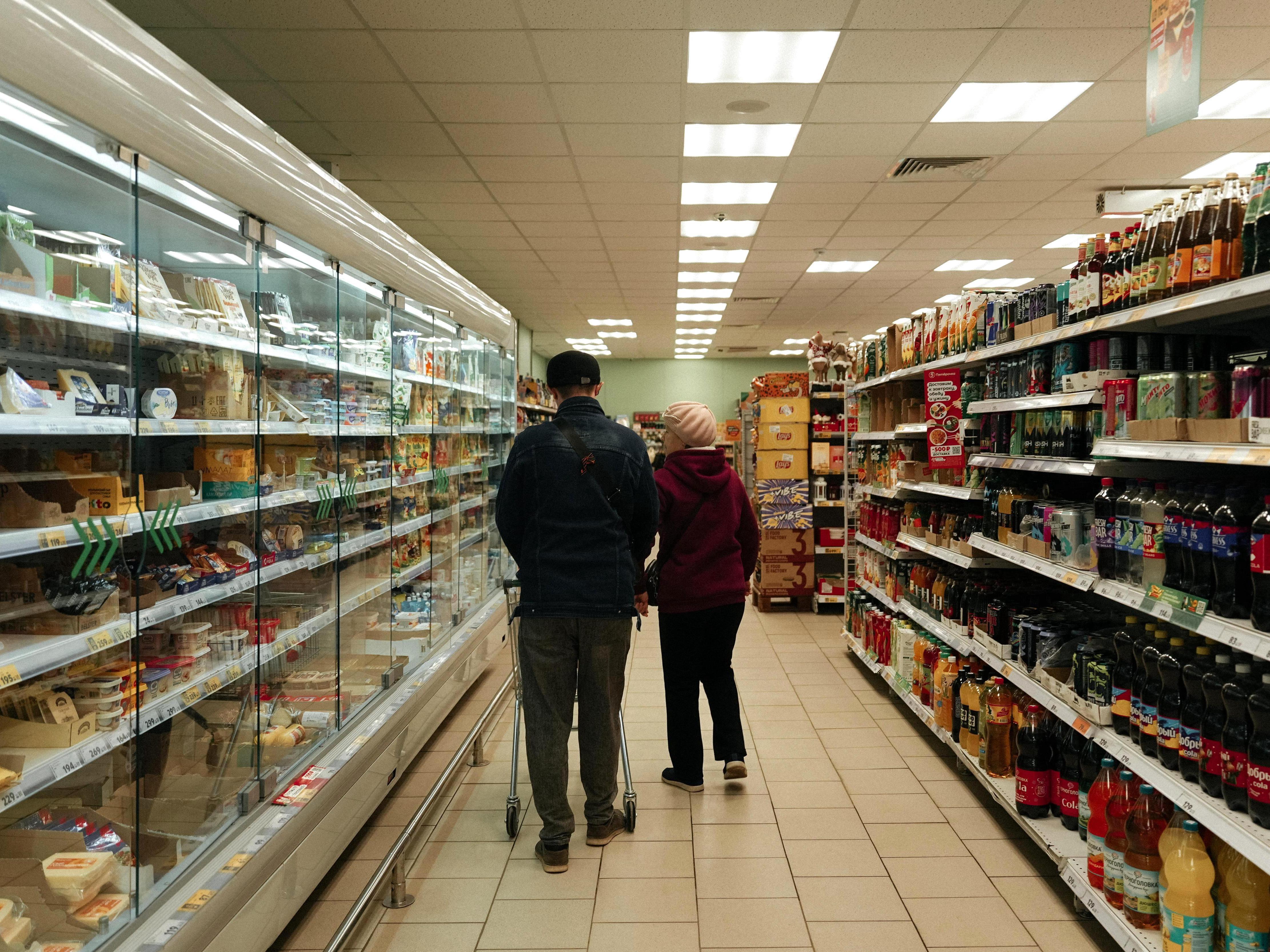

Analysts from Nielsen, who studied data from over 180 Russian retail chains, rural areas, and the online market from November 2024 to November 2025, note active optimization of the product assortment. This process is particularly noticeable in the dairy category.
Sales of private labels (PL) over the past year grew by 7.5% in volume terms, and their share reached 12.3% in monetary terms. Meanwhile, sales of butter and margarine fell by 9.6%, while sales of thick yogurts, on the contrary, grew by 8.6%.
«It is important to note that the decline in store sales is often caused not at all by a universal rejection of dairy products. For example, the most significant negative factor affecting the dynamics is assortment optimization,» Nielsen states.
Trend goes beyond dairy
According to independent expert Mikhail Lachugin, a similar situation is observed in almost all food categories. He gave the example of a St. Petersburg confectionery factory that reduced its product line from one hundred to 20 items, focusing on marmalade and lollipops.
Another company completely switched to producing frozen bento cakes, which increased operational efficiency. «In Lenta, Auchan, Metro, and so on, the choice is indeed not great and continues to shrink,» confirms Ekaterina Lapina, CEO of the Lapina real estate agency.
Economics and consumer habits
Analysts divide the main reasons for assortment reduction into two groups: economic and related to consumer behavior. «Retail chains have started to think about the profitability of their stores and have started counting money. Therefore, they sell what actually sells,» notes Georgy Zhitmarev.
Ivan Fedyakov, founder of the INFOLine agency, explains that it is more profitable for retailers to keep products with a small profit margin but a large sales volume. According to Mikhail Lachugin, a wide assortment is a legacy of «the prosperous 2000s,» and now affordable prices are more important to the buyer.
Consumer conservatism
«Indeed, the consumer has long made their choice and prefers certain products,» says Alexander Myshinsky, co-owner of GC Real. He notes that consumers are wary of new brands in dairy products, sausages, and especially tea.
«I attribute such conservatism, among other things, to the fact that in 2022, many new producers appeared on the market, some of whom produced low-quality products. This largely undermined trust in new brands,» Myshinsky recalls.
Future lies with PL and online
Against the backdrop of a shrinking mass offline retail sector, private labels of the chains will remain the winners. «This approach is logical, since through PL, retailers get rid of intermediaries and keep all the profit for themselves,» explains Ekaterina Lapina. According to Ivan Fedyakov«s estimates, the share of PL in the largest chains, currently at 15–20%, could increase to 40–50% in the coming years.
A wide assortment will also remain in online sales and premium stores. «Often in stores, if we are talking about the mid- and low-price segments, two or three items from a category will be presented, and a wider range will be available online,» says Mikhail Lachugin.
Challenges for manufacturers
Manufacturers have to adapt. Georgy Zhitmarev, deputy general director of the Piskarevsky Dairy Plant, reports that the enterprise has already optimized its assortment, producing only well-selling categories.
«Just last year we had a line of seven yogurts, now it has been reduced to three items,» shares the head of one of the dairy plants. Small producers are left with either working under private labels or developing their own trade, for example, by opening farm shops, which involves risks and investments.
«Assortment optimization in order to survive in a shrinking market, to adapt to the demands of the chains, will become one of the key challenges for manufacturers this year,» summarizes Mikhail Lachugin.