Breeding Hardy Yakut Horses That Survive -70°C
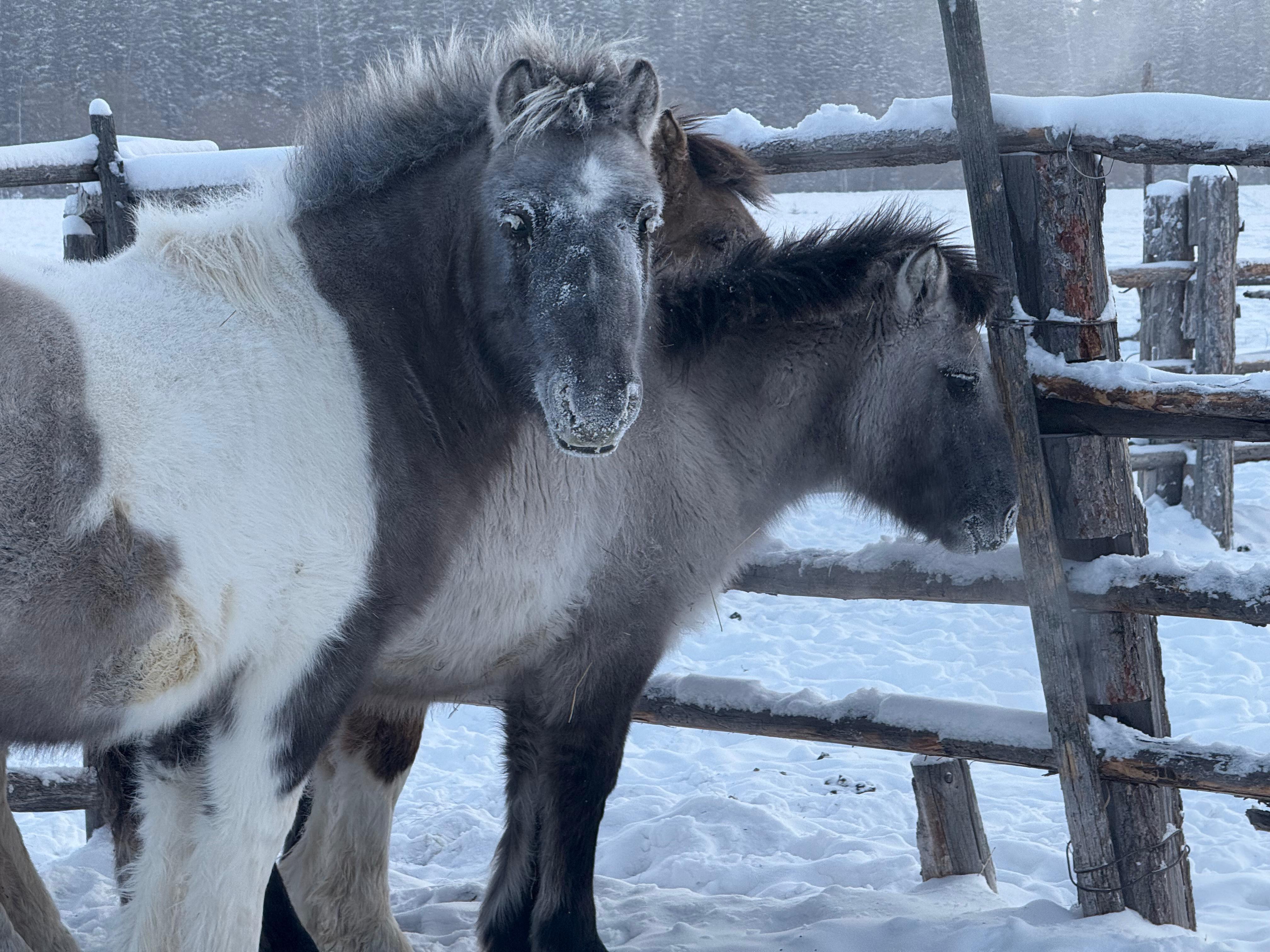

Yakut horses are distinguished by their exceptional endurance in extreme Siberian conditions.
Sad but tasty — that is the motto of Yakut people at the start of every winter. Why? Because this is the time for slaughtering foals, and everyone, young and old, eats the meat. The Yakuts themselves say it is the most environmentally clean meat. In the Year of the Horse, the editorial team of 14.RU decided to write about local horse breeding and spoke with the family of Tatiana and Georgy Vasilyev, who keep two herds of horses in the village of Naakhara. Mares can be bad mothers, stallions can be abusive and ardent suitors. But the most important thing here is what people feel when the moment of slaughter arrives. No one can smile on that day.
Hanging from a Branch to Becoming a Horse Breeder
Tatiana and Georgy moved to the tiny village of Naakhara in Suntar District in 2014, home to just 58 people. We described their daily life in a separate article. The couple is engaged in horse breeding — they have 12 heads across their two herds. The business was inherited from Tatiana«s grandfather.
«My grandfather was an excellent hunter. Once he went after a wolf — at that time they gave a reward for a predator«s head — and he was given two mares for his quarry. Grandfather increased the herd to 20 horses. But when he grew old, he had little strength left to care for them, and when he passed away, six horses remained. We decided to continue because it is personal production we are confident in. We feed our children and treat relatives in Yakutsk. Our foal meat is an environmentally clean product. Plus it»s a significant saving, as meat is expensive,» says Tatiana.
The Yakut horse is a native and unique breed, adapted to extreme cold, with thick fur, a powerful layer of fat under the skin, and sturdy hooves for moving through snow. It is distinguished by a stocky build and short stature. The horses are hardy, late-maturing (fully developing by age 6), but long-lived (working up to 27 years). At the same time, the Yakut horse is unfazed by the cold. They will not freeze even at 70 degrees of frost (-70°C/-94°F). DNA analysis shows the horses appeared in Yakutia in the 13th–15th centuries.
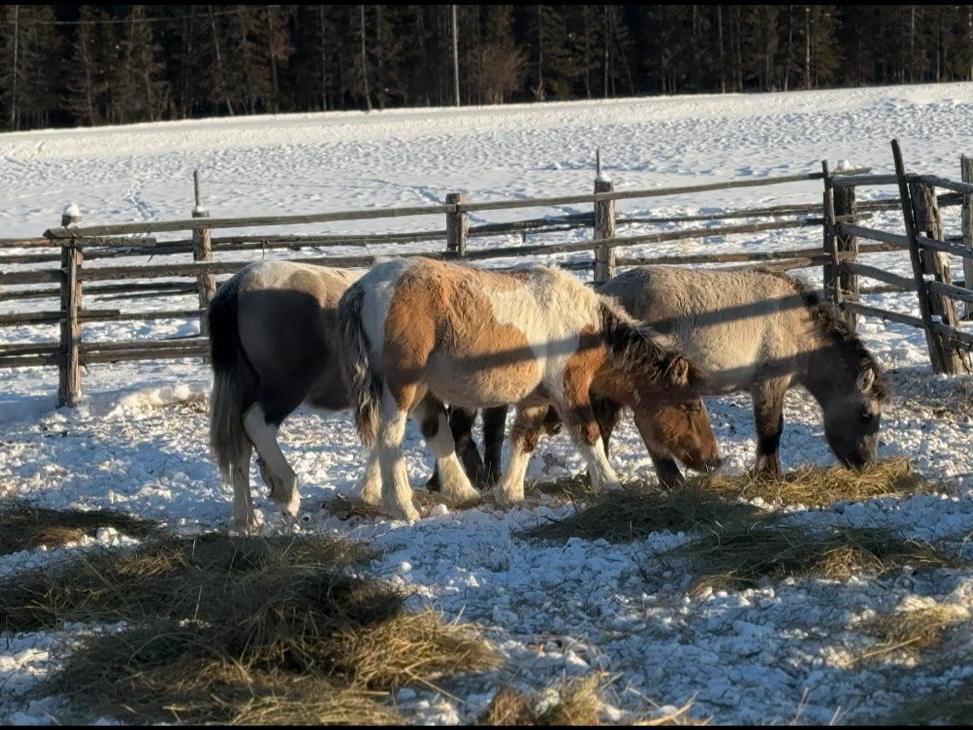
Foals on the Vasilyevs« farm receive two feedings each day from their caretakers.
Georgy bears almost the entire load of caring for the animals. As a child, the man already had an encounter with horses: his grandfather put him in the saddle for a ride, but the horse resisted and ran toward the forest, where little Gosha couldn«t hold on and got caught hanging from a branch. Twenty-seven years later, history repeated itself in Naakhara: Georgy was asked to saddle a young stallion, everything went well, but the horse decided to take off again and carried its rider toward a small forest, where the man once again got caught hanging from a branch.
«That was the second time,» laughs Tatiana. «After that he started working with horses. In 2023 my grandfather passed away, and my husband and my uncle now run the farm together, caring for the two herds. In the first herd are older mares, some over 20 years old, in the second are younger horses. We don«t notice any particular downsides to breeding, except for some minor difficulties with transporting machinery,» she says.
The Bond Between a Breeder and Their Herd is the Most Important Thing
According to her, there are more advantages for a horse breeder in the village than in the city: there are many pastures where horses roam and graze peacefully. Difficulties begin in autumn, especially if early frosts set in.
«Usually, through a thin layer of snow, you can still see grass, and horses dig through the snow with their hooves to get to it, but if early frosts come with rain, the ground gets covered with ice and the grass too, so it becomes harder for horses to get food. It«s also dangerous because lakes get covered with a thin layer of ice, and animals can fall through. Two years ago we lost two mares and a foal that way… They were very young, we had raised them for a long time, cared for them, and in one day we lost three at once… Our neighbors had this happen with cows. In general, such cases are rare but true,» sighs Tatiana.
Until the foals are strong, they are branded and kept near people for care. By winter, the owners stock up on oats and prepare hay, and repair the fence around the hayfields — that is where the adult horses spend the winter, and a strong fence is needed so they don«t run away.
Yakut horses are prized for their endurance and frost resistance, so they are not afraid of the cold. According to the Vasilyevs, the horses teach discipline: the animals need to be fed on time, so they gather in a bunch for food at a certain time; you need to go after them during grazing, catch them, observe them.
«My husband and uncle go to feed them almost every day, sometimes walking 8 kilometers (about 5 miles) there. In summer the herd is on free range, and when we meet them, we always count how many foals have appeared, how many are missing. Now we have seven mares, one stallion, and four foals,» says Tatiana.
The little ones are fed twice a day, morning and evening; their menu alternates: one day oats, another day hay. According to Georgy, taking care of horses is easier than taking care of cows.
«The most valuable skill in care is observation and knowledge about the life of horses. You need to know their habits, condition, and give them what they need in time. The state of the herd«s health is best seen in spring. For example, they look at the back — whether it»s thin or not. If yes, then the horse is emaciated and measures must be taken. This skill is honed every year, now you can tell from the first glance if a mare is healthy or not,» says Georgy.
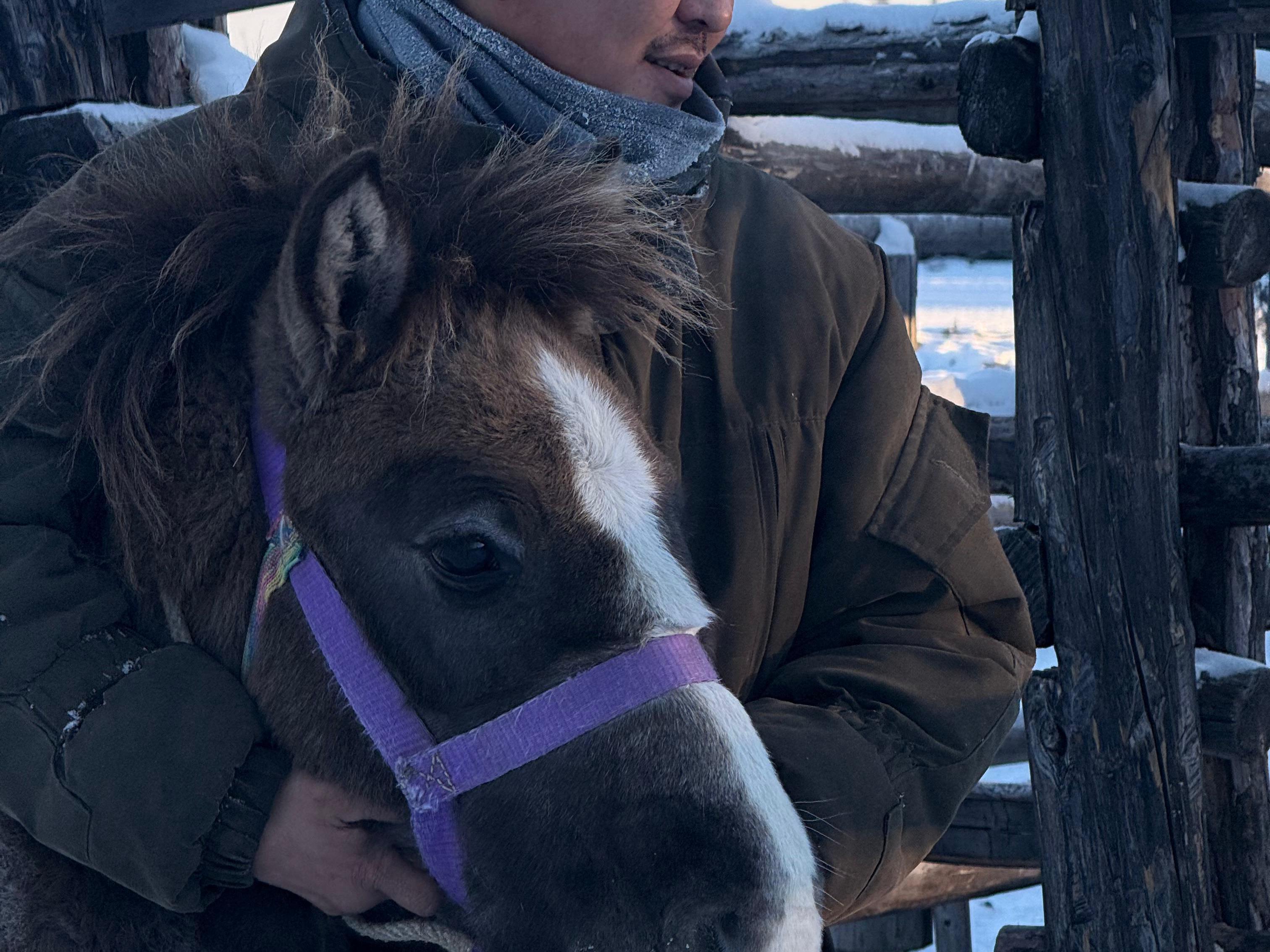
Georgy Vasilyev shares the daily duties of managing their two herds with his wife«s uncle.
Also, a person can tell, by eye and without any devices or a vet exam, whether a horse is pregnant. After birth, it«s important to watch the mother»s attitude toward the foal: it happens that mares don«t accept their young, kick them, refuse them, some can even beat them to death. In such a case, the foal is »adopted.« People nurse it by hand.
The couple notes that the bond between a horse breeder and their herd is very important. If a person has to take responsibility for the horses due to some circumstances, without their own desire, the animals sense it, and the herd simply won«t grow.
The demand for horses in Yakutia will always be high because meat is the priority here. But it«s important to remember that the larger the herd, the greater the effort. Foals are rarely bought; they are usually exchanged for a stallion.
«The demand for meat is greater than for live horses,» Tatiana summarizes.
Horses Are Almost Like People
The Vasilyevs« herd has its own favorite — a mare named Rosa. This name was given to her by the couple»s eldest daughter. Rosa has a sad story with a happy ending.
«As a foal, Rosa fell into a hay storage pit — it«s a deep hole. When my husband pulled her out, her mother rejected her, stopped accepting her, and started kicking. My husband drove the mare away and brought the foal home, where he treated and nursed her himself. Now we notice that Rosa is more attached to her young than any other mare. She doesn»t leave the babies, always keeps them at her side, and when foals are separated from their mothers for the winter, she doesn«t want to leave her child. We women feel this with our hearts, but even the men note Rosa»s attitude toward her children. Just like with people. There are good mothers, but there are also not very decent ones,» says Tatiana.
Rosa has never renounced or beaten her foals. According to the couple«s observations, in spring the horse »kindergarten« frolics and runs in the field, but Rosa»s children prefer to be near her. Moreover, other foals also love the mare and often walk near her.

The herd includes several young foals that stay close to their mothers for protection.
«We have another mare, we feel sorry for her because her foals don«t survive,» sighs Tatiana. «One baby fell into a puddle and drowned, another was kicked to death, a third foal simply disappeared, possibly attacked by dogs. Last year she gave birth to another baby, in spring we saw it had a large hump; the men suggested it had been kicked after birth so hard that it broke a bone. Such a foal could not have survived our winter, so it had to be slaughtered.»
It turns out horses can hold a grudge, especially tamed ones accustomed to humans. The rest will always be wary.
«The tamed ones run to you right away. They really love refined sugar. Sometimes I play with them: I give a piece, then take it away. Then the horse gets offended and walks away. She«ll come back in about half an hour if you call, sometimes she might not come at all,» smiles Tatiana.
Surprisingly, there are mares of «easy virtue»: they run away from one herd to another to the stallions. One lady«s escapades were once stopped… by a stallion. True, his methods were harsh.
«The mare went to another pen, the stallion jumped over the fence and brought her back, and in his own pen he began to beat her, bite her, and chase her across the field. Grandfather said then that he was punishing her. But it didn«t help, because the next year she ran away again; we don»t know: is it such a deep love for another stallion, or is she of easy virtue,» smiles Tatiana.
When stallions fall in love, they become very persistent. Once, a neighbor«s strong and powerful horse took a fancy to the Vasilyevs» young, never-before-foaled mare.
«He came, broke our fence, and took the lady with him. We didn«t have time to drive him away, we went to the neighbor and drove our horse back, at the same time strengthening the fence as much as we could. But this stallion came again and spent almost a week trying to break through to her in different ways and take her away. In the end, we gave up and let them go together,» recalls Tatiana.
Despite such impulses, stallions in general are not known for a compliant nature toward mares and foals. It also happens that a stallion may purposely kick a mare in the belly to cause a miscarriage; if after this a foal is born, the stallion will trample it to death.
How the Slaughter Happens
The slaughter is a heart-wrenching but necessary moment. On this day, no one can remain cheerful.
«We women always feel the pain and the understanding of the tradition. This is how we survive in such harsh conditions. This awareness and pain always go hand in hand. This subject resonates too strongly; you know what I«ll say: all women in our village don»t like to talk about it. Suppose we get together, and someone says they will have a slaughter. Everyone refuses to discuss it. This subject is closed for us. It«s hard not only for women, it»s not easy for men either,» sighs Tatiana.
The process of separating foals from their mothers is a difficult but necessary step before the winter season.
To slaughter a foal, they first separate it from its mother. Usually several men are involved, as several are slaughtered at once. The mothers have a hard time with this moment: they neigh, snort, wander nearby, and look at their children.
«It«s hard for me to talk about this, I want to leave this subject open. I don»t want to describe in detail what happens on that day. While the men slaughter the foals, the women make pancakes — that is our tradition. We thank the spirits for everything: for a good season, for sustenance. And of course, we thank our mares,» shares Tatiana.