Even the Cold Pole Was Warmer in January
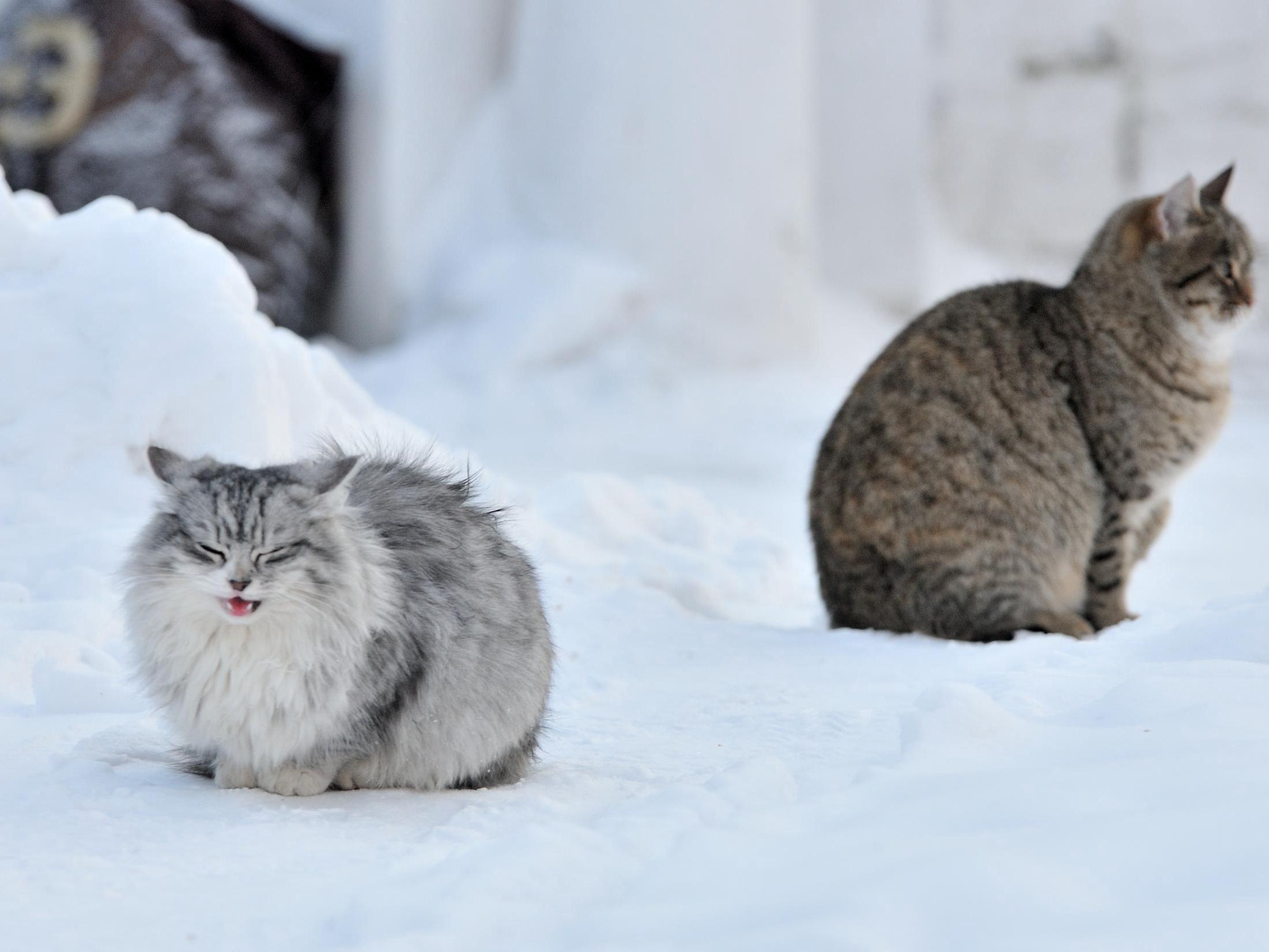

Record low temperatures and heavy snowfall impacted the Irkutsk region in January 2026.
Residents of Irkutsk Oblast will remember January 2026 for the severe and prolonged Epiphany frosts, which even in our Siberian region have been rare in recent decades. But they were not the only thing that attracted scientists« attention. What else made January interesting and what to expect from February, journalist of IrSiti was told by the head of the Department of Meteorology and Physics of Near-Earth Space at Irkutsk State University (ISU), Inna Latysheva.
Frostbite Danger Was Frequent
Inna Latysheva characterized the second month of this winter as follows: «Cool, snowy, with frequent fogs and haze, strong temperature inversions, prolonged Epiphany frosts, frequent halos and light pillars, northern lights, and fluffy crystalline hoarfrost.» And this is perhaps the most detailed list of everything that the residents of the Angara region received from January.
The frosts, which could compete with temperatures at the Yakutian cold pole of Oymyakon, carried the danger of frostbite. In addition, the daily minimum temperature was broken in the highland regions of the Khamar-Daban mountain range. Baikal came under the influence of cold Arctic breath.
«Thanks to the combined efforts of the powerful Siberian anticyclone, Arctic intrusions, and the stationing of an upper-level cold cyclone, as well as many other factors, from the second half of January 2026, a complex of adverse weather phenomena persisted almost everywhere in Irkutsk Oblast,» Inna Latysheva notes.
In the extreme northern districts of the Angara region, abnormally cold weather was recorded from 11 to 31 January. The average daily temperatures there were 7 degrees below the long-term norms, and on 13 January, 50-degree Siberian frosts struck. With a north wind of 2 meters per second and air humidity of 70%, local residents felt not even -50°C (-58°F), but -54°C (-65°F). The danger of frostbite persisted in the north of the region for almost the entire month.
«The cold weather in the extreme northern districts of our region was accompanied by frosty and radiation fogs, haze; there were only five snowy days, which gave only about 40% of the monthly precipitation norm,» Latysheva reports.
The second record holder for January frosts is Kirensky District. It was abnormally cold there for a full 20 days, but scientists counted 20 snowy days as well. True, they gave only half of the monthly precipitation norm.
«In the western districts of Irkutsk Oblast, which in January 2026 more often came under the influence of a cyclone trough and increased gradients of the upper-level frontal zone along the rear part of the upper-level cyclone, up to 2.5 times the monthly norm of precipitation fell. Consequently, January turned out not only frosty but also snowy, and in the first half also with blizzards and drifting snow,» emphasizes Inna Latysheva.
The cold wave in the west was not as prolonged as in the north, and there were 16 snowy days, but a heavy snowfall on 13 January changed the picture. In just one day, a month«s worth of precipitation fell.
«The contrasts in temperature as felt changed from -7°C (19°F) at the beginning of January to -47°C (-53°F), which, with a weak south wind and humidity up to 70% on the morning of 16 January, threatened the danger of frostbite,» the interlocutor shared her observations.
Residents of Bodaybinsky District also had a hard time. For almost the entire January, residents felt 54-degree frosts with supercooled fog and prolonged haze. Due to the prolonged cold, the water supply froze in the city, more than 1,300 people were left without hot water and heating.
Also, the hazardous weather phenomenon «severe frost» affected residents of Balagansky District on Epiphany. There the temperature dropped to -47°C (-53°F), but as felt it was like -52°C (-62°F). Anomalous cold stood there for a week, and temperature contrasts reached 40 degrees.
This January, the high-mountain station of Khamar-Daban (located at 1,442 meters above sea level) recorded a new daily temperature minimum on 17 January. It reached -35.6°C (-32°F).
By the way, neighboring Siberian regions were also cold. January in Krasnoyarsk turned out to be 5 degrees colder than the norm, Ulan-Ude — 2 degrees. But at the cold pole of Oymyakon, it was almost 9 degrees warmer. On 28 January, a new daily temperature maximum of -21.4°C (-7°F) was set there, which is 20 degrees warmer than the norm.
Even Moscow Felt the Breath of the Siberian Anticyclone
For residents of Irkutsk, January 2026 turned out to be two degrees colder than the long-term norm. In the list of the warmest over the past 154 years of meteorological observations, it ranks a distant 79th. At the same time, last January is in the top 3 warmest and is in third place. Higher temperatures were only in 2002 and 2015.
«In the ranking of snowy winters by the amount of snowfall, January 2026 in Irkutsk is in 19th place, starting from 1883, i.e., over 144 years of continuous observations. During the month, there were 15 cold days in Irkutsk, and 12 warm days. But in intensity, the cold wave from 17 to 21 January prevails with a minimum temperature of -38.2°C (-37°F) on 20 January. There were 14 snowy days this month, heavy frontal snowfalls occurred on 11, 13, and 15 January. On these days, a month«s worth of precipitation fell, and in total for the month, 1.5 times the norm was recorded,» said Inna Latysheva.
All this allows us to call January 2026 in Irkutsk cold and snowy. The first ten days felt comfortable, either «seasonal» or even «warm». But from 15 to 23 January, «danger of frostbite» was noted. However, by the end of January, residents of Irkutsk again got «seasonal» weather.
«Interestingly, in terms of climatic indicators, Irkutsk in January 2026 is very close to Moscow, which also felt the cold breath of the Siberian anticyclone. In the capital, the average monthly temperature was 1.7 degrees below the norm. The peak of frosty weather occurred in the third ten-day period of January, but judging by the minimum temperatures of down to -18.5°C (-1°F), these were not Siberian frosts. Although with humidity of 80% and a north wind of 2 m/s, it felt like «very cold»,» Inna Latysheva noted.
What to Expect from February?
The current February in Irkutsk Oblast started with the warm sector of a long-awaited cyclone, which warmed the western and highland regions in the daytime to +2°C (36°F), at night to -5°C (23°F), which after January«s 40-degree frosts was perceived as the breath of spring.
But after a couple of days, a Ural ridge shifted the cold cyclone at altitude into our region, and at the Earth«s surface, the Siberian anticyclone merged with the Arctic anticyclone. This caused a wave of cold, but not as prolonged as in January. A new Atlantic cyclone will soon again delight with warmth.
«Such variability of February weather in Irkutsk Oblast is vividly reflected in the folk names of this month — bokogrey (side-warming), snezhen (snowy), and lyuten (fierce). February-bokogrey is when waves of warmth with increasing day length indicate the approach of Siberian spring. At the same time, February is lyuten and snezhen, when active cold fronts are often accompanied by snowfalls, blizzards, drifting snow, and a piercing northwest wind,» says Inna Latysheva.
Climatic data say that February in Irkutsk Oblast is the month with the least amount of precipitation, but, as a rule, the greatest height of snow accumulated over winter. In the last winter month, residents of our region are more often treated to a southeast wind, gloomy gray low clouds appear much less frequently, while noticeably more often, with jet streams at altitude, intricate filiform, claw-shaped, and flocculent cirrus clouds float by, which serve as harbingers of weather change.
In most cases (75%) in the entire history of observations (since 1873), the average monthly temperature in February is higher than in January. However, in recent years, February has been colder than January, this was recorded in 2014, 2015, 2019, 2022, 2024, and 2025.
«Nevertheless, February reflects the trend of rising winter temperatures, where in the ranking of the hottest are February 2002, 1997, and 2007, and in the top three coldest are February 1969, 1929, and 1957. Last year, the last month of winter in Irkutsk was dominated by cool weather and was remembered for 30-degree Timofeyevsky frosts (St. Timothy«s frosts) in the first ten-day period. Relatively cold was Nikolai Studeny (St. Nicholas the Cold) on 17 February. Also recorded was a short period of cool Vlasyevsky nights (St. Blaise»s nights) in the third ten-day period,» Inna Latysheva shared observations.
February 2024 was more contrasting in Irkutsk. Then on the 10th and 11th, daytime temperatures were up to -5°C (23°F), at night only -2°C (28°F), due to which new temperature maximum records were set (an excess of 16 degrees). But a week later, the thermometers at night showed -34°C (-29°F). In terms of sensation, it was like -42°C (-44°F). For comparison: in February 1929, the temperature dropped to -44.7°C (-48°F).
«If we talk about the warmest February days, then residents of Irkutsk should go back to the last day of February 1987, when the air warmed up to +10.2°C (50°F), although on 23 February of the same year, it was -33°C (-27°F) at night,» Latysheva noted.
It is impossible to call February weather balanced. As well as to predict in advance how waves of heat and cold will change. Inna Latysheva compared this to a colorful mosaic that cannot be assembled in advance. Nevertheless, a probabilistic forecast exists.
«The Hydrometeorological Center of Russia suggests that the average monthly air temperature in Irkutsk Oblast in February will be around the long-term average values. They range from -25°C (-13°F) in the north to -14°C (7°F) in the south. The monthly precipitation amount is also expected over most of the territory to be close to the long-term average amount, although just the first two days of the month have already given about a third of the monthly precipitation norm in the western districts of the region,» says Inna Latysheva.
According to foreign models, the second ten-day period of February in Irkutsk Oblast may be warm, while frosts are expected in the European part of the country.