Possible Cause of Platform Collapse at Nizhegorodskaya Station Revealed
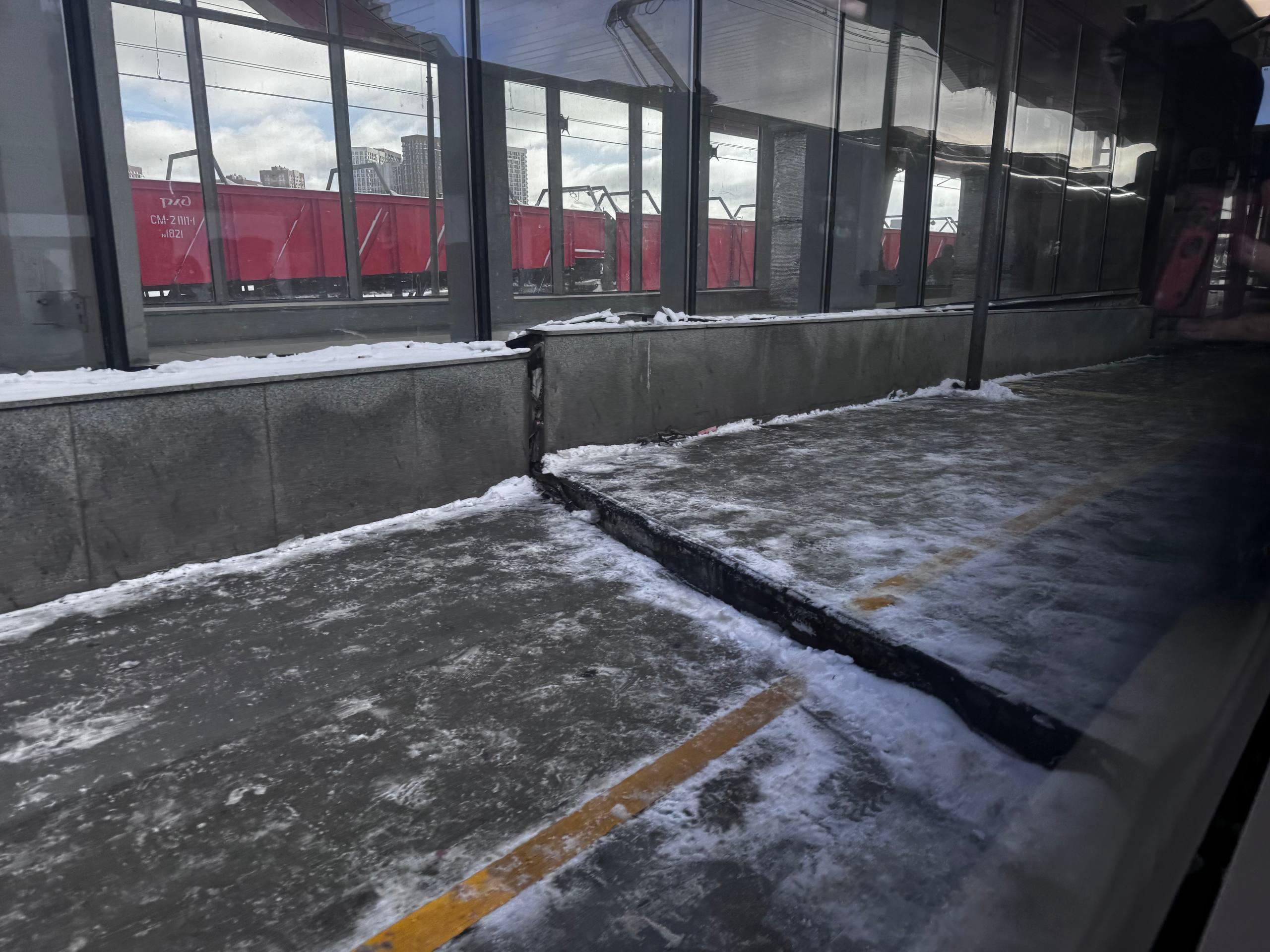

The platform at the Moscow Central Circle (MCC) station Nizhegorodskaya may have collapsed due to a ruptured beam. This was reported by MSK1.RU citing a source familiar with the investigation. Official comments on this are not yet available.
Possible Causes
According to an MSK1.RU source close to the examination, among the probable causes being considered is a manufacturing defect, although the platform remained intact for about ten years. It is also possible that it happened due to low temperatures: likely, after the beam was damaged, the load on other supports increased, and they could not withstand it.
Officially, the causes of the platform section«s collapse have not been reported. The press service of the Moscow Railway refused to name the versions under consideration to MSK1.RU. And the Moscow Interregional Transport Prosecutor»s Office responded that the circumstances of the platform section«s collapse are being checked by prosecutors of the Southwestern Division.
Expert Opinion
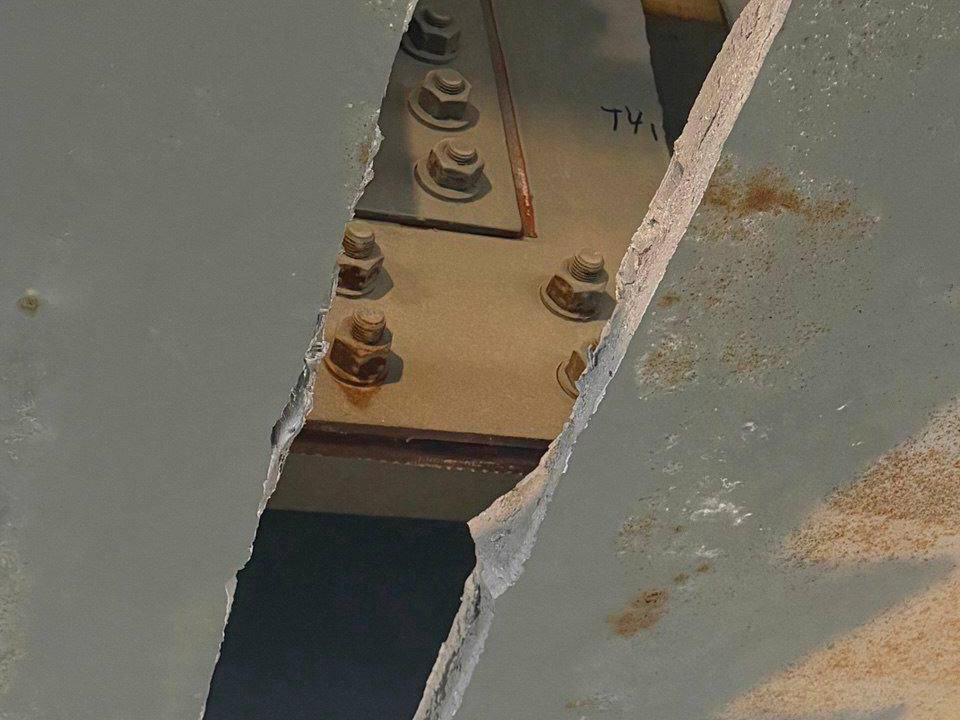
Earlier, presumably photographs of one of the damaged structural elements began circulating on social media. MSK1.RU asked an expert to assess what could have caused the incident.
“There could be many versions; qualified investigators should look into it. In the photographs, the beam has sagged; it does not look damaged,” says Oleg Zege, associate professor at the Department of Bridges, Tunnels, and Building Structures of MADI (Moscow Automobile and Road Construction State Technical University), to MSK1.RU. “Most likely, the support has been compromised. It has undergone significant deformation and lost its load-bearing capacity.”
The expert deemed it unlikely that there was an exceedance of permissible loads or a defect in parts. According to Oleg Zege, it increasingly resembles a local defect and improper support of the beam, although without thorough examination, it is difficult to judge.
“Steel behaves quite specifically. There could be some issues related to stability. The material is working, but the shape of the structure changes and stops bearing the load. I don«t think it»s a design error because it«s a serious project, and it was most likely done correctly. Moreover, with such a failure, no catastrophic destruction occurred,” explains Oleg Zege to MSK1.RU.
According to the expert, the temperature difference between during construction and now is significant, reaching up to 40 degrees Celsius (104°F). At the same time, Oleg Zege adds that structures in the capital can withstand temperatures as low as minus 42 degrees Celsius (-44°F).
Additionally, the associate professor at the Department of Bridges, Tunnels, and Building Structures of MADI noted in a conversation with MSK1.RU that the tracks for trains and the platform had different span structures. That is why the railway was not damaged, and only a part of the platform sagged.
In the expert«s opinion, the “protective mechanisms” mentioned by the authorities are not related to the structure.
“This is protection from greater damage, meaning a ‘failure’ occurred, the structure cannot be operated, but it did not cause damage. As I understand, people were evacuated, notified, the entrance was closed, the structure was inspected, and train movement was allowed to continue. Closing the station is unpleasant, but closing the line is critical,” explains Oleg Zege to MSK1.RU.
The examination and determination of causes could take a month, the expert believes. Probably, work on design will begin in parallel, and then on platform restoration.
Earlier, the Moscow Department of Transport explained that an interdepartmental headquarters has been created at Nizhegorodskaya, where a commission of Russian Railways (RZD) is working. Restoration measures are now being developed with the involvement of structural subdivisions of JSC Russian Railways – design institutes and construction organizations. The opening of the MCC station will be announced separately; the Moscow Central Circle is operating normally.
On the evening of January 30, the MCC station Nizhegorodskaya was closed (the metro and MCD-4 are operating). Then it became known that a part of the platform collapsed. Official information appeared almost a day later, on Saturday.