“Don’t Abandon Dima”: Life of ‘Fish Boy’ Family


The skin is the largest organ, and those with healthy skin don’t realize how lucky they are. In the Novosibirsk region, more than a hundred children live with ichthyosis (often called “fish children”). But eight-year-old Dima Pyatkov from Novosibirsk has not just ichthyosis, but KID syndrome: keratitis, ichthyosis, and deafness. An NGS correspondent spoke with the boy’s mother, Yulia, about acceptance, family support, and the daily care routine.

“How do you feel about horror films?”

Dima was born in 2018 at Novosibirsk Maternity Hospital No. 6, a long-awaited child. His parents, Yulia and Oleg, had been hoping for a new addition to the family for some time, but it hadn’t happened. A gynecologist found that Yulia’s prolactin hormone levels were four times higher than normal. She prescribed treatment, including a medication during which pregnancy was not allowed. But since Yulia couldn’t conceive anyway, the sudden “Oh!” from the ultrasound doctor came like a bolt from the blue. In the tenth month of taking the medication, the woman learned she was pregnant. Abortion was never a question. The pregnancy went well, and all available tests at the time revealed no problems for mother or baby. The birth also went smoothly.

“He was born quite large, 3,780 grams, 54 centimeters. I look at him, he’s so cute, everything is fine,” the mother recalls the first minutes of the boy’s life.
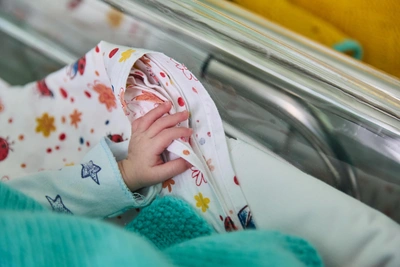
The next day, Yulia noticed a small pimple on her son, but no one paid attention. Then the mother noticed that Dima had slightly lighter skin on his forehead than other babies and dystrophic nails. But the discharge from the maternity hospital was still good. A week and a half later, the boy became seriously ill with neonatal pneumonia, and in the hospital he turned red all over, and his skin began to peel.
Ichthyosis (“fish syndrome”) is a genetic skin disease. It is characterized by a disorder of skin keratinization, which manifests as scales resembling fish scales. The disease can be congenital or develop over a lifetime.
The diagnosis was not made immediately. Doctors first wrote “ichthyosis” with a question mark, and the region’s chief geneticist, Yulia Maksimova, suggested it might be “congenital dyskeratosis” (which was not confirmed).
“I was warned not to read about it yet, because it was still in question. But, of course, I got in the car and read up on it. It was very bad, very painful, and I didn’t understand why this happened to us. No one in our family has this disease,” says the Siberian woman. Later, doctors confirmed: the parents are not carriers of the broken gene; the mutation occurred in the child himself.
Acceptance took time. Yulia was unconditionally supported by her husband, who went to the hospital every evening to learn how to care for their son. Yulia and Oleg also received great support from their parents on both sides.
“Dad, may he rest in peace, was very attached to his grandson and said, ‘Just don’t abandon Dima,’” Yulia recalls.
Then began a whirlwind of hospitals, complications (a leucoma appeared on both eyes, and hearing began to decline), routine care, and searching for answers. The final diagnosis was made by a geneticist at the National Medical Research Center for Children’s Health in Moscow, where Yulia and Dima were sent under compulsory medical insurance.
“He (the doctor, — editor’s note) opened a book published abroad, showed photographs, and there was Dima, one to one. And he says: ‘This is KID syndrome. Keratitis, ichthyosis, and deafness.’ And he explains what it is. I naturally burst into tears, and they send me to a psychologist. There they gave me a questionnaire with over 300 questions, including ‘How do you feel about horror films?’ and ‘Has your attitude toward your child changed?’ — Yulia lists the events of that day. — In the end, they saw that it’s hard for me to accept, but I’m adequate. And the psychologist gave me advice: ‘Don’t look into the future, because it will be very hard for you. Live here and now.’”
And so they did. Fortunately, Dima was not a problem child. Even now, at eight, he is a very quiet, affectionate, and smiling child. And extremely independent: he can get what he needs from the refrigerator and eat on his own.
Three hours of care and small joys
Dima is also an extremely disciplined child. His daily routine consists of about three hours of care procedures. In the morning, it’s drops, moisturizing and medicated creams and ointments. In the evening, Dima spends about 40 minutes in the bath, as his mother says, soaking. Then another hour is spent applying medicated products. The most problematic areas are the armpits, palms, and soles.
“Sometimes he may limp a little. I understand: apparently, there’s a deep crack on his foot, and it hurts,” Yulia says.
Dima cannot complain: he doesn’t speak, like many hard-of-hearing children. But he communicates his needs to his parents with gestures.
In the closet in Dima’s room, next to his toys, there’s a shelf with medications. Maintenance treatment for KID syndrome is very expensive. Foundations like “Circle of Kindness” and “Butterfly Children” sometimes help with the purchase of some medications and travel expenses to other cities. But the main costs fall on the family, and they are significant—for example, from 2,000 rubles (about $27) for one bottle of cream.
Special plasters that hold firmly are also needed. Lately, due to the sun, the boy has developed many pustules that later become scabs. Sometimes they bleed, and that’s when these plasters help. For dry lips, Yulia found a surprisingly suitable and inexpensive lip balm at a chain store.
Another major expense is hearing aids. At first, the family received free ones, but they broke down every month. Then the family bought their own—miniature, with replaceable ear molds. They had to pay more than 100,000 rubles (about $1,120).
“I asked the audiologist if they make sense. She said he has labyrinthine deafness, meaning his hearing may come and go, and he can hear some sounds, so he needs to wear them,” the boy’s mother explained.
But Dima met us without them—due to the skin condition, earwax plugs form quickly in his ears, and they need to be washed out promptly to prevent otitis.
Now the family is waiting for surgery to implant a special chip that will allow the boy to hear. Previously, this was impossible due to the condition of the skin behind the ears. Yulia has already gathered all the necessary documents, and in the near future they will wait for an invitation for surgery in Moscow or St. Petersburg.
Of course, the child lacks socialization. It’s hard for Dima to communicate with peers because he doesn’t speak. But he usually doesn’t face overt rejection.
“When we go to sanatoriums, children first look at him from the side. I’d do the same if I saw him for the first time. And then, when they talk to me, they understand everything is fine and run to him: ‘Dima, Dima!’ and hug him in every way,” the boy’s mother smiles. He knows how to win people over.
At home, he happily plays with construction sets and enjoys spending time with the cat Taisia—there are no contraindications. Also, despite poor vision, he plays educational games and watches cartoons on a tablet. The parents monitor screen time because vision needs to be preserved until age 18, when eye surgery can be performed.
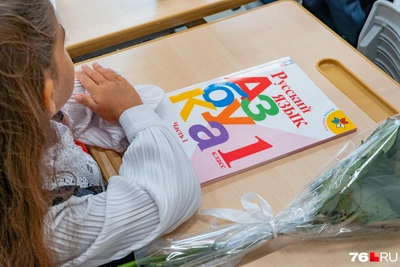
By the way, this year Dima will start first grade. The commission has placed him in boarding school No. 39 for children with visual impairments.
A little over a year ago, Dima got a sister. At 37, Yulia gave birth to a healthy daughter, Polina. The Siberian woman admitted that despite all the necessary tests and studies during fetal development, she could only breathe a sigh of relief when she saw the baby.
In August 2025, NGS told the story of Yaroslav Mityakin, who lives with ichthyosis.