Chelyabinsk Clinic Creates AI-Avatar for Dental Patients
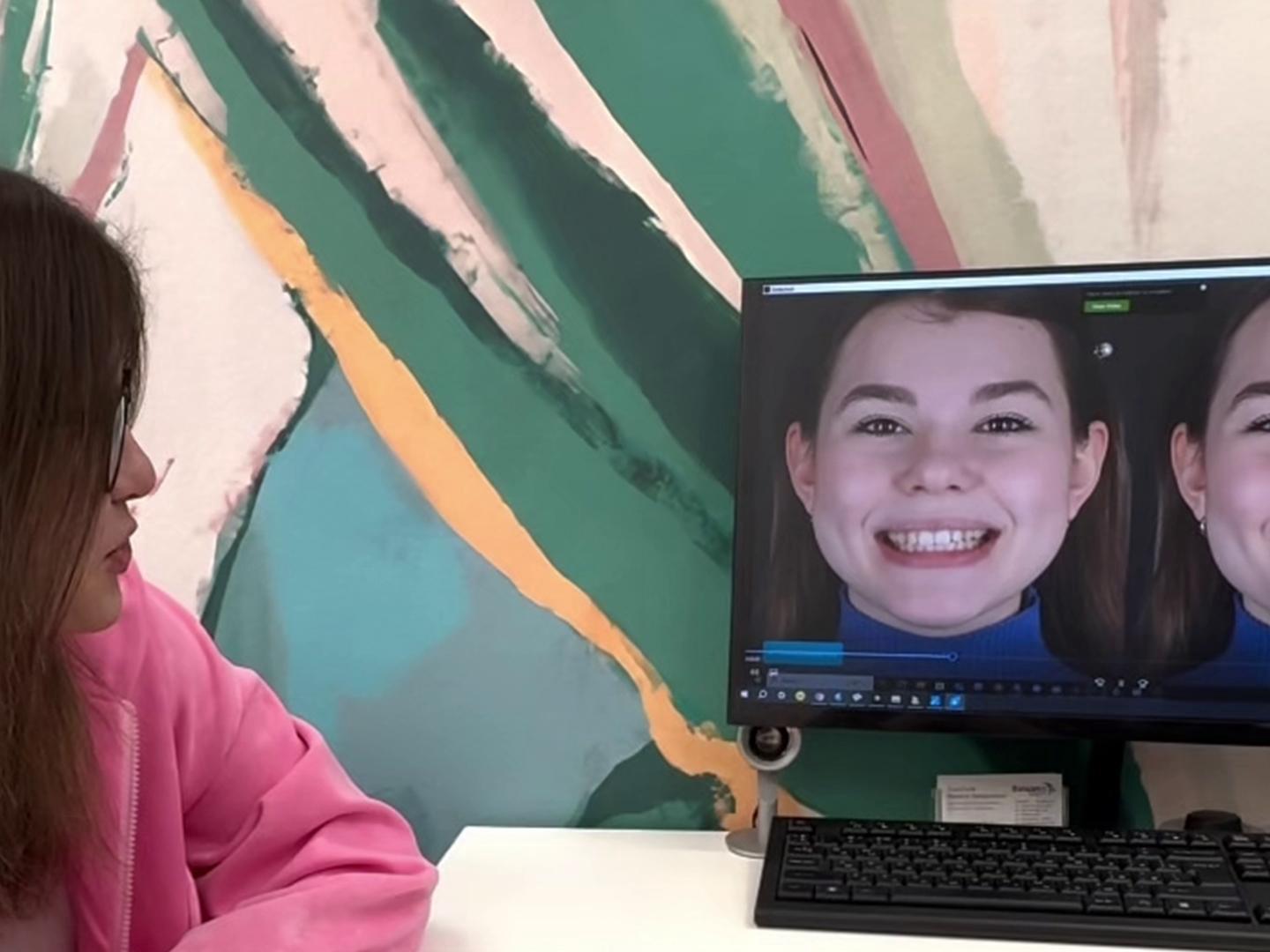

The digital avatar shows in detail from various angles how a patient will look after dental treatment.
Look how far progress has come! Now, before dental restoration, patients can preview «the new version of themselves» in advance. They can examine the future smile from different angles, assess facial expressions, and even understand how comfortable it will be to chew with new teeth.
Patients can view a video version of their future self with a new smile on the screen.
Yes, we«re already used to the fact that today neural networks can animate old photographs or, say, turn an ordinary picture into a whole movie. But here, everything is much more complex. In the hands of experienced dentists, AI technologies create not just a beautiful video, but a full-fledged »digital avatar« of the patient, which helps plan and predict treatment with high accuracy. How it works was explained by the head of the »Veladent« clinic on Kurchatova Street, orthopedic dentist Igor Kondarev, and orthopedic dentist of the »Veladent« Ortho clinic, Vadim Emelyanov.
— What is the essence and benefit of the new technology?
Vadim Emelyanov (V.M.). The main value is that both the doctor and the patient see the future result in advance, even before we start any medical procedures.
Now, the approach is different. A technician manually models the shape, size, position, and color of teeth based on all the patient«s data, and then this data is processed by the system; artificial intelligence creates a visualization. The patient receives a realistic video—with head turns, smiles, facial expressions, chewing movements.
— Is it difficult to prepare for creating an avatar; what is required from the patient?
V.M. At the first stage, we need to perform diagnostics: computed tomography, intraoral scanning of the upper and lower jaws with bite fixation, and also take a series of photos—necessarily the oral cavity, face front and profile.
Igor Kondarev (I.K.). Next, we combine in the program facial photos, 3D scans of the jaws, and CT images. We preliminarily agree with the patient on the desired design, shape, and shade of teeth, pull all this information into the program, and together discuss the preliminary picture to later pass all the data for modeling.
— Can the patient first «try on» different smile options virtually?
I.K. Yes, at the preparation stage, we can assess proportions and, if necessary, directly on the screen adjust the smile line, change the shade, move a particular tooth. Together with the patient, we try and see what really fits.
Thanks to such technologies, unpleasant surprises in the future can be avoided. Remember, at one time, absolutely snow-white teeth were in fashion? People brought me photos from magazines: «We want the same smile.» In reality, such unnatural whiteness suited few people, and often I had to dissuade patients from rash decisions. Now, it«s possible to visually show how it will look in real life.
— How accurately does the final visualization reflect the future result?
V.E. The visualization is very accurate, especially compared to what was used before. The more information the doctor gives to the technician and the more precise the diagnostics, the better.
I.K. You could say we get a model of a specific person«s head that is as close to reality as possible. The program even reproduces jaw movements, which helps assess functionality during speech and chewing. The system will »highlight« points of increased pressure, places of potential chips, show overloads when teeth close, or situations where orthodontic preparation is unavoidable.
— In which cases is the AI-avatar particularly useful?
V.E. If serious changes are planned—full rehabilitation, significant correction of tooth shape and color, work in an aesthetically significant zone—the digital avatar becomes a very useful tool. It helps the patient make an informed decision and understand what result we are aiming for.
— In the Chelyabinsk region, such technology still seems something space-age; the clinic is implementing it among the first. Are there already results and feedback?
I.K. We are at the stage of active mastery and implementation; there are patients with ready digital projects. We«ll be able to compare visualizations with actual treatment results later: comprehensive restoration and rehabilitation on average takes from six months to two years. But already now, it»s clear how much the technology simplifies planning and improves communication between doctor and patient.
Interested in learning more about the capabilities and features of the technology or would like to model your future smile? Come for a consultation at «Veladent».
Veladent Dental Clinic Network,
branch addresses;
tel.: +7 (351) 246-77-77;
veladent.ru;
VKontakte;
Telegram.