Gasoline Prices: What Will Happen? Experts Explain
As gasoline prices surge across Russia, experts analyze the shortage, its causes, and the outlook for the coming months, with a glimmer of optimism for stabilization.
Jul 27, 2026 0


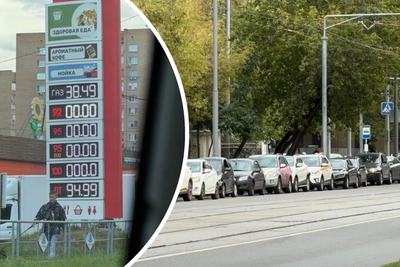
Queues at gas stations have become a common sight in megacities
Source:
How the gasoline crisis will develop further, when the queues will disappear, and what will happen to gasoline prices — 74.RU gathered expert opinions.

Years go by — gasoline only gets more expensive
Source:
Gasoline Prices Surge

Rapid price increases hit car owners« pockets
Source:
In July, popular gasoline grades continued to show record price increases across the country. According to the analytical service Check Index, during the first ten days of July, the median price was:
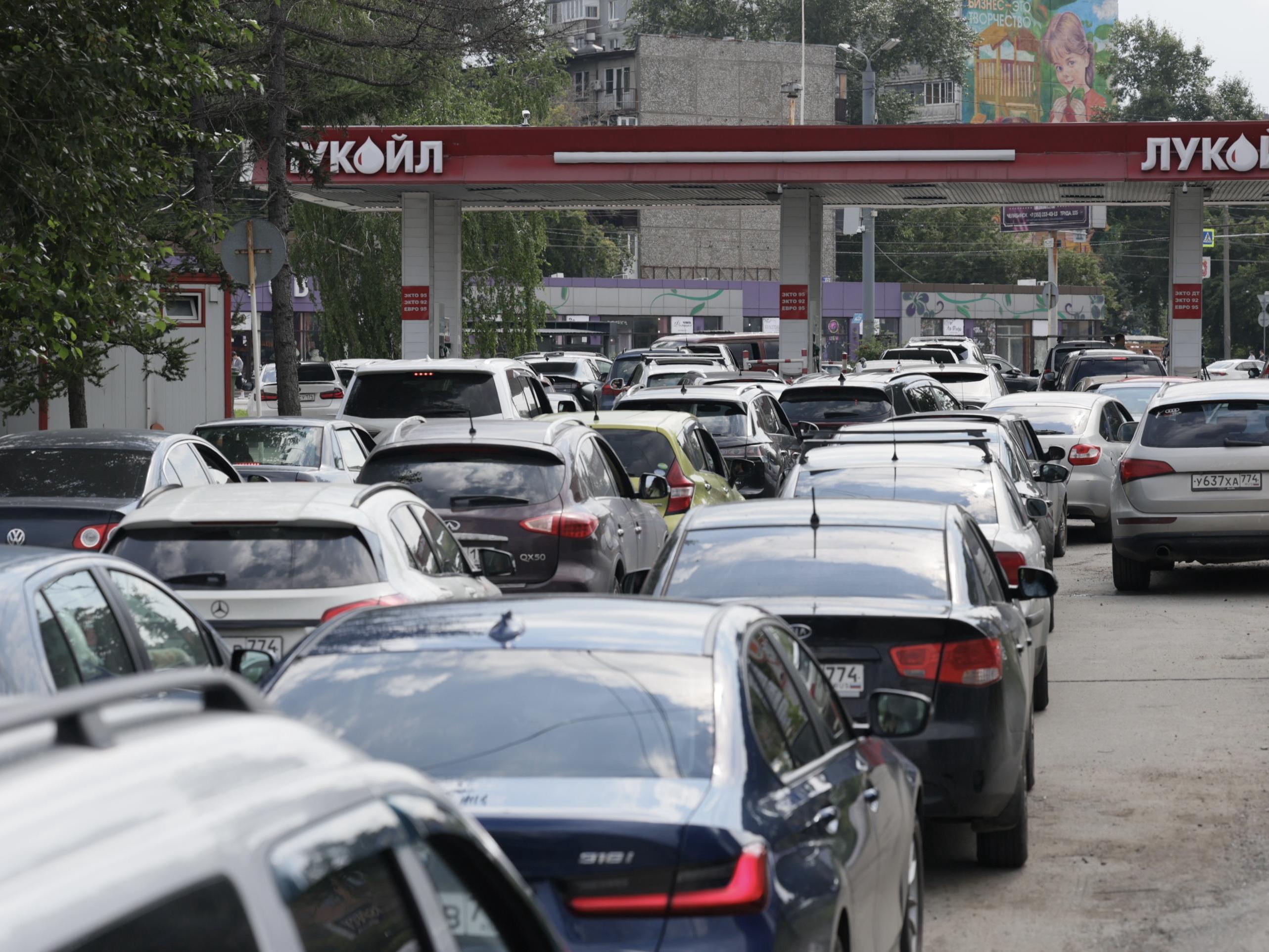
If only there were gasoline, drivers are ready to wait
Source:
AI-92: 70.5 rubles ($1) — 20% higher than last year;
AI-95: 77.5 rubles ($1) — 24% higher than last year;
AI-98: 119.5 rubles ($1) — 32% higher than in 2025;
The price of diesel also rose — 88 rubles ($1), which is 11% higher than last year.
Median price is the value that divides the entire price range into two equal halves. One half of all goods costs less than this value, the other — more. Thus, the median price shows the real «middle» of the market, while the average price is heavily skewed by overly expensive or super-cheap goods.
«Volatility and price spread are high; the price difference between chain and independent gas stations reaches 2.1 times,» noted Check Index analysts.
At the same time, demand for fuel is changing unevenly. In July, motorists began to fill up more with AI-92 and AI-100 — compared to 2025, the number of purchases increased by 10% and 37%, respectively. At the same time, Check Index specialists noted a decrease in purchases of AI-98 by 18% and AI-95 by 13%.
Of course, diesel is in high demand — a 28% increase over six months.
«Cannot Turn a Blind Eye»
The increase in gasoline prices also caught the attention of the Central Bank. Fuel contributed to the June rise in the Consumer Price Index (CPI), which increased by 0.87% compared to May and accelerated the annual growth to 6%.
«The main “extra” in the June CPI was the sharp rise in fuel prices. Core CPI showed much more moderate growth of 0.48% and 5%,» noted Alexei Zabotkin, Deputy Chairman of the Bank of Russia, in the Bank of Russia Telegram channel.
According to the Central Bank Deputy Chairman, costs are affected not only by fuel prices themselves, but also by restrictions on its availability. The Central Bank will closely monitor the price picture during July and beyond — to what extent the situation on the fuel market will affect the inflation concerns of citizens and businesses.
«The Central Bank cannot turn a blind eye to fuel prices and inflation expectations,» Alexei Zabotkin admitted. «But we assume that the measures taken by the government will be able to normalize the situation on the fuel market.»
With a well-calibrated monetary policy, the Bank of Russia can still ensure a return to the 4% inflation target by 2027, the Central Bank Deputy Chairman expressed confidence.
«Production Fell by 25–30%»
The dynamics of gasoline prices and the presence of shortages will largely be determined by the ability of oil companies to restore production volumes, experts indicated.
«Judging by open data, production fell by about 25–30% due to numerous attacks on refineries, meaning the damage is already higher than last year. Locally, of course, various measures are being taken to stabilize the situation: an export ban is in effect, environmental requirements are being lowered, imports from India, China and former Soviet countries are being activated, a damping mechanism (a mechanism for subsidizing fuel consumers on the domestic market. — Editor’s note) is being extended to imports, and so on,» noted Sergei Kaufman, analyst at Finam Group (Finam). «However, these are all temporary measures that alleviate the symptoms of the crisis but do not solve the primary problem. In other words, a full normalization requires restoring oil refining volumes. To do this, it is necessary to repair the damaged refineries and prevent new attacks.»
In most cases, refineries can be repaired in a few weeks to a couple of months, but it is more important to guarantee no new damage, the expert added. This means the situation can be normalized within a couple of months (without new damage). Against this background, achieving an energy ceasefire would be a great success for the Russian fuel market, but such talks are not currently underway.
«If production can be normalized in the coming months, then prerequisites will arise for a reduction in prices relative to current abnormal levels. And then, by the end of the year, price growth could return to single-digit territory,» explained Sergei Kaufman. «At the same time, without restoring production, the final price increase for the year could be even higher than in 2025, although the dynamics will be smoothed out by growing imports and subsidies on them.»
According to the Finam expert, in the coming weeks, growth rates (according to Rosstat data) of more than 1.5% per week may persist, since imports of fuel from more distant regions (China, India) require weeks, and without this it is difficult to eliminate local shortages.
«As subsidized imports grow, weekly data will smooth out, but a sustained decline in prices, in our opinion, is likely only in a scenario of restoring domestic production. We also note that locally, imports are complicated by the ongoing conflict in the Middle East, due to which gasoline in the world is now more expensive than usual and in short supply,» concluded Sergei Kaufman.
«May Normalize in August»
The gasoline crisis is not over yet, but its most acute phase may end in the coming weeks, experts gave hope.
«The main reason is precisely the physical shortage of fuel, not just the rise in oil prices. According to industry sources, gasoline production now covers about 65% of seasonal demand, and the daily deficit reaches 40,000–45,000 tonnes with consumption of 115,000–120,000 tonnes,» noted Vladimir Chernov, analyst at Freedom Finance Global. «The government has limited exports, increased the utilization of existing refineries, accelerated their repairs and increased imports. At least 60,000 tonnes of gasoline have already been shipped from India, and supplies are also coming from Belarus.»
In the absence of new large refinery shutdowns, queues should begin to shrink in the second half of July, the expert predicted.
«In most regions, the situation may normalize in August, but in the south of the country and remote regions, individual disruptions may persist until the beginning of autumn due to complex logistics and increased seasonal demand,» explained Vladimir Chernov.
At the same time, according to the expert, a return of prices to spring levels should not be expected.
«Imported fuel is more expensive, and wholesale increases reach retail with a delay. By the end of the year, gasoline may rise another 5–8% relative to the beginning of July. The average price of AI-92 could approach 74–76 rubles ($1) per liter, AI-95 — 80–83 rubles ($1),» commented the Freedom Finance Global expert. «With new refinery shutdowns, the increase could be higher, and AI-95 in some regions could exceed 85 rubles ($1).»
«Will Resolve by September»
The Rosstat figures will in any case differ from what we all see on the ground, i.e., at gas stations, the expert reminded.
«Rosstat counts large wholesale, not retail. Naturally, in retail the price increase is significantly higher than what Rosstat declares. Especially if you take the south of the country and even more so Crimea. There, fuel already reaches 300–400 rubles ($3–$4) per liter and it seems to be becoming the norm,» pointed out financial expert Alexei Krichevsky. «Gradually, these data may start to level out. For example, trading in gasoline and diesel futures has already been launched on the Moscow Exchange, and the indicators there are more adequate.»
The problem of gasoline shortage will very likely be resolved in many regions by September, the expert is confident. He links this to the upcoming State Duma elections.
«Because of this shortage, there are already problems with harvest collection and so on. Moreover, it is unclear why a shortage and queues have formed at all if, as they say at the top, we have almost two million tonnes of gasoline in reserves,» Alexei Krichevsky muses. «Presumably, by September the situation will resolve in most regions. First of all, of course, in Moscow and St. Petersburg, then other megacities. Why in most? Because there are Crimea and the new territories, where fuel needs to be delivered one way or another. And the president actually focused on this, instructing to work out such routes that are out of reach of, let’s say, external factors.»
How this will look is still a question, the expert added.
Expecting a return of the price tag to the values of, say, May, is not worthwhile, Alexei Krichevsky agrees.
«In any case, fuel will be about 10–15% more expensive. How this will further affect prices and inflation can only be guessed. Because the shortage and price increases on fuel are problems with harvest collection, rising food production costs, and so on. This naturally increases logistics costs. So inflation could easily spiral,» the expert concluded.
Read more