MTPL Payouts Jump 1.5 Times Amid Spare Part Crisis
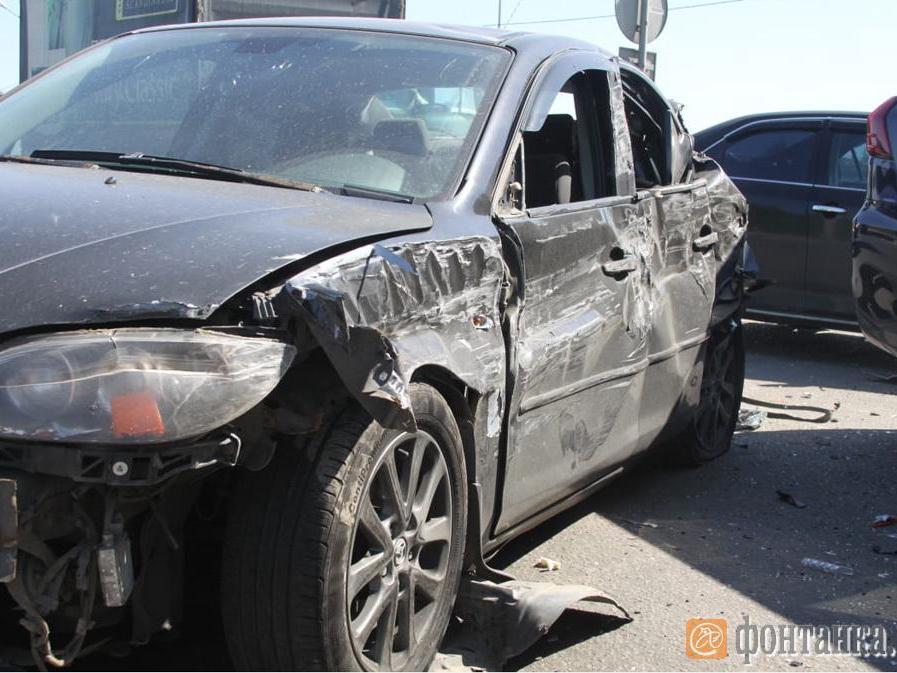

The average insurance company payout for an accident has grown from 72,000 rubles (about $800 at current rates) to 101,000 rubles (about $1,100 at current rates) since 2022 — almost 1.5 times. Behind these numbers lies not only inflation but also the collapse of the spare parts market. As a result, getting a car repaired under MTPL (compulsory motor third-party liability insurance) is as difficult as it was three years ago: insurers« official rates are far from reality, supplies are unpredictable, and prices for original parts still cause shock. This systemic failure cannot be fixed soon: a bill that would allow car owners to receive additional payment if the payout is insufficient for repairs has been stalled for a long time.
Over the three-plus years that the car market has endured since Western brands left, passions have mostly subsided. Some, open to new experiences, have switched to Chinese cars; others, who remained loyal to the West, have mastered parallel import markets; and others, devoted to a bird in the hand, are still driving it.
The story with the spare parts market is different. It«s not easy even with Chinese cars, despite the fact that several Celestial brands have been successfully assembling in Russia for more than a year. With those brands that have secured top sales, «things are quite good,» experts say. But with a caveat:
— There are still some items whose deliveries have to be waited for up to three months. Parts for «Europeans,» and even «Americans,» are also being brought in, but the wait is 1-1.5 months, — at a conference dedicated to the results of 2025, Alexei Podshchekoldin, President of ROAD (Russian Association of Automotive Dealers), answered a question from Fontanka.
The only nuance the expert left without comment was the change in the cost of these very spare parts. And Fontanka even knows why: there are still no established price tags on the spare parts market. Nor, for that matter, are there trusted — vetted — suppliers.
— Component manufacturers do not want to enter a low market, — Podshchekoldin shrugged.
Average Temperature According to RSA
Therefore, spare parts for cars (if they are not dealer parts) are brought to Russia from any corner of the vast world, primarily China. The quality of what is imported is so varied that it is difficult to figure it out on your own, and the cost of original parts makes car owners« hearts skip a beat. Insurers have it a bit easier in this regard — they have long been entering spare parts into the manuals for calculating accident damage under MTPL at average market cost, although even that has to be regularly indexed. However, they are still far from the real market.
In the past year, 2025, these very manuals were updated twice. First on 19 September, with prices changing on average by 0.2%, as noted by the RSA (Russian Union of Motor Insurers). The second adjustment followed on 19 December after a public review of the updated data and refinements. As noted by the RSA, compared to the previous version, prices rose on average by 1%. Moreover, they emphasized, parts for Nissan, Renault and Chevrolet rose in price by 4.5-6.6%, Toyota, Mercedes, KIA «are in the general trend,» where growth does not exceed 1.4%. Prices for parts for Chinese cars continue to fall, with «the record holder being the Geely brand — a decline of more than 10%,» wrote the insurers.
The RSA explained to Fontanka that average prices for spare parts for Chinese cars overall fell by 2.4% in the second half of 2025.
— The price decline is caused by the saturation of the spare parts market for those brands that are only entering the domestic market and are already taking a noticeable place in it, — the association noted.
They also clarified that for the most popular and frequently repaired brands, where demand is consistently high, «spare parts suppliers have no reason to lower prices.» However, for the average car owner who gets into an accident, this «average decline» of 10% is unlikely to be noticeable. And here«s why.
Originals as a Luxury
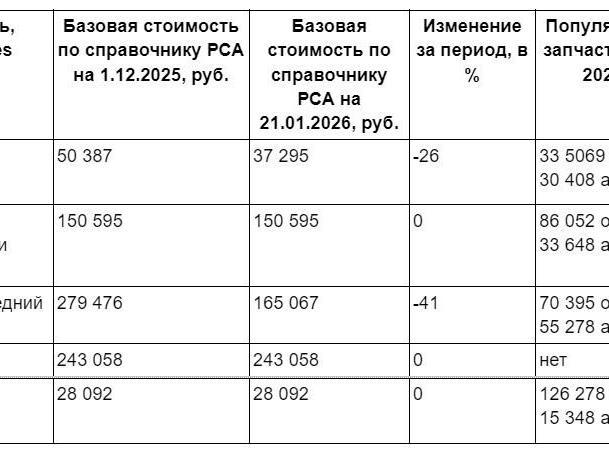
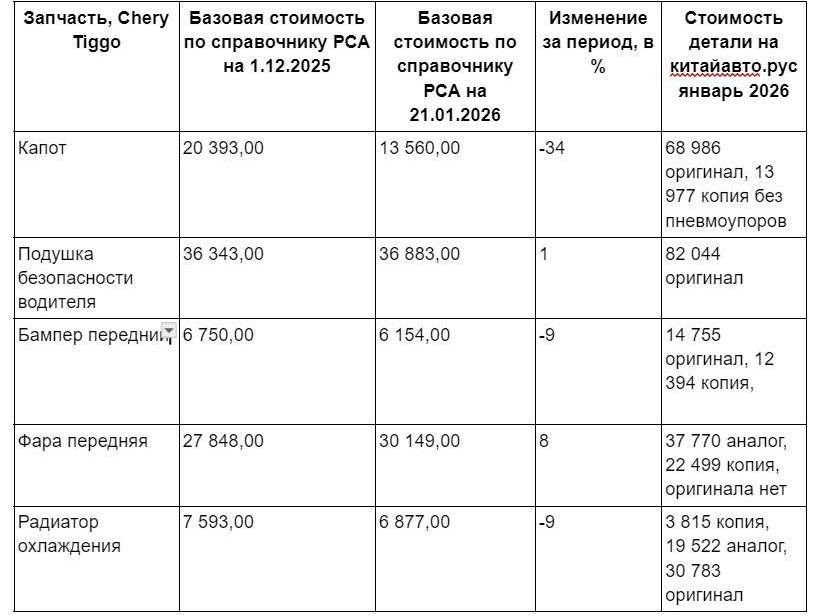
Fontanka has been keeping an eye for years on spare part prices. This time, too, we checked what base cost entered the manuals for a hood, driver«s airbag, front bumper, and headlight (in short, what is most likely to suffer in an average accident) for a Mercedes, a Belgee X70, and a Chery Tiggo.
It is worth noting that in the case of Mercedes, prices really did fall, at least for the hood (by 26%, to 37,300 rubles or about $410) and the bumper (by 41%, to 165,000 rubles or about $1,800). Everything else in our «set» remained with the old price tags: the manual values the airbag at 150,000 rubles (about $1,700), the headlight at 243,000 rubles (about $2,700), and the radiator at 28,000 rubles (about $310). Need we say that market prices differ from the base ones in the manual by an order of magnitude if we are talking about originals, and in some cases (the radiator) even analogues significantly outpace the base price. However, Russian motorists are increasingly shying away from originals: few can afford them, and such parts are only significant during the warranty period.
With parts for the Chery Tiggo, it«s not so simple either: three items from our list really became cheaper (the bumper and radiator by 9%, and the hood by as much as 34%), but the airbag and front headlight became more expensive (by 1% and 8% respectively). As with the «German,» original parts for the «Chinese» will cost from 2 to 4 times more. As, by the way, will substitutes (the bumper).
Numbers Under a Magnifying Glass: Where is the Promised Decline?
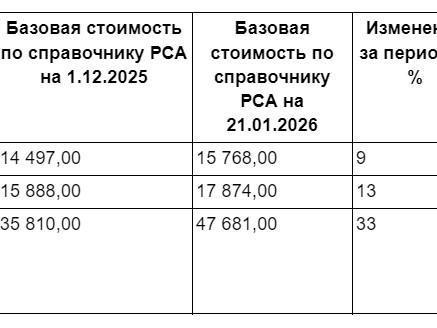
But with the record holder for price reduction, Geely, things didn«t work out right away. Let us note that we were looking at parts for its Belarusian sibling brand Belgee, but their part numbers in the manuals completely coincide with the Chinese ones.
So, no matter which component we took, we everywhere encountered an increase in the base cost: the hood added 9%, the radiator — 13%, the headlight — a full 33%. So where is the announced decline? We won«t even talk about the market price — the market, through the insurers» eyes, does not look at the world.
Separately, we note that over the past year, some spare parts on the market also noticeably increased in price. For example, (original) hood and radiator for Mercedes rose by 170% and 31% respectively, while the airbag and bumper became cheaper by 68% and 37%. For the Chery Tiggo, more items from our set became more expensive: the radiator rose in price by 9%, the hood — by 17%, the bumper — by 23%, and the airbag «grew» by 251%. Recall that Chery, under the Tenet brand, has been assembled by AGR at the plant in Kaluga for almost a year, and it would seem one could be buried in affordable airbags, but no.
Money Instead of Repair
Representatives of service stations confirm pressure on prices but link it not to market frenzy but to tax changes.
— In wholesale, everything is roughly unchanged; from next year we expect a change in the exchange rate, that«s the only thing that can seriously affect prices for now. The retail level is already experiencing VAT pressure from wholesalers of 2%. For those still working on the simplified tax system, the minimum mandatory price increase is 7%, and for those who switched to the automated simplified system — another +2% (equals 9%). The FAS (Federal Antimonopoly Service) announced that it is looking for those responsible for the price increase, — market players shared.
In fact, even insurers understand that assessing parts according to manuals is far from the real state of affairs, and the payout amount is generally insufficient for the complete restoration of a wrecked car. Probably, this is precisely why they do not object, and for years now, part of the damage in accidents has been compensated to clients in money, not in repairs. Thus, for the 11 months of 2025, according to RSA data, 1.650 million cases were settled in cash, while only 103,700 (6.3%) were settled «in kind.» In monetary terms, the ratio is: 190.9 billion rubles (about $2.1 billion) in cash versus 13.4 billion rubles (about $149 million) in repairs (25%).
It is noteworthy that the average amount of insurance payouts is increasing year by year. Thus, for the 11 months of 2025, the average MTPL payout was 115,600 rubles (about $1,300); for the same period in 2024, it barely exceeded 100,000 rubles (about $1,100). Compared to 2022, the average payout amount has grown (from 77,200 rubles or about $860) by 1.5 times. In 2025, insurers even discussed legally enshrining an amendment that would allow a car owner to receive an additional payment from the insurer for repairs if the MTPL payout does not cover it. However, so far, the initiative remains just a draft.
On the Threshold of Reform
However, in response to Fontanka«s inquiry, the RSA outlined a possible way out of this impasse. The association stated that it hopes to carry out a reform of the MTPL compensation system already in 2026. Its essence is to make repairs in kind a priority, but flexible: if the insurer finds a service station willing to do the work within the legal deadlines, the car will be sent there. If no such station is found, the car owner will first receive a cash payment (minus depreciation), organize the repair themselves, and then, having confirmed its cost with documents, will be able to receive from the insurer an additional payment for that very depreciation.
— This is the strategic topic that will affect MTPL in 2026, — emphasized the RSA. — It will make the system of compensation in kind convenient for citizens and limit fraud, which is precisely related to cash payments.
According to the plan, funds saved on fighting fraudsters will go to compensate car owners. Thus, the regulator sees in the reform a chance not only to increase the convenience of the system but also to restore its financial stability.
Apparently, 2026 may become a turning point for millions of car owners. However, the success of the reform will directly depend on whether the market can ensure predictable prices and supplies. For now, it is precisely this link that remains the weak one in the chain.