Rare European robin spotted in Volgograd
Biologists note that European robins often begin singing before sunrise. Spotting one in the wild, let alone taking a good photo, is quite difficult due to its timid nature.
Apr 26, 2026 0
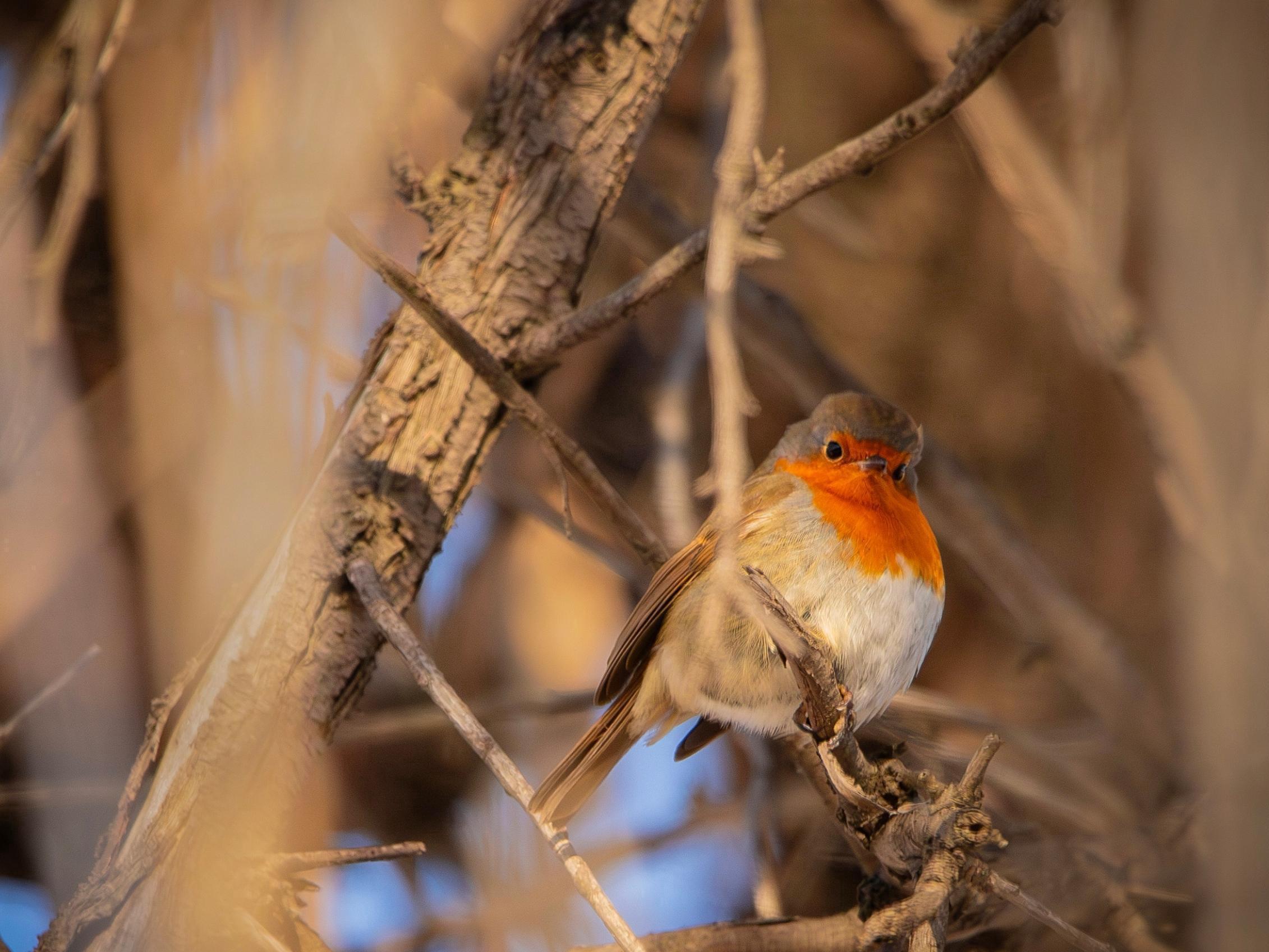

Photographing a European robin is difficult due to its timid nature.
Source:
Volgograd-based artist and miniature painting master Marina Yudina managed to capture a European robin — a small bird with a bright orange patch on its chest. Spotting it in the wild, let alone getting a good shot, is quite difficult due to the bird«s timid nature.
«A tiny bird that I noticed because of the orange patch on its chest and face,» — says Marina Yudina. — «In the rays of the setting sun, flying through the reeds and branches, it really looked like a little fire. It perched on a tree branch at the top of a small but steep slope, and I was at the bottom, and because of its small size, my «telephoto lens» couldn«t see it well; I had to crawl on all fours to get shots of it. Slipping and sliding, climbing back up and trying to find some kind of foothold… While I was fussing down there, it sat on its branch and seemed to watch my attempts to reach the top with mockery and superiority. In total, out of several attempts, one »shot« turned out successful, and then a dog scared it off and it flew away.»
The photographer encountered the robin at the SNT «Dubovaya Balka» (a gardening cooperative) in the Angarsky area of Volgograd«s Dzerzhinsky District. Marina Yudina admitted that she would like to take more photos of this bird and its relatives, but the weather conditions in Volgograd so far do not allow her to carry out her plan.
«I want to go «shoot» it again, what a thrill it is!» — Marina Yudina exclaims. — «But the weather in Volgograd is like a roller coaster, ugh… A nightmare: after frosts, a sharp warming, mud, slush, puddles and ice, and now suddenly a sharp cold snap and snow has fallen, but there is still ice under the snow, so dangerous… And scary. But never mind, I«ll get to it yet!»
Viktoria Faifer, an assistant at the Department of Biology and Bioengineering of Volgograd State University (VolSU), confirmed that the photo indeed shows a European robin. According to her, in Volgograd these birds sometimes stay for the winter thanks to the relatively mild climate.
«The European robin, also called the redbreast or simply robin. It is distributed throughout Europe up to Western Siberia. Generally, it is a migratory bird, but since winters in Volgograd are relatively mild, some robins stay for the winter. In summer, their diet consists of insects, but with the onset of cold weather they can also eat berries and seeds. Interestingly, they can sing not only in the morning but also at night, and may start singing long before dawn. This is probably where its name comes from: a bird singing at dawn, and the color of its chest also suggests such an association.»
Earlier, Marina Yudina photographed waxwings and fieldfares feeding on juniper berries in the same Angarsky area.
Read more