Five Touching Tales from Irkutsk Zoos
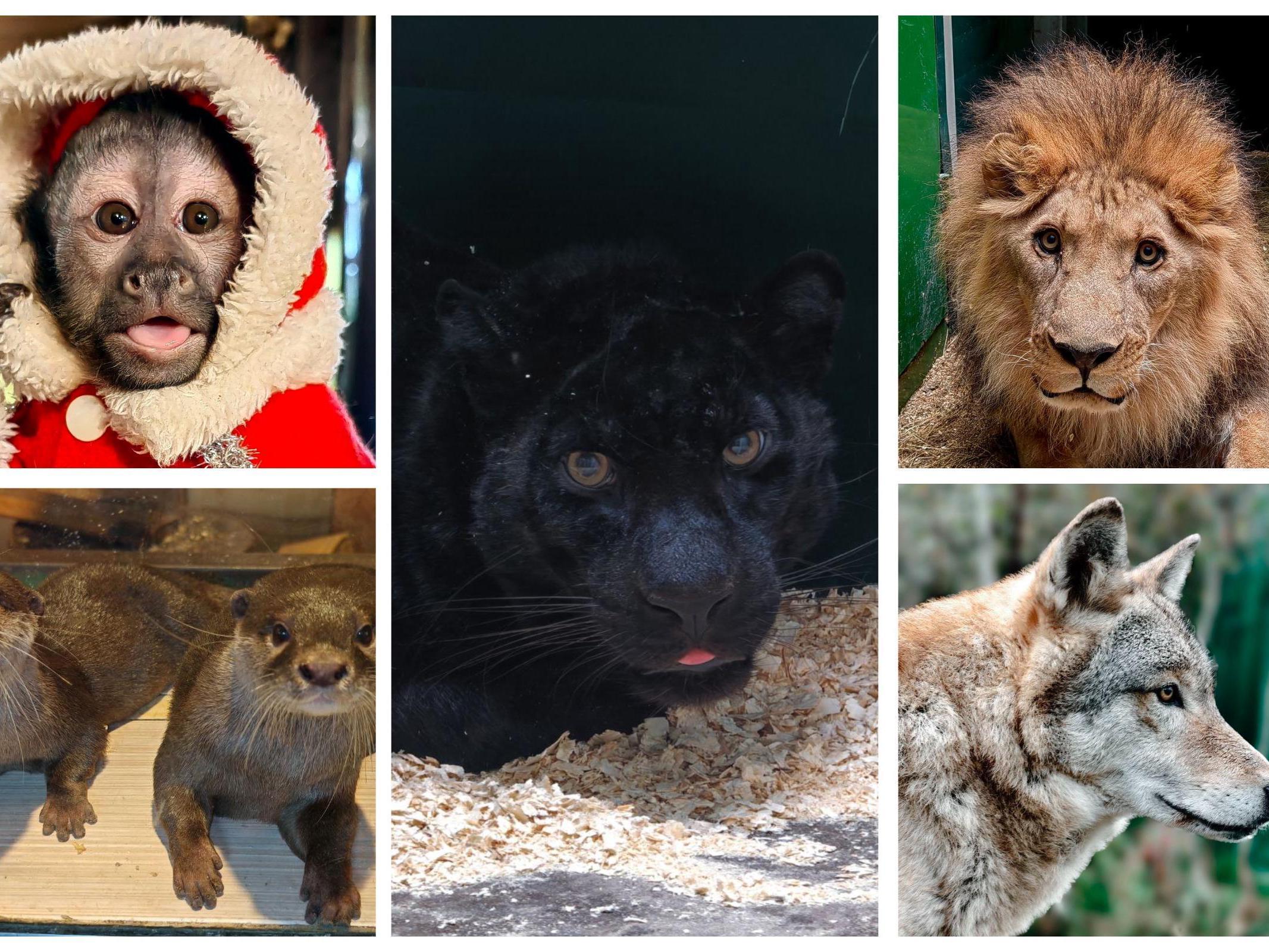

Almost every resident of Irkutsk«s zoos has a tragic story. These animals weren»t supposed to survive, but they did. They didn«t know how to trust people because they were betrayed, but they managed to believe in love again. In this article, we recall the five most poignant stories about pets that impressed the editorial board of »IrCity« in 2025.
From a Tiny Bundle in a Cramped Box to a Majestic King of Beasts
Gosha the lion from Irkutsk Zoo is over twenty years old, which is rare in itself. In the wild, these impressive cats don«t live to such an age, and even in captivity, such long-lived lions are almost unheard of. Gosha is a true legend of Irkutsk.
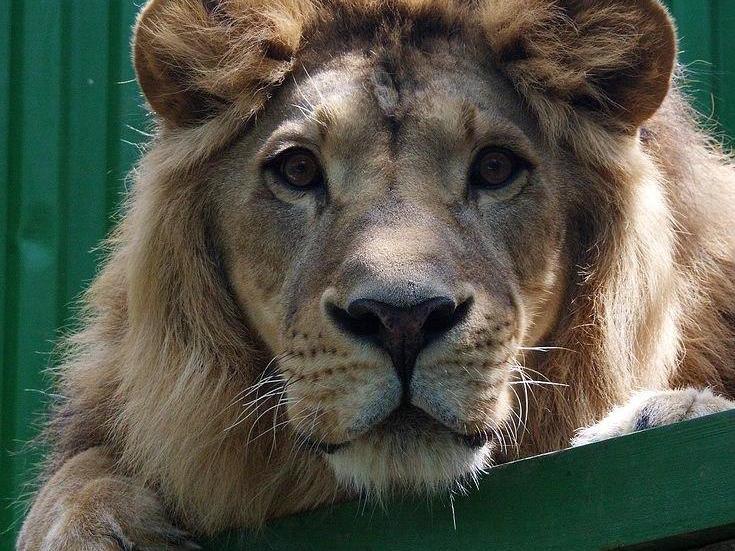
Gosha arrived in our city as a lion cub — weak, emaciated, and frightened. He was brought in a cramped, smelly box in critical condition. The cub didn«t know proper care and attention, and his hind legs had already failed from exhaustion. The little predator could only emit barely audible squeaks.
At that time, no one could say whether this tiny, unfortunate bundle would survive. Zoo staff nursed the baby for a very long time — treating him, feeding him on schedule, keeping him warm, and staying by his side. And a miracle happened: Gosha survived and grew into a big, strong lion with the character befitting these regal animals.
A separate chapter in Gosha«s life was the lioness Sarabi, who was specially brought for him from another city. Their acquaintance was cautious — first through bars, under the supervision of specialists. But gradually, a real bond formed between them. Gosha and Sarabi became a pair that produced offspring three times.
Now Gosha is almost completely blind, has become worse at navigating space, and requires constant attention. He is fed by hand, people talk to him, warn him of every movement — and he recognizes the voices of those nearby. Even having lost his sight, Gosha hasn«t lost his dignity: he is still a lion, just very old. And he still loves his wild cat Sarabi.
The Man-Eating Panther with the Cute Name Tortik
Also in Irkutsk Zoo lives the man-eating panther Tortik. This is a black leopard who ended up in the zoo gallery because he attacked a child in a traveling circus in Angarsk. After the incident, the predator lived for half a year in a tiny cage in the industrial zone of Usolye, and when the light and heating were cut off in winter, the leopard almost died from the cold.
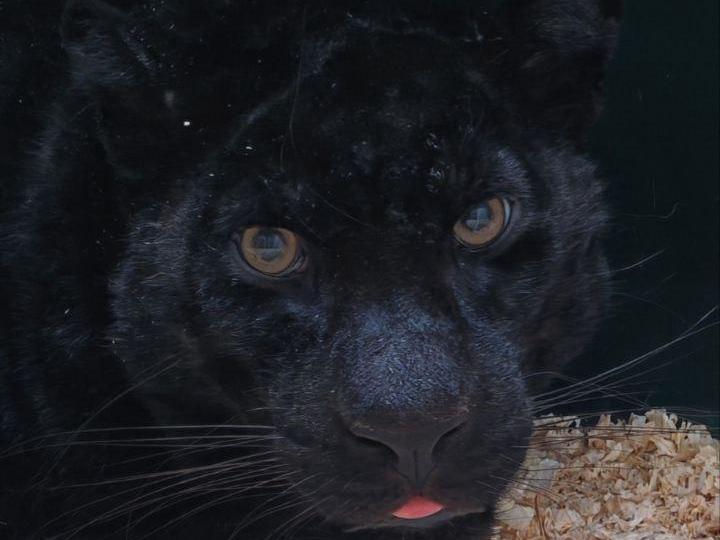
Upon learning that the panther and his unfortunate companions — pelicans, a crocodile, and pythons — were literally freezing in a trailer without amenities, Irkutsk Zoo staff rushed to rescue the animals. Tortik had to be transported under sedatives: his psyche was so damaged by prolonged stress and living conditions. At the new place in Irkutsk, he initially panicked when leaving the cage, didn«t understand what was happening, and was very frightened by light and people.
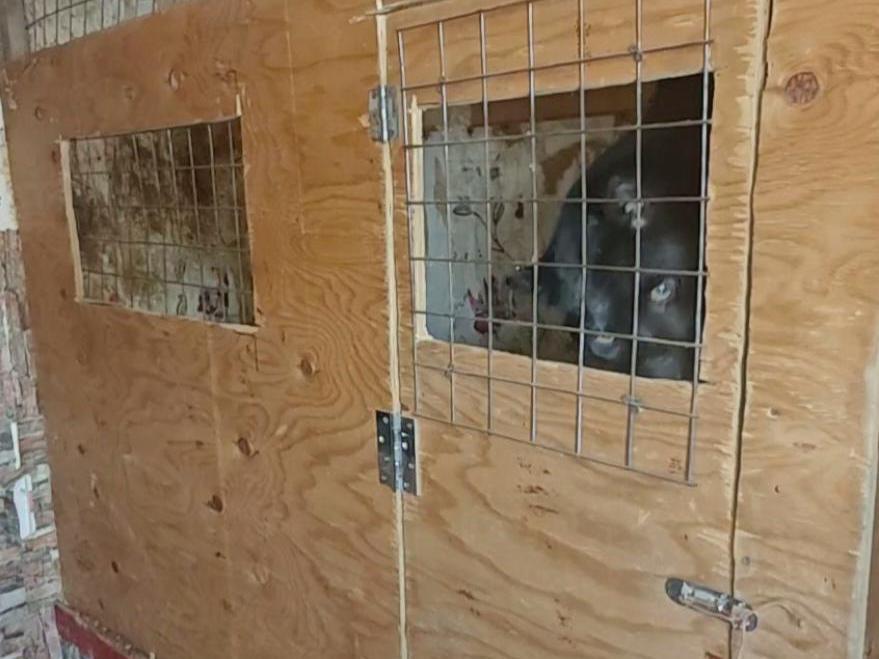
He had to recover for a long time: the leopard had problems with his immune system, his fur was falling out in clumps, and his psychological state remained fragile. Over eight months, zoo specialists step by step brought Tortik out of deep anxiety — now he doesn«t go into a stupor at the sight of people and can walk around the enclosure instead of sitting in a corner.
Tortik didn«t get his current name immediately. First, the panther was called Victoria, and when it turned out that this was a male, he became Victor. His previous owners called him Torik for short, and at Irkutsk Zoo, they decided the leopard would be Tortik. As a symbol of softness and festivity, which were so lacking in his past life. Today, this once-frightened predator is learning to trust people and is ready to greet visitors at the Irkutsk Zoo branch on »Fortuna«.
The Capuchin Born by Caesarean and Raised by Humans
The little capuchin Chen-Chen was born on July 12, 2024, at Irkutsk Zoo Gallery, but his story began long before birth. His parents — Garrik and Chupa — themselves went through real adventures: the father wandered the streets for three months after escaping from an underground brothel, and the mother underwent difficult rehabilitation. Her health was undermined by traveling exhibitions.
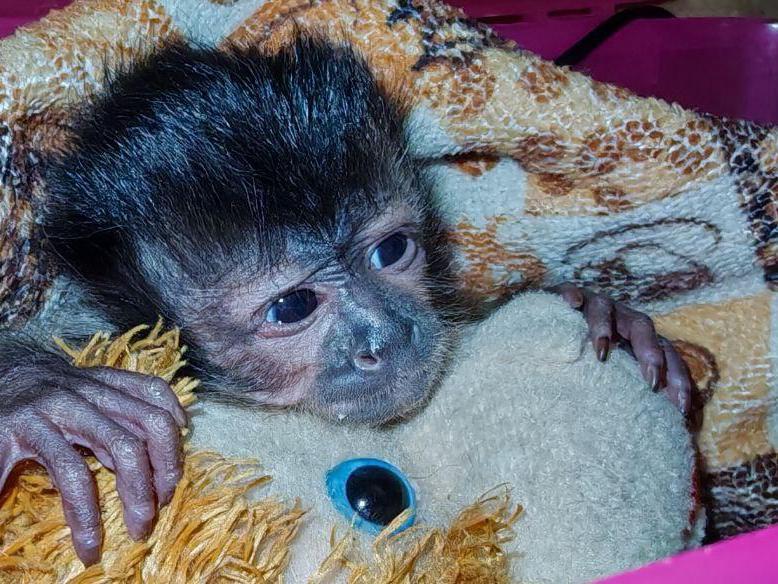
The first attempt by the monkey couple to become parents ended in tragedy — the newborn infant did not survive. But then Chupa and Garrik had a second baby — Chen-Chen. Born via cesarean section, he faced an unexpected problem: his mother rejected her baby. The zoo gallery staff had to hand-raise little Chen.
Now Chen-Chen is 1.5 years old, he lives in the home of Irkutsk Zoo Gallery owners Lyudmila and Vadim Ivushkin. He only appears in public on major holidays, so that zoo guests can also admire him. There is no talk yet of relocating him to a permanent exhibition.
— He«s just still very small. He»s our boy, and we can«t part with him. Our Chenchenka still demands a pacifier at night, he can»t fall asleep without a bottle of milk. If it«s not there, hysterics start, screams, and we can»t do anything about it. He«s still a child, our beloved little boy. When he grows up and matures, we will, of course, move him to an enclosure, he will become a permanent resident of the exhibition, — said Lyudmila Ivushkina.
The Otters in Love Who Befriended a Monkey
Another interesting pair at Irkutsk Zoo — Asian small-clawed otters Den and Sandra. Their story is unusual because for a long time these cuties lived together with the monkey Oscar, who even taught them to climb trees.
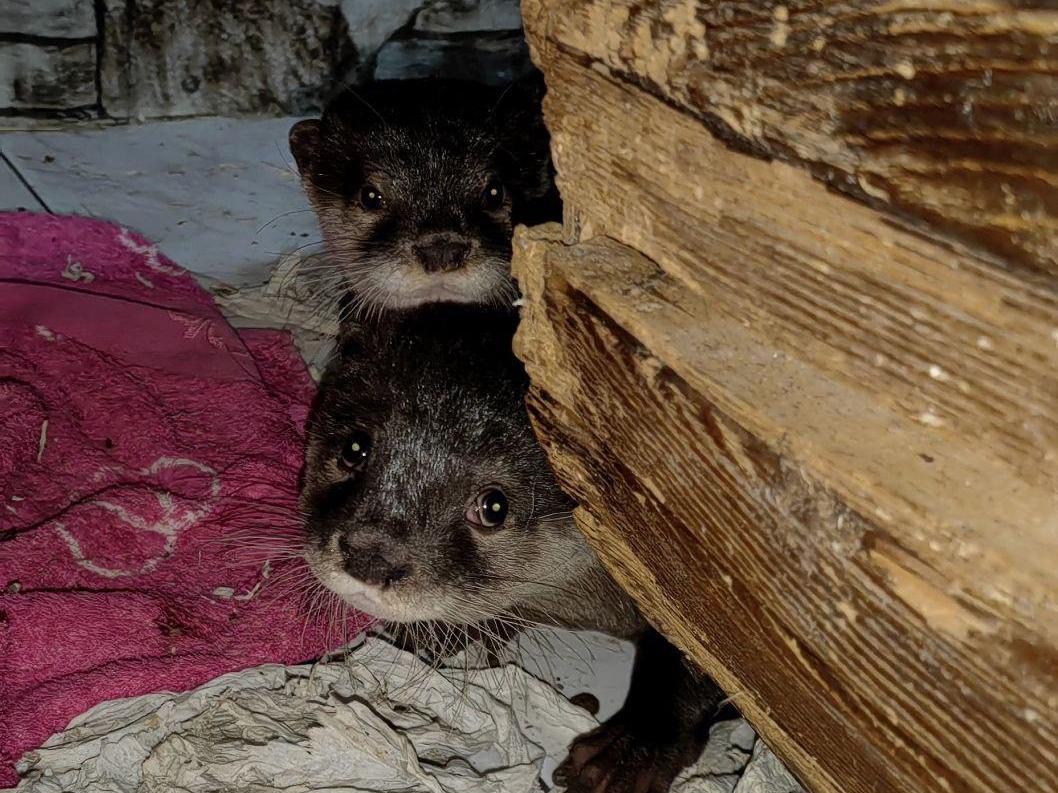
The history of the otters« appearance in Irkutsk began long ago: zoo director Lyudmila Ivushkina dreamed of such animals back in 2015 when she first saw them at Beijing Zoo. Fate smiled when one day an Irkutsk resident brought a young otter named Chika, or Chikita, to the zoo gallery. This female had offspring, and the zoo took one baby for itself. The little one was named Sandra.
Then a male otter named Den arrived in Irkutsk. Thus, a new pair formed at Irkutsk Zoo. This happened in 2023.
But the real star of this story is the monkey Oscar. During one of the walks, the baby otters met Oscar, and an unexpected real friendship arose between them. Animals living on different levels of the enclosures found a common language: they played, ran, and explored space together. Oscar even taught the otters to climb branches and live not only on the ground, which is not quite typical for them in the wild.
This idyll lasted almost two years, but when the otters grew up, disagreements arose between them and Oscar. Den and Sandra spent more and more time together, cuddling with each other, and Oscar, accustomed to active games, began to get jealous and even tried to pull them apart to different corners. Realizing that it was better to create their own space for each, zoo staff made a decision: Oscar moved to the branch on «Fortuna» to his mother, and Den and Sandra remained in the «House of Nature».
The Wolf Who Knew Love and Raised His Own and Others« Pups
Wolf Serega lived at the Siberian Zoo in Listvyanka for nine whole years — and during that time, his fate became almost legendary. He was brought to Irkutsk as a wolf cub from Chita, where he was rescued from poachers. Little Serega was then like an ordinary puppy: friendly, playful, and completely tame.
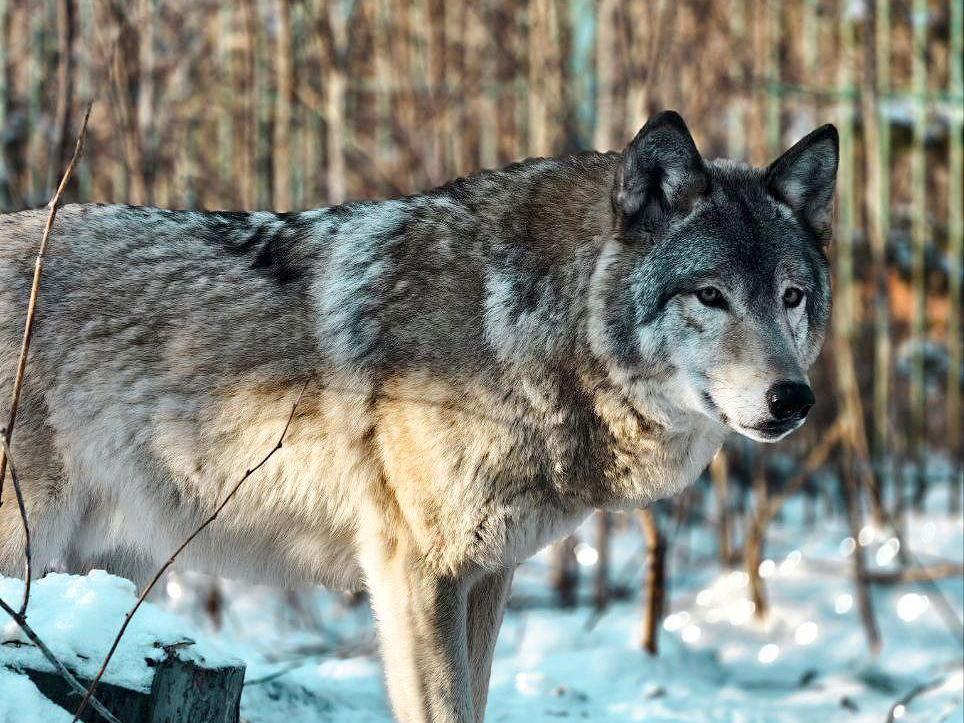
As Serega grew up, he became more and more like a real wolf: cautious, formidable, severe. Many zoo staff were afraid to approach him, and only one person became his true friend — Andrei Abramov. He socialized the predator, walked with him, and accepted Serega as he was.
Serega«s first love was the Alaskan Malamute Romy. They had a wolfdog Aurora, who remained to live with her parents at the zoo. Serega and Romy»s love was strong but tragic: due to poison that dog hunters scattered around Listvyanka, Romy died, and Serega took a long time to recover from this.
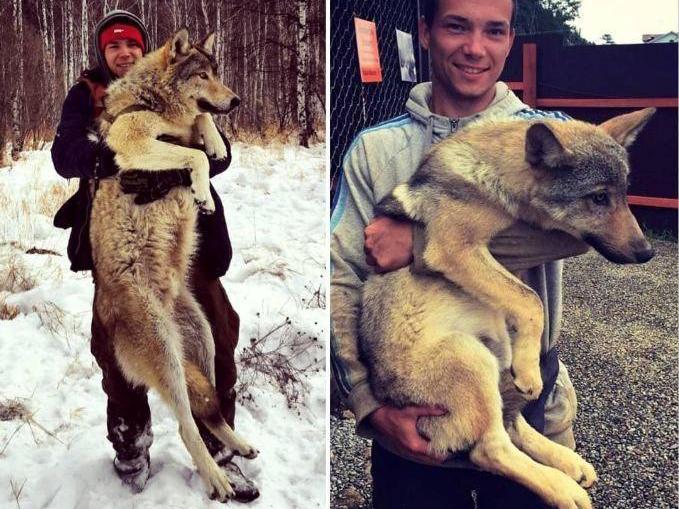
To help Serega, they found him a new companion — the she-wolf Amelia from Bratsk. Their relationship was not easy, but gradually they got used to each other, and they also had offspring — the she-wolf Daria, who still lives at the zoo branch in Listvyanka.
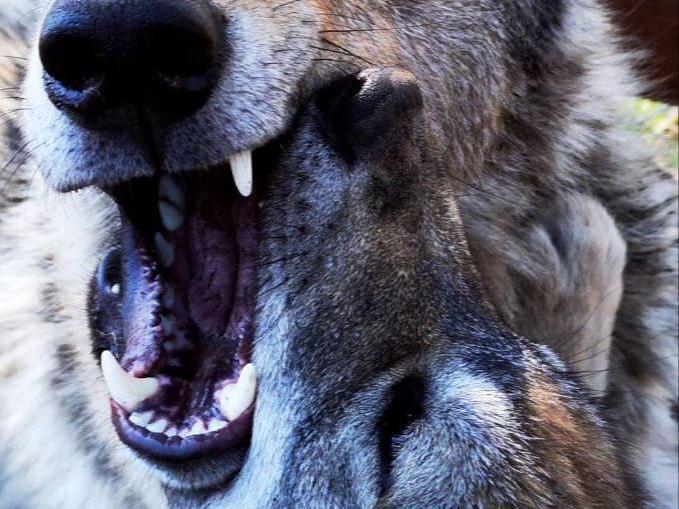
Besides his own children, Serega also raised adopted ones — the mixed-breed dog Alfa and Malamute puppies. How the wolf cared for them amazed and touched everyone around. Serega became a symbol of friendship between humans and wild wolves, and this story was even filmed by French documentary filmmakers.
Unfortunately, in mid-December, Serega became seriously ill. Due to his advanced age (and wolves in the wild live only 8–10 years), the predator developed vascular problems, and against this background — epileptic seizures. For a whole week, Serega was taken for drips, but they didn«t help much. The predator weakened and couldn»t get up.
On December 23, Serega died. He passed away quietly in his sleep.