A Benefactor from Hell: How Kurgan's Homeless Children Found Their Final Home
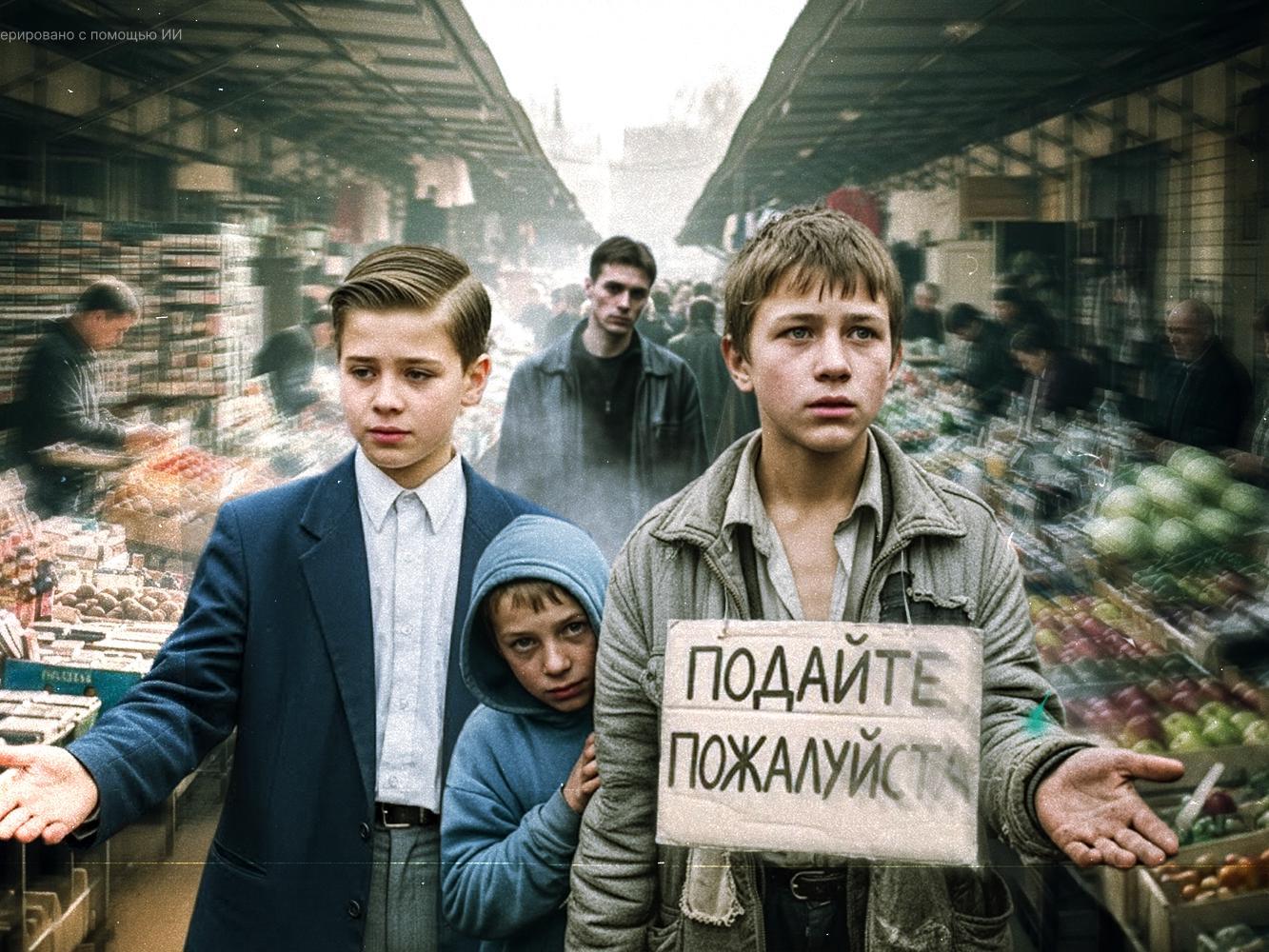

In Kurgan in the 1990s, it was common to see homeless children on city streets near stores, asking for «a few kopecks for their daily bread.» Many passersby, pitying the boys, would give them a couple of coins or small bills. Most of these children came from families where alcohol replaced a proper diet. The children quickly learned the lesson: the street was safer than home.
Fateful Meeting
In Kurgan in 1998, the Central Market became the entry point to his final «home» for twelve-year-old Vova Sh. Here he met two homeless children: Seryozha T. and Yura Ch. The boys were already living at a dacha by Lake Kalach under the patronage of 21-year-old Sergei L. They invited Vova to join them. The boy, who had run away from home after a routine quarrel with his father, accepted the offer, not knowing he was signing his own death warrant.
Vova lived at Sergei«s dacha for just one day. Realizing he had ended up in a concentration camp, he decided to return home. The boy refused to play the role of a servant and tried to leave, but the »benefactor« quickly brought him back. Within an hour, Sergei methodically beat the child. He used a hammer, nunchucks, knives, and a wooden stick. This was not a burst of anger—it was a planned torture. Sergei didn»t just beat him; he forced the other boys to participate in the violence.
The finale happened on the second floor to the deafening sound of a tape recorder. No, the music wasn«t for Sergei»s mood, but to isolate the victim«s screams. When physical violence tired the murderer, he moved on to technical execution. After tying Vova»s hands and putting a jersey over his head, he fashioned a noose from an electrical wire. But the last step in Vova«s torment, the »benefactor« made little Seryozha T. do, by terrifying him to death. Fear for his own life turned out to be stronger than morality; Seryozha kicked the stool out from under his comrade»s feet. The body, packed in two bags, was later dumped by Sergei L. into Lake Kalach with the words: «We»ll get rid of the corpse.«
Witnesses Beyond Morality
According to a crime feature in the city newspaper Kurgan i kurganets, months later during interrogations, Seryozha T. and Yura Ch. described the murder details with frightening detachment. What is a psychological catastrophe for an ordinary person was, for street children, just another link in the chain of everyday violence. At age 12, their emotional threshold was so high that Sergei L.«s cruelty didn»t cause shock—only the instinct for self-preservation. They weren«t monsters; they were products of an environment where compassion is a sign of weakness and leads to death.
The tragedy could have been avoided if social filters had worked in time. After his mother was deprived of parental rights, Yura Ch. couldn«t be transferred from the reception and distribution center to an orphanage due to administrative failures. Seryozha T., whose criminal experience began with his mother»s live-in partner (a professional thief), also remained at risk—his mother hid from the guardianship authorities. Incidentally, Seryozha had repeatedly helped police solve crimes committed by his «stepfather.» The system knew about each of them, kept records, accumulated files with documents. But in fact—it left the children on the street, to their own devices.
Genesis of a Criminal
21-year-old Sergei L. is the logical outcome of judicial liberalism. As a minor, he already had a suspended sentence. Juvenile inspectors repeatedly demanded the suspended sentence be replaced with actual prison time, foreseeing an escalation of violence, but the court ignored these requests. As soon as he turned 18, he was taken off the register. Believing in his own invulnerability, Sergei transformed his accumulated criminal experience into destructive leadership. The dacha by Lake Kalach became his personal citadel, where he could with impunity try on the role of «master of lives,» exploiting teenagers« need for authority.
The end of this story is cynical. Vova Sh. died, becoming a random victim. Seryozha T. and Yura Ch. were sent to a special school—the only place that could be offered as an alternative to the street. Their «salvation» became possible through complicity in murder. The system noticed them only when the body of a twelve-year-old boy had grown cold on the shore of Lake Kalach.
It«s convenient to follow Kurgan news in our Telegram channel! We tell about everything important and interesting happening there. By subscribing, you will be the first to know this information. To join, click here.