Sochi's snow-making system can cover more than just the Caucasus
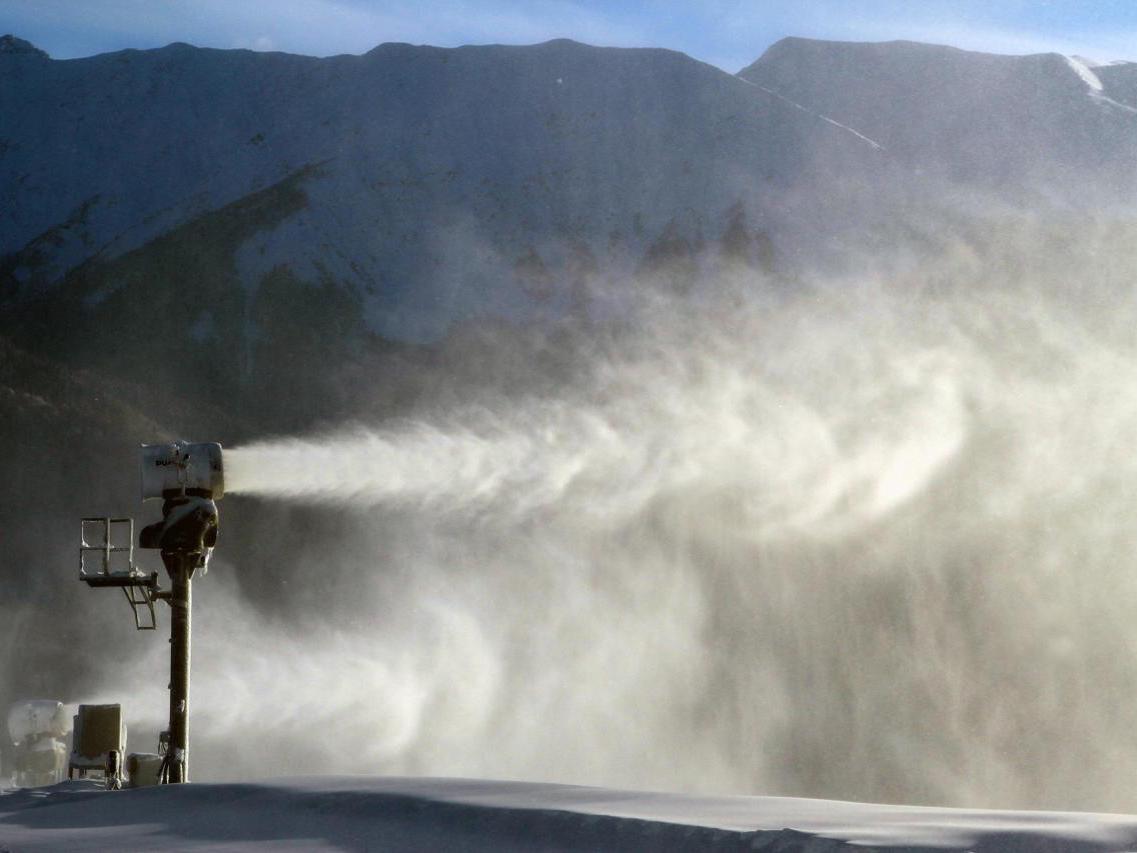

A snow gun in operation on the slopes of a ski resort.
The 2026 Winter Olympic Games will take place from 6 to 22 February in Milan and Cortina d«Ampezzo. Organizers are facing a problem—a lack of natural snow in Italy and an insufficient budget to make artificial snow. More than three million cubic meters are needed for the courses. Representatives of the International Ski Federation (FIS) have expressed concern that the freestyle skiing and snowboarding events may not take place. Upon learning this, four-time Olympic biathlon champion Alexander Tikhonov suggested hosting the Games in Sochi.
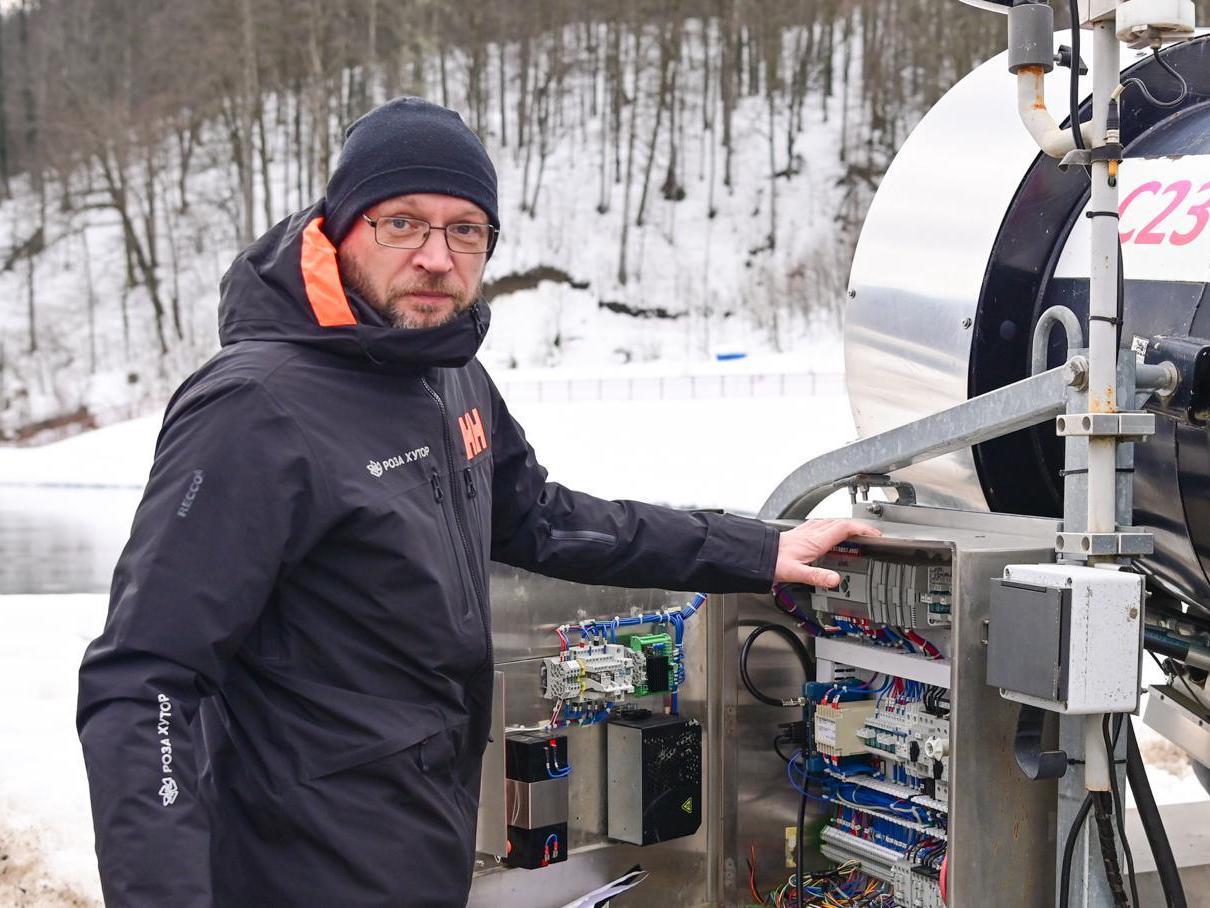
Vyacheslav Soldatenkov, the head specialist for artificial snow production.
«The best Summer Olympic Games were in 1980 in Moscow. The organization has never had anything better. That»s the opinion of everyone who was at those Games. The Sochi Games in 2014, apart from a few moments, were wonderful. The sports facilities were of the highest level; no one has ever built anything like them. No one will ever host a Winter Olympics better than Sochi in 2014. Many skeptics who announced a boycott of the Sochi Olympics later regretted it! Palms at the bottom and a sea of snow at the top. In this regard, the Olympics were top-notch. This proves once again: everything will work out if we want it to, and if professionals get involved—which is a big problem here in Russia. If our people weren«t sleeping and there was professional management, we should have insured ourselves long ago and even spent money, saying: »Come to Sochi, we are ready to host you!«. I have no doubt it would have been a repeat of the best Olympics,» declared four-time Olympic biathlon champion Tikhonov in an interview with «Soviet Sport.»
A close-up view of the dense, compacted snow on a slalom course.
There is indeed enough snow in Sochi. Its possible shortage was one of the criticisms of the Russian resort, which won the right to host the 2014 Winter Olympic Games in 2007. German newspapers ran headlines at the time: «Better an Olympics without snow than a winter without Russian gas.» Russia guaranteed the presence of snow.
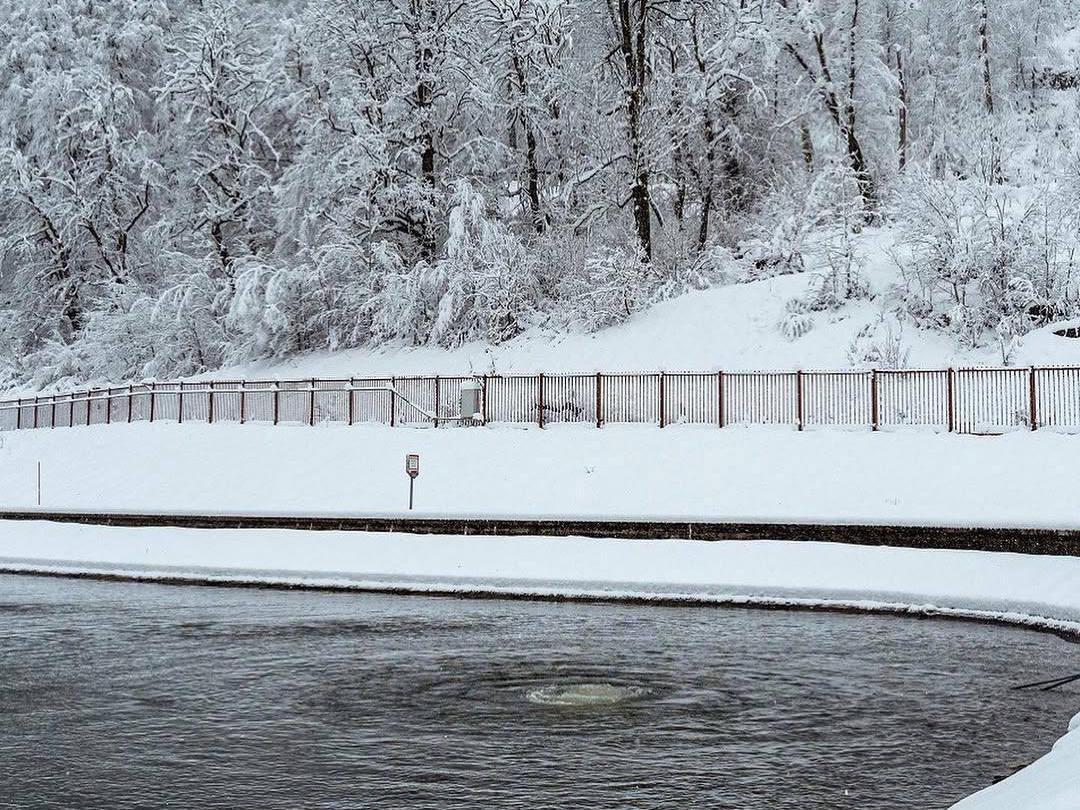
A technological lake built specifically to supply water for the snow-making system.
Snow with a guarantee
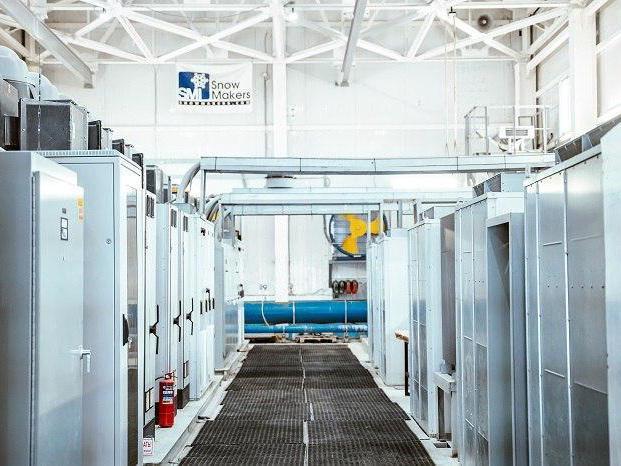
Powerful pumps that move water uphill through an extensive network of pipes.
Vyacheslav Soldatenkov, head of the artificial snow service at the «Rosa Khutor» resort, doesn«t remember the preparations for the 2014 Winter Olympic Games well. He rarely got enough sleep in those days. They were making snow. For this, the largest snow-making system in Europe was created—404 snow guns. It was necessary to cover more than 50 million square meters of Olympic venues with snow.
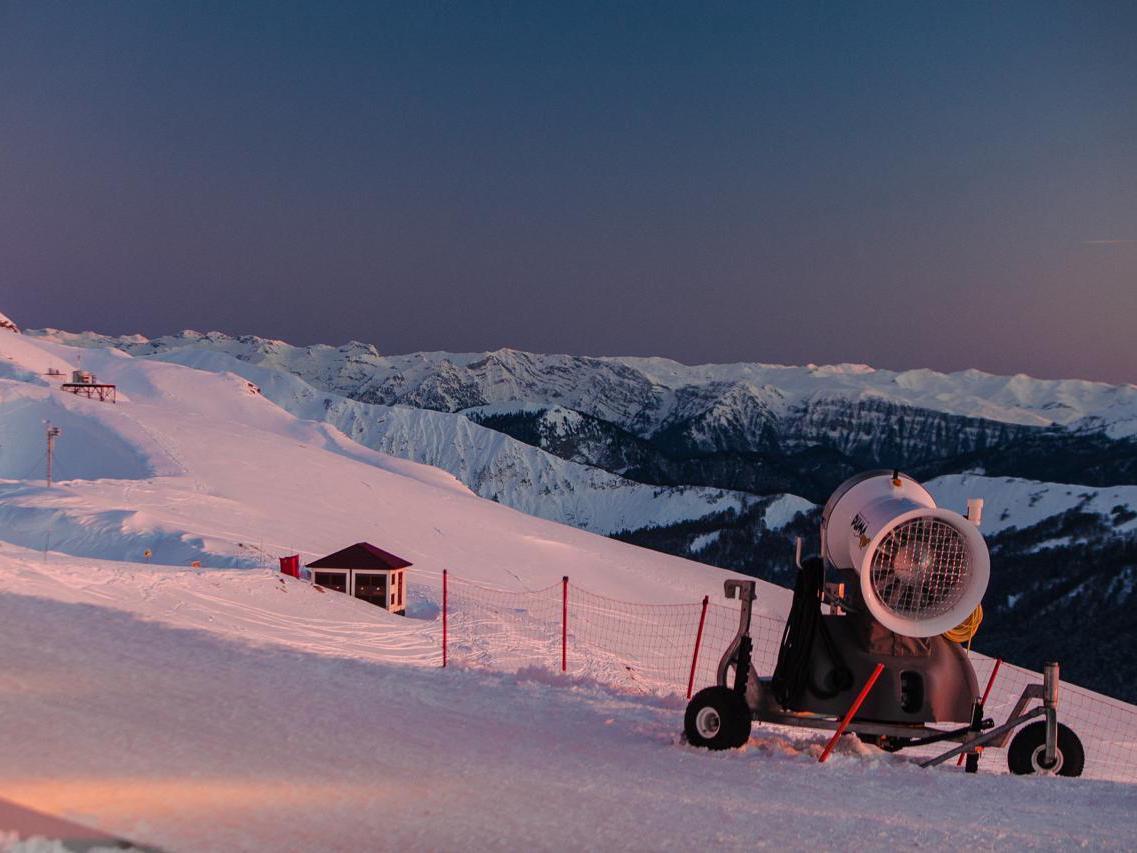
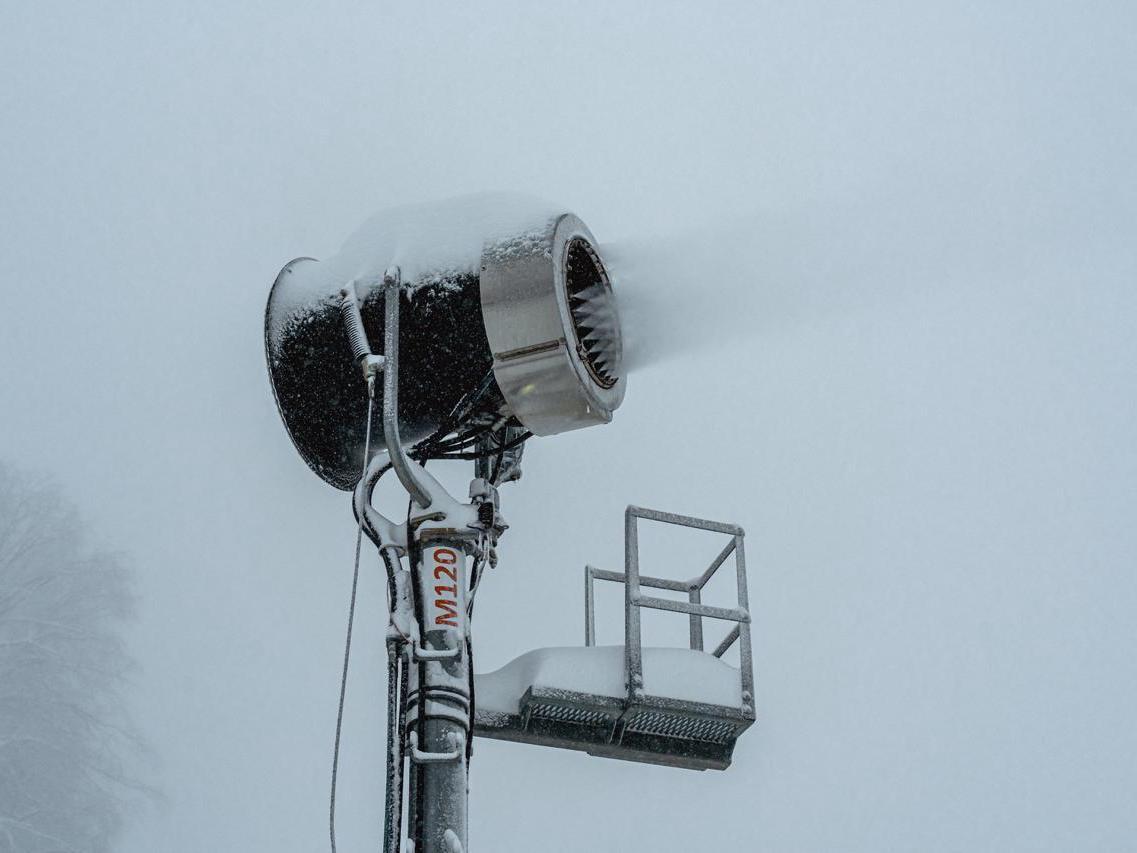
Over 400 stationary and mobile snow guns are deployed across the mountain.
«In natural snow, water droplets freeze in the shape of the familiar lacy snowflake, while in artificial snow—in the shape of a crystal. Because of this, artificial snow is denser, it is less susceptible to external factors—sun, rain, fog, and retains its consistency for a long time. It doesn»t matter if the area is in the sun or shade, it will be roughly the same density, meaning there is no transition when a skier goes from ice into «slush». All this helps make skiing safer and create equal conditions for athletes. Therefore, artificial snow is used during major sports competitions,« explained Vyacheslav Soldatenkov.
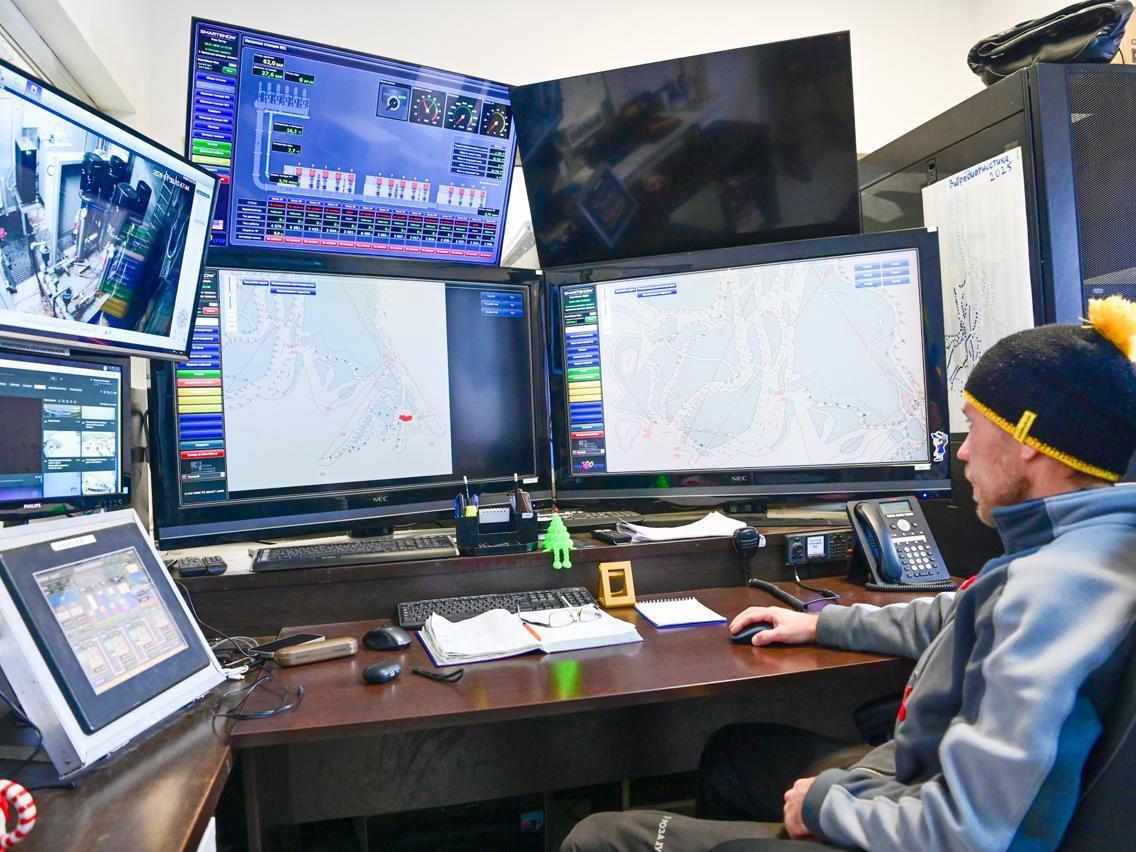
Operators monitor the entire snow-making process from a central control room.
During the 2014 Winter Olympic Games, the largest number of Olympic medals were awarded at «Rosa Khutor»—30 out of 98; competitions were held in all disciplines of alpine skiing, snowboarding, and freestyle skiing. And for each, its own, special snow was needed.
«During the Olympics, we constantly weighed the snow. We took a cube with a side of 10 centimeters, found out its mass, and made the necessary calculations. A special team of employees from the IOC and FIS controlled the readiness of the slopes for competitions. At daily meetings, we received instructions: which gun should add snow where, of what quality, and for how long. The hardest snow had to be on the slalom course: 750 kg/m3 so the course would wear down less. In this case, the course is initially made »wet,« and then it freezes. And on the mogul course, we had to »spray« exactly five centimeters of snow every night—not to improve the quality of the surface, but exclusively for the TV picture: it looks beautiful when athletes ride and »make waves«,» explained the snow-maker.
To guarantee snow for the 2014 Olympic starts, more than one and a half million cubic meters of snow were made.
Last year«s snow
The resort also stored last year«s snow. This technology is not new; it is used in a number of European countries. In Switzerland, Norway, and France, snow is preserved for early cross-country skiing and ski jumping competitions, but nowhere on the scale of Russia.
A year before the Olympic competitions, 450,000 cubic meters of snow were collected on the slopes of «Rosa Khutor.» It was securely covered with a special blanket made of isothermal fabric that reflects sunlight. The total area of such «blankets» was 120,000 square meters. By the way, they were produced in Russia to a special order and differed from existing analogues by being twice as thick and having a double reflective surface. 200 people were involved in snow harvesting, 24 snow-grooming machines worked around the clock, and it cost over 250 million rubles (approximately $3.5 million at current rates).
The strategic snow reserve was necessary in case of very warm weather. After all, even technology cannot overcome the laws of physics; the snow-making system requires sub-zero temperatures to operate. Today in the mountains of Sochi, snow is made not for athletes, but for amateur skiers and snowboarders. Thanks to this, the skiing season lasts about 140 days.
Snow factory
It would seem that snow is simple: a drop of water and a little frost. In reality—it«s a whole factory. It all starts with water. At »Rosa Khutor,« two technological lakes with a total volume of 153 thousand cubic meters have been created. Water flows into them from a natural stream, so clean that it requires no additional preparation; it just needs to be cooled.
«For the snow-making system to work, about 60 kilometers of pipes are laid underground at the resort. Through them, water goes, among other places, to a cooling tower for forced cooling. For example, the water temperature under the ice in a reservoir is +4°C (39°F); we try to cool it to +2°C (36°F), and our record is +0.5°C (33°F),» said Vyacheslav Soldatenkov.
After the cooling tower, water goes to five pumping stations. They pump water up the mountains. The power of each is up to half a megawatt, and there are 14 such devices at just one station. It turns out the consumed energy is enough to «light up» a small village of 300 houses or turn on 5000 electric kettles. This snow is not a cheap pleasure.
«Water from the pumping stations is fed to the snow guns. There are 404 of them at the resort, 22 of which are mobile. Stationary guns are installed at a distance of 80-100 meters from each other. Locations were chosen based on the wind rose and the area that needs to be covered with snow. A power source and a hydrant are connected to each gun,» shared Vyacheslav Soldatenkov.
And at night they make snow
A snow gun has two main circuits. The first receives an air-water mixture, creating crystallization points. The second circuit contains water nozzles. As a result, water «freezes» around the crystallization points, and the snow is ready. The gun«s performance depends on the ambient temperature. The maximum temperature at which you can »make snow« is minus two degrees Celsius (28°F), the optimal is minus ten (14°F).
«Each gun has its own microcontroller and weather station. All data is »collected« in the control room, and based on it, it is determined what to do with the device—turn it on or off, which operating mode to choose. But the quality of the snow is controlled manually. The simplest test is how high a snowflake »bounces« off a jacket. Does the snow stick to the clothes? It»s too wet; you need to reduce the water supply. And if the snow crystal «flies off» high—it«s too dry; that also needs to be adjusted. For comfortable skiing, »softer« slopes are needed, with a snow density of about 400-500 kilograms per cubic meter,» says Vyacheslav Soldatenkov.
The snow-making process is managed from a single control room, akin to a flight control center. The monitors show all the information about the system—pressure in the pipes, the operation of the pumps, and each of the more than 400 guns. Commands are sent from here into the system. However, people are indispensable. 22 specialists work in the artificial snow department of the «Rosa Khutor» resort. The first requirement when hiring for the «Snow Control Center» is that the person has a higher technical education. That is—a necessary foundation. To train a snow-making specialist who will work easily, it takes about two years on average. You need to know hydraulics, pneumatics, automation, relay circuits, engines, and perform all metalwork. And, of course, confidently stand on skis or a snowboard. When the resort is open and people are skiing, moving between guns and controlling the system can only be done this way.
«Most often we make snow at night, after the slopes close. First, a base layer is formed, and then work is done on specific areas where there is a lack of snow. Then snow-grooming machines—huge snow-compacting machines—come out to work; they shape the slopes for skiing so that everything is ready by morning. On average, we prepare 800,000 cubic meters of snow per season. This year, more than 600,000 cubic meters have already been made. We are waiting for sub-zero temperatures and are ready to continue,» says Vyacheslav Soldatenkov.
By the way, nature itself helped people guarantee snow during the 2014 Winter Olympic Games. Few know, but the snowiest place in Russia is not in the Urals or Kamchatka, but in Sochi, 15 kilometers from the village of Krasnaya Polyana in the area of the former «Achishkho» weather station. This place has even been named the «pole of humidity and snowiness of the Caucasus.» The snow depth there reaches eight meters (26 feet 3 inches), and the average long-term precipitation in the cold period is 3242 mm, 5-7 times exceeding the figures for Dombay and the Elbrus region.