'It pulled me through': Tyumen man openly shares life with HIV


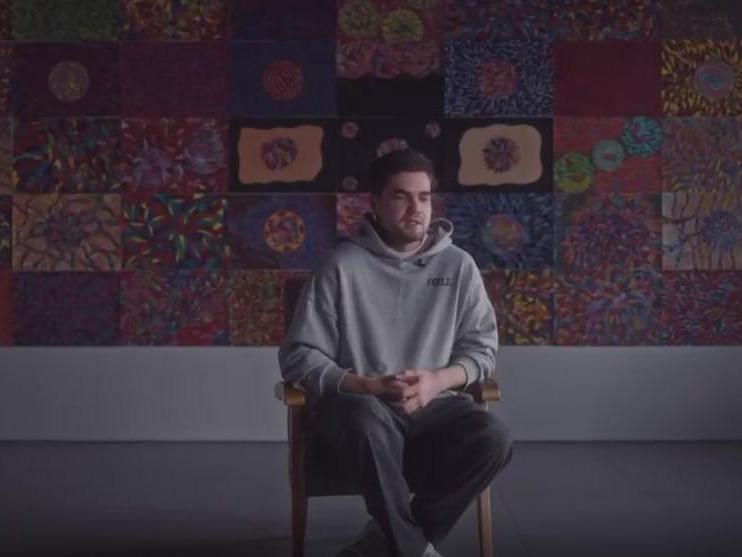
A documentary film titled «Positive» has been released for World AIDS Day. It tells the story of a Tyumen resident named Dmitry, who is now 26. Three years ago he learned he was HIV positive. The video also features his friend Alina, doctors, and anonymous HIV-positive individuals.
Dmitry«s story shows that a diagnosis is not a death sentence, but merely a part of life.
«It all started when I lost my job. It was a difficult period. Then there were moves, I was searching for myself. I lived in Moscow, St. Petersburg, and many other places. I returned to Tyumen, started to stabilize here and that»s when I met Alina. With Alina we had a connection. She was able to motivate me and support me,« the Tyumen resident began telling his story in the film.
Dmitry«s friend – Alina – also appeared in the video. The girl not only befriended him but supports him. She recalled that the news of his status was unexpected for her and their other mutual friends.

«He had a depressive period, there were situations... partly he probably didn»t want to live,« the girl said about Dmitry»s difficult time.
The young man confirms that nothing brought him joy in life.
«I had a certain depressive period, which I dealt with by moving, therapy, and then I learn about my status, about HIV,» he explained.
How did the Tyumen resident find out he had HIV? In a banal way. According to Alina, Dmitry started getting sick and went to get tested, including an HIV test. Previously, his results came quite quickly, but this time everything was delayed. The young man couldn«t bear it and started searching for information online, then bought an express test at a pharmacy. It gave Dmitry a result with a barely noticeable line. His fears were confirmed when he was called by the medical facility.
«I found out by accident, I just came to get tested. They called me and said I needed to come in. I already understood that I was positive,» Dmitry said in the video.
Dmitry«s friend assures that he has an understanding circle. And to many of the Tyumen resident»s loved ones, the story about HIV seemed something distant and not about him at all.
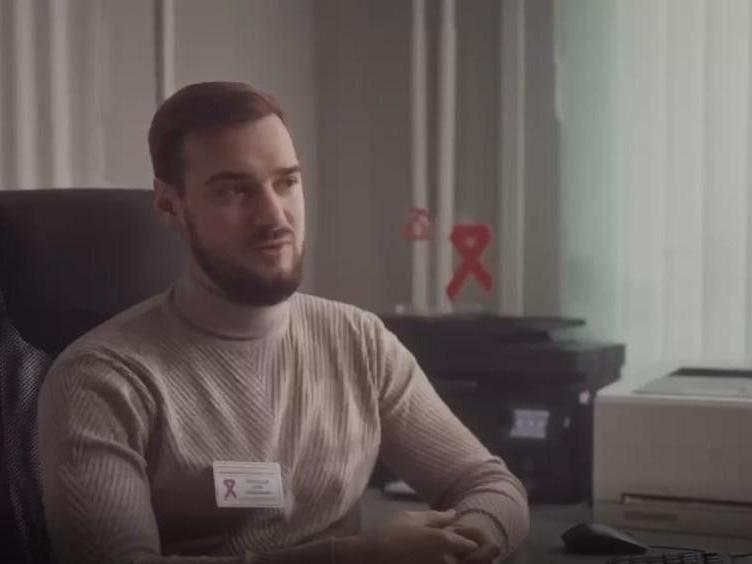
According to doctor Svetlana Petrova, epidemiologists are the specialists who first tell a patient about their positive HIV status.
«We begin communication with the patient. The epidemiological investigation includes who could have been the source of the infection, how the virus entered the body, establishing the transmission routes. Naturally, all information spoken in the office is confidential. The entire dialogue remains between us,» she said.
Yegor Cherkasov, a medical prevention doctor at the AIDS Center, explained that HIV is transmitted through three routes: sexual, blood contact, and vertical (from mother to child).
«Practically 90 percent of newly identified people with HIV infection were initiated precisely through the sexual route. HIV is not transmitted in everyday life: neither through using common objects (clothing, dishes), nor through handshakes, kisses, nor through saliva. In the 2000s and 1990s, the topic of so-called HIV terrorism was widespread. Supposedly, blades contaminated with the blood of HIV-infected people were taped to railings in stairwells, needles were stuck into seats in cinemas... If they did do that, not a single person in the world contracted HIV infection from it. This virus is unstable and dies in an open environment almost immediately,» he explained.
According to the doctors« conviction, a person with HIV can live a full life by following a number of recommendations with therapy. This is important for preserving the health of the patient and their loved ones.
Dmitry shared what thoughts he had the moment he learned about HIV.
«I didn»t have any bad thoughts that I learned my status and didn«t want to live. I have a bit of the opposite story. It pulled me through,» the young man explained.
Dmitry opened up about his status to the world and posted videos about it online. The young man says this made his life easier. The Tyumen resident believes that openness on this issue is an opportunity to help himself first and foremost.
«If we talk about getting on my feet, it»s sports. Over the three years since I learned my status, I«ve changed a lot. I do sports. It»s the only thing that could help me. I think it«s discipline. And discipline wins,» the Tyumen resident said in an interview.

The man also shared that he worried about shaking hands with people because they knew about his status.
«It was difficult for me to offer my hand to a person, to be the first to greet them. I thought they would refuse me,» confesses the Tyumen resident.
Doctor Yegor Cherkasov says that one cannot say that HIV is a story about disadvantaged people, about some wrong people.
«I walk the corridors and see what kind of people are sitting waiting for appointments. How they are dressed, what smartphones they have in their hands, what cars they arrive in. The vast majority are prosperous and successful people,» the medic adds.
There were also several off-screen remarks from people with HIV in the film. Particularly emotional and honest ones sounded at the end of the documentary.
«HIV is not a crime. You have nothing to be ashamed of, you have nothing to fear. You can calmly live on, be the same as before, just with pills.»
«I know for sure that you can live with HIV, you can have children and you can be happy.»
Dmitry also expressed an important thought about his openness and life with the virus: «Many people live a wonderful and good life, they just live... The same, only with HIV.»
We previously wrote that the age of people contracting HIV infection is changing in the Tyumen region. This was reported in a report by the regional department of Rospotrebnadzor (the Federal Service for Surveillance on Consumer Rights Protection and Human Wellbeing). Thus, according to the supervisory body, in 2024, Tyumen residents aged 30 to 49 were most often infected with HIV. The share of persons over 50 years old is 22%.