Kemerovo Investigator Exposes 5 Phone Fraud Myths


Did you know that a jar of jam could become evidence in an economic crime? And haven«t you wondered why scammers know everything about their victims before contacting them? And where do they call from anyway?
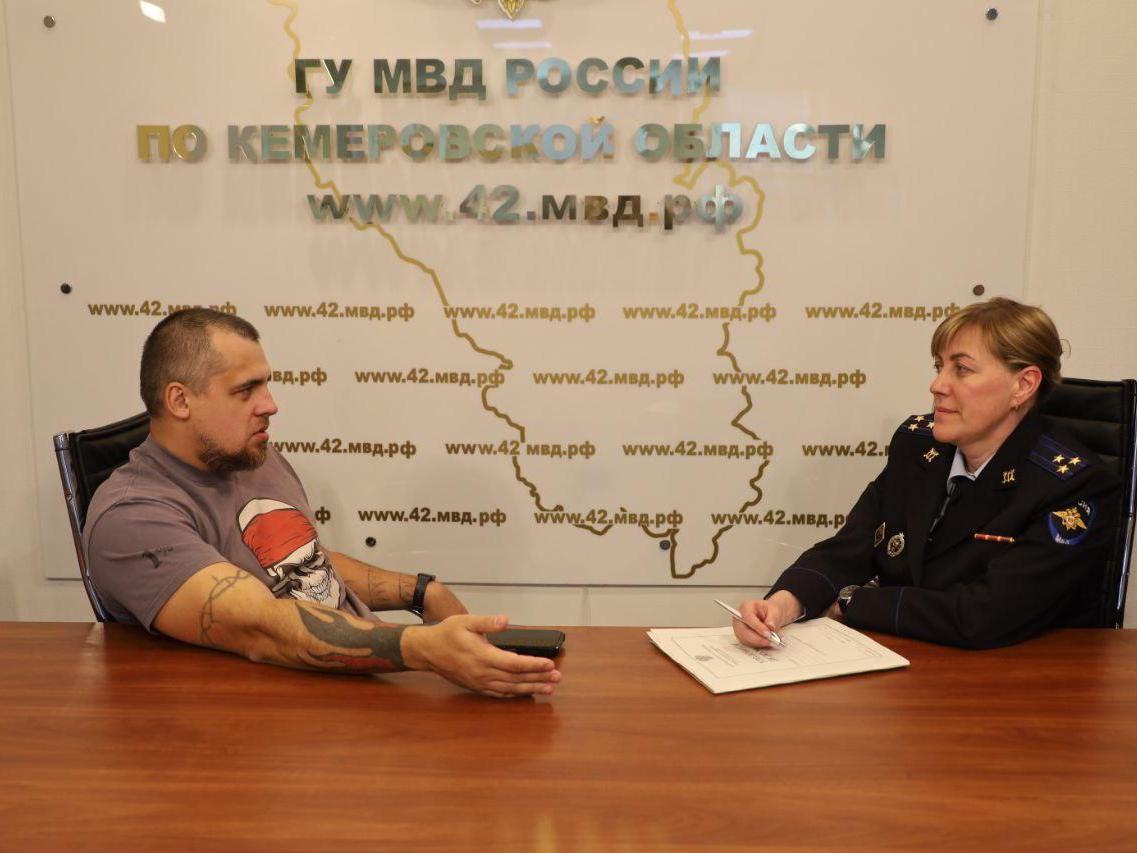
The editorial staff of NGS42.RU delved into many questions related to the scourge of our time – telephone scammers. In search of answers, we turned to Natalia Goloshchapova, head of the control and methodology department of the Main Investigative Directorate of the Russian Ministry of Internal Affairs for Kuzbass. In the «Criminal Tuesday» column, among other things, she explained where residents get the millions of rubles that they later give to scammers, and who most often loses all their funds.
Myth 1: Not Only the Elderly
Let«s immediately debunk the main myth that only pensioners become victims of scammers. According to the colonel, absolutely everyone is at risk, regardless of age or profession. As an example, the employee cited a relatively recent case where a middle-aged woman from Kemerovo, a municipal administration employee, fell for the tricks.
She knew about the schemes, but managed to believe the unknown callers and went to banks to take out loans. Two banks refused her, but the third time she was lucky – they could issue the required amount. But chance intervened – the city resident noticed a memo about cyber scammers and only then realized that she had almost made a total mistake.
One of the most surprising cases – when a university internet safety instructor in Kemerovo said goodbye to his money.
— A professor was called and told that they were FSB (Federal Security Service) employees. He transferred about 3 million rubles (approximately $42,900 at current rates). Everyone falls for it. Minors are also at risk; they are most often intimidated. They are told that their mom or dad could be jailed, for example, for sponsoring the Armed Forces of Ukraine. Panic ensues, the child tries to «save» their relatives and gives away all the money, — says the law enforcement officer.
As an example, she told of a case where a Kemerovo schoolboy, while his parents were sleeping, took out a loan of 500,000 rubles (approximately $7,100 at current rates) and transferred it to the scammers« accounts. When asked why he didn»t wake his relatives, the boy simply answered: he was afraid.
Another similar case was in Berezovsky. There, a 17-year-old girl, believing the scammers, took from home in a thermos 500,000 rubles, dollars, and euros. By taxi, she delivered the «ransom» to Kemerovo, handed it to a courier, and happily returned home. And only then did she realize how she had been scammed. Another unusual «container» – a jar of jam. A naive resident of Kemerovo stuffed 5 million rubles (approximately $71,400 at current rates) into it and handed the can to the criminals.
Myth 2: All Scammers Are in Messengers and Prisons
Lately, this thesis has been on everyone«s lips. In an effort to combat scammers, restrictions were even introduced on calls in messengers, but, according to Goloshchapova, this has not yet affected the situation.
— Criminals use all IT resources to gain access to accounts or «Gosuslugi» (the Russian government services portal). They closed some messengers – they moved to others. They even call landline phones, — notes the investigator.
By the way, criminals do not call from prisons, as many think. Currently, according to police data, most calls come from nearby foreign countries, including Ukraine.
According to the colonel, in crimes, couriers are often young people looking for easy money online. They think the job is easy: pick up a package, pass it on to someone else, not forgetting to take their cut of 1.5–2%. Considering that scammers now extort no less than 100,000 rubles (approximately $1,400 at current rates), it turns out that for half an hour of «work» they get about 2,000 rubles (approximately $29 at current rates). And then, when the authorities catch up with them, they face prison time.
— The most high-profile case – about a woman who gave away 46 million rubles (approximately $657,100 at current rates) that she inherited. A whole special operation was developed to detain the couriers with the participation of the victim«s relatives. The defendants in the case are awaiting sentencing, — said the publication»s interlocutor.
By the way, easy money threatens a quite heavy sentence – up to 10 years in prison.
Myth 3: They Knew Everything About Me!
People who have lost money often say that the criminals seemed to know everything about them, even though they were communicating for the first time. In some cases, scammers shoot in the dark: name several different banks, hoping to hit the right one, or mention the most common names. But there are also those who actually operate with real information, obtaining it… from the victims themselves.
— First, they call with a survey. They ask about attitude to the political situation, what kind of family, age, whether there are pets, and so on. A day or two, and sometimes a month later, the scammers call again, but now with a clear understanding of the person and manipulating the obtained facts, — notes the investigator.
As an example, she recalls a case where scammers from Yurga asked a resident to come up with a code word to supposedly conduct a «special operation» to catch scammers. She was supposed to hand over the money and say something. The woman didn«t overthink it and suggested the word »Barsik« – in honor of her cat.
Myth 4: «Mom, I Hit a Person!»
The «relative in trouble» scheme is not as popular as it was a couple of years ago. Largely thanks to numerous publications in the media, social networks, banners in stores, bus stops, and so on. Criminals have to adapt and find new manipulation options.
Another method – investments. The victim is offered to buy shares of some large company and live off the dividends.
— Recently, there was a case. A man sent several thousand for shares, soon he was returned twice as much and offered to bring a friend so that both would receive income. Naturally, they were deceived, — gives an example the police employee.
As mentioned above, in recent years, scammers most often pose as employees of the Ministry of Internal Affairs, FSB (Federal Security Service), Investigative Committee, prosecutor«s office, who »accuse the victim« of sponsoring the Armed Forces of Ukraine or terrorists and offer their »help«. Transferring money to a »safe account« because it allegedly became accessible to criminals remains popular.
Additionally, people are scammed by promising to extend the validity of a bank account or SIM card.
Myth 5: All Banks Are in Cahoots
There are conspiracy theories that banks allegedly do not regulate the sphere of client security because they are in cahoots with scammers. According to some Russians, it is beneficial for them that trusting people take out loans that will be stolen from them. But in reality, this is not the case.
You cannot withdraw a large sum of money online; the bank will approve the application, but you will have to go to a branch for cash and processing. There, you will not immediately receive the papers and the required amount; before that, you will undergo a survey: how you are feeling, whether you are under someone«s influence, whether there have been any suspicious calls recently, including from law enforcement.
Additionally, a «temporary freeze» system is in place, where account operations are suspended for a couple of days.
The investigator, over many years of work, has understood that suddenness, psychological processing, and technological methods – these are the three pillars on which all the criminal activity of scammers is built. Therefore, you can protect yourself, the main thing – is not to rush.
Father, Two Sons and 98 Broken Hearts: In Kemerovo, a Family of Scammers Is Tried for «French Scheme» Divorce.
Bribe-Takers Fall, Orphans Fly: Why Beneficiaries of Kuzbass Become Victims of the Fight Against Corruption.
How the Richest Kuzbass Law Enforcer Lived: Looking at His Cars and Houses in Sochi Worth 220 Million Rubles.