Jewelry Market: Revenue Rises as Pieces Shrink in Size
Russia's jewelry market is seeing rising revenue despite falling sales volumes. Buyers are becoming more thrifty, while manufacturers are reducing the weight of pieces and focusing on expensive stones.
Jan 27, 2026 0
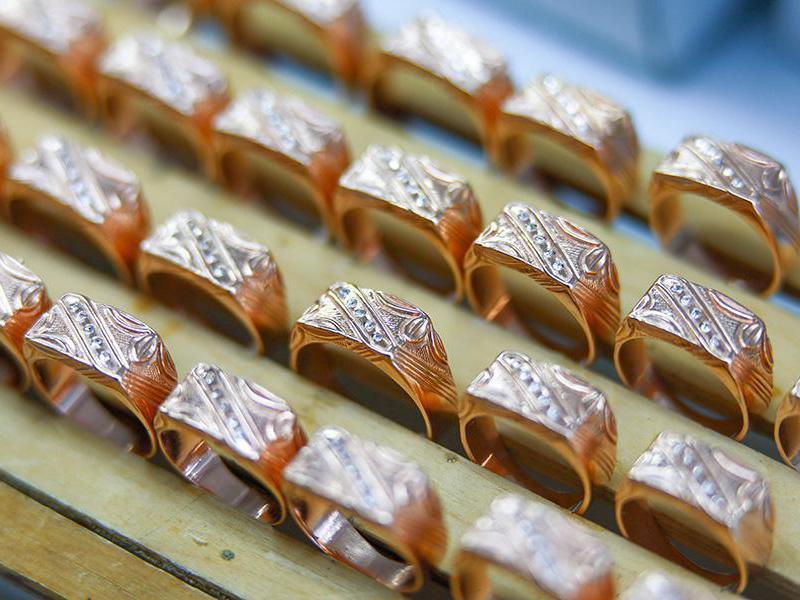

Gold and silver prices have surged to record levels, impacting jewelry production costs.
Source:
Prices for precious metals continue to hit new record highs. On January 20, 2025, silver exceeded $95.37 per ounce for the first time, and the next day gold rose above $4,800. Trading volumes on the Moscow Exchange tripled over the year, and over two days gold prices increased by 5.6%, directly impacting the cost of jewelry production.
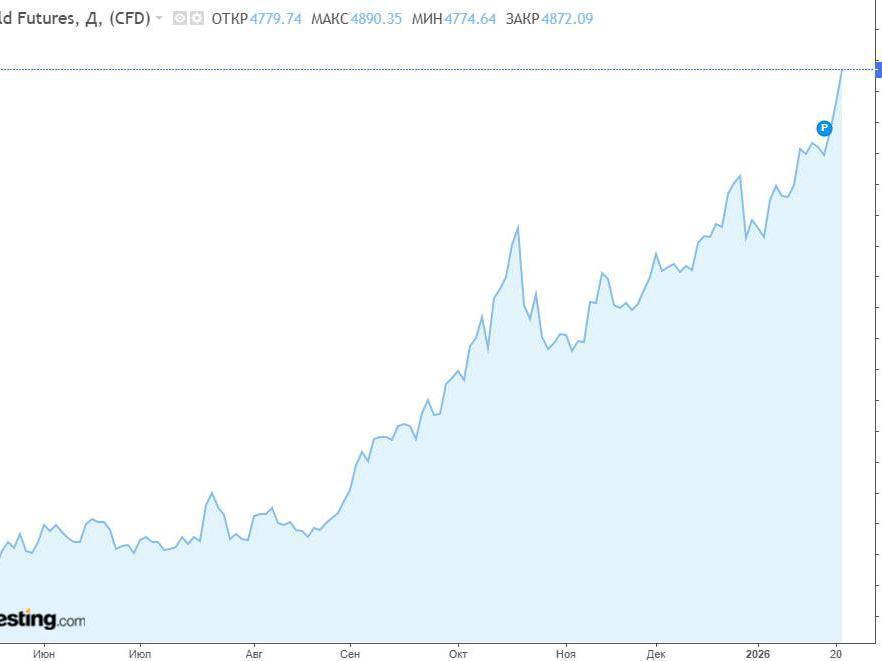
Charts show the volatility and increase in precious metal prices on financial platforms.
Source:
Stanislav Mazurchik, founder of the GRANT jewelry factory, noted that the main challenges in 2025 were related to the sharp increase in precious metal prices and high volatility. «Price pressure has become one of the key factors — both in wholesale and retail sales. Since the start of the year, the cost of gold has risen by more than 50%, leading to a proportional increase in production costs. Costs have also been affected by rising labor, production, and logistics expenses. As a result, price has become the determining factor in most orders,» he said.
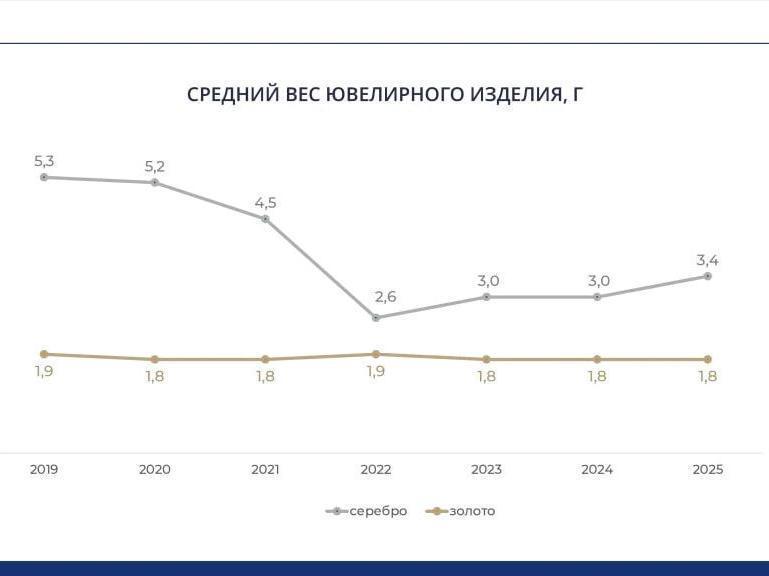
Data indicates a shift in consumer preferences towards lighter and more versatile jewelry designs.
Source:
Consumer demand has also undergone changes. According to estimates from the Federal Assay Chamber, in some regions the decline in demand in physical terms reached 25%. Buyers have become more calculated, preferring jewelry for specific occasions and paying attention to the versatility of design.
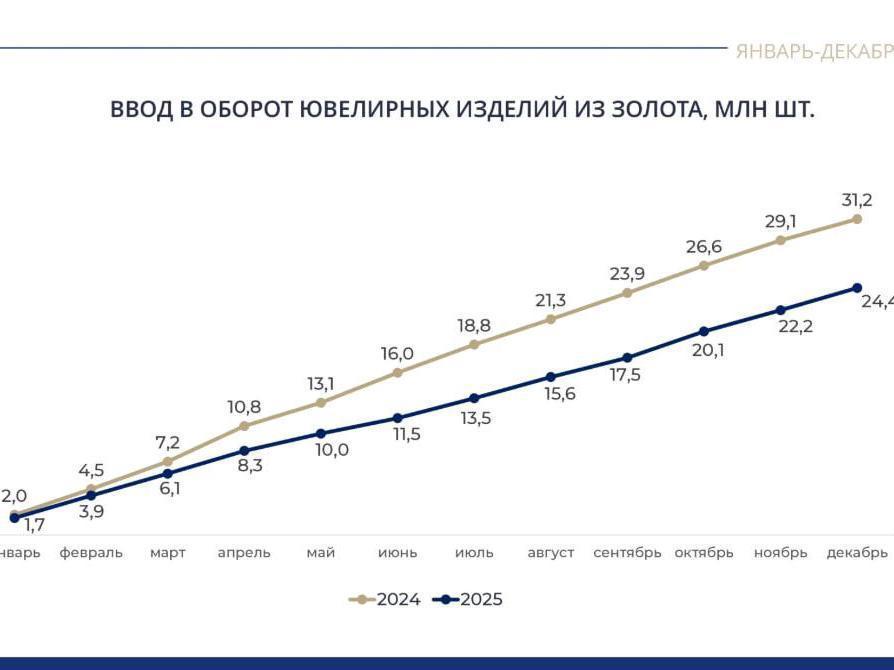
Sales volumes for gold jewelry have declined while revenue has continued to grow.
Source:
Stanislav Koloskov, marketing director of 585 Zolotoy, stated that clients now more often choose models for everyday wear, and for minor occasions — more affordable alternatives made of silver or with less weight. «Naturally, this has led to increased interest in transparent pricing offers, promotions, and service formats like installment plans. Overall, the buyer is becoming more engaged and demanding regarding the quality and meaning of the purchase,» he added.
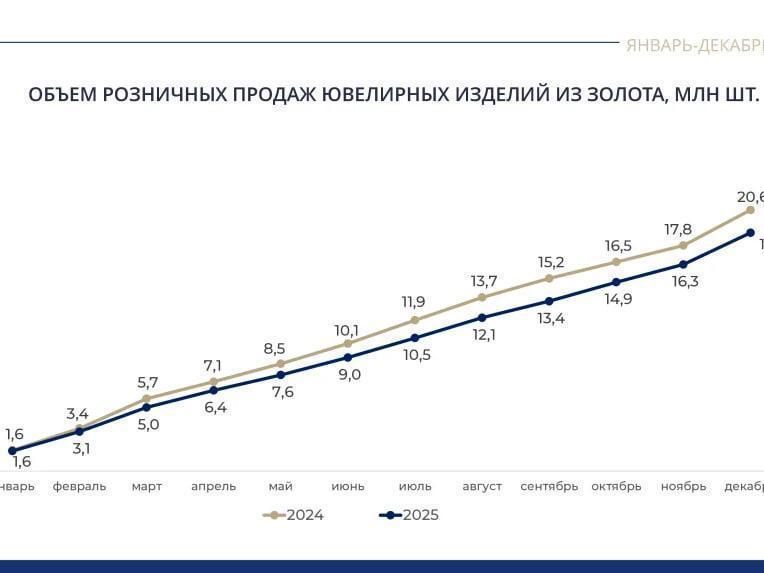
The average weight of silver jewelry has increased, showing stability in that market segment.
Source:
At the same time, as experts note, consumers are not giving up gold in favor of costume jewelry, but are simply reducing the frequency of purchases. Sergei Dokuchaev, general director of Russkiye Samotsvety, emphasized: «A person who is used to buying jewelry in the high-price segment will not move to a lower one. If a woman is accustomed to diamonds, she won»t switch to cubic zirconia. More likely, she will reduce the frequency of purchases.«
To keep prices stable, manufacturers are reducing the weight of pieces. According to analysts from Yuvelir.INFO, the average weight of a gold jewelry item in 2025 decreased from 1.8 to 1.7 grams. At the GRANT factory, they recorded a 16% reduction in the size of gold items. To further reduce production costs, companies are implementing new technologies such as nano-casting and automated casting with stones.
However, statistics from the Federal Assay Chamber show that the average weight of a gold item has been stable over the last three years at 1.8 g, while that of silver has increased from 3 to 3.4 g. At the same time, the total number of gold items introduced into circulation by the end of 2025 decreased by 27% compared to 2024, and retail sales fell by 10% — to 18.8 million pieces. The silver market has been more stable: sales remained at the same level, and the introduction of items even surpassed last year«s figures.
According to INFOLine, in the first half of 2025, the market in monetary terms grew by 12%, reaching 232 billion rubles (approximately $2.3 billion at current rates), and by the end of the year it is expected to be 535–540 billion rubles (about $5.4 billion). However, in unit terms, retail sales of gold items fell by 11.5%, and silver by 4.5%. «With a decrease in the total number of purchases, we are seeing a confident growth in revenue and an increase in the average check,» explained Stanislav Koloskov.
At the GRANT factory, they note that since 2024, about a third of sales have shifted from the mid-price segment (80,000–120,000 rubles, or $800–$1,200 at current rates) to adjacent ones: some to higher, some to more affordable.
Simultaneously, demand for diamonds is growing. The SOKOLOV brand reports that in St. Petersburg, sales of jewelry with lab-grown diamonds in 2025 increased 2.3 times, and the average check was 57,277 rubles (about $573 at current rates). Natural diamonds are also popular: the average weight of a stone in a piece has increased by 300%. Buyers are willing to overpay for stones, expecting further price increases due to shortage.
Stanislav Mazurchik predicts a significant increase in the cost of natural diamonds: «According to estimates from Russian and foreign analytical agencies, the cost will rise by up to 50% already this year, and according to some forecasts — by 70–80% during 2026. This creates a »buy in advance« behavior.» At the same time, synthetic diamonds, which were recently significantly cheaper than natural ones, are now losing value, which creates risks for networks that have bet on them.
The industry is also facing other challenges: sanctions-driven price increases for imported equipment, the abolition of the simplified taxation system for jewelers in 2023, and an increase in imports due to the duty-free trade regime with the UAE. This has led to a wave of store closures. INFOLine analysts note that by summer 2025, the total number of jewelry stores in Russia decreased by 6%, and in individual cities such as Omsk and Nizhny Novgorod — by more than 22%. In spring 2025, the Moscow Arbitration Court declared AO Panklub bankrupt, the operator of former Pandora stores in Russia.
Sergei Dokuchaev believes that the crisis hits the mass market the hardest, where there is high price competition and pressure from marketplaces. Major players believe that brands that clearly understand their audience and do not mislead consumers, for example, by mixing natural and lab-grown stones in displays, will show resilience.
Read more