Sailor from Volgograd Shares Truth Behind Maritime Profession
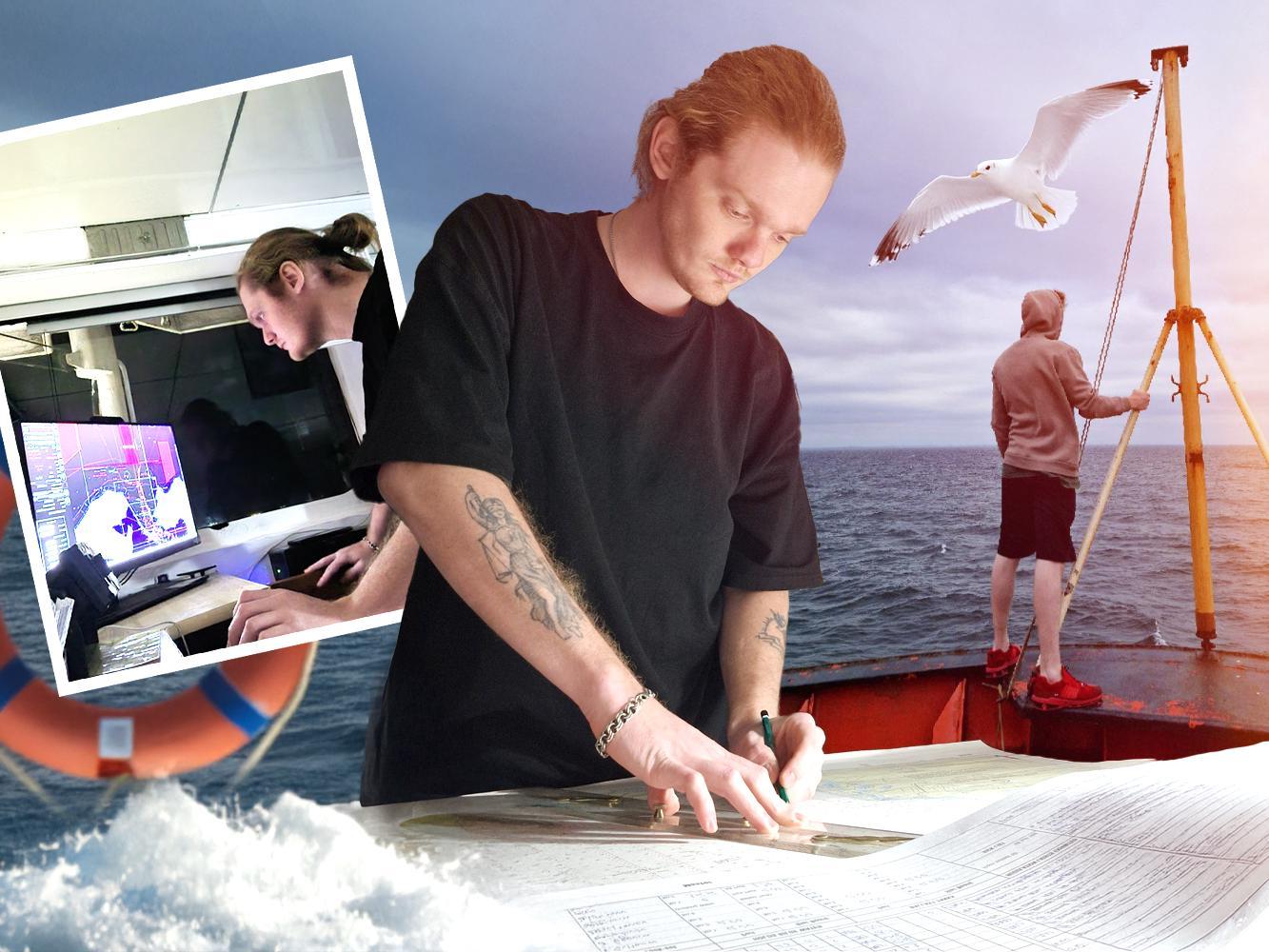

«If I don»t pass physics, we«ll go to maritime college together,» 17-year-old Savely Moiseenko from Volgograd once heard such a proposal from his friend, and since then the idea of conquering seas and oceans has stuck in his head. Now, at 23, having become a captain«s assistant, he has already traveled half the globe, getting paid for his journeys. But Savely doesn»t want to romanticize his profession because he knows its drawbacks well.
«I Had No Prejudices»
Savely is now 23 years old. He has a stable job, and a wonderful young wife waits for him in Volgograd. But just six years ago, he was a graduate of a regular school in Krasnodar Krai and didn«t even know which life path to take.
«When I was 17, I didn»t think about what I wanted to become or what I wanted in life. But I had a friend who wanted to become a military man,« Savely says. »He had problems with the Unified State Exam in physics, and he said: «Let»s, if I don«t pass, then we»ll go to maritime college, we«ll travel to different countries, see a lot?» He did pass physics, his dream came true — he became a military man. And I applied to a maritime college in Rostov-on-Don. And it«s from Rostov-on-Don that I now most often set out to sea, even despite moving to Volgograd.»
The potential earnings also influenced the choice of profession. Savely receives his salary in dollars, so it depends on the exchange rate. On average, it comes out to 180,000 to 300,000 rubles per month (approximately $2,000 to $3,300 at current rates), and this is not the limit.
«I had no prejudices about maritime romance that everyone loves to talk about,» Savely admits. «Purely on my friend»s advice, this thought appeared in my head. And the money: I found out that working at sea can be profitable, so I thought about it, applied. My parents were in shock at first. My mother didn«t want such a fate for me, but over time, everything seems to have turned out okay.»
«There»s Plenty to Do Here«
Now Savely works as a second mate on a dry cargo ship on a watch schedule. So, about the usual «working day» that many know, he only hears from others.
«Since the ship must be in motion around the clock, the navigational command crew on the bridge and the engine crew work in watches. Mine starts at 12 noon, ends at 4:00 p.m. After that — an eight-hour rest period and again a watch from midnight to four in the morning. This happens continuously throughout the contract — 4–5 months.
Since the end of November, Savely has been on a dry cargo ship that this time carried wheat from Russia to Turkey. The Turkish company considers Russia a combat zone, so it pays an additional about $400. As a result, Savely earns from $3,000 per month on watch. But this money still needs to be earned.
«I wake up an hour before the watch, do my things, get ready, eat,» Savely says. «Ten minutes before, I go up to the navigating bridge. From the person I»m relieving, I get all the necessary information: weather conditions, any navigation obstacles, oncoming ships crossing our course — in general, everything that can threaten safe navigation. Then independent watch begins. Usually, it involves keeping watch — auditory, visual, by instruments. The surrounding situation can change at any moment: out of nowhere, another steamer might appear, a small fishing boat that wasn«t »pinging« on the radar, and it»s already literally under your side. Plus, if the situation is more or less calm, you can do some paperwork, correct charts, manuals. On the ship, there«s a lot of documentation, logs that need to be kept daily. There»s plenty to do here.«
Savely tries to go specifically to sea because working on rivers doesn«t appeal to him much.
«On rivers, navigation rules are complex: there are many prohibitions, and documents are needed that cost a lot of money. And documentation alone costs on average 70,000 rubles (about $780) for updates. To navigate rivers, you need to pass a test — as a sailor, I passed only on the ninth attempt.»
As Savely admits, life on a ship differs from life on land, first of all, in the schedule — all because of the four-hour watches. But not only they change sailors« world.
«At first, it can be hard to get into this rhythm, after the watch it»s not easy to come out of it. Plus, on the ship, I very much get out of the habit of having to wash dishes, cook food. Here, cooks do all that for you, so after the contract, you become very lazy. Also, at times, you fall out of the information field. You feel a slight, so to speak, «degradation.» This happens both due to the large volume of work and lack of connection. You might not be present in the information field for a long time, and then it all mixes up chaotically in your head. And the first week, I only get used to people — when you work with one team for 5–6 months, seeing other people is novel.«
However, Savely doesn«t have to get used to one person even after six-month watches — that»s his wife.
«We call each other every day, communication goes without any breaks. Even when I have no connection, we write to each other, and then messages all arrive at once. And when connection appears, we can call again and discuss everything. She doesn»t feel like a «new person.» Only at the very beginning, after the first voyages, there was surprise that after a long absence, you can touch, hug again. But this problem is already past.«
Working on a ship greatly toughens character, testing sailors «for strength» — according to Savely, this is both a plus and a minus. Not everyone copes with it.
«You become more cold-blooded, perhaps. You treat things with more indulgence that previously seemed unsolvable. But morally, it»s hard. When I was studying and just gaining seniority to get a navigator«s diploma, many of my classmates left simply because they couldn»t endure it. It«s very hard to part with home, especially not for two weeks, but for a sufficiently long period. Four months — that»s standard, and some work at sea for six. Once I met a person who served on a ship for 22 months — the longest contract I«ve seen.»
«Norway Remembered for Beauty, England — for Rock, and France — for Parties»
Depending on the company that sends or receives the ship, the route and, accordingly, the countries visited change. Over the years, Savely has been to Norway, the Netherlands, Greece, Turkey, and good knowledge of English allowed him to order in a local bar as well as chat with locals in public transport. If only there was time for everything.
«I had one European contract when we worked in the North Sea, the Baltic Sea, and only went to European ports. Everywhere there was free exit, and then I managed to see a lot: get to a festival in France, walk around the Netherlands, sit in an English pub. Of course, there»s not enough time for everything. Many, especially 1st–2nd year students who haven«t been on their first contract yet, think they»ll go to sea and walk around all countries. No, it«s not like that. You can»t just take off and go somewhere upon arrival in port because there«s always work, a lot of work. Plus, on top of work, you need to simply sleep, and in port, emergency situations often arise when you might not sleep for a day and a half. So it»s a misconception that you can see the whole world, but you can definitely see something. At least, I managed.«
Which countries did Savely remember the most?
Norway («Insane beauty of nature, words can»t describe how beautiful it is there. You can, of course, try, but if you see it in person, you«ll understand that words are worthless in this case — you need to see it»).
Netherlands («I really liked their »vibe.« I got the impression that it»s a «country of the young.» Very many stylish guys, warm and friendly atmosphere on the streets, similar to pictures from Pinterest in the style of «evening coffee shop aesthetics.» All this borders on atmospheric characters, like NPCs from GTA, as well as a share of lust, without which the Netherlands can«t be called the Netherlands»).
United Kingdom («I was in relatively small towns like Grimsby and Southampton, but in all such places, you feel English aristocracy. An English pub, rock »n« roll in the background, and a pint of dark beer with an aftertaste of burnt caramel — that»s what England is remembered for«).
France (»Remembered for the French being wild partygoers. Once I managed to get to a festival, and I understood that they know how to do it. Parties, a lot of youth, music — everything is very cool. But also, France is very dirty«).
Spain (»Spaniards — very friendly people. Once I went ashore, went for a walk, and in the process, my phone died. I approached a woman, explained the situation — she said to get in her car, promised to give me a ride. While driving — we talked: she found out I«m from Russia, and immediately stereotypical questions poured out about our cold, the severity of the Russian people, and so on. But from the fact that a stranger just put me in her car, drove me around the city, and didn»t calm down until she delivered me to my destination, I«m still in shock»).
However, not always everything goes well. Sometimes Europeans, who know much about their rights, show their character.
«In France, there was a case when a crane bucket broke the handrails — the railings,» Savely says. «The master started filing a report, saying the French broke it. To which these French said that if the crew doesn»t calm down, they«ll go on strike and won»t load us at all. So all damage to the ship had to be repaired by the crew«s efforts.»
Another time, metal was being loaded onto the ship. The crane operator who was doing this had his working day end, and he called the company to find out if they would pay him for overtime.
«The company refused, he got off the crane and went home, and the ship remained at the berth all weekend, since in most of Europe, except for some Baltic countries, ports don»t work on weekends,« Savely explains. »Berth rental for a ship, for a minute, is 5,000 euros per day, so it came out to 10,000 euros. And all because they didn«t want to pay an extra hour to an ordinary worker who values his time. In Europe, such policy is very common. They value time, while in our case, in most cases, they work to exhaustion for »thanks.«»
By the way, Savely slightly debunks the myth of fallen women waiting for sailors in every port. To seek «amorous comforts,» according to him, it«s worth going a bit further into the city.
«In European cities, services of an intimate nature can be offered right on a busy tourist street, which is a bit confusing for someone with our mentality, but in ports, this rarely happens. It»s a restricted facility, strictly guarded. So the presence of women with low social responsibility in the port — that«s usually an exception to the rule. Although I once heard that someone in the port was offered almost a separate room for pleasures, but that»s all at the level of rumors.«
«No Confidence That You»ll Be With Loved Ones in an Important Moment«
Traveling to different countries and a good salary — all that is, of course, wonderful, but…
«Working at sea takes time away from loved ones. This is the main drawback of the job that nothing can compensate for: no pluses, no salary,» Savely admits. «Everyone sells their life for money, but I think we do it a bit harder. I don»t see my wife, someone doesn«t see children — I don»t have any, but I don«t see brothers, sisters, parents. All this for a period of four months. At times, it weighs morally. There»s no confidence that you can be home for some important event that might happen — doesn«t matter if it»s bad or good.«
Savely admits that he has seen crew members who don«t mind going to sea for a year and really love long contracts. But his attitude is a bit different.
«And it»s for the better. Because of this moral pressure, personality starts to change a bit over the years. Psyche becomes unstable,« Savely explains. »A person works, works a lot, ends up in a high position, and I come to him — a young second mate. The person«s psyche is unstable, his decisions, in his opinion, are the only correct ones. He has many prejudices, and I have to get used to it. This job really wears on the nerves. Not always the crew can be adequate, in the fleet there are serious problems with alcoholism. Because of this, many accidents happen.»
Such moments, like emergency situations, Savely tries to perceive without extra emotions, but some things still irritate.
«On one contract, the cook was so occupied with alcohol that he went on a binge for 2–3 days, and the whole crew ate only porridge — he just didn»t cook. It happened that the captain, under the influence, called me to his cabin and accused: «What, you think you»re a tough guy? Arguing.« This was after I was told to make an absolutely unnecessary document, and to my question »why,« the captain answered: »So that it exists.« Bureaucracy for the sake of bureaucracy.»
In physical labor, Savely sees no problem — things happen. But precisely the feeling of remoteness from loved ones, the inescapable necessity to live on one ship with possibly not the most adequate and pleasant people, loneliness — that«s what is truly difficult and can break you.
«Everything is difficult in combination: for me — it»s the absence of loved ones and the presence of unstable people. When this intertwines, you feel bad because you«re not home, you»re not falling asleep with your wife, but standing watch on the bridge. Plus, on top of that, there are some inadequate conversations. And in terms of physical work, there«s nothing difficult. Yes, you might not sleep. It happens that you don»t sleep for a very long time — once, as a sailor, I didn«t sleep for two days. But I won»t say it«s hard. The hardest thing — is to endure the moral pressure.»