Barnaul Student Shares Experience of Year-Long Exchange in China
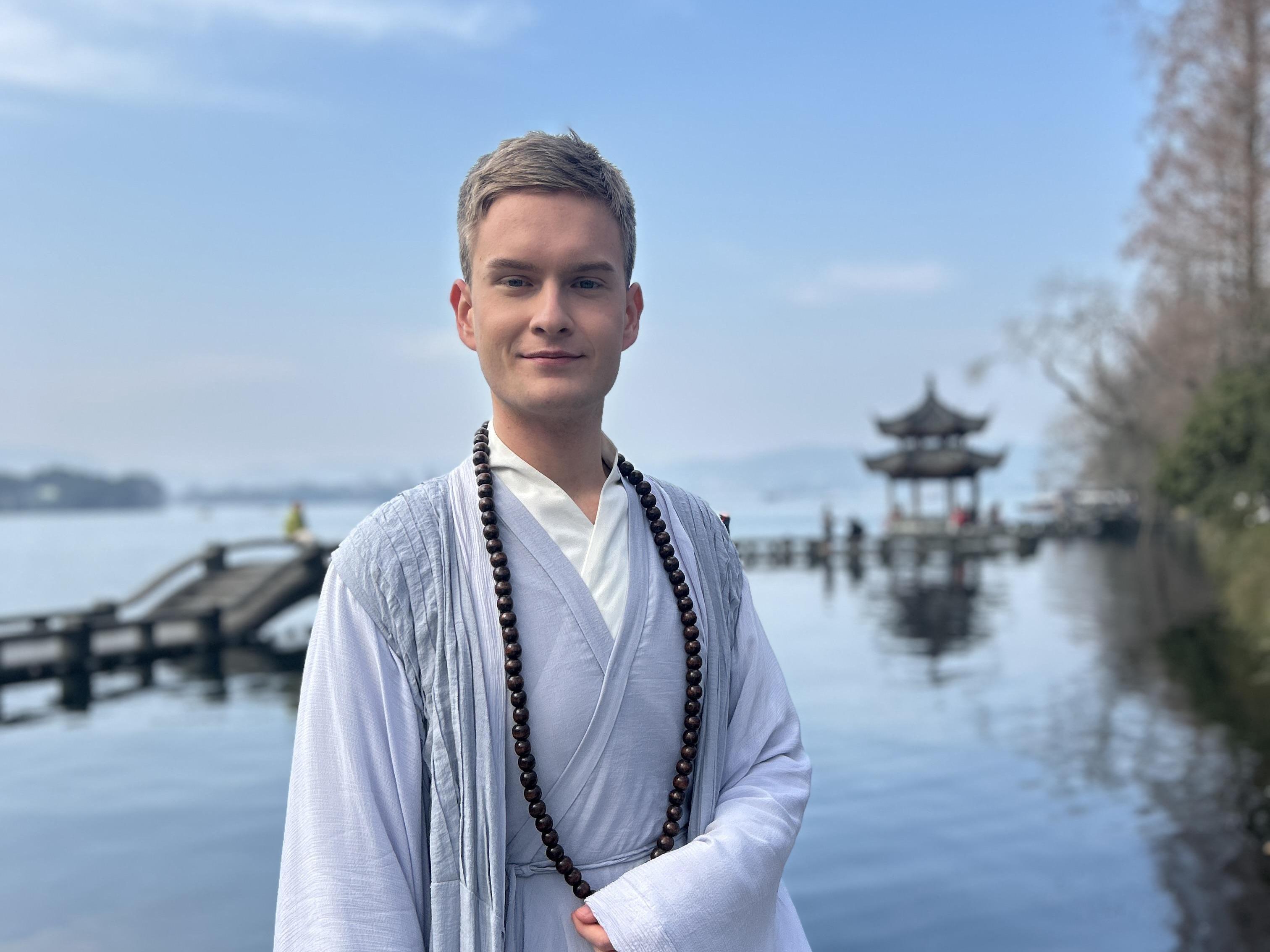

Nikita Kazakov is a student from Barnaul who managed to pass a tough selection process and go study in China on an exchange, as he dreamed when he first enrolled at Altai State University. The young man lived in one of the country«s largest megacities, Hangzhou, for a whole year, integrated into the local environment, and even made plans to move after graduation.
He told NGS22.RU about the impression local residents made on him, whether he managed to make friends, what prices are like in China, and what might surprise Russians on a trip.
Simply fascinated by calligraphy
Nikita«s love for Chinese culture began back in school. Then, participating in history olympiads, he came across an interesting master class from two Altai State University students who promised to show the basics of Chinese calligraphy. Drawing characters with a pen, the guy seriously thought that he could try something completely new, for example, studying Chinese, since he already had quite good spoken English and had no particular interest in studying it further.
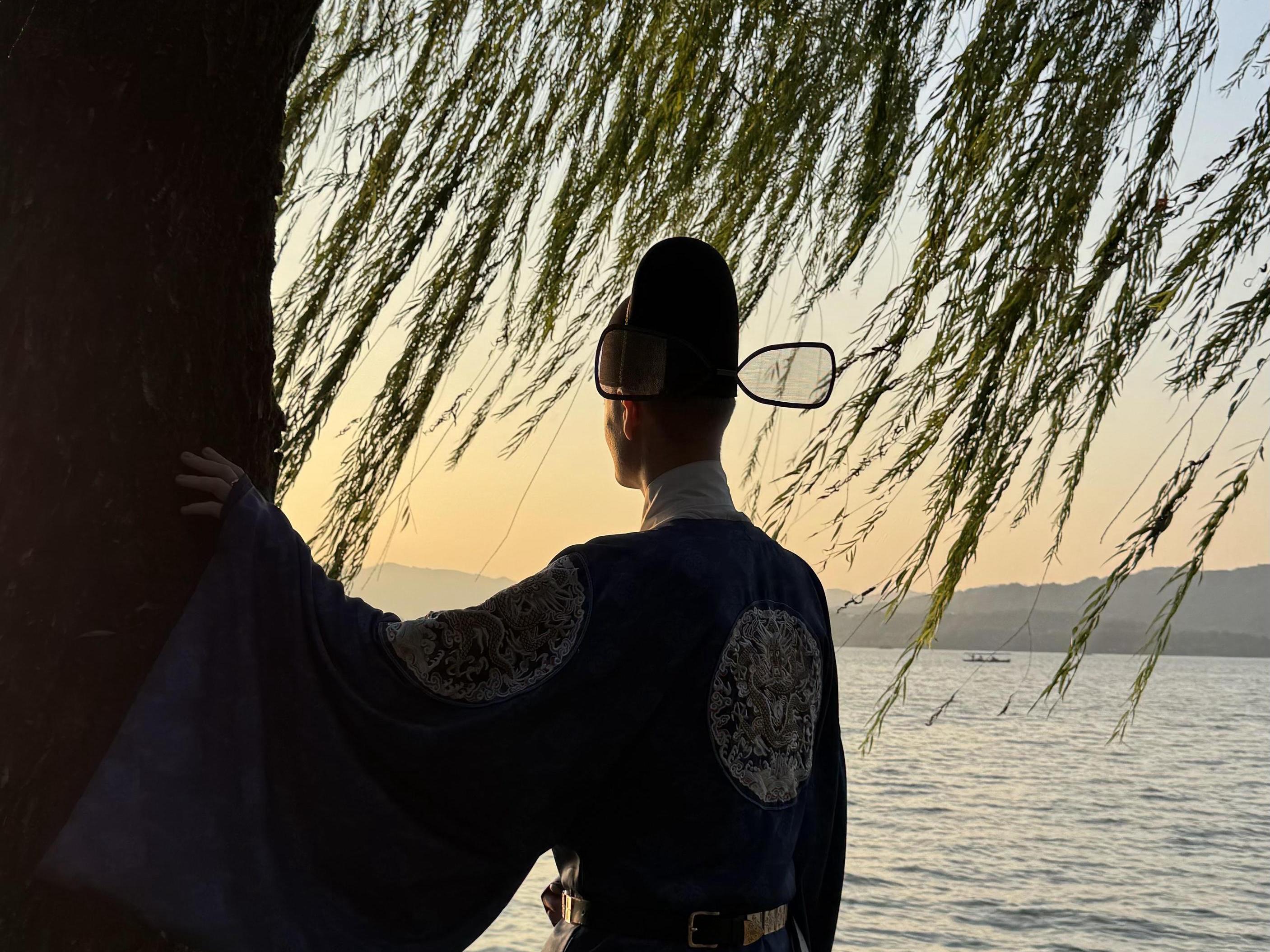
«Calligraphy is one of the main artistic activities in China, and from very ancient times. Previously, as locals believed, a noble man was obliged not only to be able to compose poetry beautifully, write texts well, and competently manage the country if he was, for example, an official, but also to practice calligraphy, to master this art. To this day, it is one of my few hobbies that is directly related to China.»
After school, he enrolled in foreign regional studies at Altai State University, but from the first year he knew that he would have the opportunity to go study on an exchange. The selection procedure for this program did not cause Nikita any particular difficulties, although in order to go to China, he had to prove that he was worthy — with his grades, attitude to study, and activity.
One of the main differences in education systems, he says, is the timing. If a bachelor«s degree in China, like ours, lasts four years, then a master»s degree is a full three years. Moreover, studies take place throughout the day, so combining it with work is not possible — students get up at 8 a.m. and spend the whole day studying until evening.
«For Chinese, a strict admission system is very characteristic. There is very tough competition, so after the 11th grade they take an analogue of our Unified State Exam and based on its results they enter universities. There are special quotas for provinces — if you don»t succeed, then either you try to enter another university here, or you go to another province — it«s not so fundamental there. In Russia, however, the policy is a bit different, aimed at preserving guys in the region»s core universities.«
«Russians are a combat nation»
One of the main features of the Chinese, as Nikita clarifies, is their closedness. Mostly students walk in groups, so most often it is quite difficult to make friends with them.
«The only thing that can somehow attract them to foreigners is common interests or the learning process. I made two good friends. One of them is an ethnic Chinese who enrolled in IT technologies. And we met completely by chance — he was conducting a social survey, and I helped him with it, we added each other on WeChat — the Chinese analogue of VKontakte, and that»s how we started talking. We went out to eat together several times — for Chinese, this is a very important tradition. The second friend became an ethnic Uighur, we crossed paths on campus, he asked for help, a conversation started.«
In China, Nikita had a few more surprising acquaintances. For example, he met Chinese female teachers who, back in the USSR, also studied on an exchange in Khabarovsk. Therefore, as soon as the Barnaul student introduced himself, they decided to ask how things are in Russia now, and even talked a bit with him in Russian.
Nikita also managed to visit several Chinese villages — on one trip he was invited by a teacher to celebrate the Spring Festival together. There, the Barnaul resident communicated with the older generation and realized that they treat Russians with special respect, since they still remember the help of the Soviet Union, which it provided to China after the formation of the PRC in 1949.
«In China, there is a special term for the Russian people — »zhan-dou min-zu,« which means that we are a very combat-ready nation. This is clearly influenced by our external features, constant seriousness, but in general, the attitude towards foreigners in China is positive — there are no manifestations of any discrimination.»
Not plastic rice
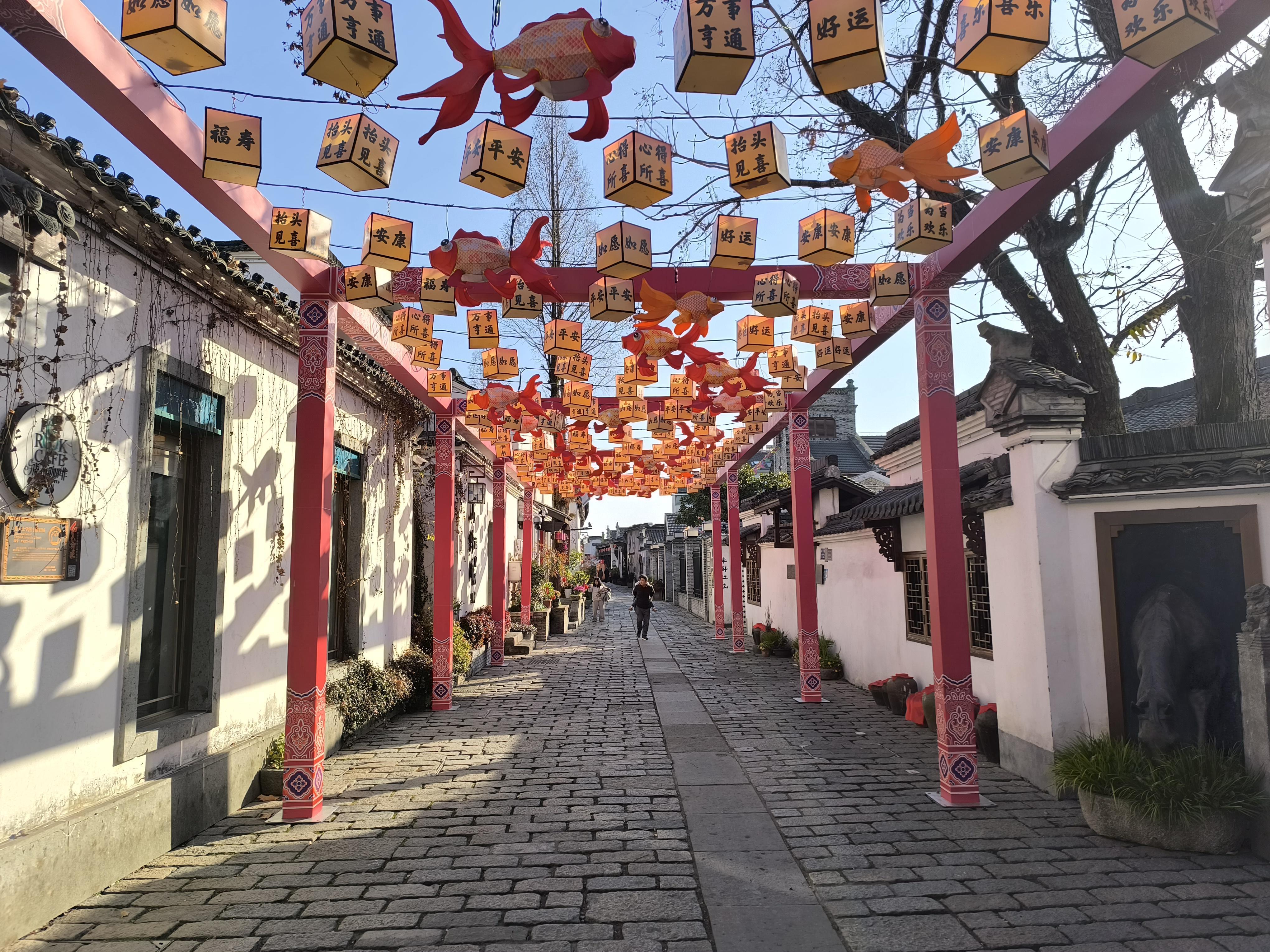
In total, Nikita visited about ten cities. Special impressions, of course, were left by Beijing, where he managed to stay for three whole days, as well as Shanghai, which in appearance reminded him of New York.
«I was in different provinces, and also in Nanjing, which was considered the capital of China back in the twenties of the twentieth century. Large cities are very different from each other, both in cultural features and linguistic. You move from Hangzhou to Shanghai, and the dialect immediately changes. The older generation has its own too. In China, there are many spaces where digital technologies are used — 3D, artificial intelligence, so museums there are something definitely worth visiting.»
The visiting card of the PRC is a developed transport system. Therefore, the first thing that surprised Nikita was the subway. In Hangzhou alone, there were about 10 lines, although construction began only in 2013. By the way, traveling by subway is profitable, ground transport there is less convenient than in the same Barnaul, as Nikita clarified.
«In Barnaul, you get on and ride without transfers, choose a convenient, albeit long route. There, there are no state companies, and private carriers are responsible for transportation in specific districts, so, for example, to get to the city center from the university campus, I would have to make two transfers.»
Due to his pragmatic approach to spending, a year of life in China cost Nikita about 350,000–400,000 rubles (approximately $4,100–4,700 at current rates), including free dormitory accommodation and paid flight expenses.
«I would say that prices there are not very different from Russian ones. There are products, for example, fruits, vegetables, that cost much more than in Russia, but nevertheless, all this is compensated by quality. And actually, everything is quite tasty. That is, this tall tale that was going around us about five years ago, that in China there is plastic rice, well, it doesn»t correspond to reality at all. There is very strict food control. As for finances, some guys spent half a million in six months, but if you live more economically, then the same 500,000 will turn out to be quite an acceptable amount for a year of life. Per month, with my usual measured pace, it came out to 35,000 rubles (about $400), which went to visiting some cultural places, museums, food.«
Tried «phoenix claws»
During his stay in China, Nikita really missed Russian cuisine, but he consciously decided not to limit himself to familiar food, but to try everything that might surprise in China.
Spicy dishes, which are so loved in the Celestial Empire, are one of the most difficult aspects of adaptation for foreigners, no matter how long you live there.
«If the menu says that a dish is not spicy, it will still be so. Many foreigners cannot get used to their food, so they switch to American fast food and eat mainly only that.»
Nikita was lucky: since childhood, he was accustomed to spicy food, which allowed him to try those dishes that other tourists usually do not dare to.
«I liked Chinese dumplings jiaozi the most. It»s something like our vareniki. Most often the filling is pork, sometimes with corn. It«s a must-have, they are in any »chifanka,« that is, a cafe,» recalls Nikita.
The most unusual dish he ate was «phoenix claws»:
«Yes, the name is quite poetic, sounds beautiful, but in fact, these are chicken feet fried in batter. In China, such offal is treated very calmly. By the way, boneless meat here is much cheaper than with bones. Fish in China is generally not cleaned — also served with bones.»
Now Nikita is completing his studies at Altai State University, but he is actively making plans for a further move to China, to enroll in the same university where he spent a year, and then continue to settle in Hangzhou or Shanghai.