Italy's Winter Olympics Threatened by Snow Lack and Arena Issues

Even the weather is hindering the Games this year
With only 11 days left until the 2026 Winter Olympics in Milan and Cortina d«Ampezzo, several major problems cast doubt on their successful hosting. Our colleagues from Fontanka learned about the main »pain points« of the preparation: the protracted construction of the bobsleigh and luge track in Cortina d»Ampezzo, the unfinished Santa Giulia ice arena in Milan, and the nearly critical shortage of snow in Italy«s mountains.
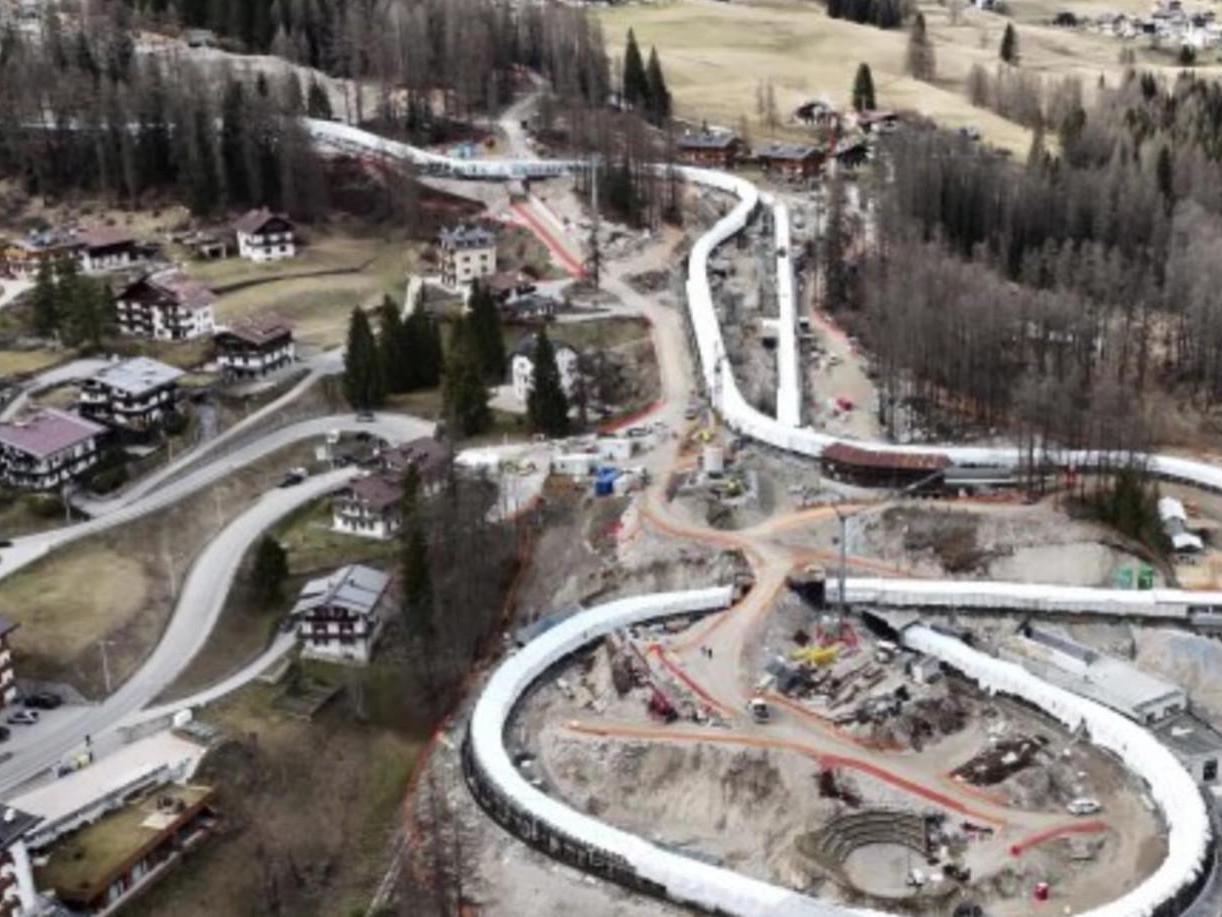
Bobsleigh and Luge Track in Cortina d«Ampezzo: Disputes and Rush
The construction of the Olympic center for bobsleigh, skeleton, and luge in Cortina d«Ampezzo has been accompanied by disagreements from the very beginning. The International Olympic Committee (IOC) openly doubted that the new track would be built in time for 2026 and recommended that Italy hold the competitions on an existing track abroad — for example in neighboring Austria or Switzerland. However, the regional authorities of Veneto and the Italian government refused to move the prestigious competitions out of the country and insisted on the complete restoration of the old Olympic track Eugenio Monti in Cortina. This decision required significant expenses: the reconstruction of the track cost 118 million euros (out of the total infrastructure budget of the Games of 3.4 billion). Critics warned that the new complex could become a facility with no future, considering the narrow audience of bobsleigh sports and the high costs of maintaining the track.
«This center has no future, and we will have to pay for it,» said local activist and journalist Marina Menardi.
Organizers long could not find a contractor and signed a construction contract only in early 2024 — just two years before the Olympics. Time was extremely tight: the IOC warned that the project «has no time reserve» and needs strict control. In spring 2024, construction finally began, but within a few months it faced sabotage: in February 2025, unknown persons dismantled part of the cooling pipe at the site and blocked the road with it, paralyzing work ahead of an IOC inspection. Police launched an investigation. Meanwhile, deadlines loomed: according to plan, by March 2025 the track was to be iced and presented to sports federations for certification and test runs. Organizers even had to develop a backup option — in case of construction failure, the competitions could be moved overseas, to a track in Lake Placid (USA), which was unexpectedly designated as a reserve venue. Mayor of Cortina Gianluca Lorenzi then assured that it would not come to that: according to him, engineers guaranteed the delivery of the facility on time, and the IOC publicly confirmed that the track would be completed in time.
By the end of 2025, the bobsleigh and luge complex in Cortina was finally brought to the testing stage. According to the head of the IOC Coordination Commission, Christin Kloester, the new Olympic track «even exceeded expectations»: despite the tight schedule, the project was implemented by the appointed deadline and successfully tested with athletes. President of the Italian National Olympic Committee (CONI) Giovanni Malagò called the construction of the track «a winning bet against the skeptics.» However, the long-awaited success does not cancel the controversy of the project. Local residents remember a sad precedent: a similar track built for the 2006 Olympics in Turin was abandoned a few years after the Games and is now slated for demolition. In Cortina, they hope to avoid such a fate — authorities talk about reviving national bobsleigh traditions and even an influx of foreign teams for training. But final conclusions about the fate of the expensive Olympic construction can only be made after the Games.
Ice Arena Santa Giulia: Race Against Time
Meanwhile, the true Achilles« heel of the 2026 Olympics has become the main hockey stadium, Santa Giulia. This multifunctional complex, designed for 11,500 spectators, is to host key matches of the hockey tournament, including games with NHL stars, who are coming to the Olympics for the first time since 2014. However, construction of the arena started late and progressed so slowly that it has approached the start of the Games closely.
Back in January 2025, the IOC stated that Santa Giulia would be delivered only in the second half of 2025 — literally a few months before the opening ceremony. This immediately made the facility one of the most problematic aspects of preparation. By December 2025, two months before the Olympics, the arena was still a construction site. Moreover, it turned out that the size of the hockey rink there was several feet smaller than the North American NHL standard, causing concern: this could lead to harder collisions and player injuries. NHL Deputy Commissioner Bill Daly openly stated that the league would not release its players if the ice in Milan was unsafe. This sounded quite loud: the presence of star athletes was one of the trump cards of the Games, and their possible boycott threatened an image disaster.
The organizing committee began hastily assuring that the situation could be corrected. In December, Milan organizers said they were «100% confident» in the ice quality: the work is being done by the world«s best specialists, and by the time of the first matches, the surface will be perfectly prepared. The ice was promised to be laid by the end of December, and a test tournament with leading Italian teams was scheduled for January 9–11. Santa Giulia had by then become the main headache of the preparatory period. The test competition did take place in January — and immediately revealed shortcomings. On the very first day, matches had to be paused for repair of the ice surface — a dangerous pothole formed in the ice near one of the goals.
Nevertheless, representatives of the NHL and the players« union, who arrived to inspect the facility, called the test tournament »a useful trial« and were satisfied with how organizers were solving problems on the go. In a joint statement, the overseas experts emphasized that work on finishing the arena continues around the clock, and they themselves are ready to provide any further support to ensure ideal conditions on the ice. At the site, however, the construction phase continued: during the tests, all entrants had to wear helmets and safety vests.
Nevertheless, by mid-January 2026, Santa Giulia was still essentially unfinished. Internal premises — locker rooms, press centers, guest areas — were being completed in rush mode, some of them temporarily reconfigured just for the test tournament. Of the 14 planned locker rooms, only three were ready. During one inspection, a delegation from Hockey Canada found themselves in an unfinished room. Construction work went «non-stop» while hockey players tested the fresh ice. There is no more time to delay: the women«s Olympic tournament starts on February 5, a day before the opening ceremony, and the men»s teams (including NHL players) will take to the Milan ice on February 11. The International Ice Hockey Federation (IIHF) admits that the arena may not be fully ready in non-playing areas, but is confident: the rink itself, the ice, and all services necessary for matches will be in order by the time of the first face-off. Meanwhile, players noted the rink«s too narrow dimensions: in particular, Appiano club forward Daniel Eruzione suggested that NHL players would have a hard time adapting to the limited space.
«We will hold the tournament under any circumstances, and it will be successful,» promised IIHF President Luc Tardif, noting that he would like to sleep more peacefully before the Olympics.
Organizers are doing everything to catch up in the remaining days and claim they will make it: according to them, the facility will be completely safe and accepted for Olympic competitions. Some elements, however, remain temporary — for example, the media cube above the arena has been replaced with a simplified version, which organizers promise to dismantle and install a full-screen display before the tournament starts. Ice preparation is handled by Don Moffatt — an experienced specialist from the NHL, previously worked at four Olympics.
Snow Melts: Climate Risks and Bet on Snow Guns
Even if all Olympic facilities are built on time, there is another element beyond the control of engineers and officials — the weather. The 2026 Winter Olympics has faced a record mild winter in the Alps. On many slopes, snow either fell with a significant delay or is absent altogether. Organizers have had to rely on a massive artificial snowmaking system and even postpone test competitions waiting for colder weather.
Thus, on the legendary speed track in Bormio (where alpine skiing competitions are to be held) in December there was no natural snow at all, and although snow guns were working at full capacity, warm weather did not allow snow production around the clock.
«The temperature is too high — snow can only be made at night, we cannot reach theoretical capacity,» described the situation International Ski Federation (FIS) President Johan Eliasch in late December 2025.
He noted that climate warming has become a serious challenge for winter sports, and warned that critical underfunding of preparation in Italy exacerbates the problem. According to Eliasch, due to delays in state funding, Games organizers could not timely launch snowmaking systems at some venues — and now are forced to catch up, using backup plans and calling responsible persons «mornings, days, and evenings.» Moreover, private investors who previously considered participating in the project, according to local media, withdrew investments amid rising costs.
The main risk zone — the alpine resort Livigno in northern Lombardy. Here all snowboarding and freestyle competitions will take place, requiring special conditions: from big air jumps to snowboard cross. Their preparation needs mountains of snow — literally. For example, building an Olympic halfpipe requires about 180,000 cubic meters of compacted snow, which must withstand training and finals for several weeks. According to the organizing committee«s calculations, in total about three million cubic meters of artificial snow will be needed — such volumes are not provided for in the approved Games budget, and part of the expenses remains uncovered. According to FIS, at one point even individual snowboarding and freestyle competitions were at risk — including big air, halfpipe, and moguls, requiring precise geometry and stable coverage.
Livigno was once famous for abundant snow, but in recent years the situation has changed. Research shows that over a century (1920–2020) the average amount of fresh snow in the Alps has decreased by 34%, with the process noticeably accelerating after 1980. According to Italy«s Eurac Research center, by 2040 only 10 countries in the world will be able to guarantee hosting Winter Olympic Games due to climate conditions.
Italy clearly does not want to be among the losers: the country is actively increasing artificial snowmaking capacity. About 90% of alpine ski slopes in Italy are already covered with artificial snow (for comparison: in Austria — it«s about 70%, in Switzerland — about 50%). Olympic venues are no exception. In Livigno, a new reservoir with a volume of 200,000 cubic meters (one of the largest in the Italian Alps) was built in advance, and over 50 additional snow guns were installed. With them, about 800 million liters of snow can be produced in approximately 300 hours of continuous operation. These measures came in handy: a December thaw delayed the system»s launch, and organizers even began using strategic reserves — snow specially saved from the previous winter.
In Livigno, they learned to preserve snow using insulating materials: in summer, snow piles are covered with a special fabric, thanks to which only about 23% of the volume is lost per season. These snow «preserves» came in just right when artificial snowmaking started slowly in autumn: heavy dump trucks transported 10,000 cubic meters of old snow daily and within days formed a 100,000-cubic-meter reserve — for example, completely covering the big air landing zone. Still, not all problems could be solved.
In mid-December 2025, FIS President Johan Eliasch expressed concern: according to him, preparation of snow parks in Livigno was behind schedule, and he accused Italian authorities of delaying funding.
«There was a technical failure — a pump valve broke down. But it was replaced on time, and all guns have been working for several nights now. Cold is ahead, soon down to minus 20°C (-4°F), so we will have even more snow than needed,» explained Livigno Mayor Remo Galli.
According to official data, by mid-January the Games organizing committee had already completed over 80% of the snow production plan.
«We understand the federations» concern — indeed, there were delays in the construction phase initially,« says Davide Cerato, manager of the Livigno zone. »But now all shortcomings have been eliminated.«
Italian snowboarders who tested the slopes also seemed satisfied. According to the head of infrastructure company SiMiCo Fabio Saldini, they called the coverage «fantastic.»
The IOC also states that alarming reports about snow shortage are «unfounded» and preparation of the Games is proceeding as planned: «As you could see, international competitions are already taking place in the region,» said a press service statement.
FIS President Johan Eliasch meanwhile emphasized that climate changes require a revision of winter sports geography. In his opinion, in the future the IOC and international federations will focus on a limited circle of regions with confirmed climatic reliability — primarily high-altitude areas of the Alps (Switzerland, Austria, northern Italy and France), Scandinavia, certain parts of North America (including British Columbia and the Rocky Mountains), and Japan. According to current estimates, there are no more than 10–12 such places in the world. Some regions of Russia — for example, the North Caucasus, Southern Siberia or Kamchatka — also have stable snow conditions and natural terrain suitable for winter competitions. However, for obvious reasons, hosting an Olympics in Russia in the foreseeable future is not to be expected.
Artem Kuzmin, Fontanka.ru