Italy Faces 2026 Olympics Challenges: Snow, Arena Problems
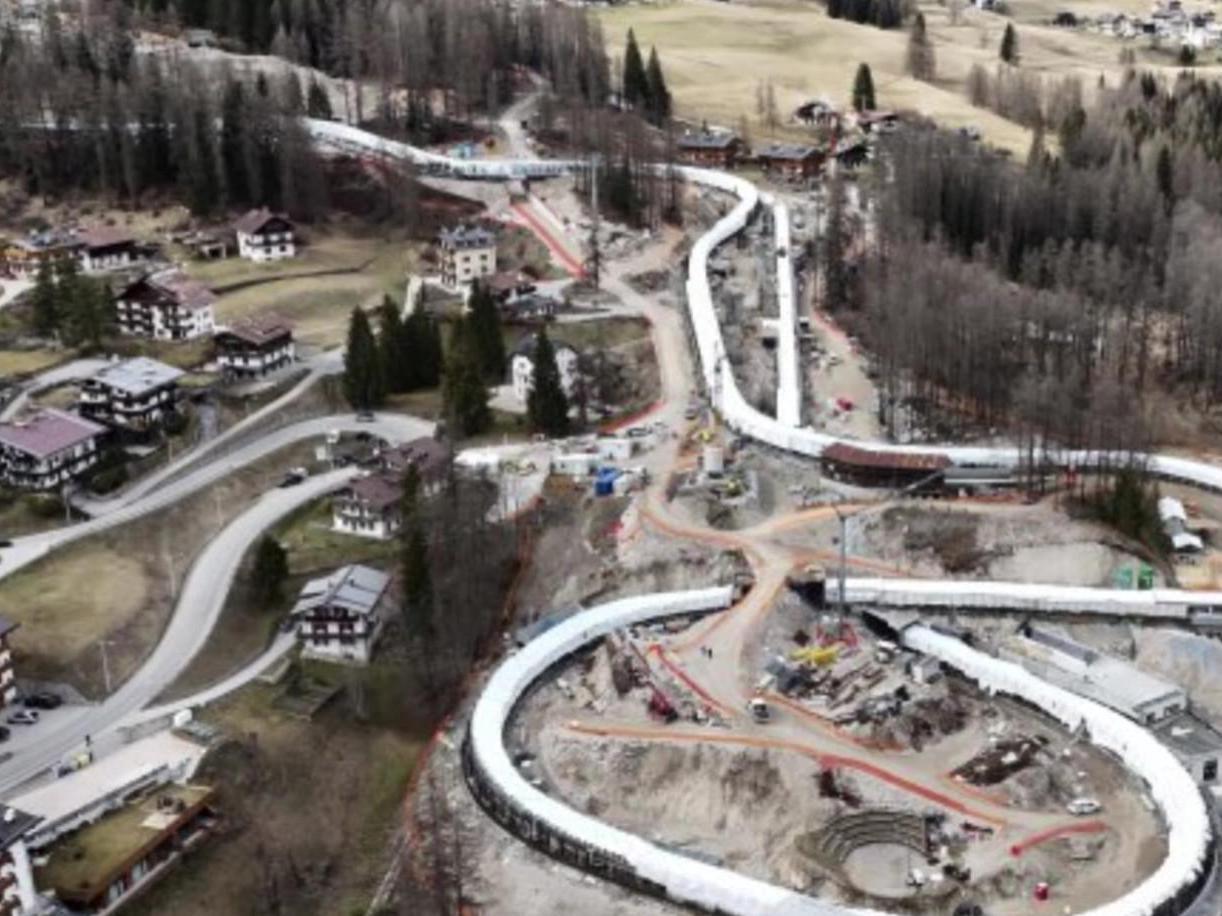

With less than two weeks to go until the start of the 2026 Winter Olympics in Milan and Cortina d«Ampezzo, organizers are still addressing several critical issues. Among them are the delayed construction of the bobsleigh, skeleton, and luge track in Cortina, the unpreparedness of the Milan ice arena »Santa Giulia«, and an anomalously warm winter that has caused a snow deficit in the Alps.
Bobsleigh, Skeleton, and Luge Track: From Doubts to Realization
The construction of the bobsleigh, skeleton, and luge track in Cortina d«Ampezzo was accompanied by conflicts from the start. The International Olympic Committee (IOC) doubted the possibility of completing the facility on time and proposed holding the competitions on existing tracks in Austria or Switzerland. However, Italian authorities insisted on renovating the local Eugenio Monti track, which cost 118 million euros. Critics of the project, such as journalist Marina Menardi, stated: »This center has no future, and we will have to pay for it.«
The construction contract was only signed at the beginning of 2024, leaving very little time. Work began in the spring, but in February 2025, an act of sabotage occurred: unknown individuals dismantled part of the cooling pipe, paralyzing the construction before an IOC inspection. As a backup option, moving the competitions to Lake Placid (USA) was considered. Despite this, the mayor of Cortina, Gianluca Lorenzi, assured that the facility would be delivered on time.
By the end of 2025, the complex was finally completed and tested. The head of the IOC Coordination Commission, Christine Kloster, noted that the track «even exceeded expectations.» The president of the Italian National Olympic Committee (CONI), Giovanni Malago, called the project a «winning bet against the skeptics.» However, the sad experience of a similar track in Turin, abandoned after the 2006 Olympics, raises doubts about the long-term viability of the facility.
«Santa Giulia»: Hockey Arena in Emergency Mode
The multifunctional arena «Santa Giulia» in Milan, with a capacity of 11,500 spectators, is set to host key matches of the hockey tournament featuring NHL stars. Construction started late, and by December 2025, the facility was still a construction site. Moreover, it was found that the rink size does not meet NHL standards, raising concerns about player safety. NHL Deputy Commissioner Bill Daly stated that the league would not release hockey players if the ice is unsafe.
Organizers began urgent work to correct the shortcomings. In December, they assured that the ice would be of high quality and scheduled a test tournament for January 9-11, 2026. However, during the test event, matches had to be stopped to repair a hole in the ice. Representatives of the NHL and the players« union who visited the arena called the tournament a »useful trial« and expressed willingness to support the organizers.
By mid-January, the interior spaces of the arena, including locker rooms and press centers, were still under construction. Only three out of 14 planned locker rooms were ready. The president of the International Ice Hockey Federation (IIHF), Luc Tardif, promised: «We will hold the tournament under any circumstances, and it will be successful.» The ice preparation is handled by experienced specialist Don Moffatt, who has worked on four Olympics.
Climatic Challenge: Snow Deficit in the Alps
An anomalously warm winter in the Alps has called into question the possibility of holding alpine skiing and snowboarding disciplines. On many slopes, including the legendary course in Bormio, natural snow was absent. The president of the International Ski Federation (FIS), Johan Eliasch, stated: «The temperature is too high — snow can only be made at night, we cannot reach theoretical capacity.»
Particular concern was raised about the resort of Livigno, where snowboarding and freestyle competitions are to be held. Building a halfpipe requires about 180,000 cubic meters of snow, and the total need is estimated at three million cubic meters. Due to funding delays, the launch of artificial snowmaking systems was postponed. Organizers used strategic snow reserves saved from last winter under insulating materials.
To ensure snow in Livigno, a 200,000 cubic meter reservoir was built and over 50 snow guns were installed. The mayor of Livigno, Remo Galli, said: «There was a technical failure — a pump valve malfunctioned. But it was replaced on time, and all guns have been working for several nights.» According to mid-January data, the snow production plan is more than 80% complete.
Johan Eliasch noted that climate change is forcing a re-evaluation of the geography of winter sports. In the future, Olympics will likely only be held in 10-12 regions of the world with stable snow conditions, such as high-altitude areas of the Alps, Scandinavia, parts of North America, and Japan.
Despite all the difficulties, Italian organizers and international sports federations express confidence in the successful holding of the Games. The IOC called the alarming reports about snow deficit «unfounded» and emphasized that preparations are proceeding as planned.