Radiation searched and found in Kuzbass museum exhibits
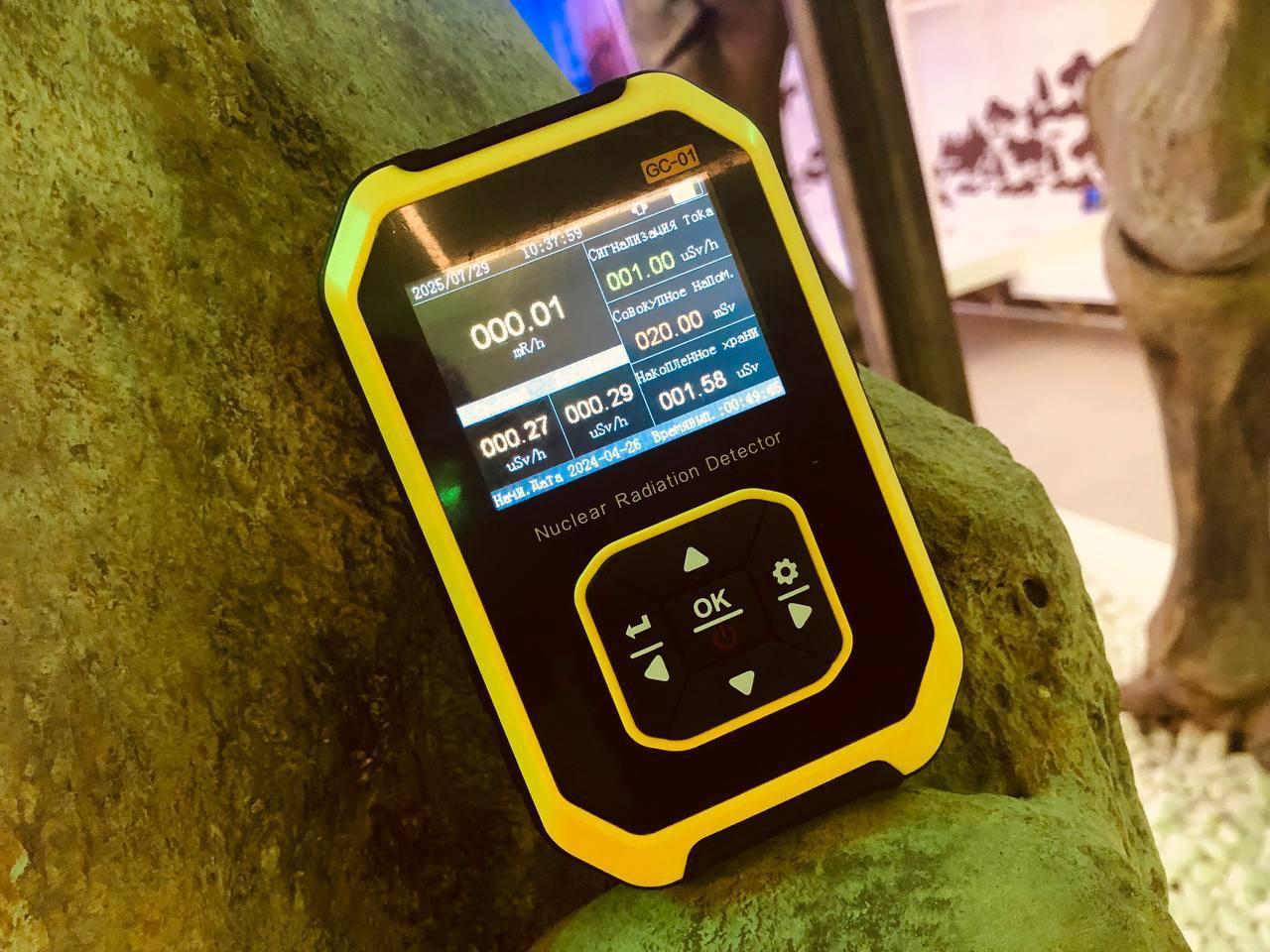

Fossilized bones dating back more than 100 million years were found to have safe radiation levels during the museum inspection.
Mysterious «alien» disks, bones of ancient reptiles and more modern mammals, precious and semi-precious stones, and much more can be found within the walls of the Kuzbass Regional Museum. Fossils that have lain underground are not only beautiful and have historical value but can also pose a radioactive hazard. Some readers of NGS42.RU were convinced of the latter and suggested that our journalists check if the exhibits emit radiation. As it turned out, these concerns were not unfounded.
We tell and show how safe items that have been in the ground for hundreds of millions of years are.
All visitors to the museum in the center of Kemerovo are greeted by a display case with jewelry made from natural stones: chains, pendants, simply beautiful stones on a backing. The institution«s staff assure that everything is safe and has certificates. We check the radiation with a dosimeter and find confirmation of this—everything is clean.
A little further on is an exhibition of the same stones. Some of them are processed, others appear in their natural form. We look at the device»s readings—and again, nothing, even in the box where cobblestones have been lying motionless for a long time, covered in dust.
At the end of the first hall, we see the main treasure of Kuzbass—a huge coal boulder. This fossil fuel can indeed emit radiation, but here the device again shows 0 microrentgens. The same data are on the petrified trees displayed nearby.
More than 10 years ago, a find at one of the open-pit mines—the Karakan Disk—caused a stir. Due to its unusual shape, space and alien enthusiasts decided it was evidence of extraterrestrials. Scientists, of course, refuted all this: the 200-kilogram stone is a product of nature, not inhabitants of the universe. The check again shows zero radiation.
Passing by the remains of ancient animals, we notice changes in the readings—the radiation level increased slightly. Soon the source is found—the eye socket of a woolly rhinoceros. Here the level rose to 0.6 μSv/h.
A couple more times, we notice an increase in radiation level on fragments of ancient bones that have lain in the area of the village of Shestakovo for tens of millions of years.
Candidate of Geological and Mineralogical Sciences Alexey Fayngerts explained that these readings are not dangerous. According to him, the natural radiation background is due to cosmic radiation, radioactive elements in the soil, and building materials. Therefore, scientists« finds can emit radiation in the range of 0.1-0.2 μSv/h.
At the same time, the permissible level is up to 0.2/0.3 μSv/h or 20/30 microroentgens per hour. An elevated background is considered from 2 μSv/h and can pose a health threat.
— Even with a slight exceedance of the radiation level, if it»s not prolonged exposure, harm to health is unlikely. However, prolonged stay in conditions of elevated radiation can be dangerous, — explained the associate professor of TSU.
The reason why there were more radioactive particles in the eye socket than in nearby objects is simple—dust accumulated inside the exhibit, which has the property of accumulating radiation.
To confirm this theory, we checked the upper shelves of a small library located in the museum. Here the level was also slightly higher, and the culprit is the same dust.
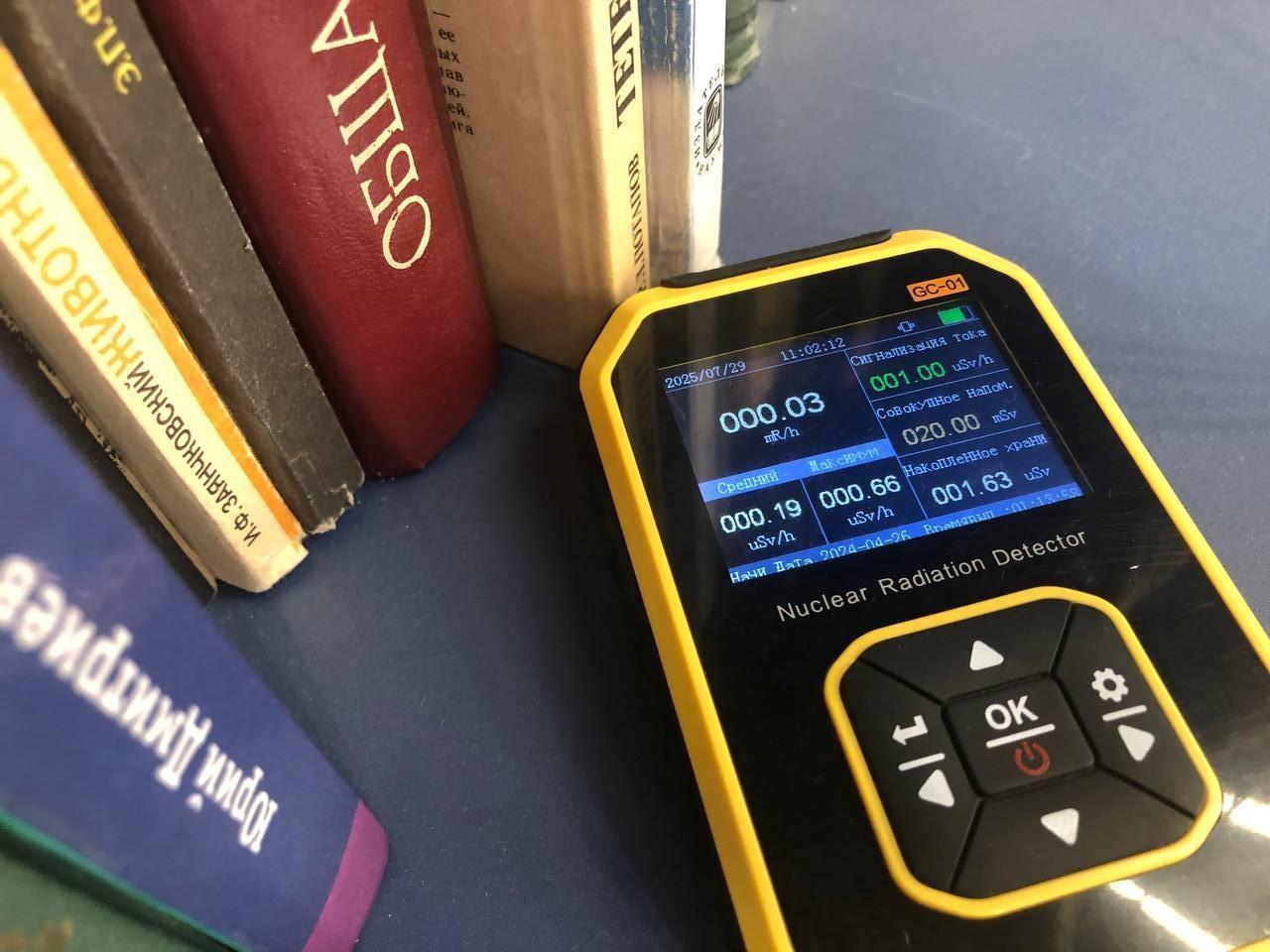
After checking all the exhibits displayed within the museum«s walls, we came to a clear conclusion that the antiquities pose no threat to people.
The editorial staff of NGS42.RU previously searched for radiation in the center of Kemerovo, as well as on the dumps of open-pit mines in Prokopyevsk and other parts of the city.
What area should be checked? Write in the comments!