From Titan to the Stars: The Search for a New Home for Humanity
Titan, Saturn's moon, is considered the best place for the first extraterrestrial colony. But what next? Interstellar travel requires breakthroughs in physics, such as a warp drive.
Feb 14, 2026 0

Source:
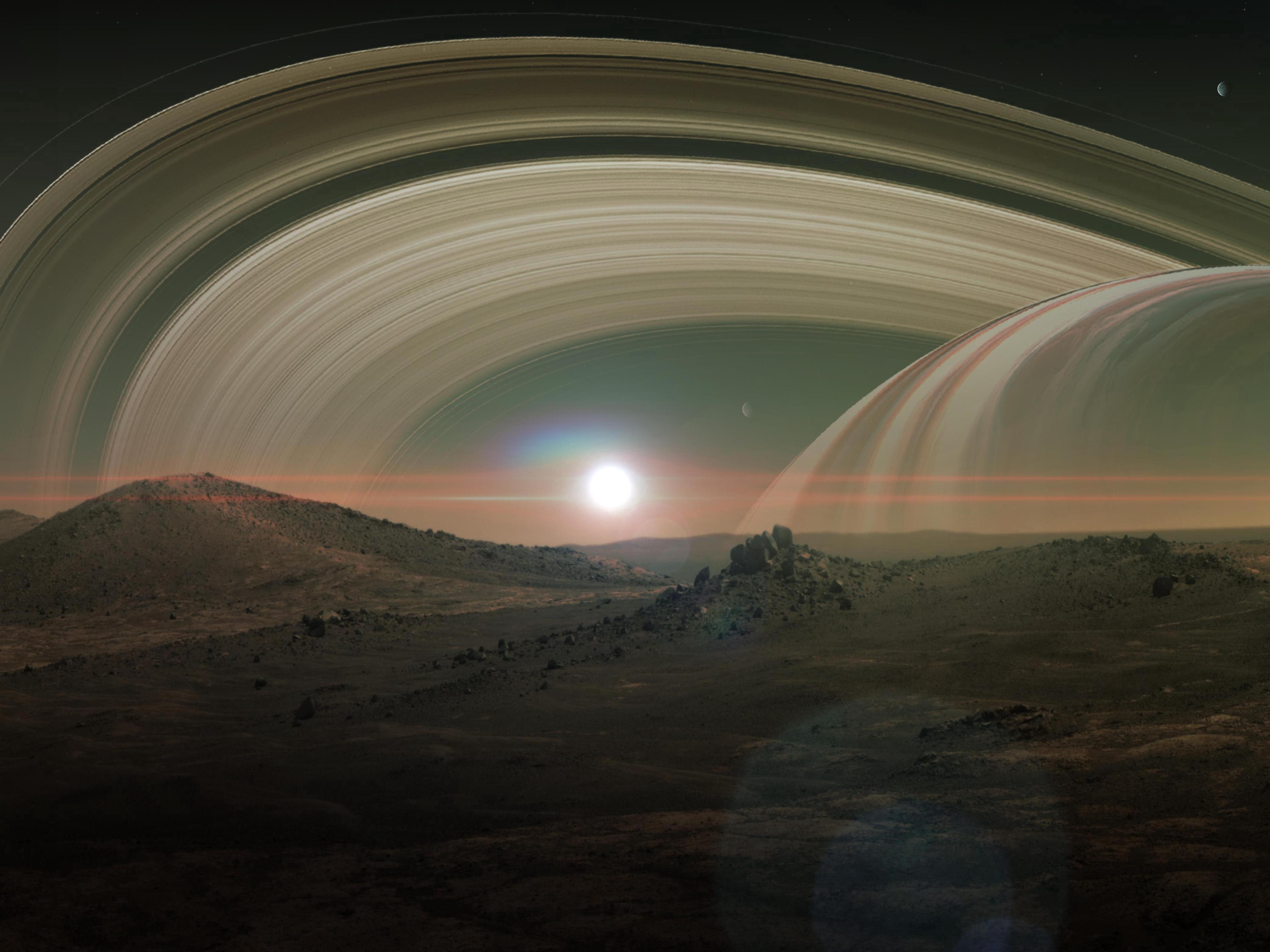
In the book «Beyond Earth,» planetary scientist Amanda Hendrix and science journalist Charles Wohlforth make a bold claim: the best candidate for the first human colony beyond Earth might not be Mars, but Titan — the largest moon of Saturn.
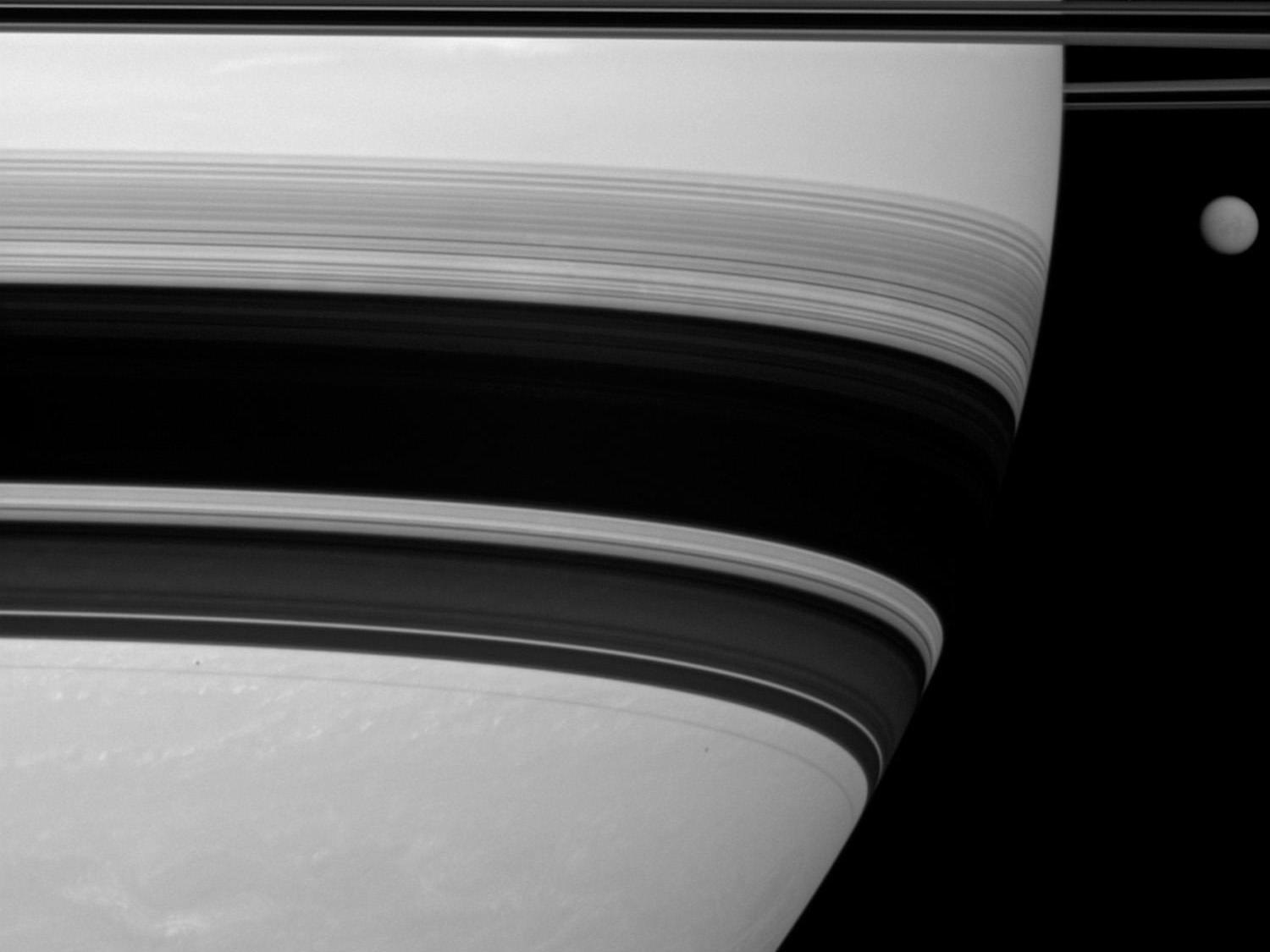
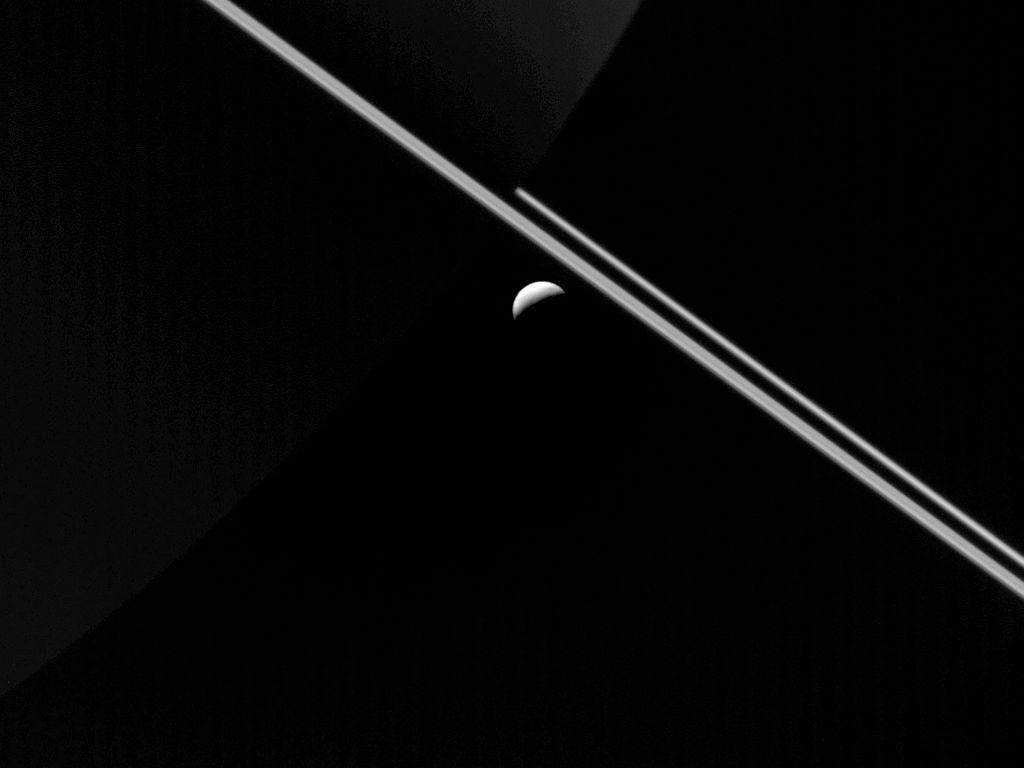
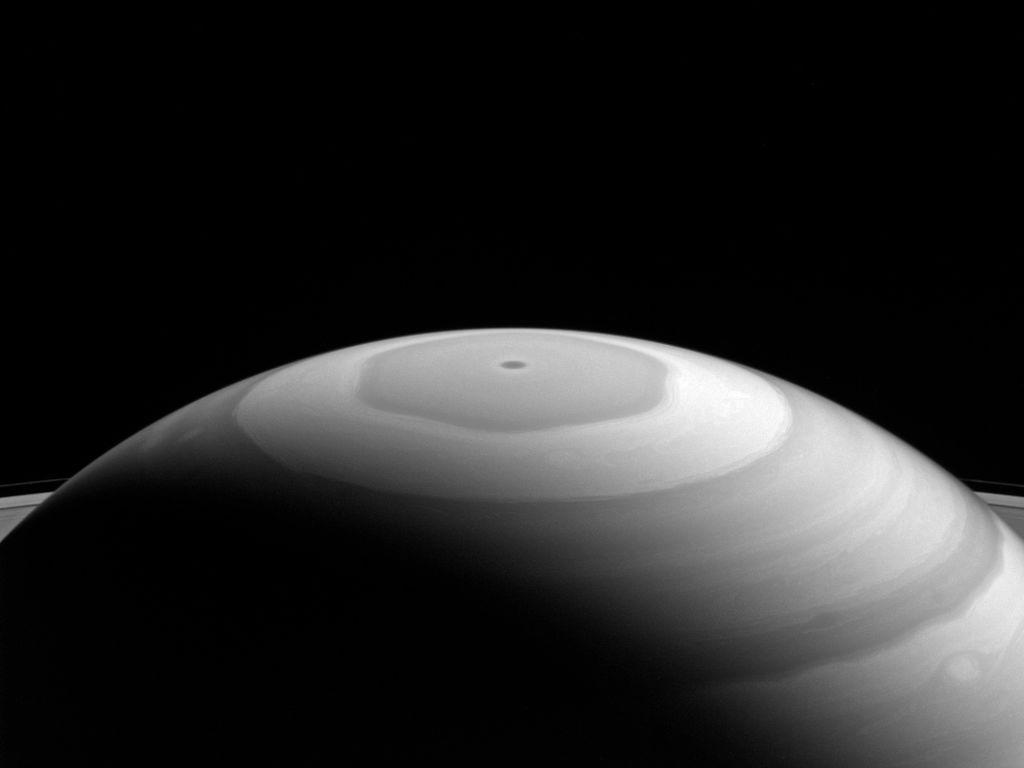
Saturn and its moon Titan in an image from the Cassini spacecraft, which completed its multi-year mission to study the planet«s system in 2017.
Source:
Titan has a dense atmosphere that protects against cosmic radiation, a relatively mild climate, and vast reserves of water in the form of ice, as well as hydrocarbons that can be used to produce fuel and energy. This makes it one of the most promising places for establishing an autonomous settlement in the Solar System.
Source:
But even if the colonization of Titan becomes a reality, sooner or later humanity will consider the next step — travel to other stars. And here arises an almost insurmountable obstacle: distance.
Source:
The nearest star to us, Proxima Centauri, is 4.24 light-years away. To reach it at the speed of the fastest manned spacecraft in history (Apollo 10), it would take over 100,000 years. And the nearest potentially habitable planet is likely even farther.
Source:
Einstein«s special theory of relativity sets a hard limit: nothing can move faster than light. As one approaches this speed, time for the moving object slows down. Even imagining a ship accelerating to near-light speeds, a journey to another star system would take many years or decades by Earth»s standards, creating insurmountable problems for the crew — from cosmic radiation to psychological stress and life support.
Source:
Some futurists propose a radical solution: change human nature itself. Entrepreneur and writer Juan Enriquez, for example, believes that the fragile carbon-based biological form of life would not survive such a flight. He suggests that the only chance is to abandon biological bodies, «transferring» consciousness into more durable silicon-based carriers capable of existing for thousands of years.
Source:
However, such scenarios belong to such a distant future that any predictions become speculative. By the time humanity masters the outer planets, technology and society will change beyond recognition.
Is there a loophole in the physics we know that would allow us to bypass the speed of light limit? Theoretically — yes, if we learn to control the very fabric of space-time.
After the Big Bang, the universe expanded faster than light, but the laws of physics were not violated because space itself was expanding; nothing inside it moved superluminally. If we could locally compress space in front of a ship and stretch it behind, the craft could reach its destination without formally exceeding the speed of light. This is akin to walking on a moving escalator.
In 1994, Mexican physicist Miguel Alcubierre, inspired by the TV series «Star Trek,» published a mathematical justification for such a «warp drive» (from the English warp — curvature). His equations showed that if exotic matter with negative mass or energy exists, it could create a «bubble» of curved space-time around the ship.
Inside this bubble, space remains flat, the ship is motionless, and the crew experiences no g-forces. But the bubble itself, moving due to the deformation of space, can, from the perspective of an external observer, travel faster than light.
Where to get this exotic matter? Quantum field theory allows for the existence of negative energy even in a complete vacuum. A clear evidence of this is the Casimir effect: two metal plates placed in a vacuum at an extremely small distance inexplicably attract each other due to fluctuations in quantum fields. Some physicists interpret this as a manifestation of negative vacuum energy in the narrow gap between the plates.
However, Alcubierre«s initial calculations showed that creating a warp bubble would require a colossal amount of exotic matter — a mass comparable to that of Jupiter. The physicist himself considered this practically impossible and abandoned further research.
In 2011, NASA engineer Harold «Sonny» White proposed a modification of the idea. He showed that if the geometry of the ring of exotic matter around the ship is changed, making it not thin like a hoop, but thick like a lifebuoy, and varying the field parameters, the required amount of energy sharply decreases.
According to White«s updated calculations, to create a bubble 10 meters in diameter, moving 10 times faster than light, just one ton of exotic matter might be enough — a fantastic reduction of 24 orders of magnitude compared to the initial estimate.
White heads the Eagleworks laboratory at the Johnson Space Center, where he is working on an experimental setup on an initiative basis. Its goal is to create a microscopic warp field and detect it using ultra-precise instruments. White compares his experiment to the «Chicago Pile» — the first nuclear reactor assembled in 1942, which, modest in scale, opened the way to the atomic era.
Despite the enthusiasm, many leading physicists are skeptical of the idea. Larry Ford from Tufts University mathematically proved that negative energy cannot exist in large volumes for a long time — otherwise, perpetual motion machines would be possible and the second law of thermodynamics would be violated. Alcubierre himself also expresses doubts about the feasibility of the concept.
In response, White proposed a clever thought experiment. What if instead of one large zone of negative energy, billions of microscopic Casimir cavities are created, assembled into a structure resembling a sugar cube, and then such «cubes» are composed into the necessary ring? In his opinion, this could provide a stable effect without violating fundamental laws.
Research at the intersection of general relativity and quantum mechanics is the cutting edge of modern physics. New theories, such as string theory or loop quantum gravity, may someday give us tools to manipulate space-time. For now, the warp drive remains a hypothetical possibility on the verge of science fiction.
As Sonny White notes, the answer to whether it is achievable might come in twenty years, two hundred years, or never. But if this dream ever becomes reality, our entire galaxy — the Milky Way — will be within reach.
While theorists ponder the stars, humanity«s practical steps are aimed at closer goals. Interest in Titan as a potential new home is only growing. In 2027, NASA plans to launch the Dragonfly mission — an unmanned aerial vehicle that will study the chemistry and geology of this amazing moon in detail.
The search for a new home for humanity beyond Earth is a path full of seemingly insurmountable barriers as well as amazing glimmers of hope. It begins with the colonization of Titan in our Solar System and, perhaps, will someday continue to other stars — if science finds a way to bypass the fundamental limitations discovered by Einstein.
Read more