‘Cheating death’: Siberian research treats animal tumors for cancer insights
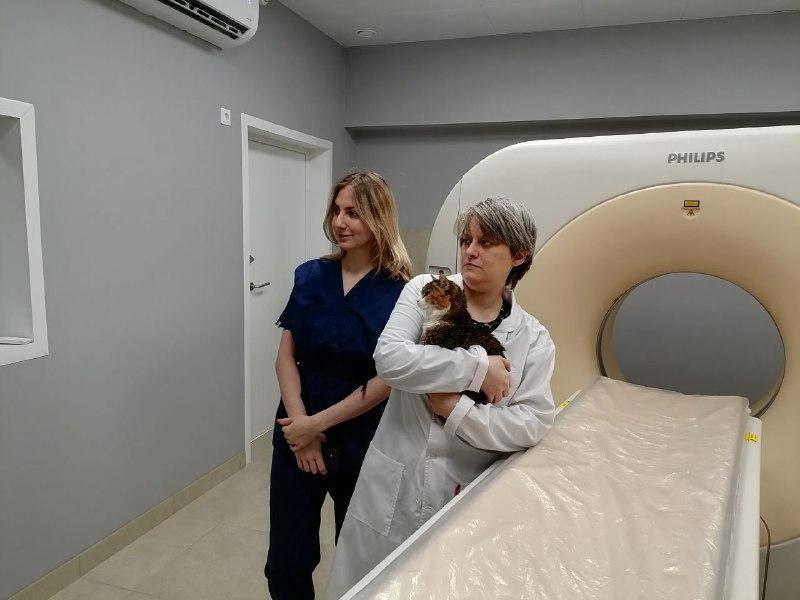

Siberian scientists have launched a joint project for the diagnosis and treatment of malignant neoplasms in pets. In Novosibirsk«s Akademgorodok, a powerful tomograph has been installed, which is used to examine cats, dogs, rabbits, and even mini-pigs. For treatment, the animals are taken to nearby Tomsk, where they undergo radiation therapy.
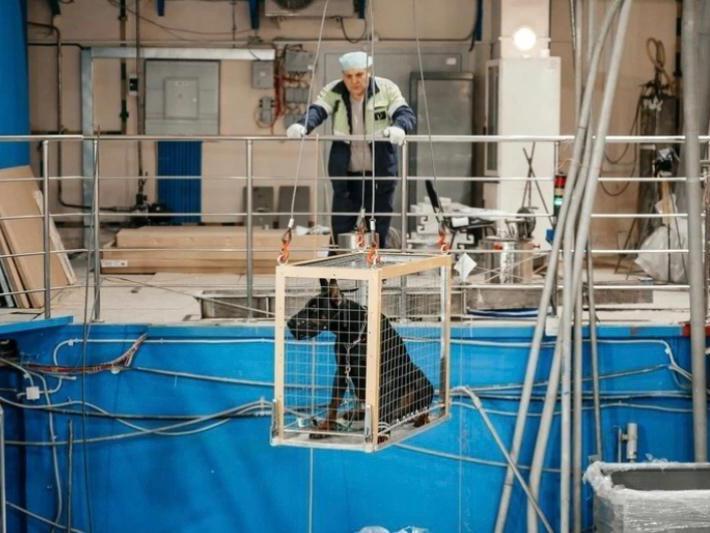
NGS.RU spoke with the project curator and a representative from the shelter, from where an elderly but lively cat with a difficult fate was taken for treatment.

Modern Technology for Pets
The non-profit organization «Siberian Research Center for Medicine and Biotechnology» (Sibbiotech) has been working on helping animals with tumors for several years, collaborating with laboratories at Novosibirsk State University (NSU), Tomsk Polytechnic University (TPU), and other institutes.
«Our work is primarily research-oriented, with the goal of gathering a sufficient number of successful cases. Under the program, since 2021, we have been conducting radiation therapy using neutron capture for cats and dogs with spontaneous malignant tumors. The method has been used on over 120 animals with neoplasms of various origins,» project curator Nikolai Kanygin told NGS.RU.
The laboratory that became the predecessor of the current one was established in 2017, and the idea of neutron capture was developed in Japan back in the 1970s, explained Nikolai Kanygin. Researchers used nuclear reactors to treat people, but since the results were ambiguous and side effects were consistent, the program was suspended.
In Siberia, experiments began when the Institute of Nuclear Physics started constructing an accelerator, and in Tomsk, they managed to generate a beam with sufficiently good properties. The method was tested on cells, tissues, and then on mice implanted with tumor cells. But large mammals are much closer to humans. So, together with Novosibirsk veterinary clinics, they started looking for patients among cats and dogs with spontaneous tumors.
«These tumors are identical to human ones, and from the perspective of researching beam properties and method characteristics, this is much more promising. We had a hypothesis that a radioprotector would accumulate selectively, destroying specifically tumor cells, and it was confirmed: tumors are destroyed. And although damage to other tissues is present, of course, it is not as severe as with other types of radiation therapy,» emphasized Nikolai Kanygin.
Among such damages, he primarily mentioned hair loss in animals. Other changes, according to the expert, are rare, typical of radiation effects, and are managed with standard therapy.
A Chance for Ada
One of the center«s patients was Ada, a cat from the Novosibirsk cat shelter «Legacy of Bastet.» For many years, she lived in the basement of a multi-story building in Ikskitim. Novosibirsk veterinarians caught her, spayed her, and removed a mammary gland tumor.
Ada behaved aggressively, hissing and growling, so she was returned to her previous habitat: let her live in her familiar environment, while a local retiree fed her. But the woman refused to continue caring for Ada, and volunteers took the cat to Novosibirsk.
Before placing her in the shelter«s care, tests were taken from Ada. It turned out that the cat had feline leukemia virus. Sometimes it leads to tumor growth, so soon she needed to have tumors removed from her mammary glands again. In total, besides spaying, the cat underwent four more operations.
«Ada has been cheating death for a year now. She had two operations under our care, and each time we were afraid to take her: what if she couldn«t handle the anesthesia. She handled it and has now outlived four other leukemic cats that came to the shelter around the same time as her,» said the cat»s curator, Imran Tano. — «Yes, she is already less mobile, mostly sitting on one sofa or another, going down mainly to use the litter box. And why else? Food is brought to her nose. Her appetite is consistently good, but she eats carefully, dignifiedly, like a countess, so she is often robbed by other cats.»
As it happened, the scientific consultant of Sibbiotech, head of the Laboratory of Nuclear and Innovative Medicine at the Faculty of Physics of NSU, Vladimir Kanygin, came to the shelter to adopt a pet. In October 2025, NGS.RU told the story of cat Perfa — she was the one who went to live with the scientist«s family. Ada, who had undergone her fourth tumor removal at that time, impressed the researcher with her love for life, and he offered her to participate in the project free of charge.
At the end of November, the cat underwent a computed tomography scan, and besides tumors and enlarged lymph nodes, metastases were found. But Ada continued to stubbornly demand food, move independently, use the litter box, and even purr. And the scientists sent her for radiation therapy using neutron capture.
«Ada traveled to Tomsk, where at TPU she was irradiated. We were warned that the goal is to assess the method«s effectiveness in various types of studies. Recently, she had a repeat CT scan. We assume that at the end of January, the cat will go for a repeat procedure, after which doctors expect her to go into remission,» said Imran Tano. — «In any case, she has shown herself to be very resilient and has served science. Plus, not every basement cat gets a chance at cancer treatment in old age.»
Cats and dogs become patients of the center in equal proportion. Their fates continue to be monitored, and statistics are kept.
«Most animals demonstrate stable remission after radiation therapy, stabilization or reduction in size of malignant neoplasms. Life expectancy has increased: usually at least six months after the procedure, often longer,» noted project curator Nikolai Kanygin.
As an example, he cited a cat with an extensive facial tumor. She received a verdict from veterinarians: no more than six months to live. But after irradiation, over three years have passed, and the tailed patient is still alive. And a dog with a perianal gland tumor, instead of the couple of months allotted to her, has been living for a couple of years.
For people, this method is not yet used in Russia: people undergo gamma therapy, which involves more sessions and carries more complications. In the future, when enough material is gathered proving the effectiveness of this therapy for different types of tumors, the experience may be transferred to humans. Although in China, such experiments are already being conducted.
CT for Pigs and a Mammoth
To diagnose diseases, since 2023, together with the «Laboratory of Nuclear and Innovative Medicine at NSU,» specialists from Sibbiotech have been performing tomography on animals using a CT scanner.
«This is a top-class tomograph; it allows obtaining high-resolution images, but according to the license, it is used only for animals,» explained Nikolai Kanygin.
The equipment serves not only for examining cats and dogs with tumors but is also actively used by project partners. For example, in autumn 2025, mammoth tusks found in Yakutia were brought for tomographic examination. Defects found on the bone remains will be compared with defects on elephant tusks from India. In the future, this will make it possible to track the evolution of dental diseases.
And the study of mini-pig hearts will allow for a better understanding of the application of cellular technologies and improve new artificial heart valves.
«At the Meshalkin Center (the E.N. Meshalkin National Medical Research Center. — Ed.) artificial heart valves are being developed. This research was needed, in particular, to assess how their properties compare with those of living hearts. And the pig was originally the closest model to humans. Using CT angiography, it is possible to evaluate parameters such as blood flow velocity, blood density, changes in the lumen of blood vessels, heart chambers, which, in fact, they were able to do thanks to our tomograph.»