Asteroid on Collision Course with Moon by 2032
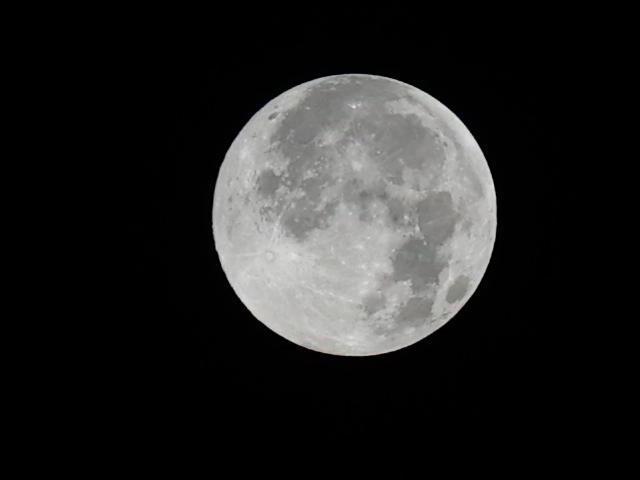

Scientists will be able to observe the formation of a large crater in real time
The Moon could be the target of one of the most powerful cosmic impacts in recent history. Asteroid 2024 YR4, with a diameter of about 60 meters, could collide with Earth«s natural satellite on December 22, 2032.
As reported by the portal Universe Today, the probability is about 4%. Despite the low odds, the threat is already considered real, prompting scientists to prepare for potential consequences that combine unique opportunities and serious dangers.
The collision would be catastrophic in force: the released energy could be comparable to the explosion of a thermonuclear charge. This is a million times more powerful than the last major lunar impact in 2013. The result would be the formation of a new crater about a kilometer in diameter and up to 260 meters deep, and the flash from the impact would be visible from the night side of Earth.
For science, this event is a free experiment on a planetary scale. Scientists will be able to observe the formation of a large crater in real time for the first time, study the cooling of molten rock, and record a record «moonquake». Data from seismic waves will reveal the secrets of the Moon«s internal structure.
However, the cosmic fireworks pose direct threats. The impact will eject a huge amount of debris into space. Calculations show that up to 400 kg of lunar material could reach Earth, creating a meteor storm in the atmosphere with a peak of up to 20 million «shooting stars» per hour.
The main risks are concentrated in two areas:
Earth«s Surface. Although most fragments will burn up in the atmosphere, there is a chance that individual particles could fall, especially over sparsely populated regions of South America, North Africa, and the Arabian Peninsula. The fall of even a small fragment in an urbanized area could lead to destruction.
Orbital Infrastructure. The stream of high-speed debris poses a serious danger to satellites in near-Earth orbit. In the worst-case scenario, this could trigger a cascade of collisions — the Kessler syndrome, which would render near space unusable for a long time.
In light of the growing risks, space agencies are already preliminarily discussing the possibility of a mission to deflect asteroid 2024 YR4. The final decision will be made as its trajectory and collision probability are refined. For now, humanity is faced with a rare phenomenon where the thrill of scientific discovery goes hand in hand with the need for a sober assessment of dangers.