St. Petersburg to tighten rules for kiosks on private land
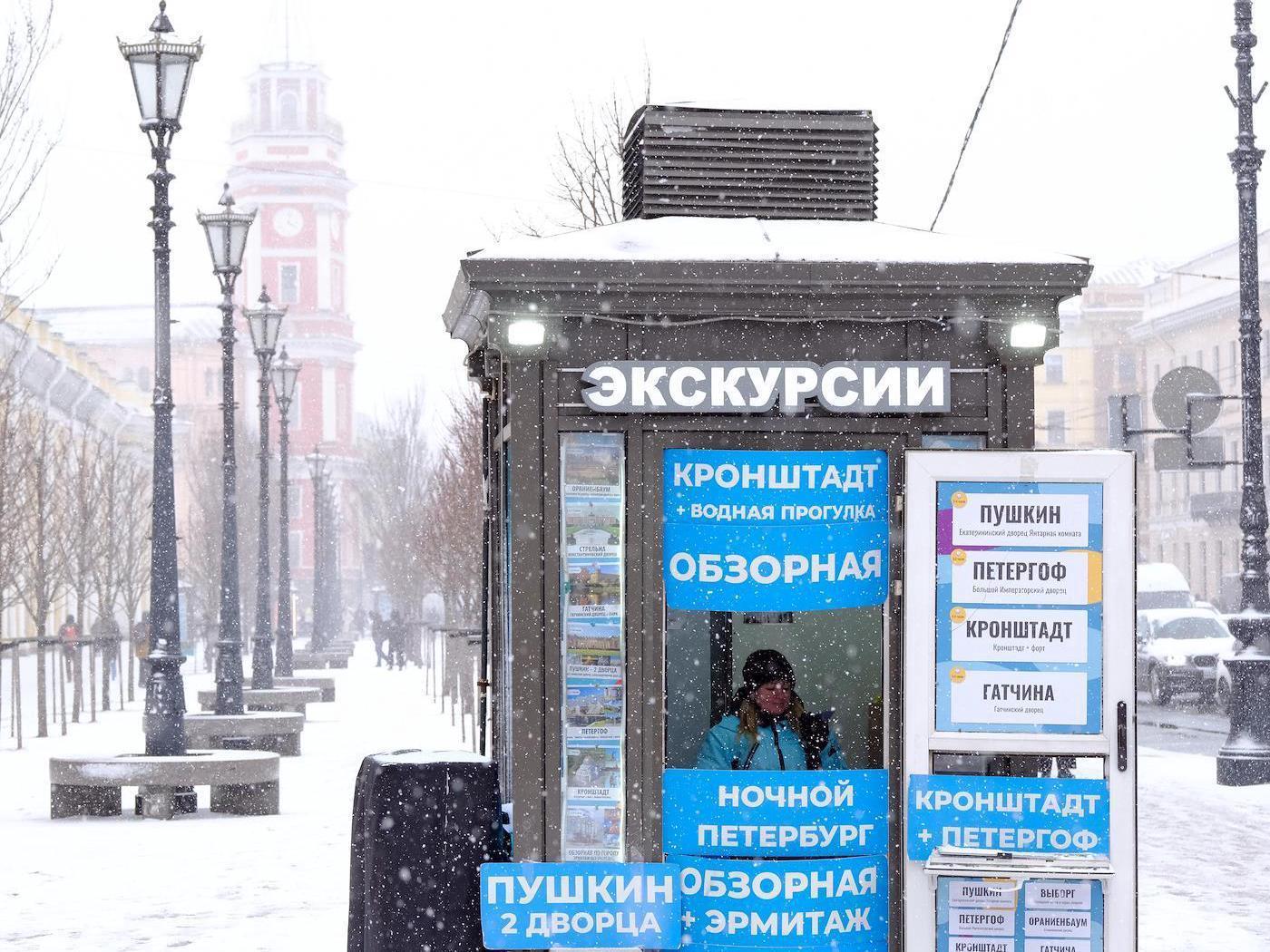

Starting September 1, the administration of St. Petersburg will expand its authority in regulating street trade. Officials will be able to approve the placement of kiosks not only on municipal but also on private land. The tightening of rules will affect several thousand pavilions, and many of them may cease operations.
The upcoming changes were announced by Governor Alexander Beglov. The bill granting regional authorities new rights was adopted by the State Duma on January 27 and approved by the Federation Council on January 28. The initiator was the St. Petersburg government.
What will change
The document introduces amendments to the federal law «On the Fundamentals of State Regulation of Trading Activities in the Russian Federation». The main innovation is that regional authorities will have the right to set rules for non-stationary trading objects (NTOs) on private lands.
Currently, locations for kiosks are determined by the NTO Placement Scheme, approved by Smolny (the city government), but it only applies to city territory. On private plots, businessmen only need to agree with the landowner.
According to the adopted law, a subject of the Russian Federation can adopt a regulatory act requiring the inclusion of NTOs on private lands in the placement scheme. Thus, installing a stall on private territory will only be possible with officials« permission.
The procedure for inclusion in the scheme will include requirements for the object itself and its installation location.
About a year ago, St. Petersburg deputies planned to introduce a similar legislative initiative at the federal level. They proposed that the placement of NTOs on any lands should occur according to the scheme, and pavilions not included should be subject to demolition. However, the authors of the final bill were senators Andrey Kutepov from St. Petersburg and Alexander Dvoinykh from Moscow Oblast.
Reasons for tightening control
Alexander Beglov explained that kiosks on private territories are often placed in violation of sanitary norms, improvement rules, and land use regulations. «This has caused justified dissatisfaction among residents,» the governor emphasized.
The St. Petersburg authorities intend to apply the federal law taking into account the city«s specifics. »We will continue comprehensive work to reduce the number of illegal trading objects and improve the quality of the urban environment,« Beglov stated.
Vice Governor Alexey Korabelnikov, overseeing the property control committee, added that the innovation also applies to plots in common shared ownership of apartment building residents. According to him, authorities receive many complaints about trading objects on private lands. Establishing uniform requirements and including NTOs in placement schemes will increase the transparency of regulation and ensure systematic control.
The issue of kiosks on private territory has been repeatedly raised in the Legislative Assembly. Last week, parliament speaker Alexander Belsky reproached the leadership of the Property Control Committee (KKI) for being unable to remove a vape stall near Gostiny Dvor for two years. The committee responded that the object is located on the land of an apartment building, and the owners have the right to manage it.
Moreover, authorities have been unable for years to eliminate non-stationary trade near Primorskaya metro station, which is also conducted on private land.
Entrepreneurs« concerns
According to market estimates, in St. Petersburg, about 2,000 private plots are used for non-stationary trade. Several thousand pavilions and kiosks are located on them.
The head of the Union of Small Enterprises of St. Petersburg, Vladimir Menshikov, clarified that it is not only about adjacent territories but also about lands intended for trade, for example, near hypermarkets. «The exact number is unknown. But it could involve tens of thousands of jobs, this is a fairly serious sphere of entrepreneurial activity,» he noted.
It is difficult to accurately estimate how many objects will not be included in the city scheme. However, business does not doubt that authorities will use the new powers to the maximum.
At the end of December 2025, a draft resolution was published that introduces amendments to the document prohibiting peddling trade. According to it, in St. Petersburg, they may ban the installation of kiosks on the territory of apartment buildings and on private land. Specific prohibition zones should be determined by the committee on industrial policy.
Market participants call on officials to engage in dialogue when developing regional rules. «It is important that this document, which affects both workers and consumers, has the broadest possible discussion, and it will take into account the supremacy of private property rights and the right to conduct legal entrepreneurial activity,» Menshikov emphasized. He also reminded that NTOs must comply with improvement rules regardless of the form of land ownership.
At the beginning of 2025, the St. Petersburg authorities conducted a large-scale cleanup of the non-stationary trade placement scheme. According to Alexander Beglov, last year, 3,303 places that did not comply with the law were excluded from the scheme, and 1,597 objects meeting the conditions were preserved. Also, 125 city land plots were cleared of illegal pavilions.