Deputies criticize cancellation of benefits for buying municipal land
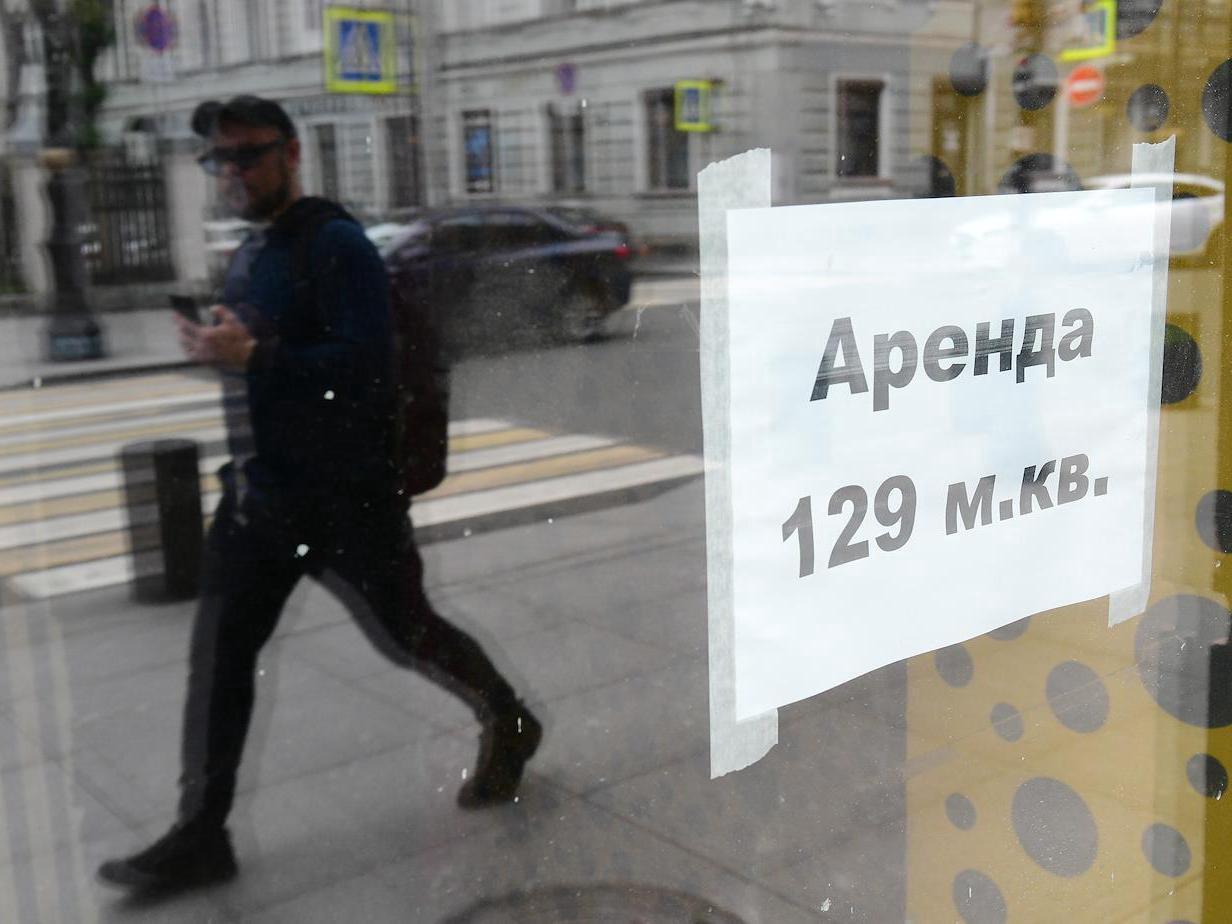

The Legislative Assembly of St. Petersburg approved in first reading an initiative abolishing a number of benefits for buying land plots. Officials justify this by the low demand for support measures from businesses. However, deputies saw in the proposal a «two-step move»: after canceling the benefits, the city may increase rental rates, depriving entrepreneurs of alternatives.
What benefits are planned to be canceled
On 28 January, at a plenary session, the governor«s representative Konstantin Sukhenko introduced a bill to cancel part of the benefits. He stated that the goal of the changes is to establish uniform rules, not to increase budget revenues.
The adjustment concerns the calculation of the purchase price for plots where buildings already stand. According to the current law, the price is usually equal to 100% of the cadastral value, but there were exceptions. For example, for healthcare, culture, or sports facilities occupying at least 70% of the plot area, the land could be bought for 25% of the cadastral value.
Moreover, there was a discount depending on the share of area occupied by the building. As deputy Natalia Astakhova notes, thanks to this, shops, offices, and warehouses often bought land with a discount from 30% to 75%.
Deputy head of the Committee for Property Relations (KIO) Maxim Pokhil reported that from 1 January 2022 to 12 May 2025, only 190 plots were bought under the preferential scheme. Officials deemed the measure underused and proposed setting the fee at 100%.
Preferential purchase at 25% will be retained for:
- plots under industrial facilities;
- territories of special economic zones with buildings;
- plots with buildings created within strategic investment projects.
Also, a 50% discount for plots provided on lease for comprehensive territory development is being canceled. There have been no such cases in the last three and a half years. At the same time, the benefit for owners of individual residential and garden houses remains—they can buy the land for 5% of the cadastral value.
Criticism from elected representatives
Deputy Alexander Rassudov inquired why businesses so rarely used this seemingly advantageous mechanism. Maxim Pokhil answered that for many objects, the rent is very low—less than 2% of the cadastral value.
Parliament speaker Alexander Belsky actively joined the discussion, trying to find out from officials the ultimate goal.
«You are proposing quite harsh measures, not giving a choice. What do you do next, triple the rent? And what should businessmen do?»he asked. Belsky stated that such a situation puts business in an «awkward position».
When Pokhil mentioned that due to the benefits, the budget missed out on 2.4 billion rubles (approximately $27 million at current rates), the speaker responded sharply:
«Stop talking nonsense, in the world they don»t count lost profit like that. You must honestly tell business: you will pay higher rent, and we won«t let you buy the land.»
Deputy Alexei Zinchuk criticized the head of KIO Vladimir Uvarov for his absence from parliamentary sessions. Alexander Rassudov drew attention to the constant indexation of rent and the growth of cadastral value:
«How can anything be predicted? And at the same time, business has no influence on the decisions made in KIO.»
Head of the United Russia faction Pavel Krupnik supported the criticism:
«If no one bought at 25%, then who will buy at 100% of the cadastral value?»In his opinion, for business now it is «the most difficult time since World War II».
Deputy from the Communist Party of the Russian Federation (CPRF) Irina Ivanova proposed extending the 25% benefit for social, cultural, and domestic facilities at least for a year. Natalia Astakhova spoke in favor of a differentiated approach instead of radical measures.
Konstantin Sukhenko in response repeated that the benefits are being canceled due to their lack of use, as well as due to the risk that after purchase, the owner might change the purpose of the object to commercial.
Questions about the speed of adoption
The city government approved the bill on 30 December 2025, and on 12 January it was submitted to parliament. Governor Alexander Beglov asked to consider it as a priority. The discussion took place only at the urban planning commission two days before the plenary session.
At the session, Sukhenko asked for only a few days for amendments so that businesses would learn the new rules faster. Deputies pointed out the haste. In the end, 35 people voted for the document, but they took two weeks for revision to arrange a confrontation between officials and entrepreneurs at specialized commissions.
After the session, Alexander Belsky told journalists:
«First of all, we must be honest with business. I think we need to approach this issue objectively and honestly explain the rules to business.»Deputy Marina Shishkina added:
«Laws of this kind should not be adopted quickly.»
Practical difficulties of purchase
Alexander Rassudov noted that Smolny (the St. Petersburg government) had previously been reluctant to permit purchase, forcing businesses to go to court. He asked for statistics on court decisions. Maxim Pokhil stated that the absolute majority of plots the city sold voluntarily.
However, court data indicates otherwise. For 2024–2025, the Arbitration Court of St. Petersburg and Leningrad Oblast considered about 150 disputes over refusals to sell land without auctions, said chairman of the judicial panel Alexandra Varenikova. Most often, authorities refuse due to the disproportion between the plot and the building or if the structure is not a real estate object.
«In 2024, approximately the same number of decisions were made in favor of the owner and the authorities, but in 2025, representatives of the authorities won such disputes more than twice as often,»clarified Varenikova.