Yakutia diver on rescues in minus 50°C and battling panic
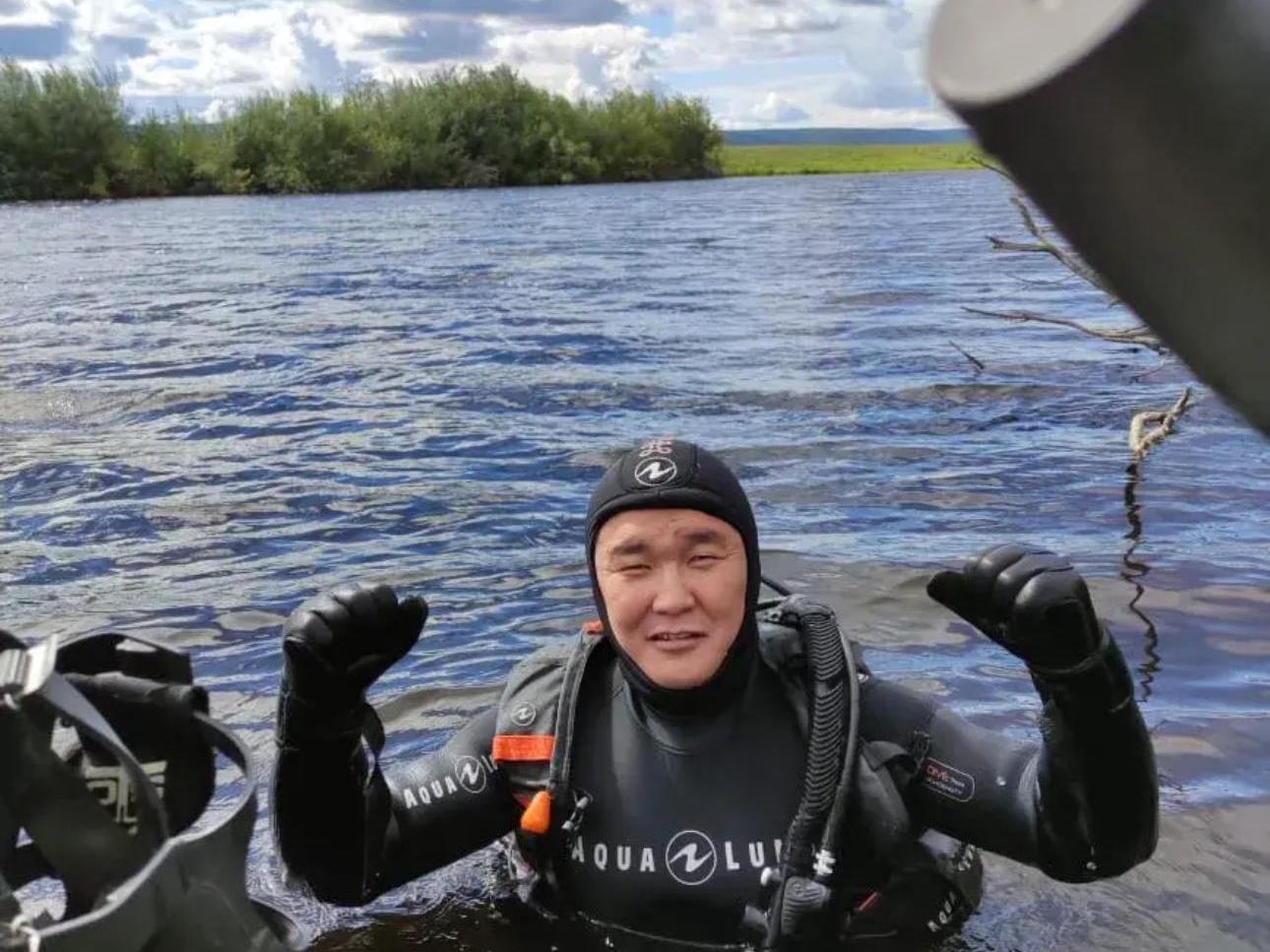

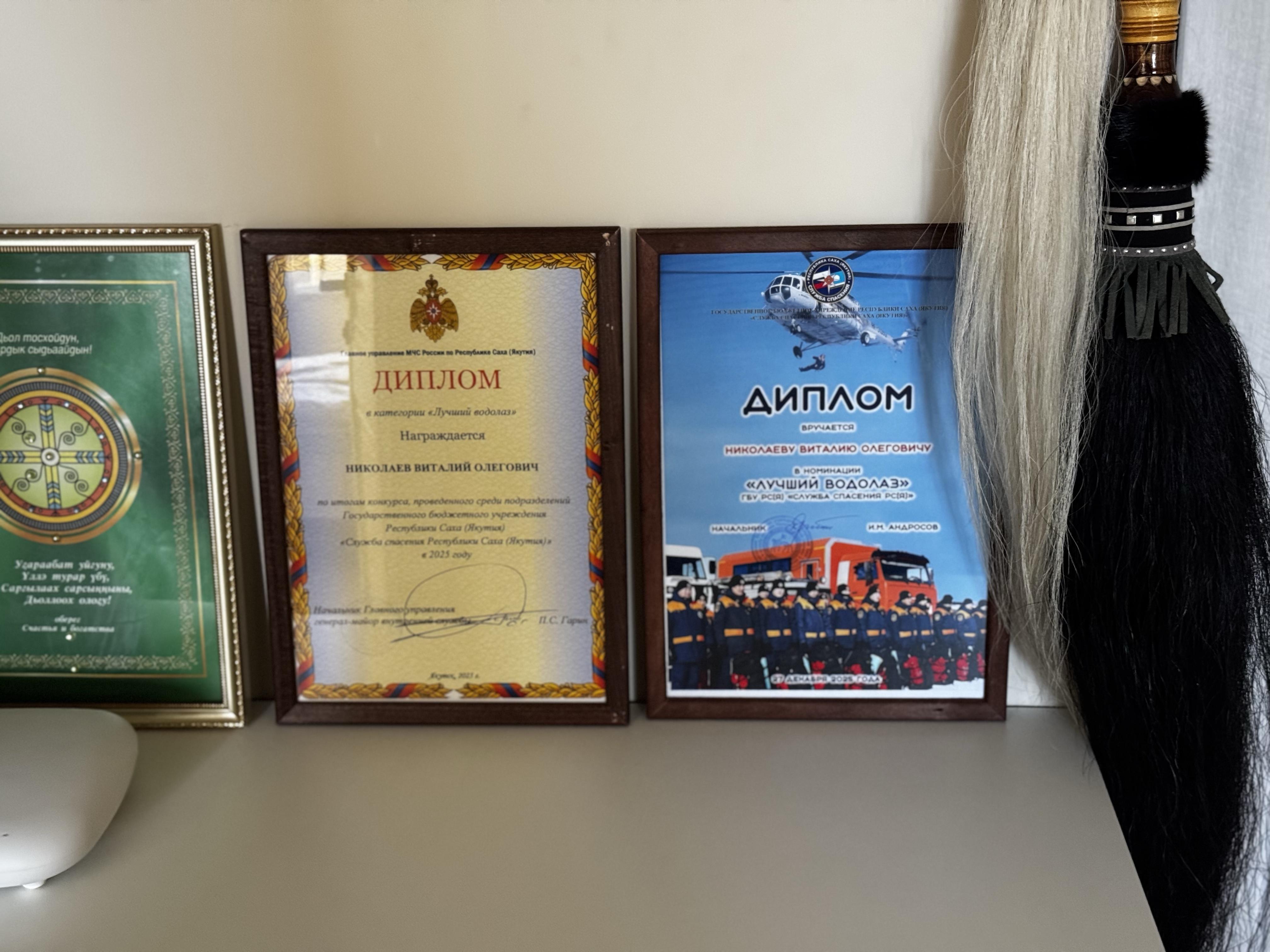
What is it like to be a diver? Constant training, fighting the current, searching for people in near-zero visibility, working with fear, and a great desire to help people. Vitaly Nikolayev was named «Best Diver» twice, in 2022 and 2025. 14.RU found out why divers sometimes have to move on all fours on the riverbed, how to pull people from the clutches of the elements, and about the special language of divers.
Constantly learning
Vitaly Nikolayev is 38 years old, born in the Zhigansky district. He is married and has two children. In 2018, he got a job as a driver for the Yakutia Rescue Service, and in 2021 he became a diver.
— You achieved recognition almost immediately after starting your service. What does this award mean to you?
— To get it, they count points. For example, how many business trips you«ve had. One trip is worth one point, and you can go not only as a diver but also as a driver. You also get a point for every body found.
— How many business trips did you have last year?
— I don«t know exactly, about ten — to the most diverse points of the republic. We travel to all districts; the farthest point in 2025 was the settlement of Tiksi, where a person disappeared in one of the river channels. We searched for him for 15 days.
Twelve people work in the diving unit of the Rescue Service; ten of them are field personnel, two are the deputy head and a diving specialist.
— How did you decide to become a diver?
— When I was a driver, I watched their work, and I liked it, it became interesting. To become a diver, of course, you need to complete training: it starts in winter, and in spring you take a theory exam, after which training descents into the water begin. Sometimes they send you to Moscow for advanced training. Every year we take an exam, it looks like a regular university exam — you draw a ticket and answer. The ticket usually has five questions and a task, for example, how to breathe correctly and calculate oxygen reserves.
— So, math is definitely needed?
— Yes, and physics. There are many nuances in our work.
— Do you remember your first assignment? What were the sensations?
— I remember we were looking for a person in the Tattinsky district; the person disappeared on a lake. I went down, there was zero visibility, I worked by touch and found him quite quickly, so I didn«t really understand what I felt. Finding bodies is always scary, but what can you do? Someone has to do the work.
— How does your workday go if there are no calls?
— We sit in the classroom and study, check our gear. In our work, you have to constantly learn.
What it«s like to dive and what is needed for it
— Yakutia is a region of extreme cold. Do you work in any weather, or are there limitations?
— We try to dive in any weather, if the current allows. A person is missing, we need to help the relatives.
— Are there any rules on how to properly retrieve bodies? Is it considered how long they«ve been in the water, for example? Or do you just grab and pull?
— We try to grab, because the current gets in the way. You have to do everything quickly, or it will float away, God forbid.
— What does your professional gear look like?
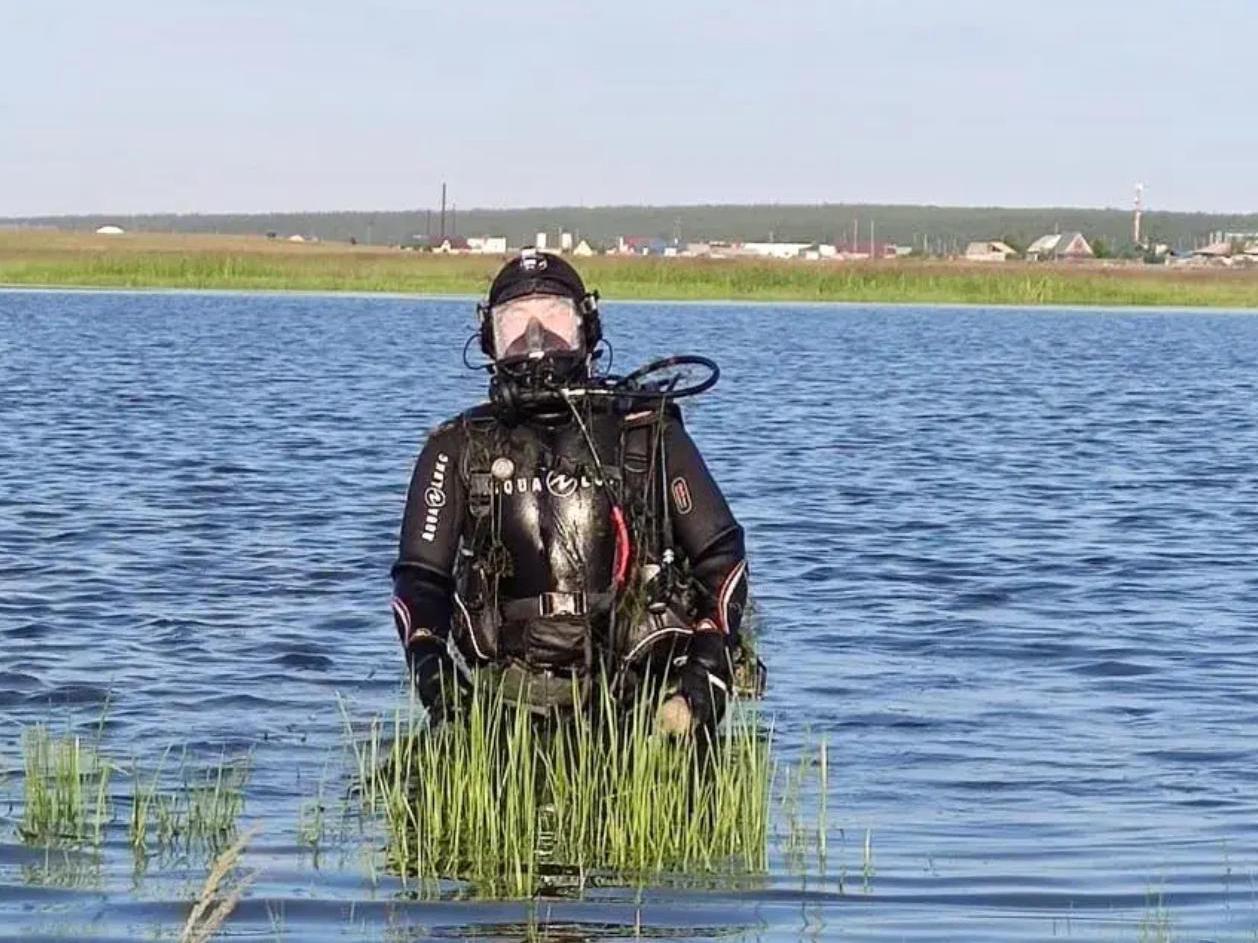
— We have two types of suits — a summer one, called a wet suit, and a winter one. The summer suit is light, and in winter you need to wear extra layers. The oxygen tank itself weighs about 8–10 kilograms (18–22 lb), and there are also fins or weighted boots to walk on the bottom. The oxygen tank has an air supply of 20 liters at 200 barrels (a unit of pressure. — Ed.). This supply lasts differently for everyone, it even depends on a person«s build, but on average it lasts at least 30 minutes.
— How does the dive actually happen?
— A team of four people works — we call it a «station» — the supervisor, the standby diver, the support diver, and the working diver. The support diver monitors the safety of the working diver, controls the equipment, depth, and time spent underwater; you can call him the co-pilot. The standby diver is needed to assist the working diver if, God forbid, something happens to him during the dive.
— Can you describe how the dive feels, especially in winter? Are there any rules about depth? What«s the maximum you can dive?
— When you dive, your hands freeze, you can«t see anything. Divers of the fourth and fifth categories can work at a depth of 20 meters, the sixth and seventh categories — even deeper. I currently have the fifth category. We often train in a decompression chamber — it»s a dome that recreates the same pressure as underwater. It feels like pressure on the body, and sometimes your ears get blocked. To get rid of that feeling in your ears, you need to «clear» them. Everyone has different ways; if the mask allows, you can pinch your nose and exhale, or you can swallow saliva.
We don«t dive if the current is very strong or the depth is too great.
Although sometimes we have to. The relatives are standing there, hoping, asking for help.
— Do you get claustrophobia attacks in the darkness and gear?
— No, they don«t take people like that.
— How do you move in the water? Walk on the bottom, swim?
— Whatever is comfortable; you can go on all fours or even crawl lying down. You can also walk or «clear» a bit and sort of hover in the water. I mostly move on all fours, it«s more convenient, especially when working against the current.
— What is the average current speed in the Lena River?
— About one and a half meters per second, but in mountain rivers it«s even stronger, it»s really tough there. I«ve worked on such rivers in the Tomponsky and Oymyakonsky districts.
«People were driven by panic.» About rescuing people in Darkylakh
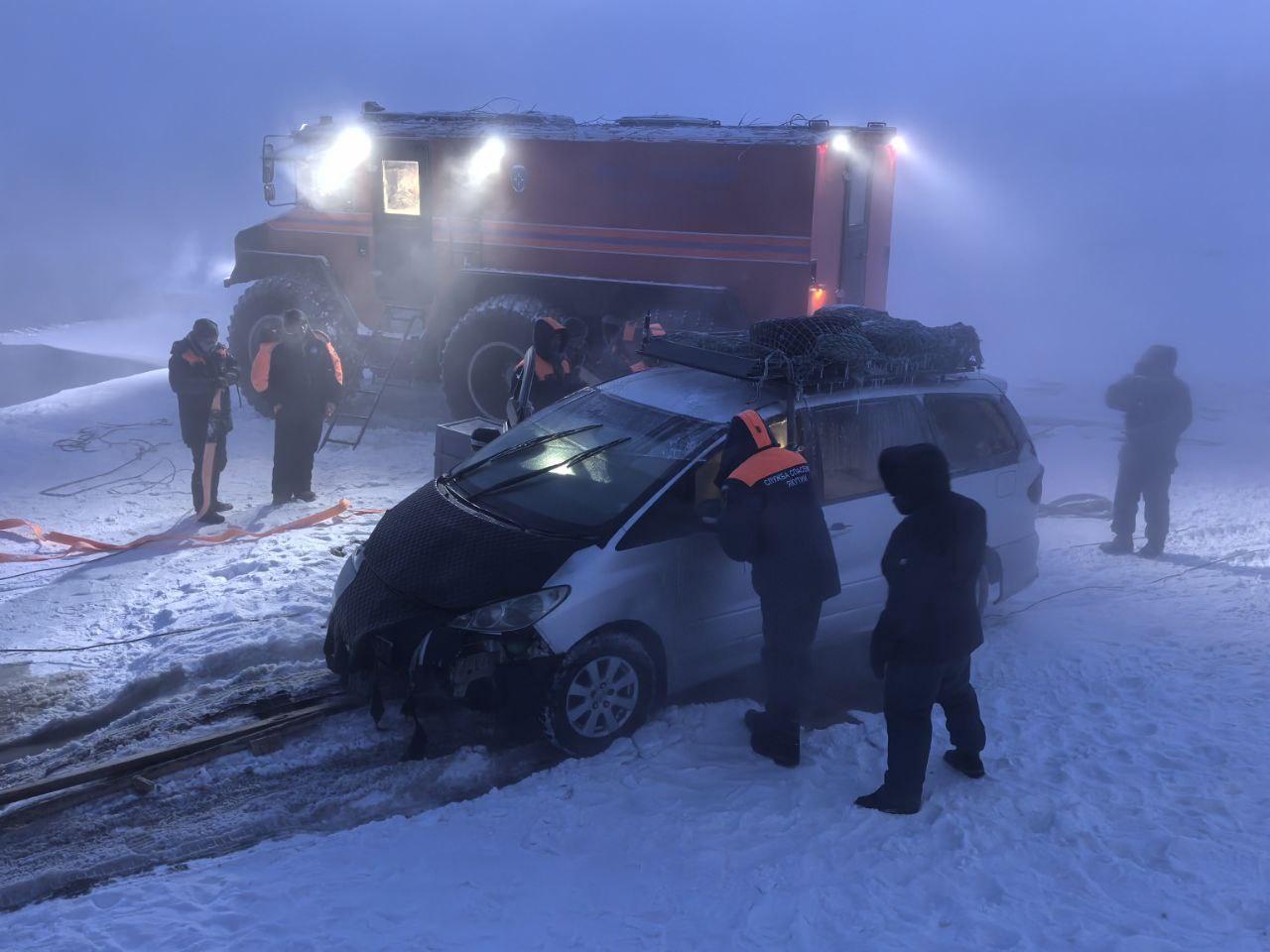
— I know you participated in the operation when a car fell through the ice in the Industrial District of Yakutsk. Can you tell us how it was? I was told that divers tried to hook the car for four hours, but only you succeeded.
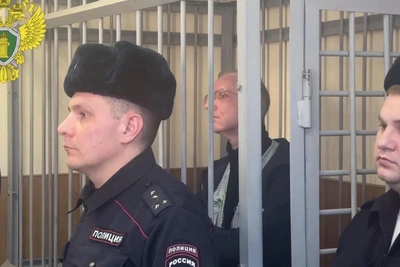
Seven people fell through the ice in Yakutsk on the morning of 27 December. A Toyota Estima drove onto the ice of the Lena River near a wastewater outfall. The driver was an intercity taxi driver; investigators opened a criminal case against him for providing inadequate quality services. Five people were saved; two died — an 11-year-old girl and a 60-year-old man.
— In the morning we were called, the dive started after lunch. The rescuers worked first. That day it was very cold and there was a strong current on the river. To pull out the car, we used a «running» technique — we used a rope with a hook that we hooked onto the trunk. When we surfaced, all the equipment froze very quickly, so we had to pour boiling water on the regulator (a key element of the breathing apparatus that connects the tank and delivers oxygen. — Ed.), it froze, the mask froze, it was very hard.
Our boss dived first, but because of the strong current, he couldn«t do it. A second diver went down, but he got dressed outside, so everything froze on him. The third was a federal diver from the Ministry of Emergency Situations (EMERCOM), but he took too long a cable, which was hovering in the water, and that interferes with work — it»s hard to drag anything in the water, especially in such a current.
But he managed to inspect the site, and when he came out, he told me what the situation was like. So I went. Visibility was almost zero, only about 20–30 centimeters (8–12 inches). I approached the car from behind; the current weakened there because it was facing into the current. I tried to get to the wheel, but the current kept ripping off my mask. I fumbled around for a long time, but in the end, I managed to hook the hook onto the trunk, and it worked.
— Aren«t you scared?
— The people in the car were panicking, that«s for sure. Many wrote in the comments: »How could they leave a child?« But in such a situation, people are driven by panic and the instinct of self-preservation.
Like Morse code, but for divers
— How do you prepare psychologically for a dive? Do you discuss your fears in the team? What is it like working with relatives?
— Relatives of the victims sometimes put pressure on you, but you can understand them in any case: they are in shock. Almost everyone thinks that if a diver comes, it means they«ll find them immediately, but that»s not always the case. People think everything is visible underwater.
It«s not. Especially in summer, visibility is poor: silt rises, there»s current. For example, searching an area of eight square meters can take a whole hour, so we can start working at 10 a.m. and finish at 10 p.m.; that happens. Not always, but it does.
We do discuss fears, of course. The unknown is scary, and you«re left alone with it. Darkness is also frightening; we work mainly by touch. If there»s no communication, it can also be scary, but for that case, you talk through the cable. The radio is built into the full-face mask.
— How does that work?
— It«s like Morse code, but divers have their own. For example, if you tug the cable three times — that means »exit,« tug twice and shake — that»s «to the left.»
— This must be a terrible strain on the body — constantly experiencing pressure.
— We don«t spend all our time underwater; we have a side-scan sonar (a device used as a scanner. — Ed.). We drive around and study the area with it; if we see something suspicious, we go down.
— So, bodies are found on the bottom? How long does it take for them to surface?
— After about 15 days, until then they«re at the bottom. And the body doesn»t surface immediately, but slowly, first a meter and then higher and higher. The higher the body, the further it goes with the current.
— That«s scary. Is it true that fish eat bodies?
— They do, but I haven«t seen that. Once I was looking for a man who had been in the water for 20 days; when we arrived, he surfaced on his own, very swollen. But still, the scariest thing is looking for children.
Diver or Buddhist monk?
— Do divers have their own professional signs or traditions?
— Not really, but when we go underwater, we give something as a gift to the water. For example, I give pancakes or bread with butter. I know that in other regions they might treat the water to cognac. I do this before every dive, I ask for help and for everything to go well.
— How do you maintain physical fitness? To withstand the weight of the equipment and such loads, you need to train constantly, it seems to me.
— I used to go to the gym, not anymore, but we still try to train, because if you«re not physically developed, you have no business being a diver.
— Have you ever been in danger yourself during work?
— It happens. If you«re working in a strong current, sometimes water gets into the mask and panic starts. Inexperienced people might spit out the mouthpiece (the attachment with a tube that you hold in your mouth, it delivers oxygen. — Ed.), and if you spit it out, that»s it… So you have to suppress panic and use a special technique to clear the water from the mask.
— Clear water while underwater?
— Yes, it«s difficult, and you need to train for it. You need to press the top of the mask, lift the bottom slightly, and at that moment start »clearing« — exhaling air through your nose.
— How did you calm yourself in such moments?
— I lay down on the ground, that is, on the bottom. You need to breathe deeply, you can close your eyes if there«s water in the mask, and slowly calm yourself down. It»s always important to remain calm, even when you get snagged on something on the bottom.
— You«re almost like a Buddhist monk, maintaining calm in any situation. Does this quality help you in everyday life?
— Yes, it helps. You get used to the job anyway. You shouldn«t dwell on it; if you constantly and strongly worry, you won»t last long in this work.
What he likes about the job and what places to avoid
— What do you love about your job?
— I love traveling around our republic, meeting different people, seeing many places. Ours is a hard job, but I also see such simple, joyful things.
— What advice would you give to people who live near bodies of water or often go swimming? How to handle our river?
— The main thing is not to panic. I think when you realize you«re drowning, you should, on the contrary, dive down and rest, holding your breath.
— How not to drown yourself when rescuing a drowning person?
— Try to approach them from behind, don«t grab their hand: they»ll pull you under; it«s better to pull them out by the hair. You can drown even in shallow water; your muscles might just cramp up.
Darkylakh should also be avoided, as well as the Petukhovka area; it«s all full of holes there, plus the current is strong.
— What would you wish for yourself and your colleagues?
— To find not drowned people, but interesting finds. I haven«t found anything yet, but the guys have pulled out many different objects, like knives.