Why Young Workers Are Returning to Manufacturing

The Sasovo Machine-Building Plant — established in 1974 — became one of the country«s most renowned facilities of its kind. The city of Sasovo owes much of its growth to the plant, with the »Yuzhny« and »Severny« microdistricts built to house workers. It thrived by selling high-tech products globally until the notorious 1990s devastated industry and small production-based towns.
A YA62.RU correspondent discovered how the plant endured the 1990s and evolved into a modern facility that now attracts young workers.
Overcoming Childhood Trauma
I grew up in Sasovo and knew about the plant from childhood — mostly sad stories from close relatives. Some were laid off, others didn«t receive promised apartments in the new microdistrict homes, some were left with pennies instead of salaries. Such stories were common in the 1990s at any enterprise in any Russian city. The sad image of »Sasta« as a symbol of decline in my childhood imagination was complemented by the tallest building in town, belonging to the plant. The 12-story building stood abandoned for years and was a Mecca for dangerous games by the city»s most desperate teenagers. Recently, the building that became a symbol of the era of decline was demolished.
Gradually, «Sasta» slowly started returning to city life — here and there, advertisements appeared that the enterprise needed new employees due to production expansion, acquaintances started getting jobs at the plant and seemed even satisfied with conditions and salary, which is rare for a small town like Sasovo. In short, what seemed utterly destroyed began to recover from the ruins in some amazing way. So, visiting the plant was interesting not only to write a report but also to overcome the trauma of a 1990s child.
«Work Is Interesting»
Olga Bubeykina, an employee, leads me to the foundry. She speaks about the plant with soul — it«s clear she genuinely likes it here. »I like the breadth, the scale of what we do,« she says. She explains how production is organized, noting that real men work in the foundry. One of them, workshop foreman Oleg Pravosudov, meets us at the checkpoint to give a tour. »Sparks of cast iron are almost like sparks of champagne. And that«s how it is for us every day,» he announces mysteriously.
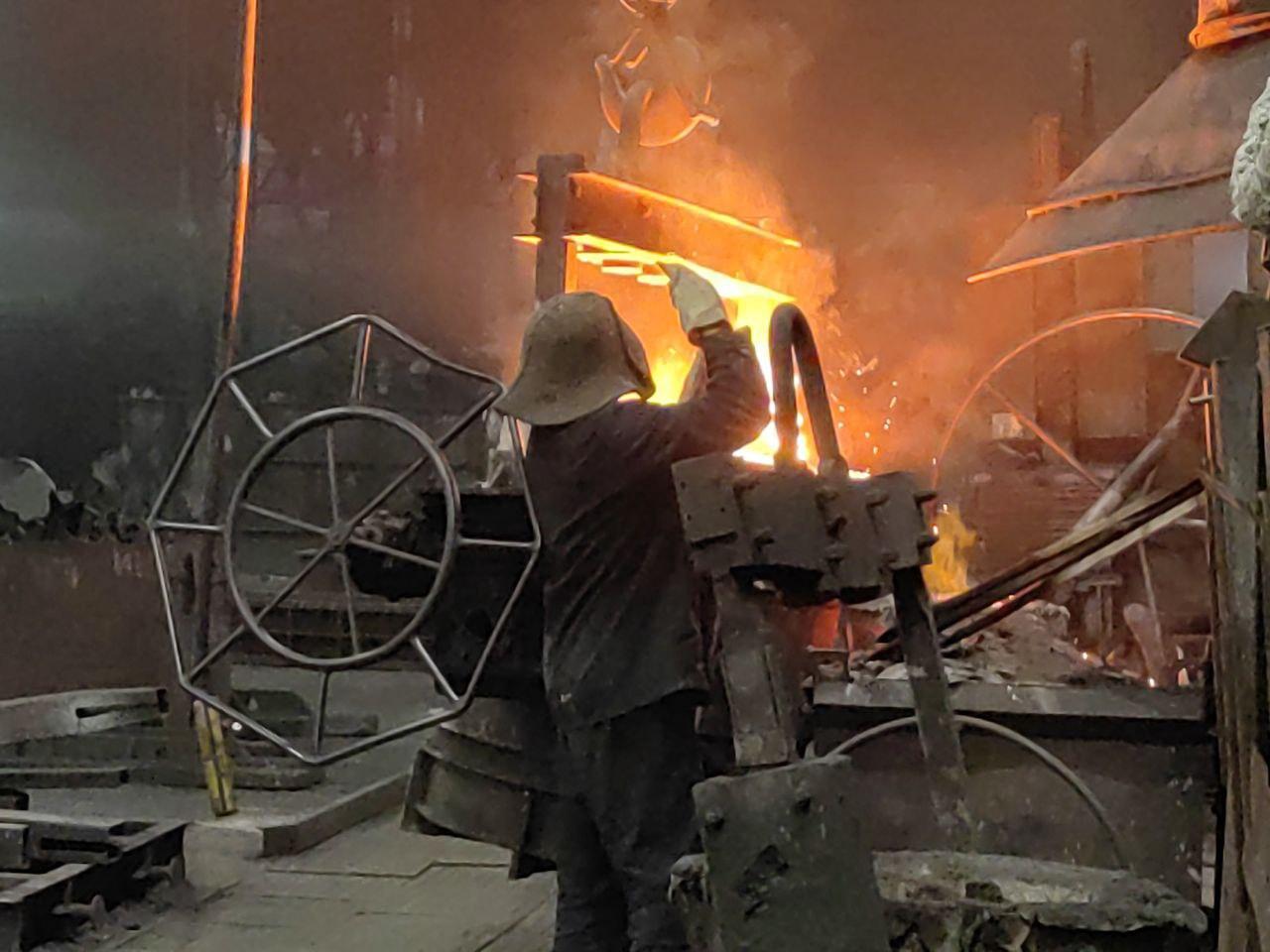
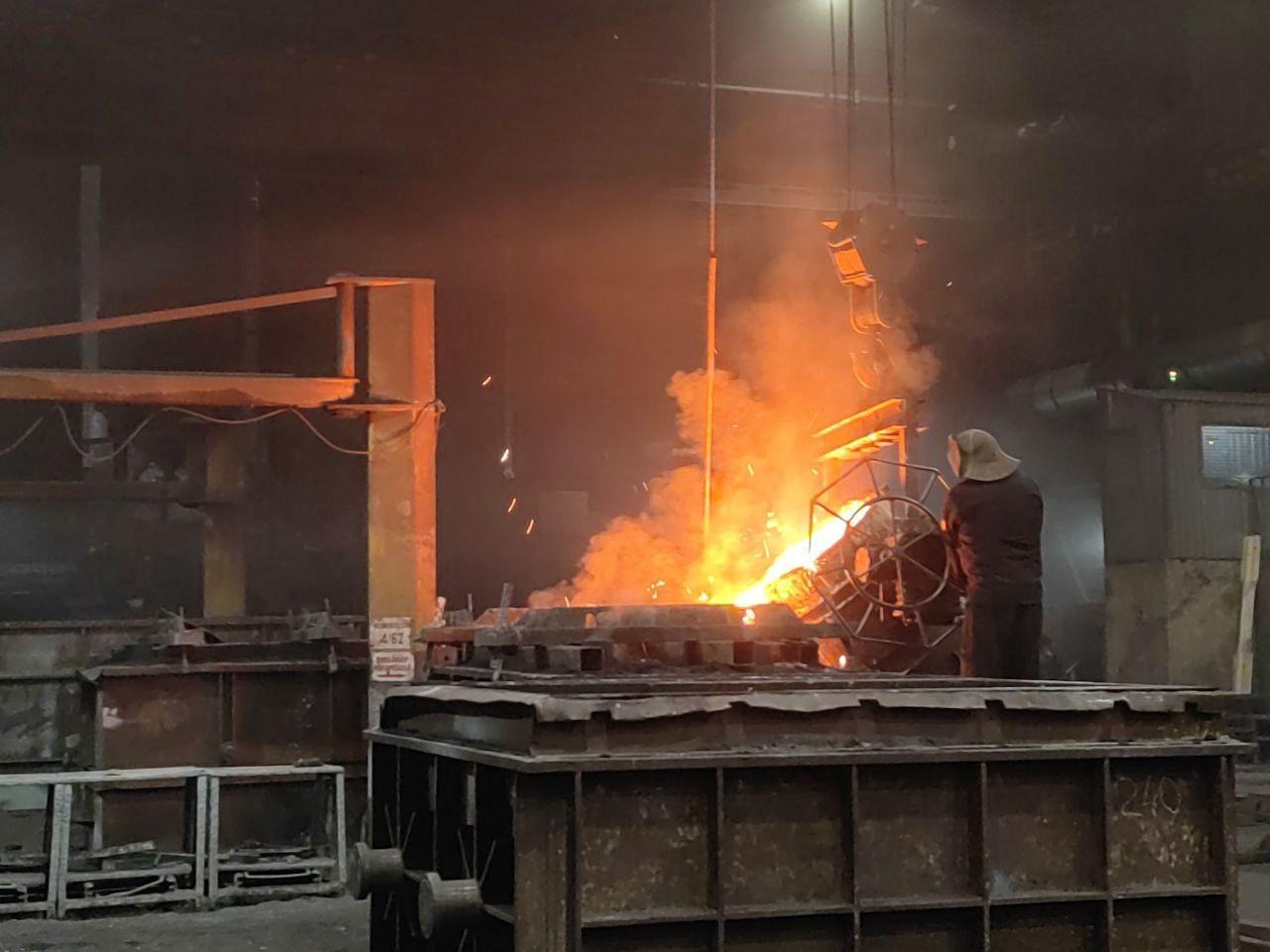
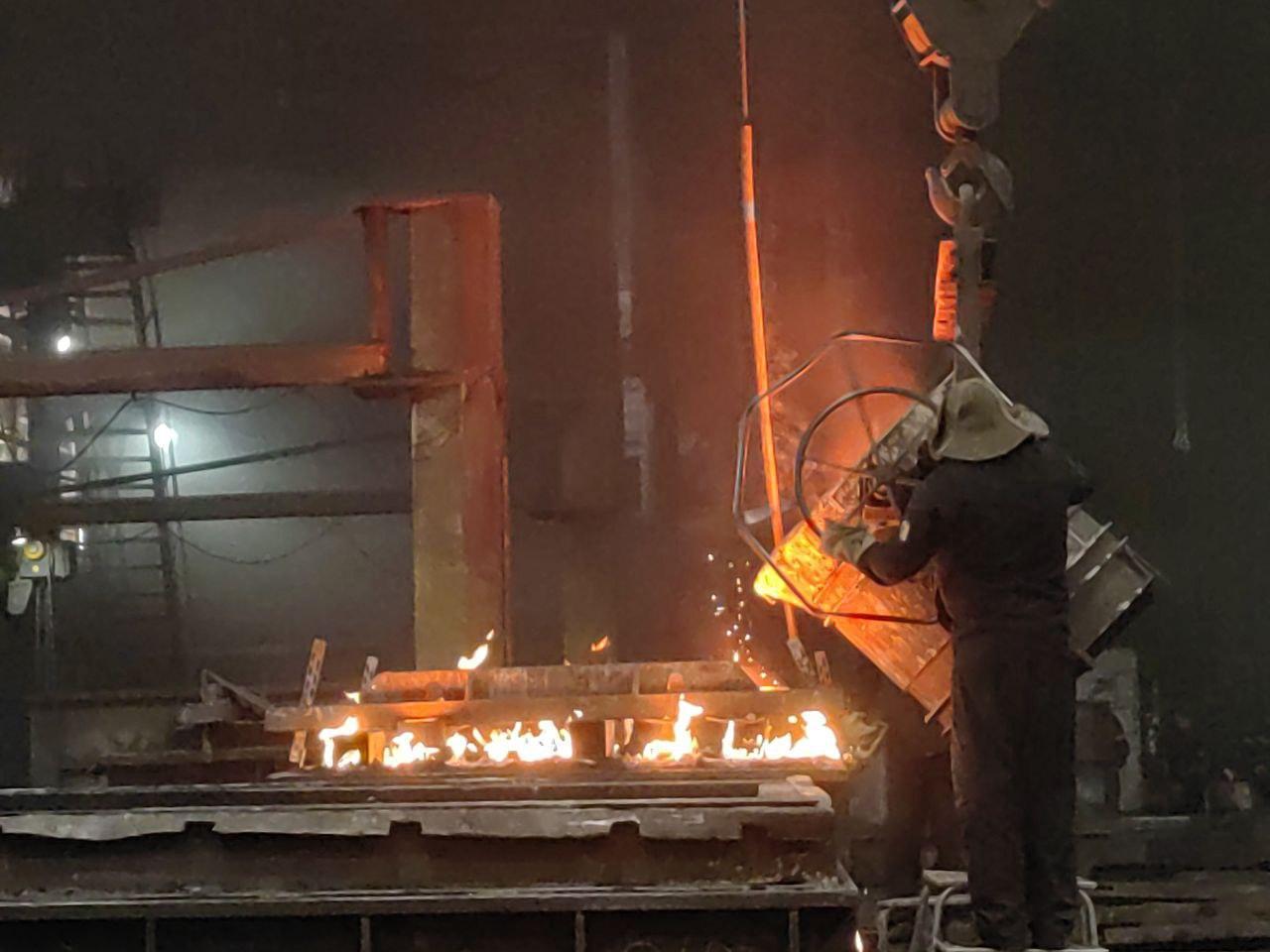
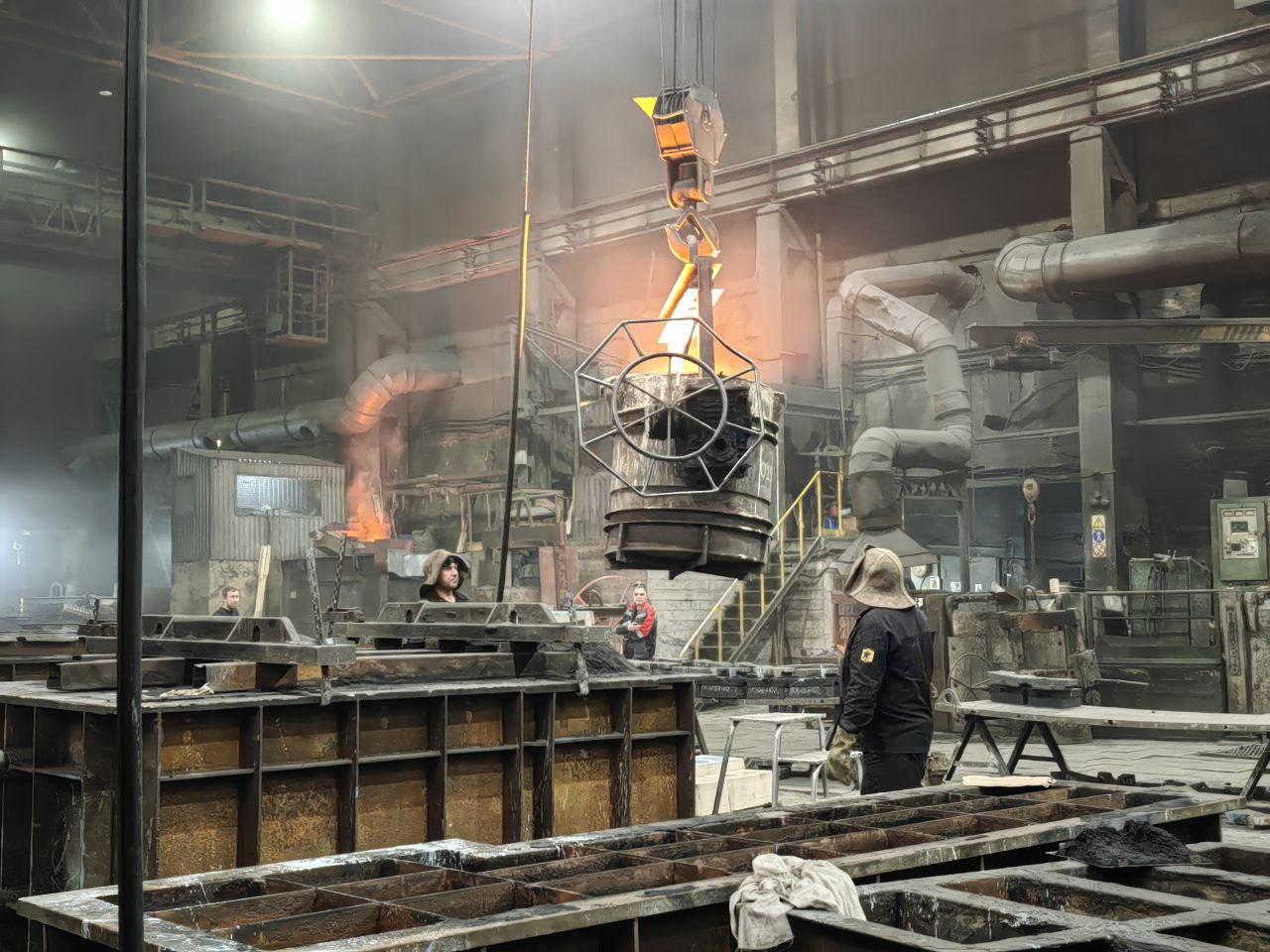
When we enter the hot workshop, it becomes clear why Olga spoke of real men — physical strength is needed here, and a faint-hearted person probably couldn«t work near sparkling, red-hot metal. Here, cast iron is melted and then poured into molds of different sizes — parts for future machine tools. Oleg Pravosudov says he likes the work. »I came here from Ryazan. The girls in Sasovo are beautiful, so I found myself a girl and a job,« he says. Olga explains that the plant now holds many career orientation tours for schoolchildren and students, and some are inspired by plant life and come to work in production afterward.
For some, this is a step towards a career in industry. For example, Dmitry came to «Sasta» because he wanted to stay and work in his hometown.
«I started as a trainee, reached the fourth grade in three months. I want to gain experience and go for higher education in machine tool building,» he shares his plans. Ivan said that he likes the work, and his friends have a good attitude towards his choice.
«You work with your head and hands, you see the results of your labor. In general, the work is interesting, and I want to develop in it,» says a taciturn guy who is also named Dmitry. There are quite a few young people in the workshop, and in general, it«s clear that life is bustling. Olga laments that there are fewer educational institutions in the city, which is another reason youth don»t stay here.
«We used to have three educational institutions, there were more enterprises, people worked and could immediately get a job. Now it»s good that something started to revive and they began training targeted students for us,« she says.
«We Took on All Orders»
Viktor Shatalov, deputy general director and chief engineer, told me about the plant. He has worked at «Sasta» for 35 years, so he has witnessed various stages of the enterprise«s operation.
«We are probably the only plant in Russia that has a full production cycle. We have our own design center that develops documentation, a technological center that creates manufacturing technology. We have our own foundry that makes castings, a full cycle of mechanical production, body parts and parts of rotation, welding and blanking reprocessing, our own heat treatment, and full assembly,» Shatalov explained.
Initially, the enterprise was conceived as a plant for automatic lines, but in the 1990s, orders began to shrink. There was no time when the plant was completely idle, but there was a period when they worked a shortened work week.
«In this interval, we tried to survive and besides machine tools, we produced road equipment. We took on practically all orders that could or couldn»t be done, we tried to do something in all spheres of the national economy to get an order. But the main direction was road equipment. We made asphalt mixing plants. By the way, we made them well, and reached output of two plants per month, which is a good indicator. We made nine-ton asphalt and soil rollers, curb or sidewalk five-ton rollers,« says Viktor Shatalov.
Then industry began to revive, and the machine tools of the «Sasta» plant were needed again.
«First, universal lathes were produced, the next stage was the transition to CNC machine tools. Well, and pipe threading machines, which are used in the oil and gas industry. A bit later, we mastered the production of specialized equipment,» he said. In 2018, the plant«s founder changed.
Shatalov says that even a decade ago, he couldn«t have imagined that the enterprise would make machine tools that process composite materials.
«And the most important thing in this machine is that during processing, there is a system for tracking the movement of the working tool. That is, the condition was that the part should have minimal deviation in microns in its thickness. We made such a machine,» he says.
During the Soviet era, «Sasta» sold machine tools almost worldwide. After the collapse of the Union, the plant«s products were bought by customers from Canada, they took pipe threading machines, Germany bought lathes »562–564«, also supplied the plant»s products to Italy and at one time even to China.
Now about 1000 people work at the plant, there are Sasovo residents, there are shift workers, because, as explained at the plant, production is growing and there was a shortage of workers. But in 2023, a program of targeted training began at the Sasovo Industrial Technical School.
Students who come for training from the street, without a profession, receive a scholarship of 30,000 rubles (approximately $300 at current rates), then the student must pass a grade and go to work full-time in the specialty. Salaries start from 65,000 and above, and the average salary at the plant is 85,000 rubles (approximately $850).
«The main thing is to show, probably, and convey to the people, to the youth from school benches, that a worker is not a loser who couldn»t break through anywhere, but a person who produces material goods, that without working hands nothing will work out, artificial intelligence, computers, will solve a lot, will suggest, but without working hands, without specialists, nothing will be,« says Shatalov.
The priority activity of PJSC «Sasta» is the production and sale of CNC machine tools — lathes, pipe threading, vertical milling. The average number of employees in 2024 is 772 people. The average salary is 75,100 rubles (approximately $751). Revenue from sales in 2024 is 6.6 billion rubles (approximately $66 million). Net profit is 954.3 million rubles (approximately $9.54 million). The plant belongs to JSC «Baltic Industrial Company» of St. Petersburg resident Diana Kaledina.