Uzbek bartender becomes Siberian monk-chef
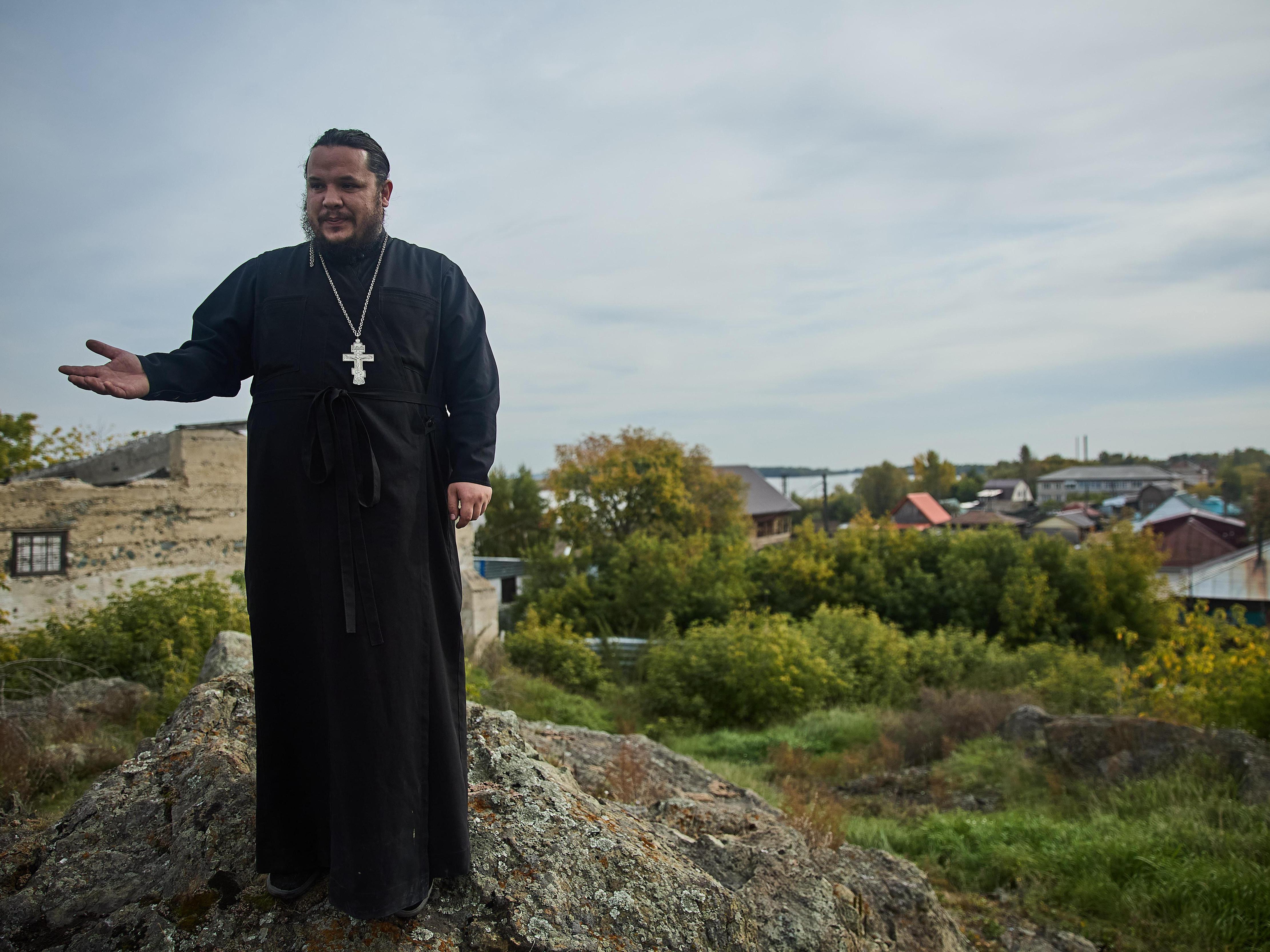

Hieromonk Stefan (Shilin) serves at the Bogoyavlensky (Epiphany) Monastery in Kamen-na-Obi.
A priest with anything but an ordinary path serves at the Bogoyavlensky (Epiphany) Monastery in Kamen-na-Obi. He moved to Altai from Uzbekistan to restore a church that, in Soviet times, housed a liqueur-and-vodka factory, is piecing together the old temple’s past, and at the same time surprises the most famous TV chefs with his cooking. During their journey around the Ob Sea, NGS journalists met Father Stefan and heard his unusual story.
Priest-bartender
«Come into the church, don’t be afraid — we’re under renovation,» the priest in a black cassock says, gesturing invitingly toward the white church doors. «People are often afraid to enter churches for some reason, but there’s no need.»
The hospitable priest — Hieromonk Stefan (Shilin) — greets the journalists at the gate of the Bogoyavlensky (Epiphany) Monastery in Kamen-na-Obi. About five minutes after meeting him, you really do stop wondering what there is to fear in churches: even if you don’t understand the complex intricacies of Orthodox rites, this priest clearly has no intention of snapping at the uninitiated.
It’s hard to reconcile the austere image conjured by the words “monk” and “monastery” with a smiling guy who loves to chat, joke, and cook and eat well.
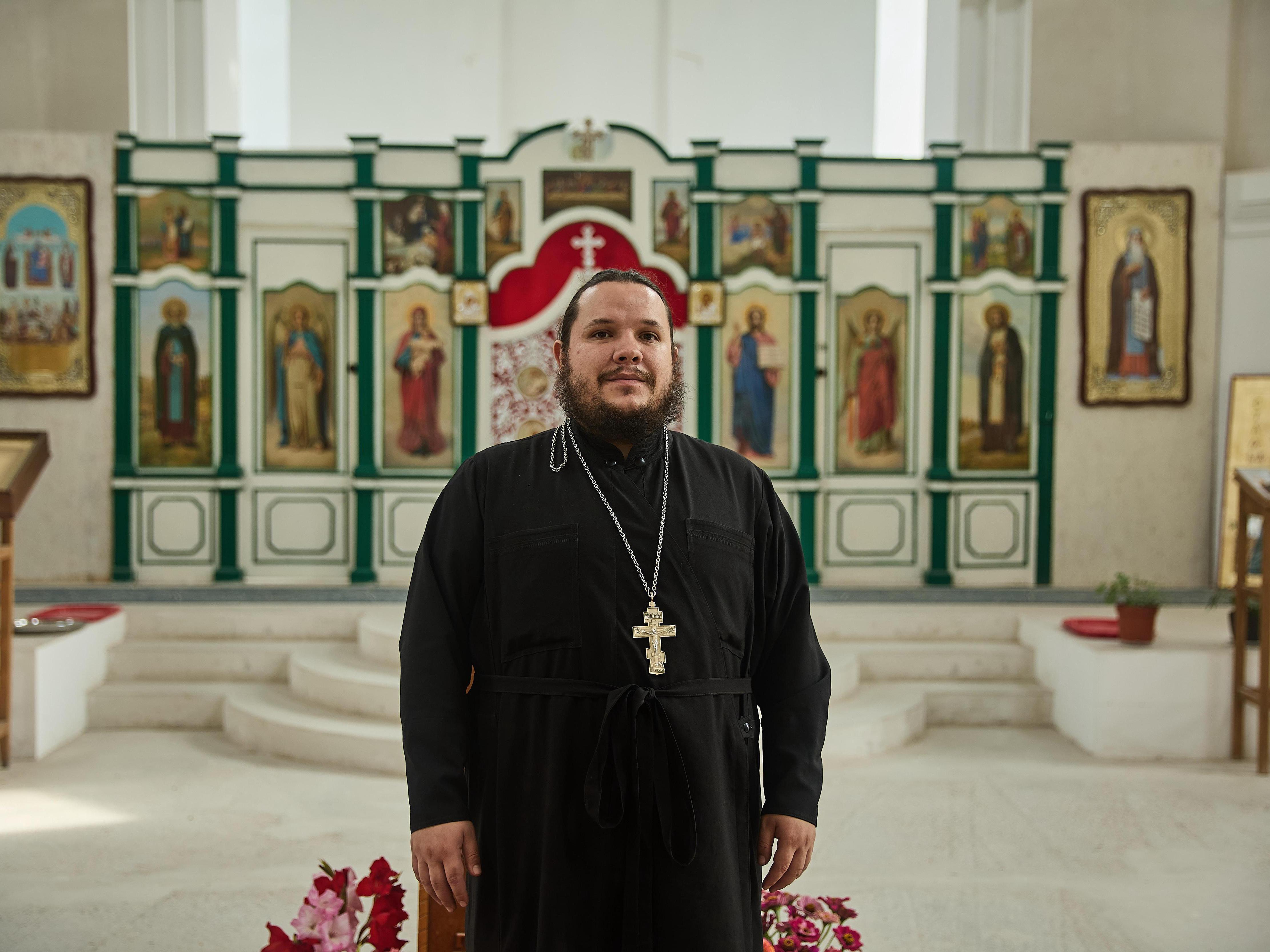
In under three years, he learned the temple’s history better than many locals.
Nevertheless, Father Stefan is a professional clergyman and a member of the monastic (black) clergy. A monk.
«I was born in Uzbekistan and studied at the seminary in Tashkent, but in my third year I took an academic leave for family reasons and was later expelled because I never returned to my studies. I started working as a bartender in a chain of sports clubs, but my heart still belonged to the Church,» the priest said. «I met [Barnaul’s] Vladyka Antony (Bishop Antony), and he invited me to visit, with no obligations.»
Father Stefan — at that time bartender Evgeny — didn’t hesitate long: he packed a bag and in February 2023 flew from Tashkent to Altai Krai.
«I landed in Novosibirsk and realized I was terribly cold — my jacket wasn’t made for such weather. I went into the airport to check the temperature outside, and it was −43°C (−45°F),» the priest recalled with a mix of horror and delight. «And then I thought: my God, where have I ended up?!»
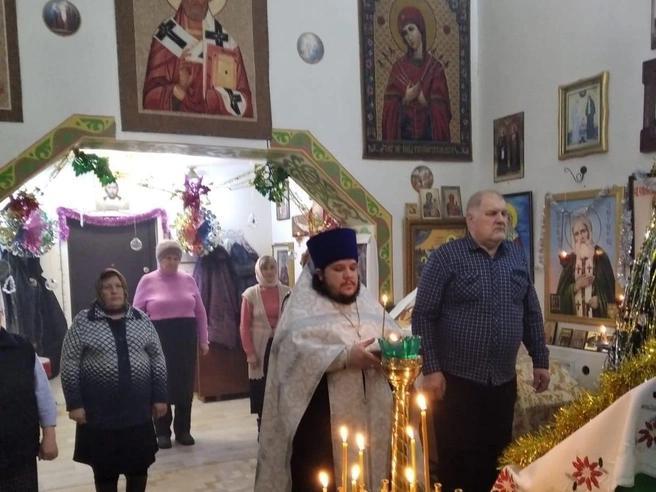
He ultimately fulfilled his youth calling through the Church and monastic service.
Instead of turning around and flying back to Tashkent, to his wife, Evgeny went to Slavgorod and ultimately decided to stay in Altai. He was ordained a deacon and then a priest. He served nine months in Slavgorod in Altai before heading to an even more provincial spot — Kamen-na-Obi — to restore a half-ruined monastery.
His wife, alas, did not appreciate Evgeny’s ascetic path: she had no desire to move to the small, provincial, and cold Kamen-na-Obi, and they divorced. There was no turning back for the priest, and in April 2025 he took monastic vows. Bartender Zhenya and white-clergy (married) priest Evgeny finally gave way to Hieromonk Stefan. When asked whether he regrets it, the priest replies, «Of course not. If I could rewind time, I’d still do exactly the same.»
Old church
A monk’s “workday” starts at 7 a.m., and in an hour one must be fully ready and join the brethren’s prayer. Then come services and sacraments (including off-site): even as a monk, Father Stefan remains a priest. On a “free” day, the priest turns into a builder.
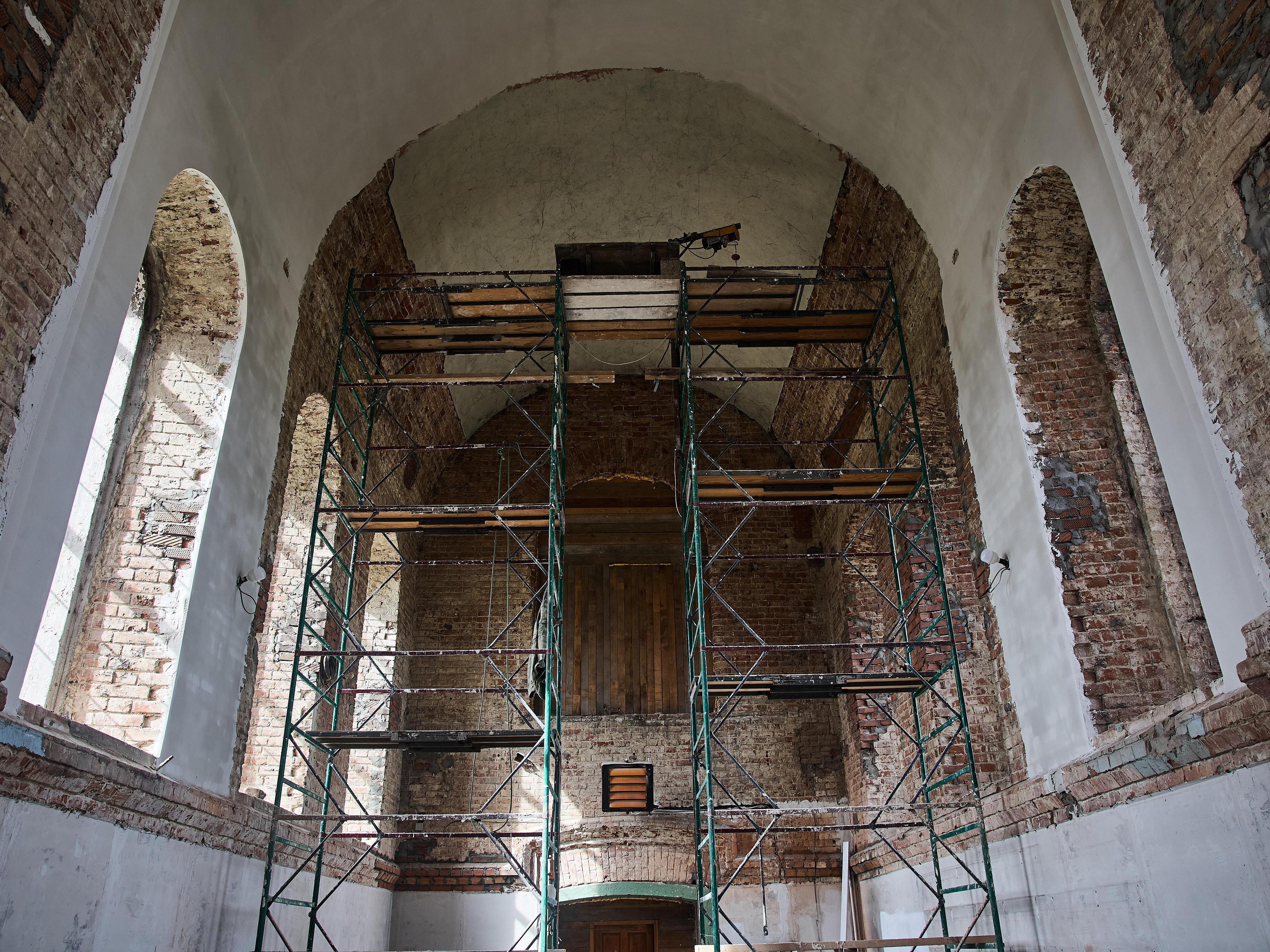
Early-20th-century interior murals are deferred; repairs and a proper bell tower come first.
Restoration of the church began in 2017, but because of a shortage of labor and budget it has dragged on for many years — and not because the Bogoyavlensky Church is more than 100 years old.
«The cornerstone of the church was laid in 1887, and construction finished in 1900. For that era, 13 years is very fast,» Father Stefan begins his tour of the church with pleasure. «But unfortunately, the building functioned as a church for a very short time — just 30 years. In 1930, the Bolsheviks came, seized the grounds and the church itself, and set up a liqueur-and-vodka factory here, and for added sacrilege placed a bottling line on the altar.»
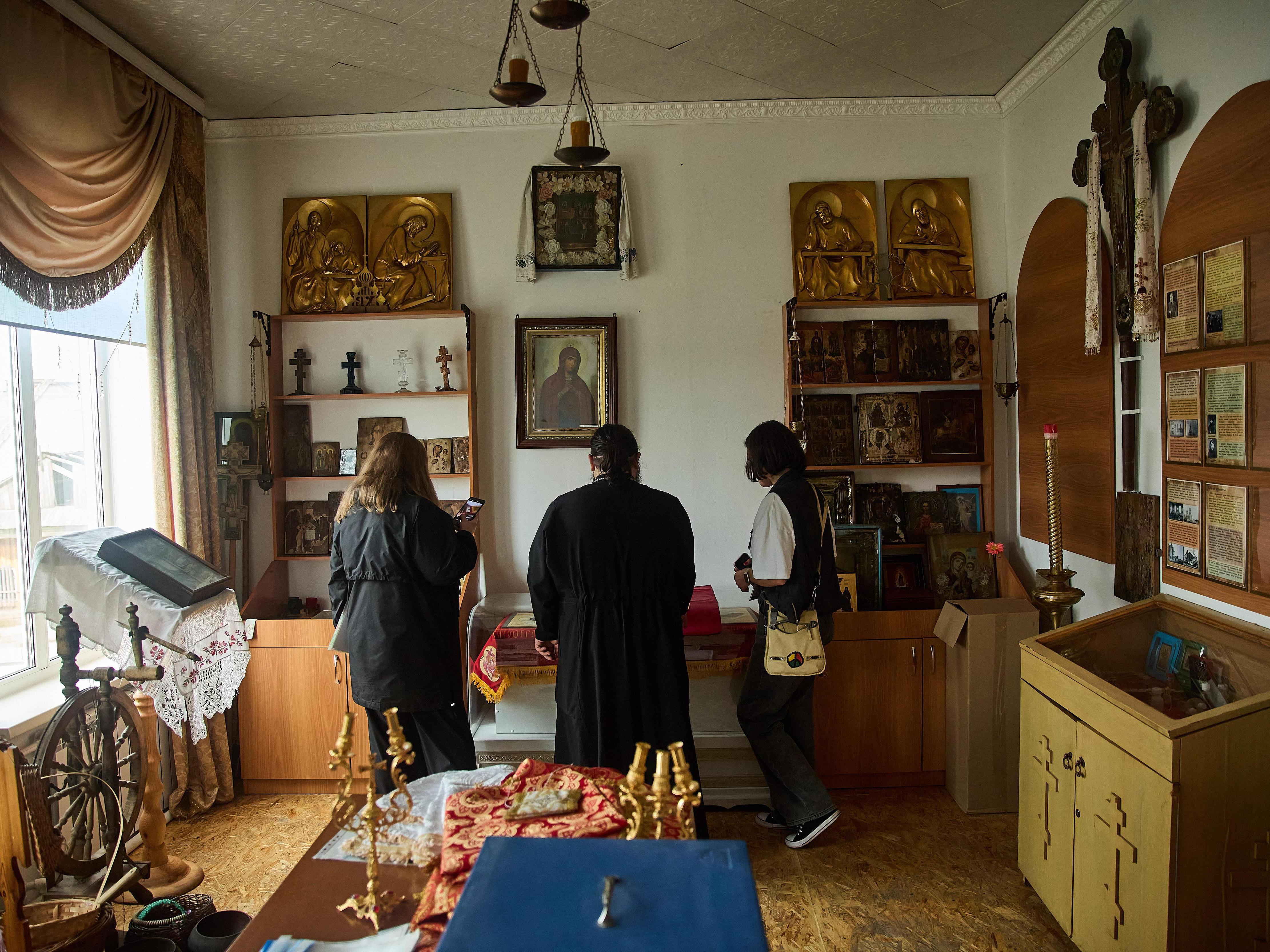
The monastery houses a refectory, Sunday school rooms, monastic cells, and a small museum.
He recounts the church’s history with authority and can give a full tour if needed. It surely helps that Father Stefan saw the consequences of the building’s spirits-soaked past with his own eyes. Although the building and land were returned to the Church back in 1994, restoration began only at the very end of the 2010s.
Initially the monastery was for women, and most of the nuns were elderly and not in the best health. When monks settled in Kamen-na-Obi, things moved a bit faster.
«You should have seen what it used to be like. In 2023, when I first came to this church, it was truly frightening: no windows, no floors,» says Father Stefan. «Gradually we poured floors and ran electricity — 25 kilometers of cable went in. Last winter we installed windows so the church would be warm, because the previous winter was very hard: in the main part of the church it was 13°C (55°F), and in the altar area it was impossible to serve.»
Today the Bogoyavlensky Church is empty, echoing, and very bright, with the smell of fresh plaster. Piles of bags with construction mixes rise under the icons. Scaffolding lines the walls. High up, a hired worker plasters; below, the monks often manage by themselves.
«Last week we painted the windows from the inside in the altar area ourselves, because dampness had started to blacken everything. Our ponomar — sacristan — Aleksandr and I climbed up together and painted. And in winter, before Christmas, I painted the iconostasis. Parishioners were surprised: “Father, why are you painting it yourself?”» he laughs.
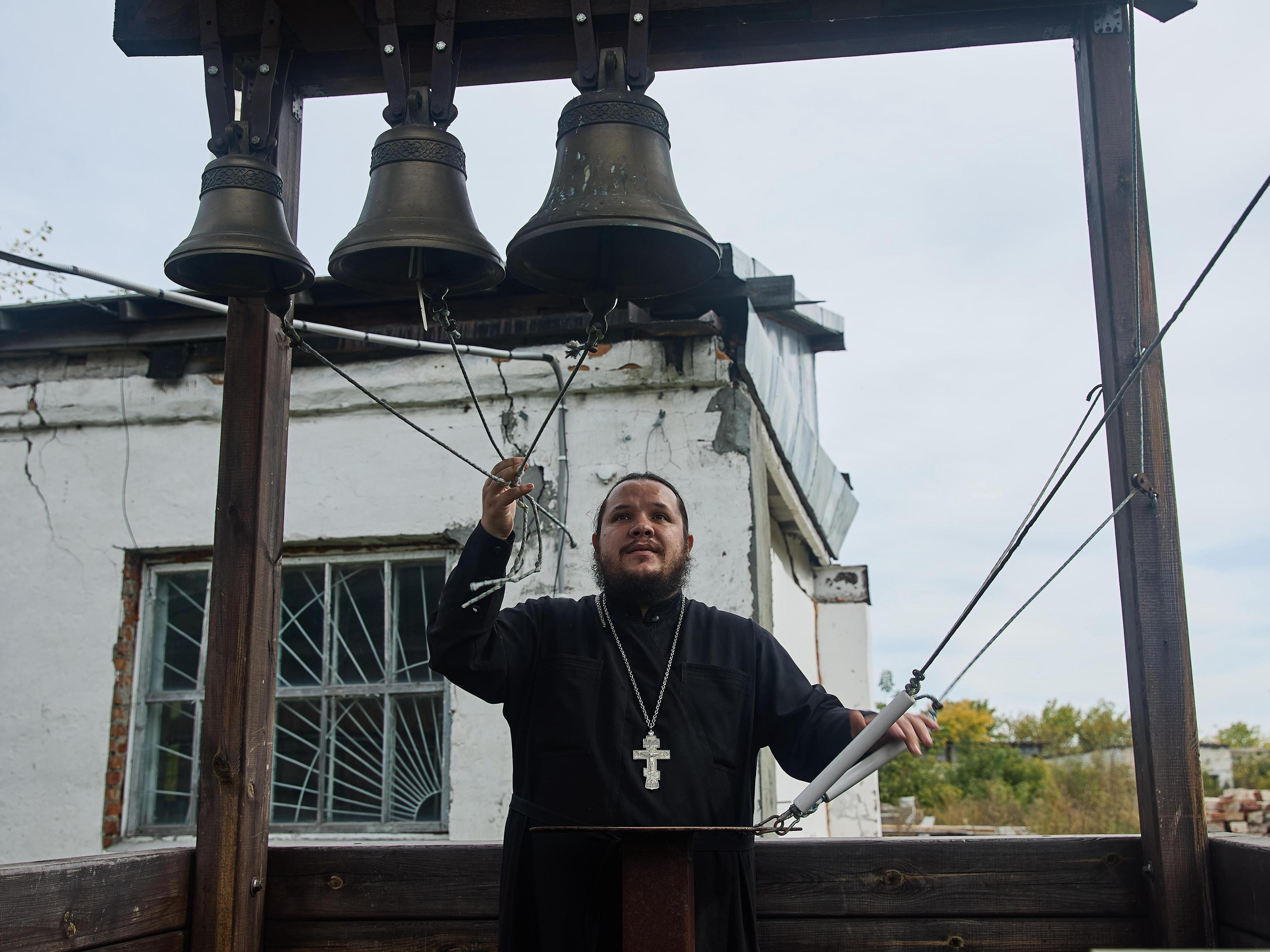
Icons arrive by many routes; donated bells appeared after a newspaper story reached benefactors.
Father Stefan talks about current and future work in the church in the same tone as the old temple’s history — with enthusiasm and a sing-song cadence, with great pleasure, and, at the right moment, lightening his lecture with humorous anecdotes so listeners don’t get bored. For example, he says an icon of St. Nicholas the Wonderworker once showed through in the factory nurse’s office — not through some commonplace whitewash, but straight through the floor paint.
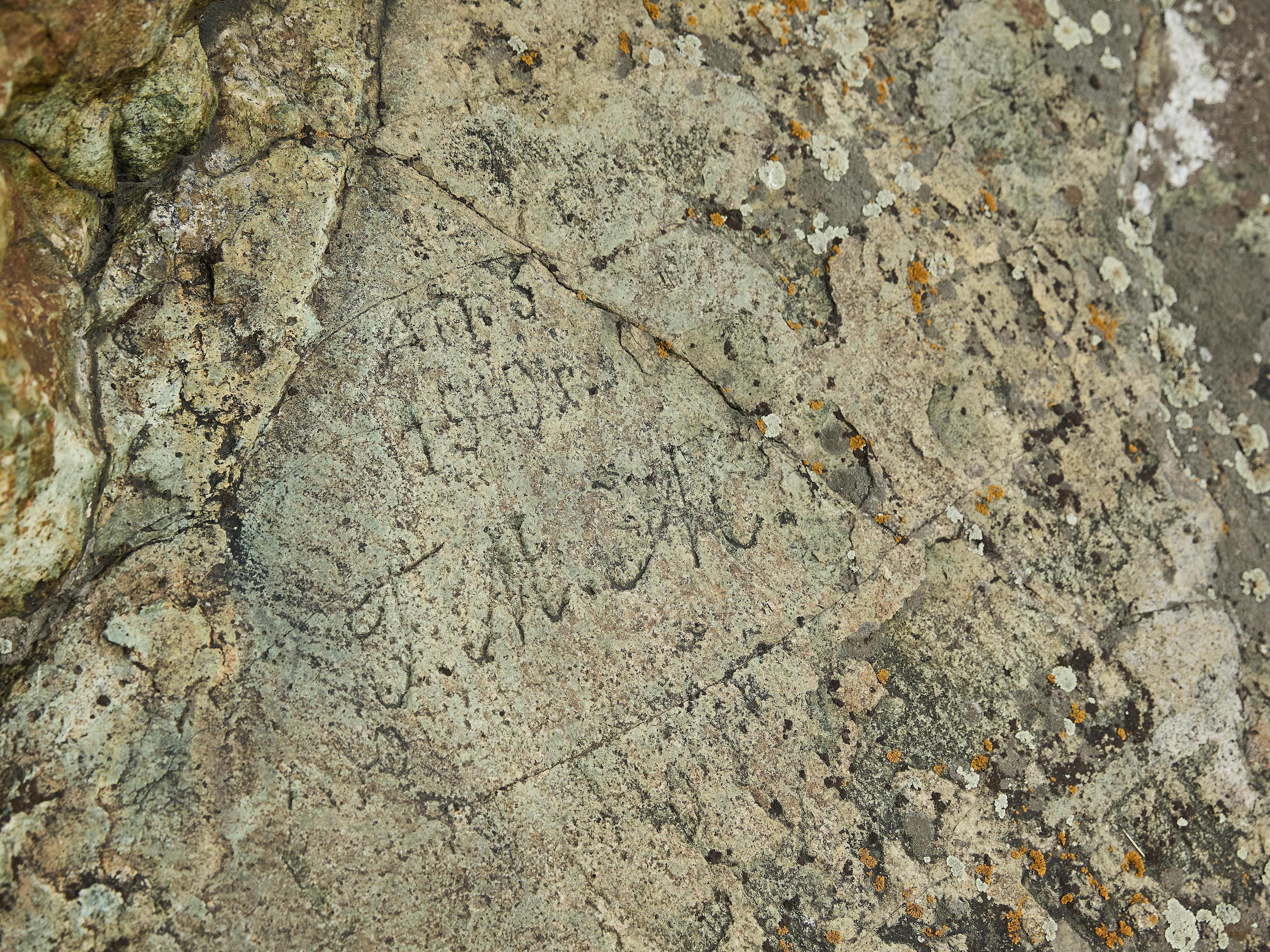
An earlier parish school left graffiti; we photographed the most publishable surviving inscription.
His practiced lecturer’s manner makes you wonder if, besides spiritual and construction experience, Father Stefan also has a degree in education — but not yet.
«This year I enrolled in our Kamen Pedagogical College, majoring in primary grades. When I came to ask about admission, the admissions committee asked me: do you have a son or a daughter? I said, no, I want to study myself,» the monk smiles. «They didn’t get it and said: don’t you have an education? I do, but it’s spiritual, and I need practical skills! First, we have a Sunday school where I teach classes. And second, schools have introduced the Foundations of Orthodox Culture, and I’ve taught children lessons there too.»
Priest-cook
Perhaps Father Stefan’s best-known role is as a cook — or rather, culinary TV personality.
«I was tonsured [as a monk] in honor of Stephen of Perm (Velikopermsky), who went to pagan Perm and baptized very many people. We have a lot in common: he also tried to feed everyone he met,» Father Stefan explained.
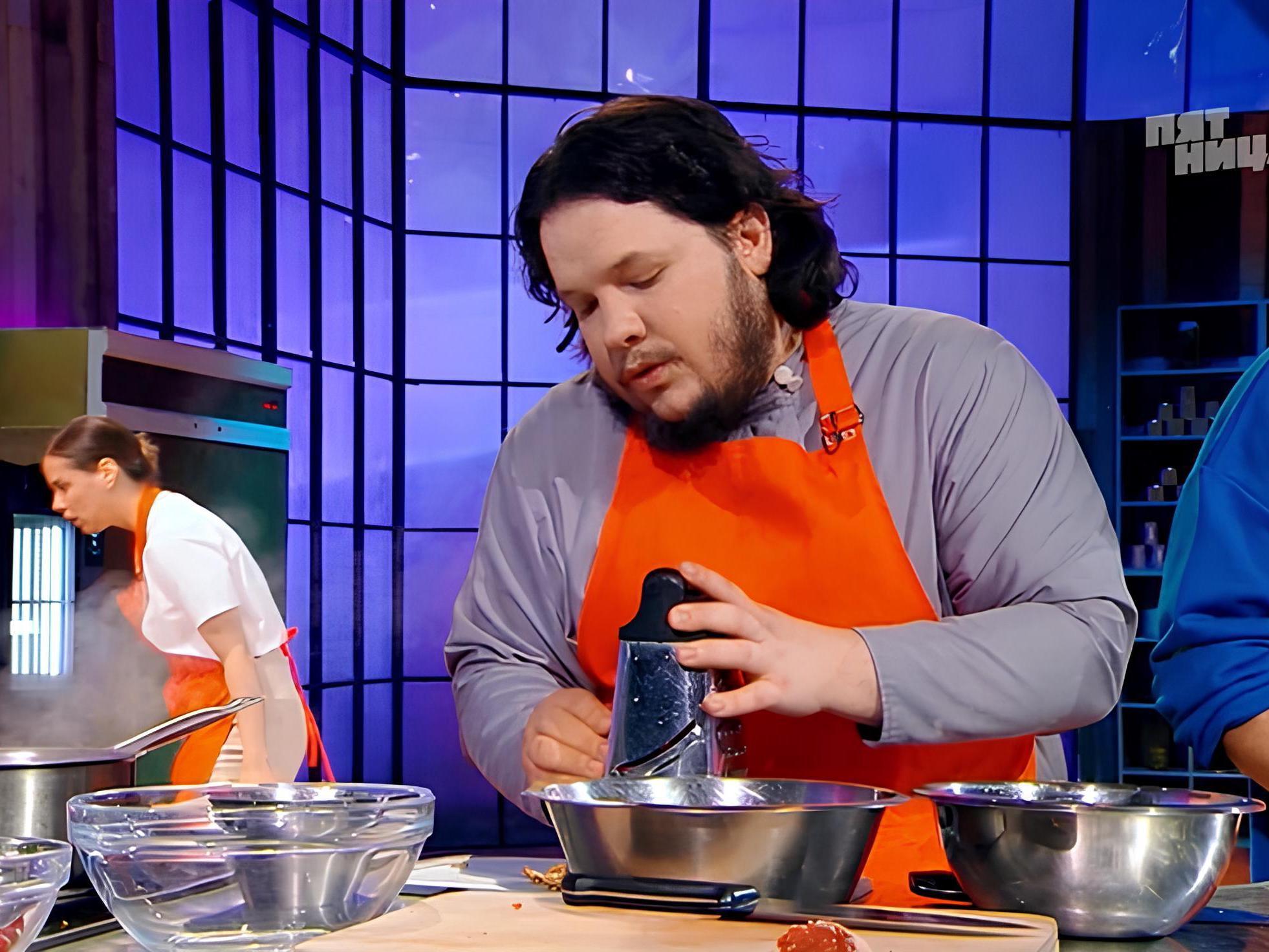
The priest captivated viewers and chefs despite lacking formal culinary training.
The Altai priest became known not only in Siberia and Altai, where he serves, but across Russia when he took part in the culinary TV show «Chef’s Battle». According to the priest, it all happened suddenly: he went to the TV channel’s website and saw a casting call. The information strongly interested Father Stefan: he had never shied away from such worldly entertainments — cooking, good food, and culinary TV shows themselves.
«I filled out the form and got busy and completely forgot about it. And in November [2024] the editors wrote to me: Evgeny, we invite you to take part in the casting. At first I thought it was a new level of scam and decided to keep talking for a laugh. But when they promised to fully cover travel and accommodation, I decided they were interested in the image of a priest. I figured I’d pass the preliminary stage, and after the first one they’d say: “Well, Father, thanks for coming. Now go and pray while we cook,”» the priest laughs.

Built with merchants’ donations, the brick church stands on the high stone that named the town.
The priest-cook’s suspicions only grew when he realized his team would include four professional chefs (two chefs, one sous-chef, and one line cook) and another woman without formal training. Father Stefan himself had only tangential food-service experience.
But he made it through not only the preliminary stage — where chefs Konstantin Ivlev and Renat Agzamov were impressed by his Uzbek shurpa (meat soup) — and the first round, but reached the final. In the last stage, the priest-chef (Evgeny was not yet a monk then) was tripped up by a weak command of haute cuisine.
«We were told to choose different ingredients so we wouldn’t end up with the same products and possibly the same dishes,» Father Stefan recalled. «And I was left with a fish called pylengas. I didn’t just not know it — I couldn’t even remember the name! It’s what did me in: I started cooking the vegetables, and the fish remained raw inside. If I’d started with the fish, I might have won.»
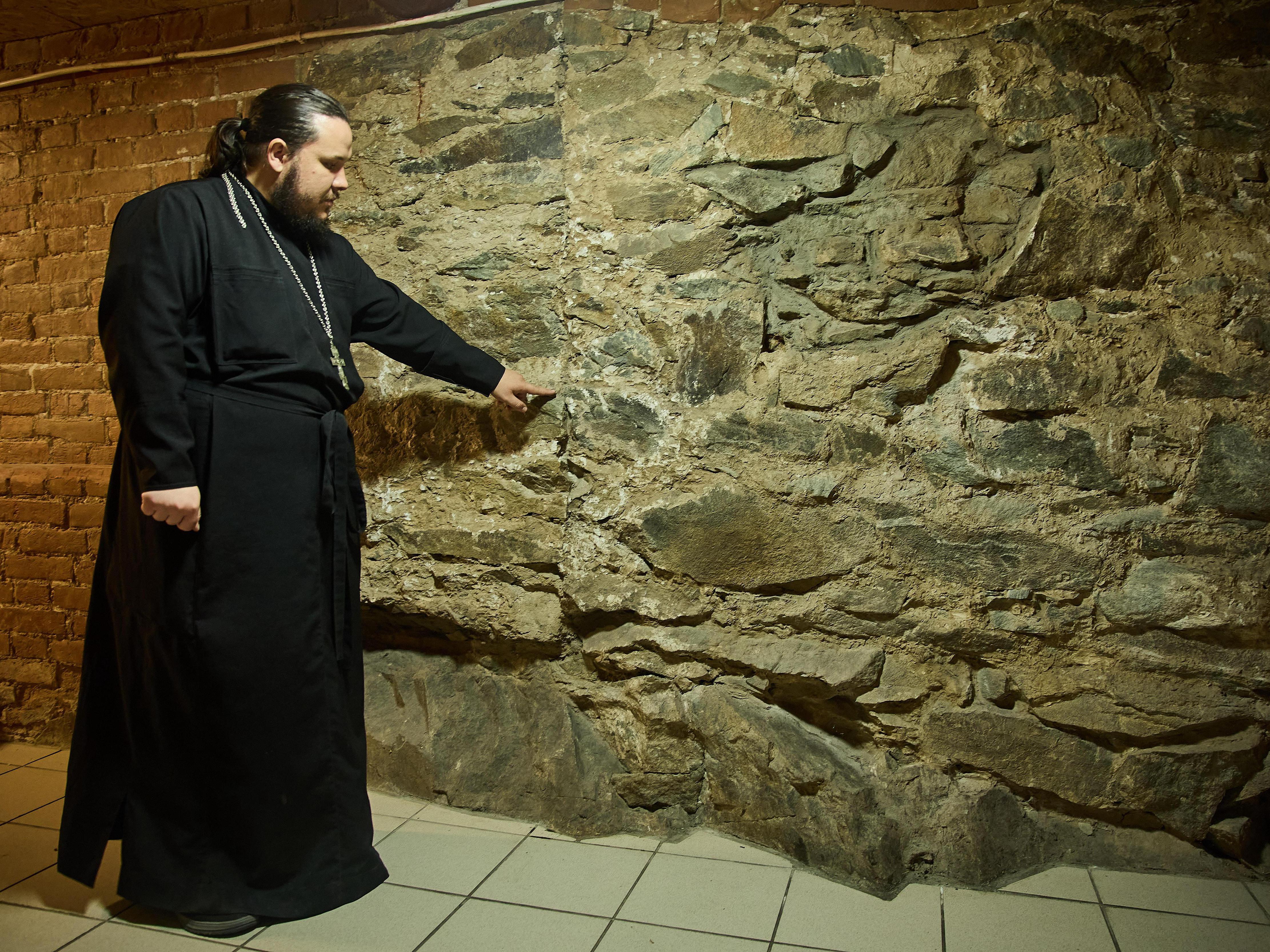
The monastery’s masonry incorporates natural rock, binding the complex to the landscape.
Along the way, Father Stefan discovered with some surprise that if a fearsome TV chef shouts and throws things on camera, off camera he can be perfectly reasonable and quite polite.
«I later spoke off camera with Renat [Agzamov] and Konstantin [Ivlev], and they told me: “Don’t think you’re standing in the final because you wear a cross and a podryasnik (inner cassock), and we’re God-fearing people,”» Father Stefan says without false modesty. «They said I’d made the final on my merits; my dishes have flaws due to inexperience, but they taste good, and the plating is restaurant quality.»
Father Stefan has no intention of ending his career as the most media-savvy priest and has already applied to take part in two more culinary reality shows. Now, however, to join filming he must not only pass casting but also receive a blessing — essential for a monk.
It wasn’t only churches that had to be restored in Siberia, but the art of bell ringing itself — it had almost disappeared. In Novosibirsk, this complex field is overseen by musicologist and campanologist Larisa Blagoveshchenskaya. She graduated from a conservatory, but had to study the peals through archives.