From delinquent teen to hotel chef
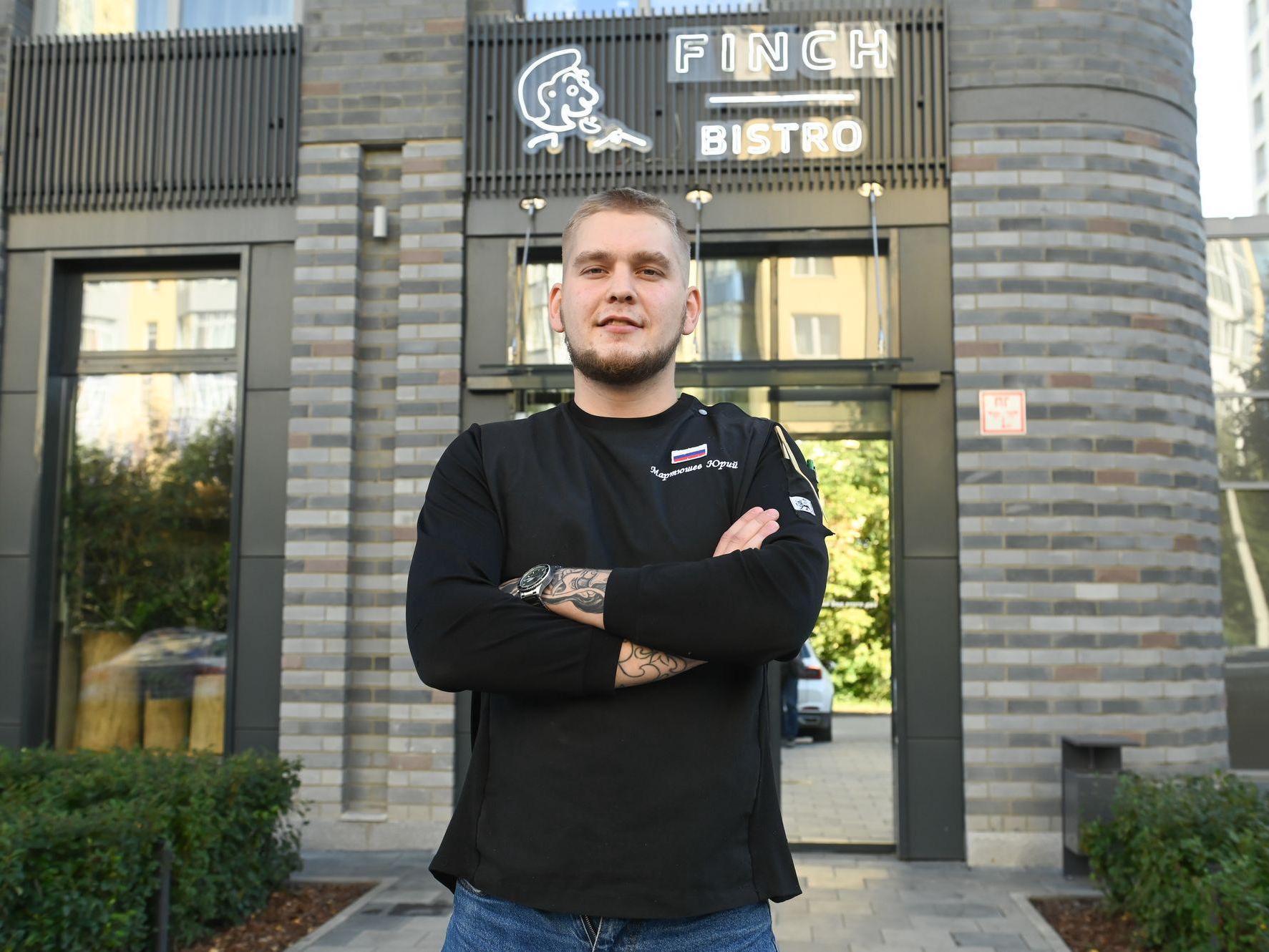

Yury Martyushev recounts his path from troubled youth to a focused culinary career.
— I stole my first car at 15. In that ‘shesterka’ (VAZ-2106 sedan) I immediately flipped it. Then I got scared they’d find me and set it on fire. When we were caught, my mom scraped together money and reimbursed the owner.
The protagonist of this piece, Yury Martyushev, first appeared on the E1.RU news site in 2016, when he was 17. The occasion wasn’t very glorious: the store’s surveillance camera caught him. He made off with a shovel and a broom.
But now, nearly ten years later, we’re telling a very different story. Yury is 27, no longer the person from that store video: he has a job he loves, big goals, and bright dreams. He is a promising cook with experience in five-star hotels, a participant in culinary competitions, and a volunteer. Soon we’ll see him on a national television channel — and for a worthy reason.
Yury spoke frankly about his story — the bad and the good. His account is about how everything is in our hands. It really is possible to change your life; the main thing is to find work you love.
«From Proma, guys don’t go to the army — they go to prison»
Yura grew up in the settlement of Koltsovo on the outskirts of Ekaterinburg, in a five-story building on Ispytateley Street — part of the Promkombinat district (nicknamed ‘Proma’). Its unkempt courtyards feel stuck in the 1990s.
«My home microdistrict is the opposite of the word “prospects”,» Yury says. «Seventy percent of the older kids (the ones who were 7–10 years ahead of me when I was little) are already dead — some from drugs, some were hit by cars while drunk. My father used to say: “From Proma, boys don’t go to the army — they go to prison.”»
Yet Yury’s immediate family and relatives were solid. His mom was a social worker and also moonlighted as a seamstress, taking orders at home.
«My father died when I was six, but as a kid I was good, I studied. Mom took me with her to the elderly women she looked after. They lived in private houses; I carried water for them from the standpipe.
I remember the turning point when life went the wrong way. I was about 13 when a new crowd appeared. At first we just ran around the garages with those guys, hunting for scrap and selling it. Then we started hauling metal out of the garages. After that — it got more serious. We’d see garages that seemed abandoned, ownerless; no one had been by for ages. We began setting them on fire and selling the metal for scrap. Then we started slipping into the nearest plant in the evenings, hauling out aluminum beams and selling them to the metal recycler,» the young man recalls.

He first appeared in 2016 after a minor store theft caught on camera.
At 13, Yura was put on the watchlist of the Police Juvenile Affairs Office (PDN) — he’d been caught stealing from the plant. It didn’t sober him or his friends up, and a year or two later they began stealing cars:
«I stole my first car at 15. In that “shesterka” I immediately flipped it — I lost control. We and the guys turned it back over, drove around, and then I got scared they’d find me and set it on fire. I remember coming home after the arson and running into Mom and my stepfather. My stepfather was a really good man — kind, worried about me, tried to get me into fishing and hunting. All my relatives turned away from me, but he didn’t. So they’re walking along and I’m filthy. I lie that I’d been selling scrap and got dirty.»
Yura and his buddies were caught a year later. The 11 teenagers faced close to a hundred episodes: car thefts, burglaries. Only the oldest, who was of age, was jailed. The rest were given a chance — just fines; parents compensated local residents for the damage.
«I remember that court now. The judge was seasoned and warned all the parents: “Almost everyone walking out of here — 80 percent — will be back on the defendants’ bench.” He was right.»
«Mom was the only one who believed in me to the very end. The teachers at school found out about everything and began to pressure me: “Behave badly and we’ll make sure you’re sent to a special school.” Once they started a petition to expel me because I was a nuisance to everyone,» Yury says. «I get it — I was disruptive, didn’t study, they put me at the very back. And that petition was signed by everyone, even my cousin and my childhood friend — they were afraid to defy the teachers. Only the kids from the orphanage who were in our class refused. They went against the system.»
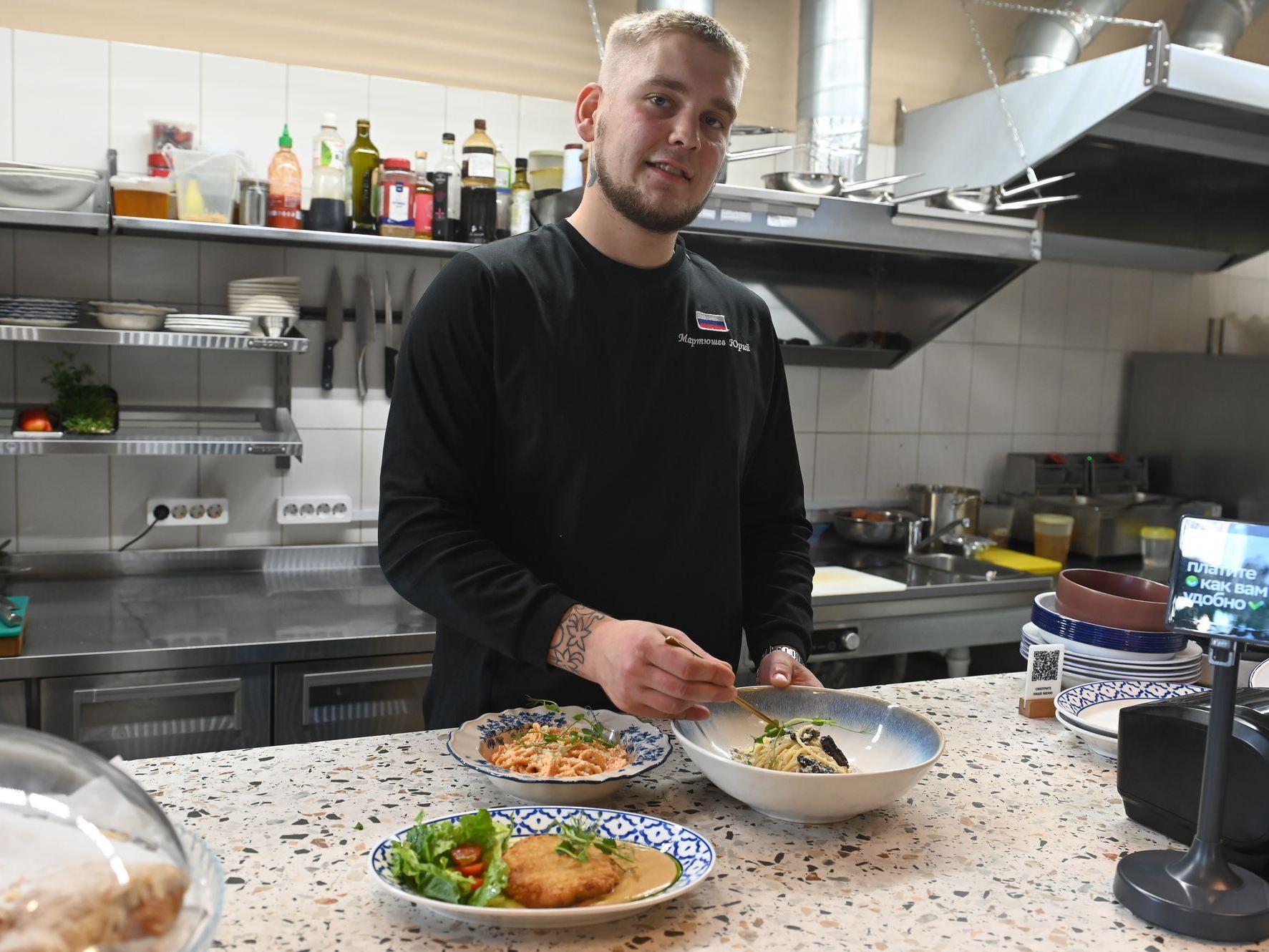
Now 27, he works as a head chef and plans ambitious professional goals.
Yura still managed to finish nine grades:
«Mom hired a tutor to get me ready — and I just fell asleep during the exam. They woke me up; somehow I passed math on the second try — they pulled me through.»
Got into trouble again
Yury went to college because he was in the police’s sights — to avoid being sent to a closed special vocational school. With a GPA of 3.1 out of 5 (the only “4” was in PE), there wasn’t much choice: either seamstress or cook. He chose cook. He’d loved cooking since childhood; that said, he didn’t really want to study.
To avoid getting mixed up in another criminal caper, at 18 Yury went to the military commissariat and asked to enlist. They didn’t want to take him because of his record, so his mom asked acquaintances to help.
The day before departure he got into trouble again: he carried a slot machine out of a store. It happened right during his send-off to the army. The group didn’t have enough money to keep the party going, so they decided to get it from that machine. They showed up, ripped out the box in plain view, tossed it into the trunk of a “shesterka”. Somewhere in the woods they smashed it open and fished out five thousand rubles (about $52 at current rates) — in hundred-ruble notes.
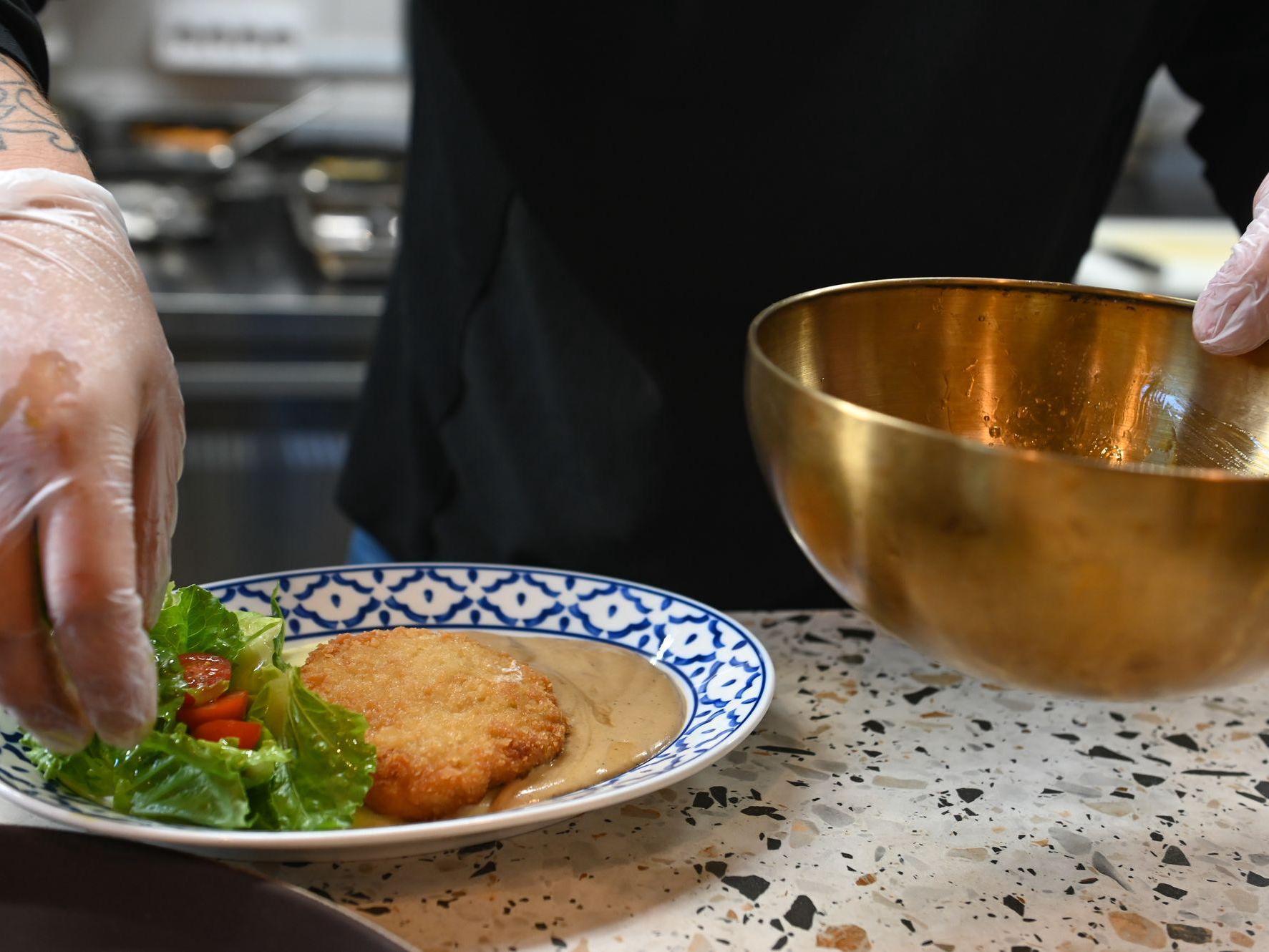
He considers kitchen work a creative craft, relying on intuition and steady discipline.
Yury returned from the army a year later with the rank of staff sergeant — and immediately found himself in the hands of the police. His friends had already been convicted for the slot machine “raid” at his send-off, and now he too was charged with robbery.
«I remember how the judge read the sentence: “Martyushev, Yury Sergeyevich… to assign a term… deprivation of liberty… three years.” I think: that’s it — I knew it could end like this. And the judge finishes: “suspended,”» the young man recalls.
«Yurochka, you’re doing great»
Eight years have passed since that court date. Our protagonist is now 27; he is no longer a neighborhood hooligan from Proma. We’re talking in a small, pleasant Finch café-bistro near the South Bus Station. Yury works as this venue’s head chef and studies at the Ural State University of Economics (Ural State University of Economics, USUE).
A lot has happened in those years: Yury has worked as a cook in five-star hotels, cooked there for celebrities and notable guests, and taken part in culinary competitions. He is also a regular volunteer at a prestigious professional festival in Krasnaya Polyana (Sochi ski resort). Each year, restaurateurs and representatives of the hotel and gastronomic business gather there.

In Sochi, he cooked alongside notable chefs during high-profile meat-focused dinners.
«Little by little, step by step, I began to adopt a normal lifestyle. I re-enrolled in college, finished it, got my diploma. In 2019 I decided to run away from the neighborhood, away from my old crowd — to the south, to Gelendzhik (Black Sea, Krasnodar Krai). I got a job there as a cook in a four-star hotel.»
«And the women on staff believed in me,» Yury says. «They helped me, guided me, looked after me. I worked two and a half months on the buffet line, cooking breakfasts, lunches, dinners. No one had complaints about me; I was doing well; they praised me. I remember calling Mom and telling her I was praised 20 times a day: “Yurochka, you’re doing great.” Mom was thrilled: “See? You showed who you really are, a clean slate. They didn’t know you any other way.” Since then I’ve loved Gelendzhik.»

At the Gastreet festival, his team prepared meat dishes on a hotel rooftop.
Yury returned there more than once to work in four- and five-star hotels, and in Sochi he helped a friend open his own restaurant. He worked as a hot-line cook.
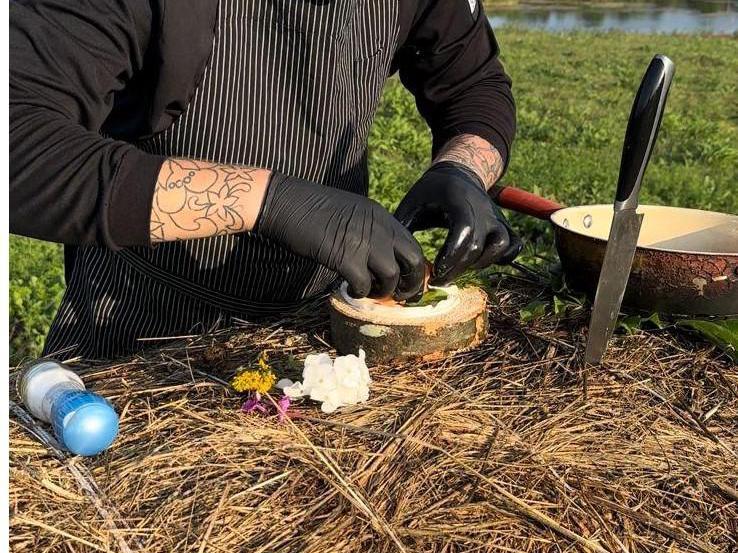
He cooked a self-caught salmon over an open fire for relatives in the countryside.
«People in food service praised me everywhere; there were no complaints. They said I had talent. I can feel, on intuition, how much salt or wine to add for a specific dish. Kitchen work, to me, is creativity. I’ve always loved to draw. My mom and dad both draw well.»
«My development — my career — started to grow like a small flower, and praise is like water without which everything withers,» the head chef explains. «Fast money can come only by illegal means — that’s not for me. Kitchen work is physically hard, stressful, hours on your feet, but those who love it will succeed.»
«A top-level head chef can earn 400–500 thousand. I’m striving for that, learning. That’s why I enrolled in a university: you need higher education to build a career. Mom was happy. She was the only one who believed in me to the end, when schoolteachers and relatives told her nothing good would come of me.»
Restaurant realities: soup from cubes for ₽800 (about $8 at current rates)
Yury left Koltsovo; he now rents an apartment with his girlfriend downtown, not far from work. Still, over the years his complicated past has been held against him: sometimes he was refused jobs because of a criminal record, even though it was already expunged.
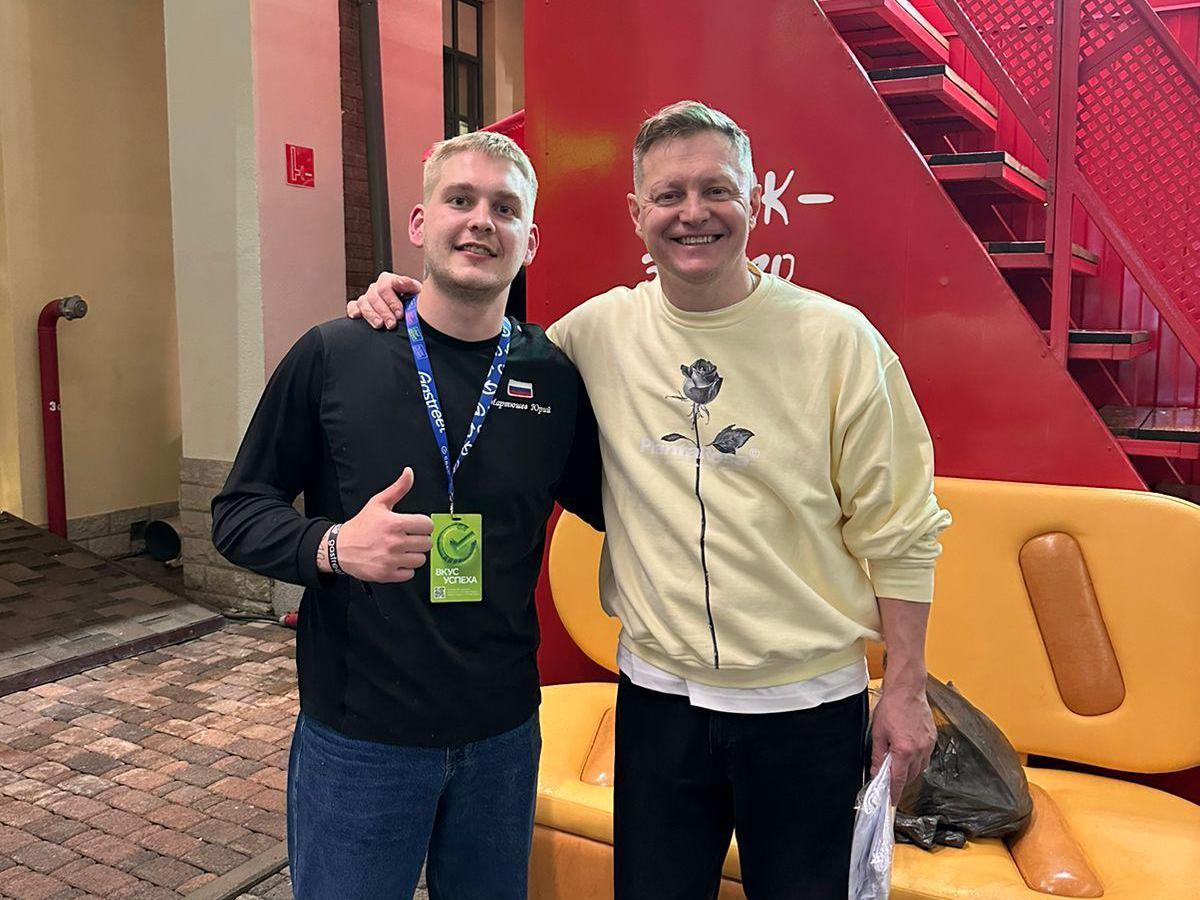
Volunteering at major festivals brings experience and networking with prominent culinary professionals.
«There was a difficult turning point. I felt I was ready to work as a senior cook. I called a hotel in Gelendzhik where I’d already worked, where they knew me. I sent documents; everything was agreed, tickets bought. But suddenly the hotel called: “Our head of security changed, he dug up your whole backstory and said this guy won’t work here. We told him you’re solid, worked well. Useless.”»
«My world collapsed. I was upset. When I have my own food-service venues — and I will — I won’t grill candidates about their past at interviews. The main thing is what they’re doing now, how they show themselves at work. Why cut people off from hope of returning to a normal life?» Yury explains.
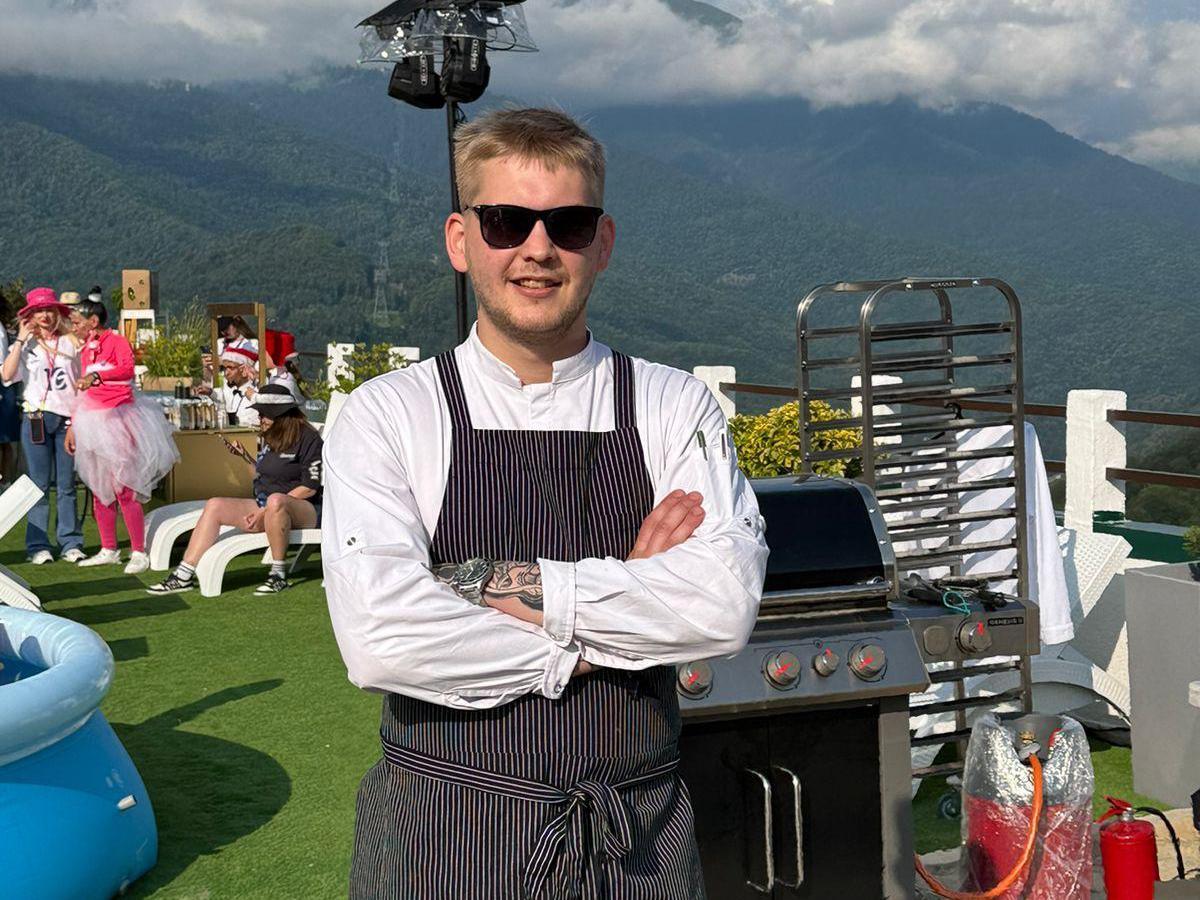
He gained years of experience working in restaurants across Sochi and Gelendzhik.
Over eight years, the cook worked in food service and restaurants in Ekaterinburg, Sochi, and Gelendzhik. Each place added experience, though not always good. Yury continues:
«I got a job at a bar in Koltsovo, but left after a month and a half — I couldn’t stand how they did things. It was a canteen in the worst sense (I respect and love good canteens) — total chaos. They billed themselves as a bar, price tags were enormous, and instead of sour cream they used a substitute; they cooked solyanka soup from the cheapest economy-class sausages. Or chicken broth from the cheapest bouillon cubes — they’d just toss them in boiling water and cook on that base, then sell that soup for ₽800 (about $8 at current rates). That’s just cringe! I make broth on two carcasses, add oranges, vegetables, herbs. I’ll cook the base and add a spoonful of dried chicken stock, ground to powder. I told the head chef all this — useless. I can’t work with people like that.»
***
Yury treats us to his dishes: pasta with mushrooms and a mushroom mousse; turkey patties with a pretty summer leaf salad and bright pearls of tomato — and also pasta with assorted seafood and a spicy sauce with the beautiful name arrabbiata.
The cook explains that this traditional tomato sauce comes from the Lazio region and in Italian means “angry”. We praise it — it truly is very tasty — and he admits he himself prefers simple dishes.
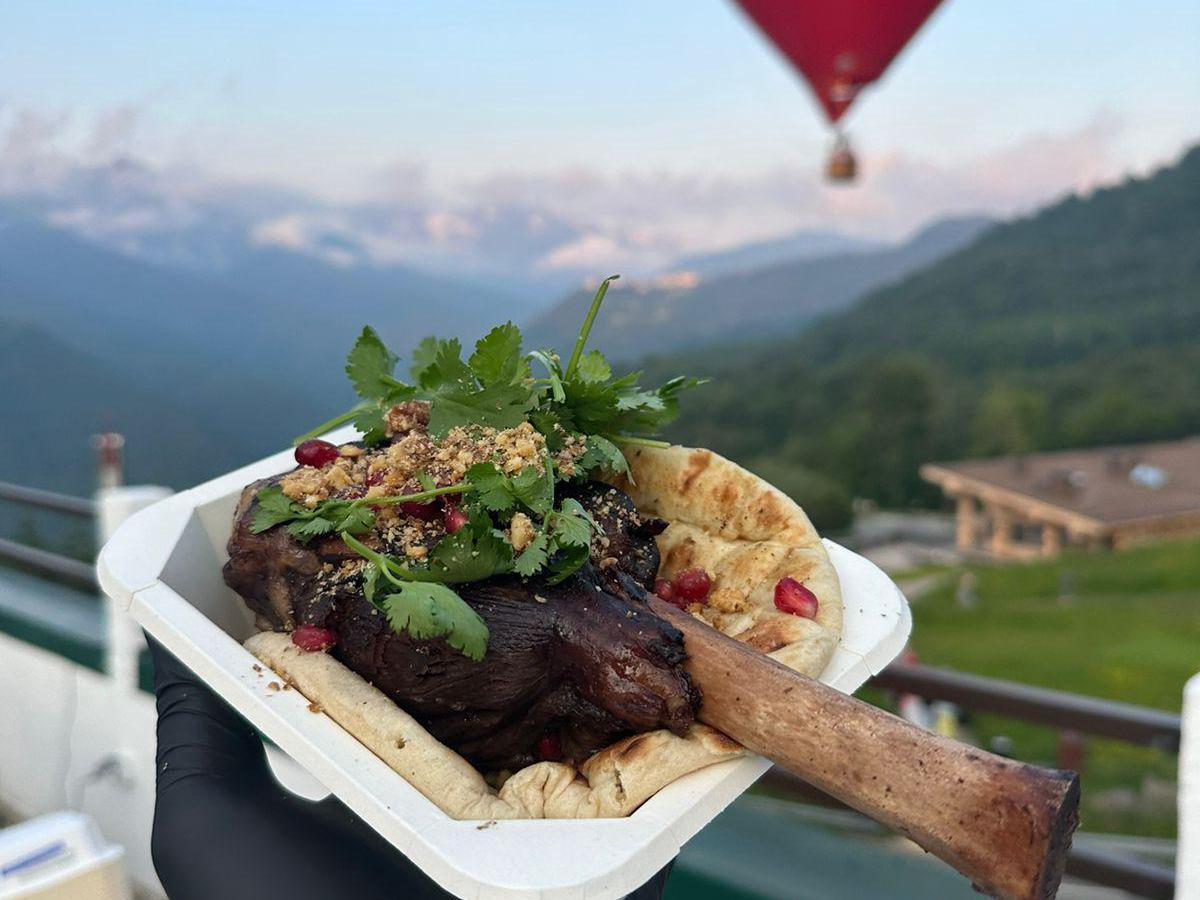
Lamb shank with cilantro and pomegranate seeds reflects his preference for bold flavors.
«I love grilling meat over coals, on a mangal. I love cooking in a cauldron. That’s my side gig at weddings and parties. I also have my own bruschetta recipe — I make them to order, not on baguettes but on good bread I buy, expensive, with butter. And sauces by my own recipes.
I love what I do. My goal now is to open my own venues. Another goal is to hold my own gastronomic festival in our city. I dream of working abroad — in China and France (for experience, a foundation) — and reaching the very highest level. To open kitchens across Russia and beyond. So that Mom will be proud of me,» Yury shares.

He serves signature dishes, including seafood pasta and turkey cutlets with seasonal salads.
Most of the guys from that wild childhood crew that torched garages and stole cars have ended up okay. Maybe not all of them, like Yura, found an inspiring vocation or are making ambitious plans — but they’ve grown up, they work, they have families, children. Sadly, there are also those who never fit back into normal life and are serving yet another prison term… And Yury tells us:
«I tell my story openly to show you can live normally if you pull yourself together. Here’s an example for other boys who, like me once, have veered off. There are three conditions: change your location, change your circle, and most important — set yourself a goal. After that — work and work.»
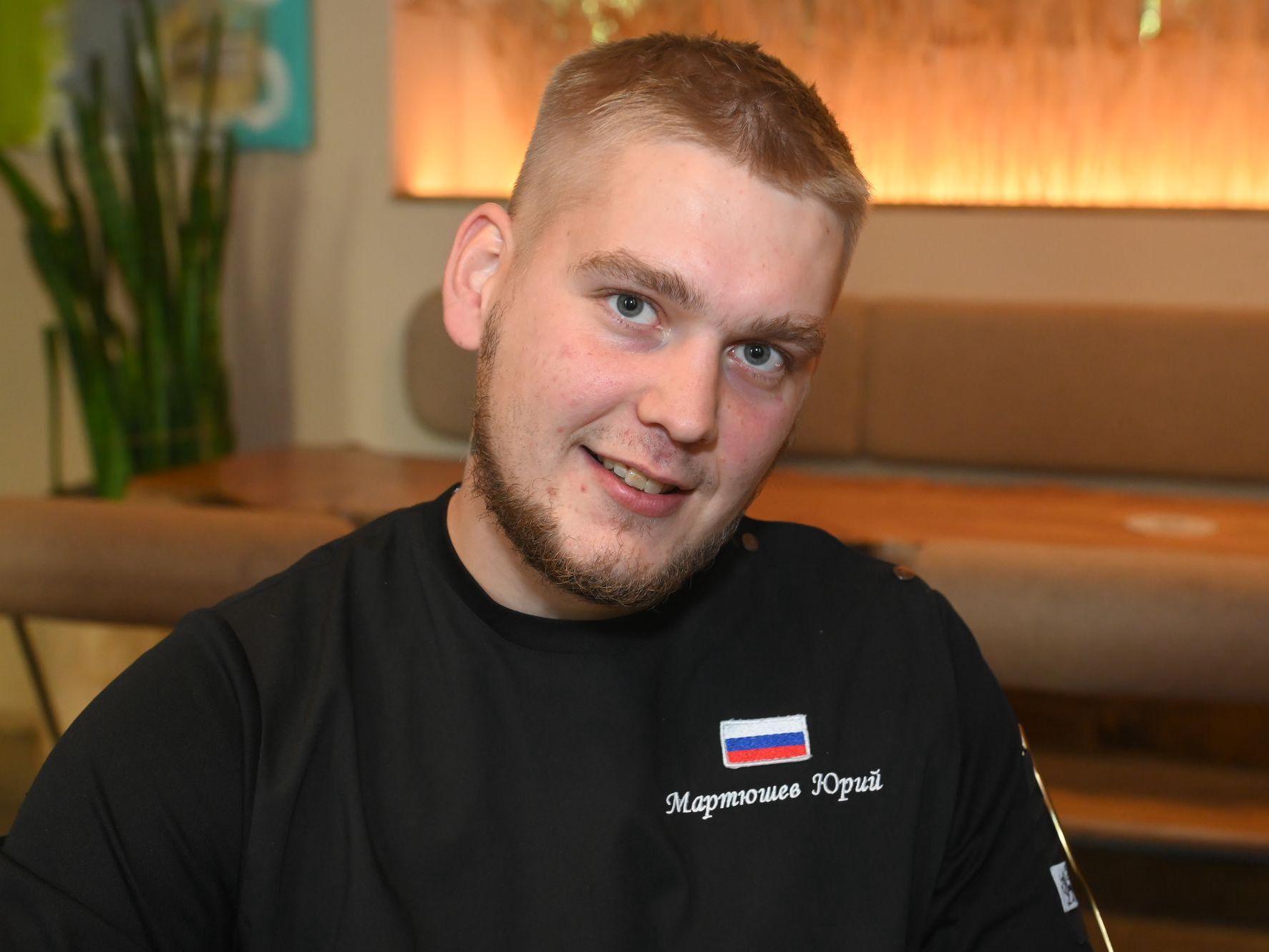
He continues pursuing long-term goals, focusing on education, leadership, and personal growth.
Read also the story of another Koltsovo resident. Sergey Shuneev grew up in the same area, on Ispytateley Street, and knows Yury. He works with at-risk teenagers and draws them into sports — he created a neighborhood football team to keep them away from crime.