Severodvinsk Woman Revives Family Home with French Flair
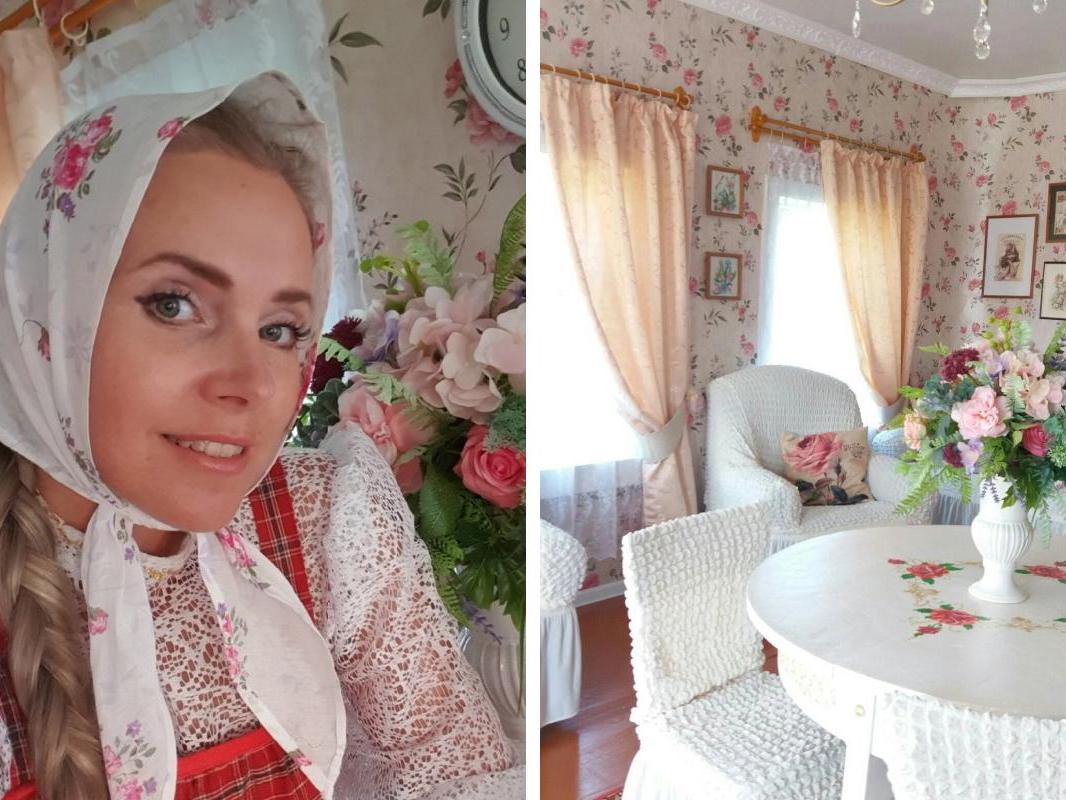

The old grandmother«s house in the village of Belaya Sluda stood empty for ten years. Coming to the family nest in the summer, Irina Kopylova from Severodvinsk dreamed of renovating it and finally decided to do it at one point. Instead of a European-style renovation and throwing out old things, she chose a different path—to leave the house as six generations of the family remembered it. We spoke with Irina about how to bring life back to a neglected izba (traditional Russian house), why to preserve spinning wheels and stoves, and why old houses, in her words, know how to »accept their own.«
Bolshaya Sludka (Belaya Sluda) is a village in the Krasnoborsky District of the Arkhangelsk Oblast. This small settlement is very dear to Irina Kopylova«s heart. Her parents grew up here and she herself did: she went haymaking with relatives, learned old legends, and ate grandmother»s pies.
After her grandmother«s death, the house stood empty for 10 years. And in 2018, Irina decided to restore it.
The building is over a hundred years old, says the northerner. Her great-great-grandfather laid the foundation of the dwelling: huge larch logs have survived to this day. The house was last reconstructed in the 1970s.
‘The House Accepted You’
For several years in a row, Irina came to Belaya Sluda and improved the yard area. Why cram in with parents on vacation when grandmother«s house is empty, she reasoned.
“Old houses, they only accept, it seems to me, their own kin,” says Irina. “As soon as I painted, whitewashed the windows from the street side, the house seemed to cheer up, to smile. My mother told me: ‘The house accepted you.’ That is, you really feel as if the house has its own soul, especially old houses.”
Irina has loved decorating spaces since childhood, even once long ago taking interior design courses. The northerner admits that knowledge partly helped her in transforming the house.
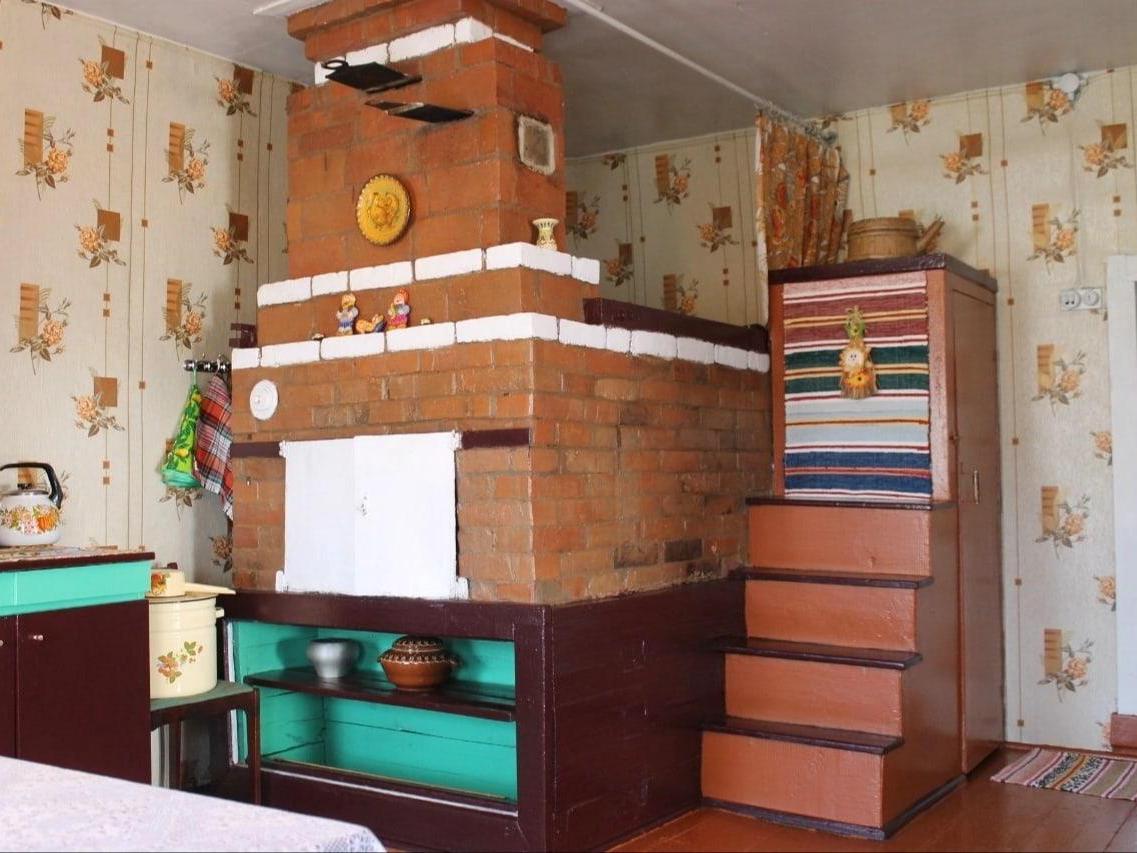
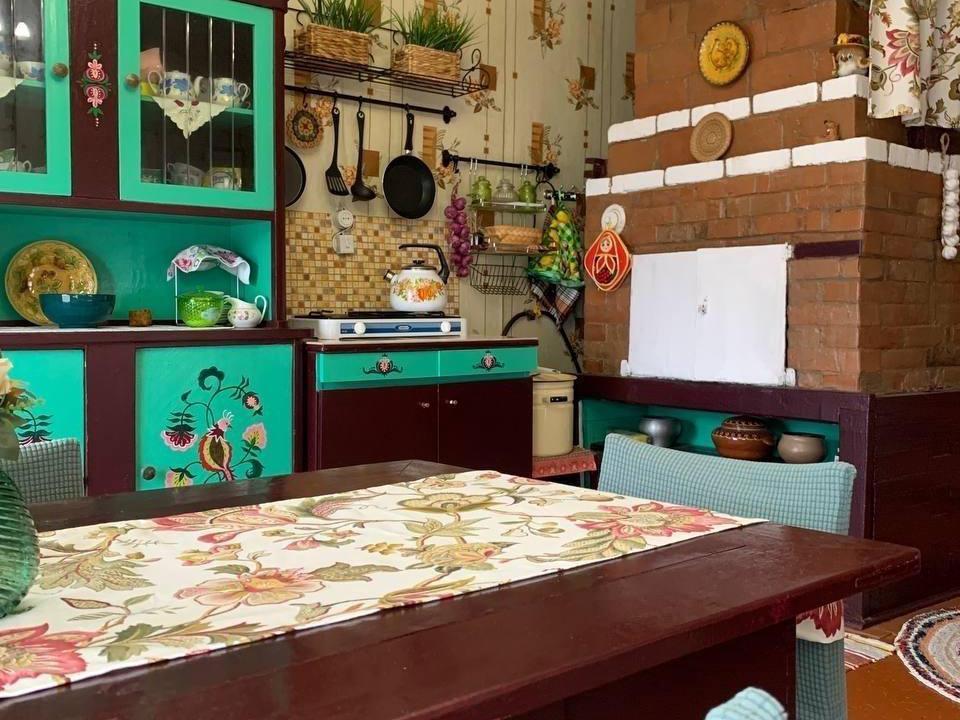
Work inside the building began with the stoves. For example, the Russian stove—«the house»s landmark«—Irina covered with acrylic fire-resistant varnish and decorated.
The appearance of the living room was entirely based on wallpaper that had long been lying unused, Irina says. As soon as it was pasted, it became clear: the room would be tender, with retro details in the Provence style.
It used to be common to divide zones with curtains. But Irina decided to abandon this solution in favor of spaciousness and light.
“In the morning you wake up—it’s indescribable how wonderful it is there,” recalls Irina. “That morning light, the whole room is bright, you wake up—such relaxation, incomparable to anything.”
The kitchen turned out bright: a turquoise cabinet restored by hand, curtains with a pattern on the window and stove, rugs, painted dishes, and dried flowers.
“For a whole year I nurture ideas, buy something, come up with something. I remember how I first got into decor: I learned to weave from paper vine, wove a box, various vases, caskets. I packed all that into the car—I remember, filled it to the brim—and took it there.”
Saving Relics from the Landfill
Irina is sure: the soul of the house is in antique things that preserve history and the atmosphere of the past.
“It’s various utensils… A samovar, for example, an antique one stands. My grandmother’s homespun sarafan (traditional dress)—she wove it herself, dyed it, wore it. And to this day the colors haven’t faded,” says Irina.
The furniture also survived: carved white chairs of her great-grandfather, an old table, cabinets. Many items even grandmother no longer used, they just lay, forgotten by all. Irina found them and brought them back to life.
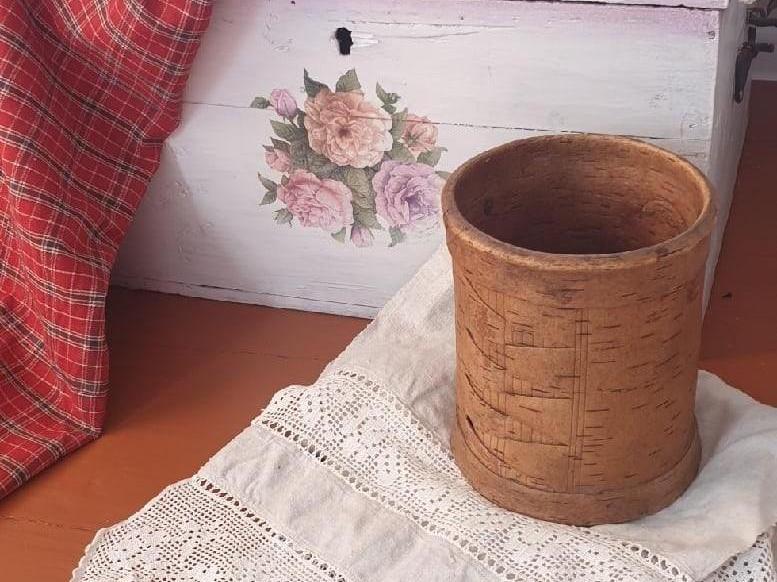
Irina started using an antique chest instead of a wardrobe for storing blankets and pillows.
On the veranda stands an iron bed, also saved from the landfill.
“Dad remembered how as a little boy he jumped on it. They already wanted to throw it out, but I didn’t let them. Dad even welded a hook for the canopy himself—participated in the decoration,” smiles Irina.
The woman remembers the antique mirror from childhood—it always stood in her grandmother«s house. Over the decades, only the color of the frame changed: first black, then brown, now white. Who and when bought it, the family no longer remembers.
“For me this mirror is special: into it, perhaps, more than one generation of our family has looked. There is something sacred in this—as if the mirror preserves the memory of my ancestors. Yes, it has small chips, but it continues to serve. People pass away, but the mirror remains—as a witness to the life of several generations,” reflects the hostess.
During the renovation of the veranda, when they raised the house and changed the rotten log, they dug out buried posts and old iron parts from the ground. Irina«s father then suggested that long ago there was a stable or smithy nearby. Irina carefully preserved all the finds just in case.
The hostess preserves old chests, boxes, tools. In the northerner«s collection there are two spinning wheels: one grandmother»s with a real old spindle, and the second—more modern. All of them preserve family history and now decorate the house.
At the same time, it was precisely the antique things that helped Irina save significantly on the renovation: she didn’t have to buy furniture.
“I used everything old that there was. It would seem, things already unnecessary, almost for throwing out. For example, a wardrobe: they were already planning to take it out, but I said: no, I see that something interesting can be made from it. So, such a little sofa turned out, seemingly from nothing,” tells our interviewee.
The old worn kitchen cabinet also found a second life. Irina painted it to match the buffet, applied a similar pattern—and the item immediately became part of the thoughtful interior.
The main expenses, she admits, went on paint, tools, chandeliers, and textiles. Everything else the Severodvinsk resident tried to do herself, even sewing curtains and weaving decor from rattan.
The Worst Thing is to Try to ‘Modernize’
When Irina Kopylova told the story of the house’s transformation online, she noticed responses from other users: some showed their houses and spinning wheels, others asked for advice on furniture restoration.
“And somehow it’s joyful in the soul that our people still don’t abandon houses, but try to preserve them.”
However, many still do not feel the value of antique items and spaces, considers the resident of Severodvinsk.
Irina Kopylova is sure: almost any old izba can be made into a dream house, if you don’t rush and first honestly answer the question ‘why’. For weekend rest, for summer living, for receiving guests, or for all at once—everything else depends on this decision.
“First of all, the house needs to be assessed as it is,” says Irina. “What condition it’s in, what has been preserved in it, and what has already been lost. And only then decide what exactly you want to do with it.”
According to her, old wooden walls are not a problem, but a big advantage. If the timber is not painted and not pasted over, it’s better to keep it open if possible.
“I myself really like it when the wood is visible. In extreme cases, you can carefully whitewash or lightly paint, but so that the texture remains. The worst thing is to try to ‘modernize’ the izba with drywall. It ruins everything: kills the atmosphere and makes the house faceless,” thinks the Severodvinsk resident.
It’s also important not to overdo it with decor. ‘Clutter’—another common mistake, says Irina. You shouldn’t hang everything in the house at once, even if the things themselves are beautiful.
“Better to choose two main colors, maximum three, and stick to them. So in my kitchen, I ended up with burgundy and green. Yes, the wallpaper there is colorful, but that was a conscious decision—other materials simply weren’t available then. I used what I had, but tried to incorporate it neatly and appropriately.”
Irina advises not to be afraid of the lack of budget and not to think immediately about purchases. Sometimes the needed things are already there—just lying out of sight.
“Look in the pantry, attic, shed, hayloft, or basement. Very often there are old household items that can be adapted: somewhere tighten, somewhere repaint, something attach or remake.”
According to Irina Kopylova, the main resource in such a house is imagination. And if it seems that ideas are lacking, the internet comes to the rescue.
“Now there are so many examples: how people decorate, paint, sew, draw themselves. This is done not by professional designers—ordinary people, and they do great. You can look up color combinations, techniques, ideas and adapt them for yourself.”
“If you’ve chosen a direction, you need to stick to it. Don’t tear the house into pieces with different solutions. Better less, simpler, but cohesive. Then even an old izba starts to look like a real home, not a set of random things.”
Preserving the Family Nest
Thoughts about turning the house into a museum or tourist space have occurred to Irina Kopylova more than once. But for that, you need to live in the village constantly and fully devote yourself to this matter. So far, work in Severodvinsk doesn’t allow such an opportunity.
“The goal now is to live in this house in the summer, to rest. And I, of course, dream of preserving this family nest for my future descendants, next generations, so that my children come there. And make a small family museum, because, in principle, there are enough exhibits that could be preserved and shown,” says Irina Kopylova.
In the summer, Irina plans to repair the stove pipe and roof. In the unfinished room, an already polished wardrobe and a large cabinet await restoration.
There is a warm, almost symbolic dream—to light the Russian stove and cook in it pies from childhood: shangi and presnitsy (traditional pies).
There’s enough work outside too. In the back part of the house, there once was a ramp to the hayloft, and below they kept livestock. The structures partially survived, but the logs in the base have rotted over the years. Irina plans to carefully dismantle and update this area, keeping it safe and usable.
“So I want to re-cover the roof, put up a fence, and finally change the windows to plastic ones for warmth, so that I can come in winter too. In general, there are many plans. If only I have enough time, health, strength. Well, and means, naturally,” says Irina.
If you’re thinking about how to update the interior in your home and do it inexpensively, then read home staging advice via the link.