Volunteer in Barnaul Lives with Huntington’s
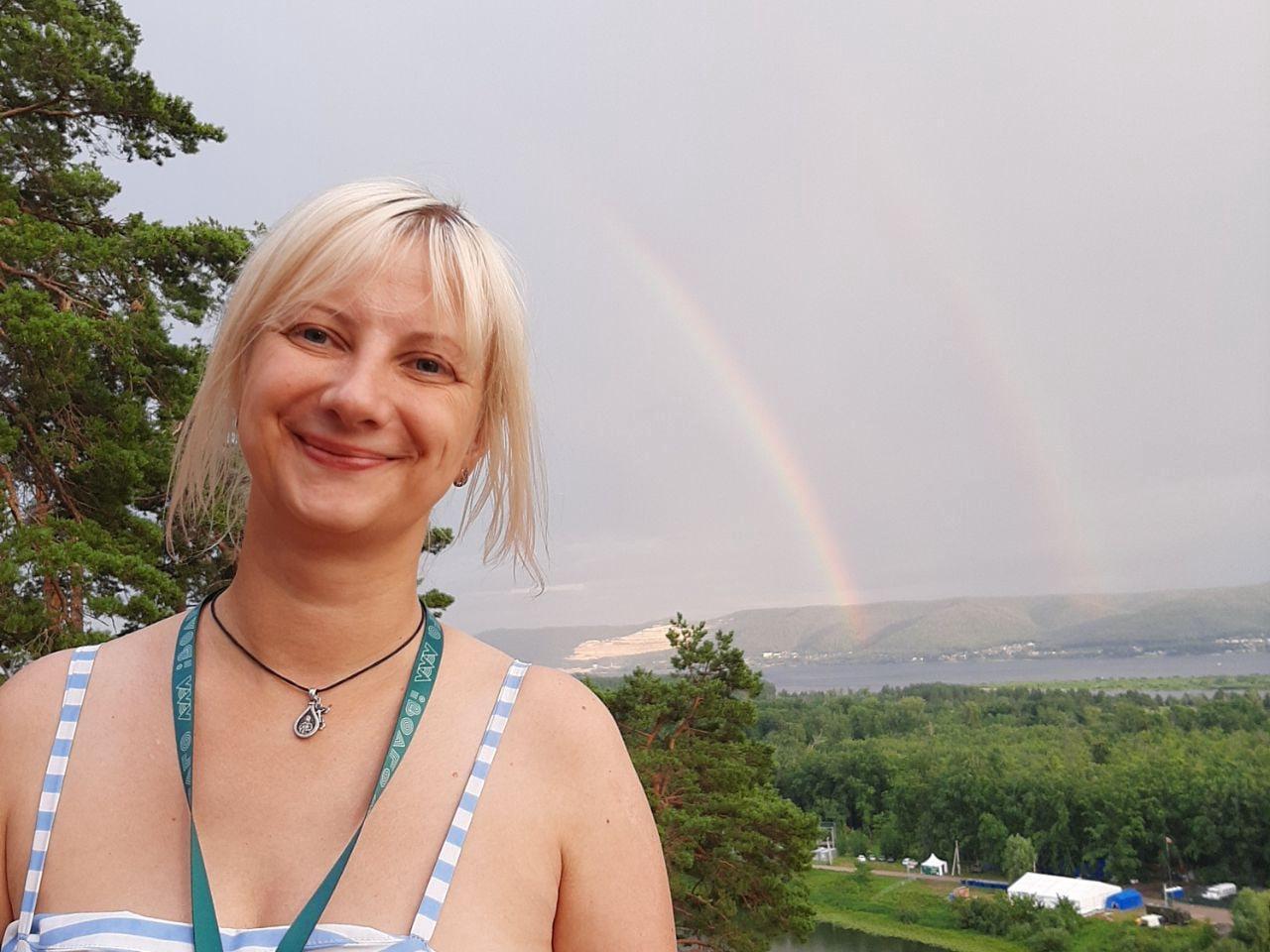

Katya’s bright smile appears despite the challenges of Huntington’s and past cancer.
More than ten years ago, when Barnaul resident Ekaterina Limaeva was being treated for cancer, doctors gave her a rare hereditary diagnosis — Huntington’s chorea. It affects the nervous system, gradually deprives a person of control over movements, and most often manifests after age 30.
For Katya, it was another turn in a life already full of anxiety and uncertainty. Instead of giving up, she started acting: studying the disease, looking for treatment options, and helping those in similar situations. Later she launched her project «Stronger than Circumstances» (Sil’nee obstoyatel’stv).
Huntington’s chorea is a rare hereditary disease of the nervous system in which brain cells are gradually destroyed. The illness presents with movement, memory, and psychiatric disturbances. It most often begins to progress inexorably after age 30.
Memory lapses and loss of coordination
— I’m getting worse now, — Katya began. — Sometimes my speech fails me, and my voice changes, acquaintances notice; I also fall more often now.
Huntington’s disease, which she has, is incurable and manifests differently in each person. Some debut with severe tremor, while others immediately suffer sharp mental changes. In her case, memory lapses appeared.
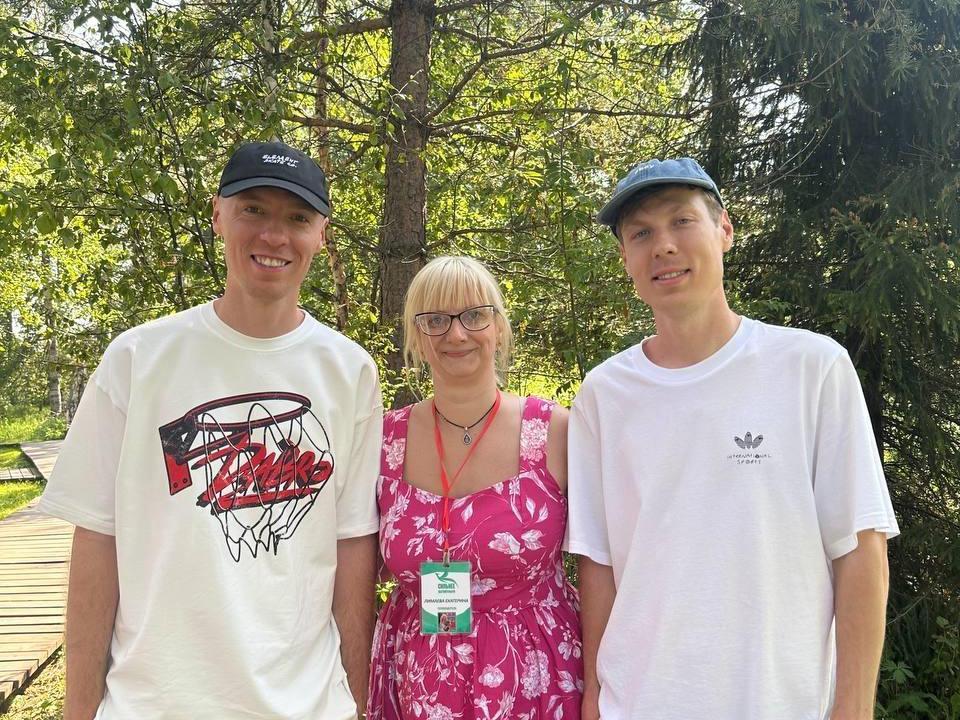
She met the band at a gathering she organized for tourists with disabilities.
Now, at 35, Katya can move around the city only by taxi, because every time she leaves home she risks forgetting the way or mixing up a doctor’s appointment time. Added to this are coordination difficulties and frequent falls, which is why she uses a power wheelchair for mobility.
It cost her ₽170,000 ($1,700 at current rates), so she decided to launch a fundraiser which, incidentally, closed after just two days: as Ekaterina herself says, a “secret angel” helped. As it turned out later, the group Dabro transferred most of the amount; Katya had recently met them at an event where she took tourists with disabilities.
«Why am I in intensive care?»
She learned more than ten years ago that Huntington’s chorea had been passed down to her. When her father developed characteristic symptoms and his disease was confirmed, her grandmother sounded the alarm and strongly urged Ekaterina and her brother to be tested.
— My brother had nothing, and I did. The risk was exactly 50–50, — she recalls.
At that moment there was no time to worry about a genetic illness: the news came while Katya was undergoing chemotherapy. She also learned about cancer of the sigmoid colon by chance:
— I was at work then; they called an ambulance and took me in. At first they relieved the pain and wanted to discharge me, but the department head insisted on an examination, saying I was young and they should look more carefully. That’s how they found the tumor. They didn’t say outright it was cancer; they said everything was fine. They operated, and when I woke up in intensive care I thought: «So why am I in intensive care, then?» Later I read the diagnosis myself.

Many people with chorea skip testing because of cost and fear of results.
Accepting two trials at once was hard, but Ekaterina tried to hold on. First she thought about whether she would enter remission, and only later — about the hereditary illness that would likely make itself known later.
— Back then I worried more about the cancer, of course. With chorea at least you live, but here it was unclear. It was a serious form of cancer, a malignant tumor. I just thought: «All right, if we’re living now, we’re living.» I fretted for a day and realized that at least I knew what was happening to me. Many people with chorea refuse to get tested at all. But I wasn’t afraid to know the truth.
A wedding between chemo rounds
Amid illnesses and hospitals, there was another important storyline in Ekaterina’s life — a love story that to this day gives her strength to get through every trial.
— My husband and I have been together 12 years, married for 10. We met simply — at work; he did websites. We got married right between chemo cycles; I went to the registry office with a colostomy bag, — Katya laughs. — He knew what he was getting into; my life without him would be completely different.
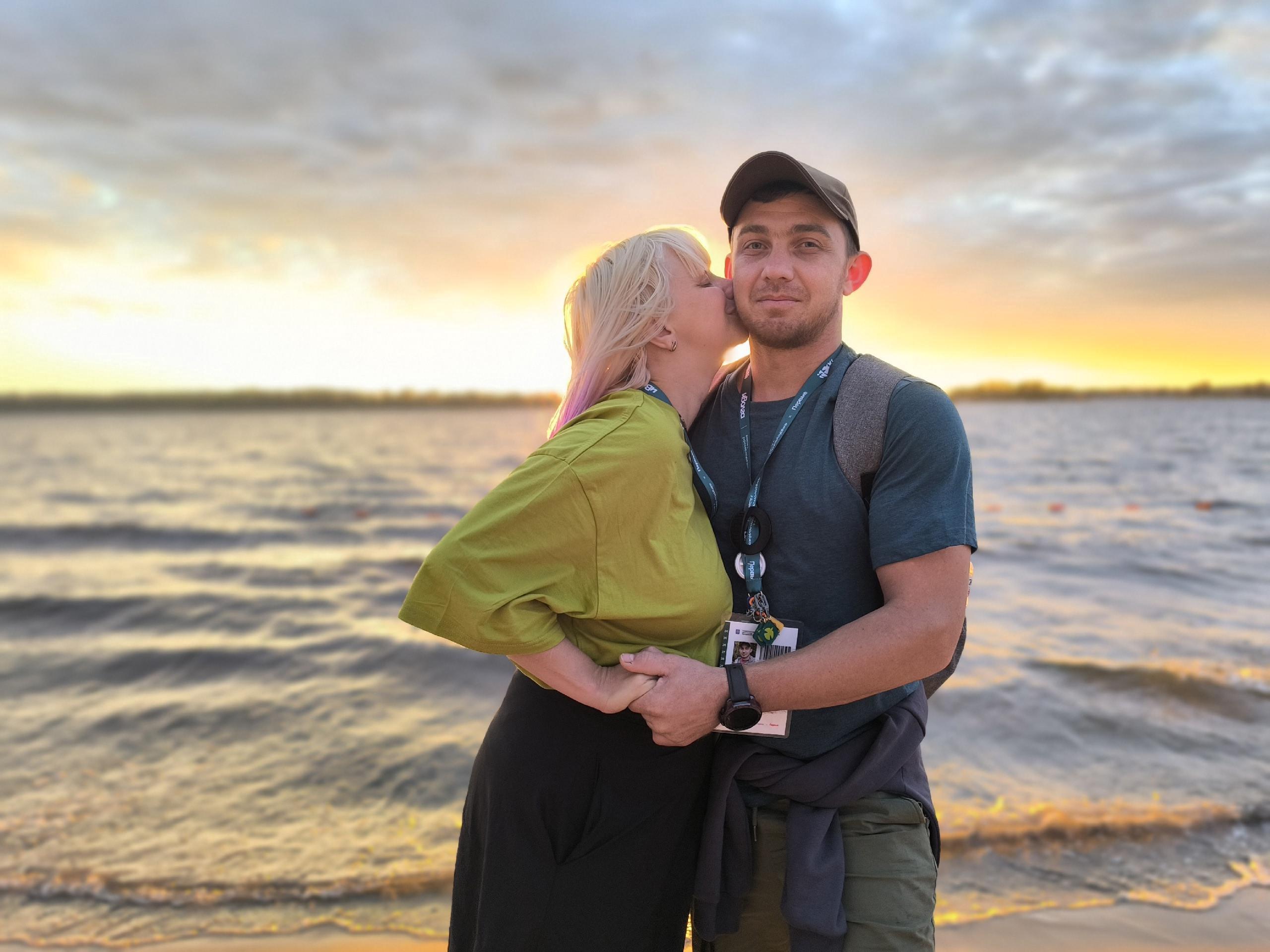
Married ten years, she says with confidence that her husband understood the commitment.
Throughout the time they have been together, Pavel supports Ekaterina in all projects and initiatives: he creates decorations for events, helps with every grant, and now even submits applications for their implementation on his own:
— Right now we have a grant to make macramé swings for people with various rare diseases. This is already the fifth grant we’ve received. We’re a real team in this: I organize, he helps.
«I love doing, not talking»
Diagnosing Huntington’s chorea is a complicated story. The disease, Ekaterina notes, is understudied, and many doctors have heard of it only superficially. By symptoms it can often be mistaken for multiple sclerosis.
To broaden her knowledge and share experience, she traveled several times to international conferences, in Vienna and in Bucharest, where she was recognized as a strong speaker.
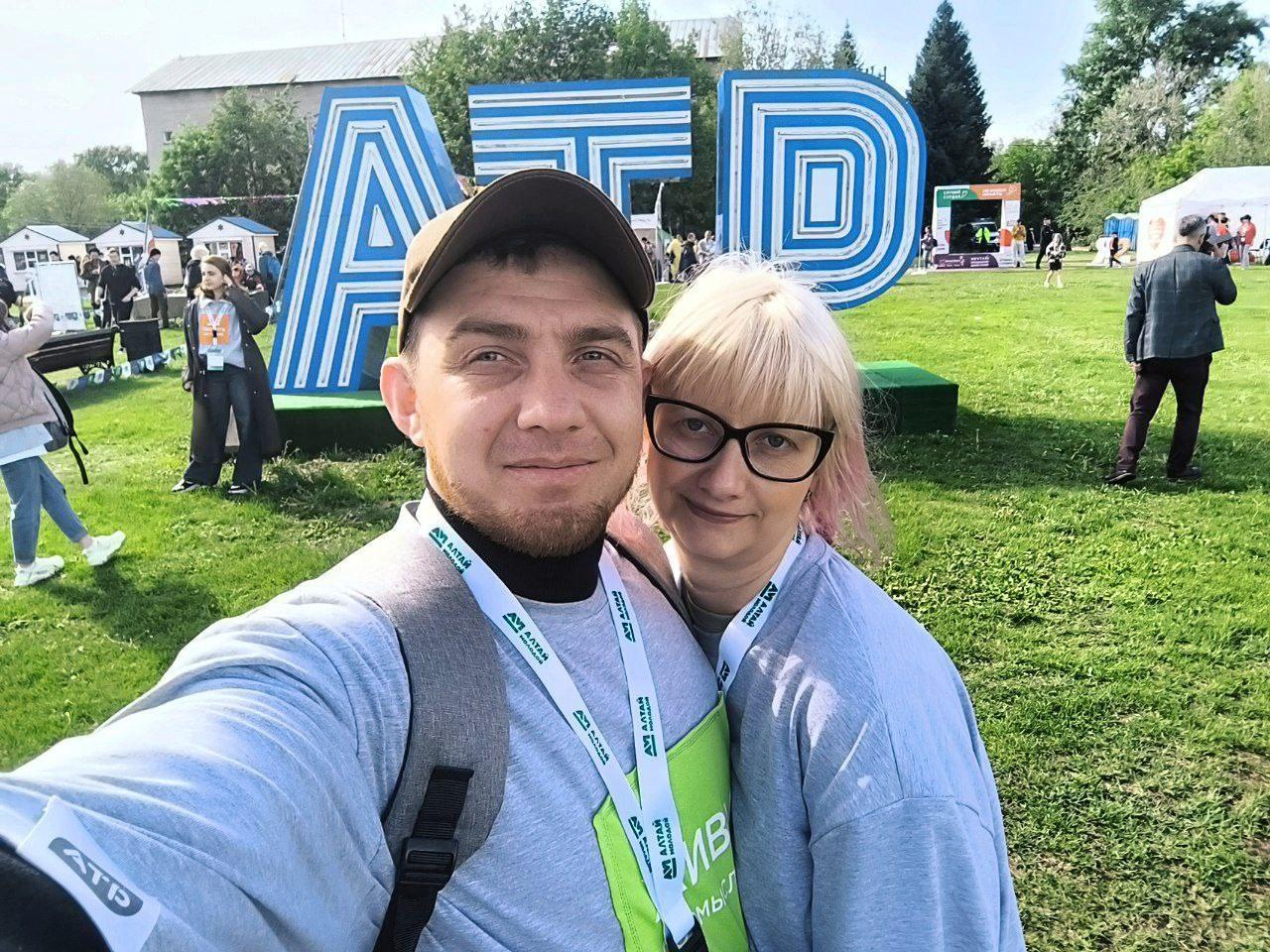
She travels by taxi and uses a power wheelchair because of coordination difficulties.
— We were lucky; we weren’t left on our own. The organizers covered travel and accommodation. There’s a huge community of people working to develop medicines. Everyone wants to be first, and I feel we won’t be left out.
Incidentally, these trips helped Altai Krai as well: patients in Barnaul with this disease now have a neurologist who monitors them and takes part in joint meetings.
In the course of her scientific practice, Ekaterina found like-minded people — those who, like her, didn’t know what to expect from Huntington’s chorea.
— I’ve helped my whole life: collected clothes for fire victims, placed animals. And when I learned my diagnosis, I realized we needed to create the community «Stronger than Circumstances» (Sil’nee obstoyatel’stv), where we provide targeted help to people with rare diseases. An enormous number of rare diseases are registered every year. Physically it’s impossible to know and track everything. Diagnostics are expensive; sometimes medicines are practically impossible to find. So the community helps at least by supporting a person at the start.
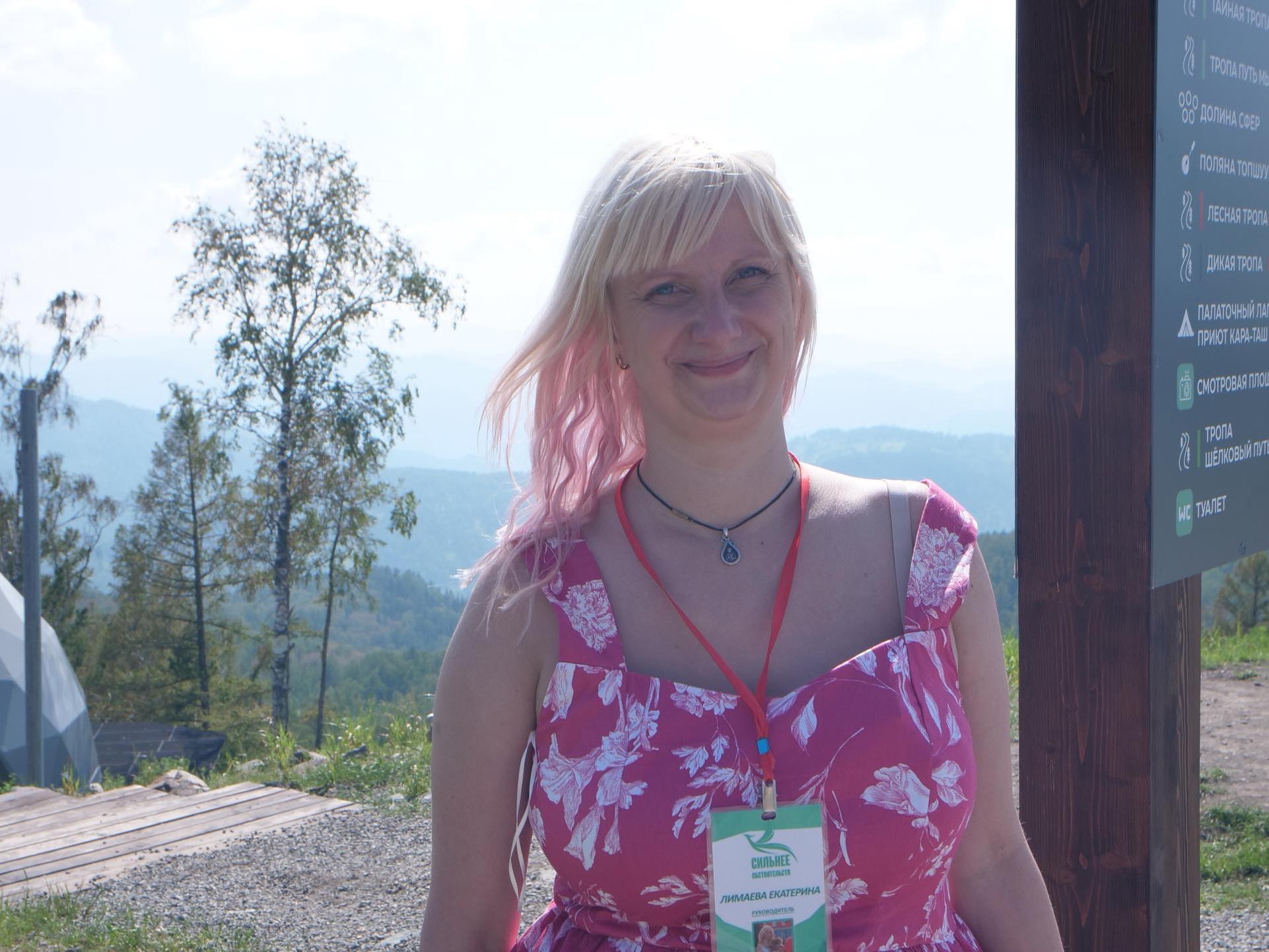
Helping others and staying connected provide steady motivation during treatment and daily obstacles.
Now, Ekaterina admits, doing her usual work is getting harder physically, as she will soon need surgery on her right ankle joint, and the disease is showing itself more actively.
— Hospital stays take a lot of strength, but interactions and helping people keep me going. I love doing, not talking.