‘Soup was a luxury’: Facing kidney failure


Olga before the transplant, during a period of strict fluid limits and uncertainty.
Olga Eliseeva, 33, is a content marketer at an IT company. She actively runs her social media pages, talks about everyday life, films vlogs, recommends films, shows how she spends time with friends and — openly — discusses her illness, the operation, and recovery.
Olga received a kidney transplant in August 2025 after waiting two and a half years. During that time she underwent hemodialysis, survived peritonitis, rethought her outlook on life, and found true friends. We spoke with this brave young woman about what it’s like to lose your kidneys and gain a new one.
How it all began
At first, Olga noticed frequent spikes in blood pressure — that prompted her to see doctors. They told her her kidney numbers were not very good and advised her to avoid salt, saying nothing was critical. However, six months later her condition worsened and her pressure shot up to as high as 200 mmHg. Doctors at the clinic diagnosed stage 4 chronic kidney disease. Her kidneys were beginning to fail.
«When I learned the diagnosis, I thought you could live with it. People do somehow live with chronic illnesses. I knew nothing about either dialysis or transplantation. I thought a transplant was something distant and that it definitely wouldn’t happen. When the doctor told me I should already prepare myself mentally for a transplant because my kidneys would soon stop working, I didn’t take it in at first. How could this have happened to me? Was it really real? I didn’t tell anyone, only my mom. I kept everything inside», Olga recalls.
The diagnosis was made in May 2021, and in 2022 doctors prescribed dialysis. On her blog, Olga describes the procedure in detail: an early rise at 4 a.m., getting ready (you need to take a hospital pass, headphones, a pillow for comfort, and bed linen). Upon arrival at the center you change into spare clothes and get prepared. According to Olga, it is painful because the needles are quite thick.
Hemodialysis is a procedure that washes the blood using an “artificial kidney” machine, which clears toxins and excess fluid when a person’s own kidneys can no longer cope. All the blood passes through an external filter (a dialyzer) where waste and extra water are removed, and the purified blood returns to the body.
«The hemodialysis procedure is not the most pleasant. Three times a week you lie there for four hours, and afterward you can only lie at home, exhausted. I lived as if from dialysis to dialysis», Olga remembers.
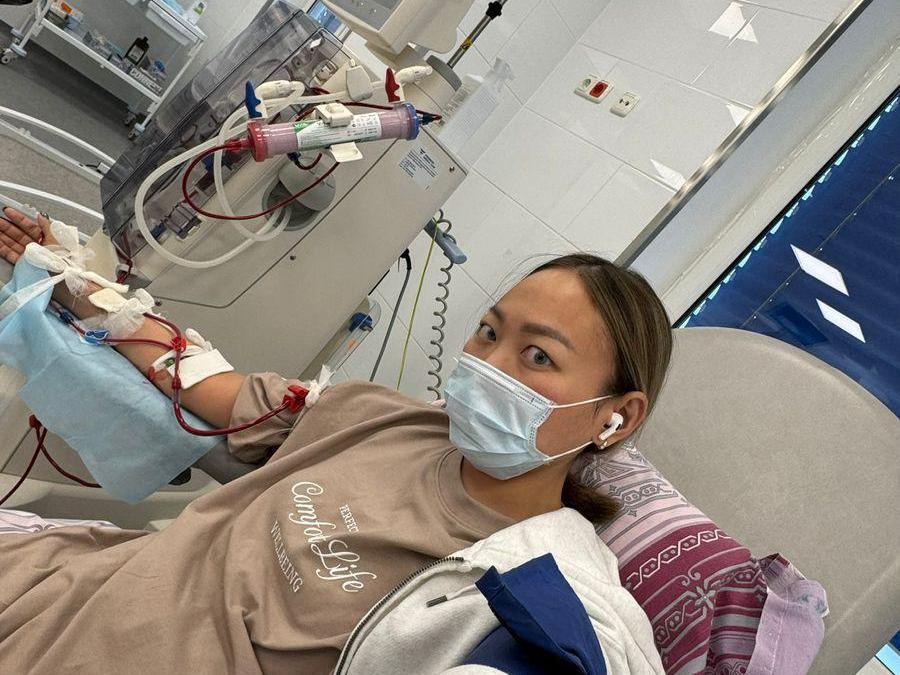
Thick needles used for hemodialysis can be painful during repeated access to the fistula.
Going to dialysis was not Olga’s only problem. She was diagnosed with peritonitis. She even thought she would die — that’s how bad it was. But she recovered — and credits her doctors for that.
Preparing for surgery
The hardest stage was the waiting and the uncertainty before the operation itself. She also found herself in another city.
«You don’t know how long you’ll wait — a month or three years. At times it was very depressing. Being far from home, with no chance not only to go home but to go anywhere at all, also turned out to be very hard. It felt like being in a cage, with no way to live, work, travel, or plan normally», Olga says.
Olga came to the city of Volzhsky (Volgograd Oblast, Russia) in May 2023 to join the transplant waiting list at the federal organ transplant center imeni Shumakova — the Shumakov National Medical Research Center of Transplantology and Artificial Organs (the Shumakov Center). A patient comes to the center, undergoes examinations, and if there are no contraindications, is added to the list.
There is no line in the usual sense, but rather a waiting list. A special program matches a potential kidney based on key parameters — blood group and the presence of antibodies. If a kidney may be suitable, the person is called and asked to come to the center. Several people may be summoned for one kidney; tests are taken and a final decision is made on who is the best match.

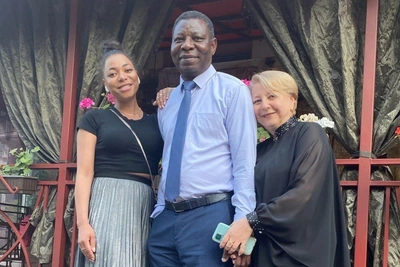
Olga near the Shumakov Center in Volzhsky while waiting on the transplant list.
«They can call any day, any time — even at night. So the patient doesn’t know when their turn will come. For example, my friend got a call at three in the morning, a year and a half after joining the list», Olga says.
At the Shumakov Center she met friends. In her words, it was a real gift from above and good fortune — to find wonderful people and share the same vibe. The friends supported one another while they waited for surgery, went places together, and tried to distract themselves from anxious thoughts. Olga says there were moments when she wanted to give up.
«It happened. But those were fleeting weaknesses; in fact I never had serious thoughts about stopping the wait — absolutely never. I decided, firmly, that I would wait as long as it took, because I didn’t want to spend my whole life on hemodialysis», she says.
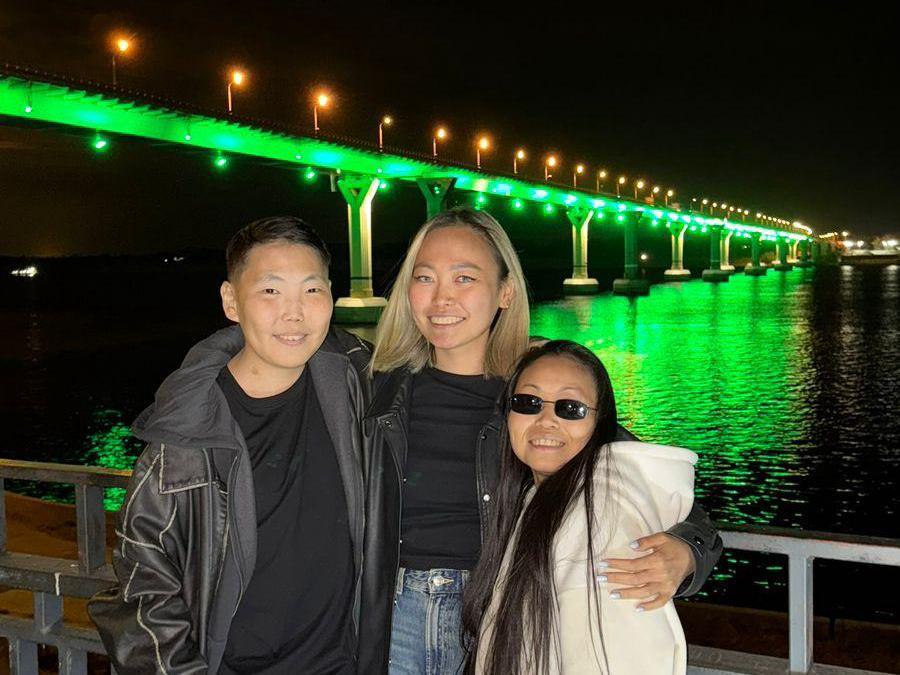
Friends she met at the center supported one another through months of waiting and tests.
Olga thanks the center’s doctors, especially the surgeon — «the kindest, most attentive, and most understanding».
«He’s one in a million. I’m very grateful to him», she says, and even though our interview is taking place at a distance, I feel that she smiled.
Now, after the transplant, Olga says she would tell her pre-surgery self that she is strong. She would advise herself not to be afraid of anything.
«Don’t be afraid, you’re strong, you’ll get through everything; everyone is given trials they can shoulder, and your day will come, and you’ll do everything you had planned, everything you want. You just need to endure a little. Don’t be afraid to ask for help — don’t carry everything alone», she says she would have told herself then.
The day of surgery and recovery
When Olga went for a routine check-up with internal medicine, the long-awaited call came that evening: a kidney was available, and she needed to prepare for surgery.
«I didn’t fully believe it would happen; I thought it wouldn’t. I tried to steel myself so I wouldn’t be disappointed. But in the end they told me the operation would definitely take place. And then I started to worry. It’s especially frightening when you’re lying on the operating table, everyone around is bustling about, doing something, and you’re just lying there waiting. Then, when they gave me anesthesia, I simply fell asleep», she recalls.
After the operation, Olga woke up with a tube in her throat and panicked — it was hard to breathe. Soon the tube was removed and she was transferred to intensive care.
«I don’t remember being in pain at first, because they’d also placed an epidural. I remember waking and feeling nauseated. By evening I began to feel pain, but after the painkiller I immediately fell asleep. That’s how my first day passed; the next day my mind was clear, though I still slept a lot; after lunch I was moved to a ward», she says.
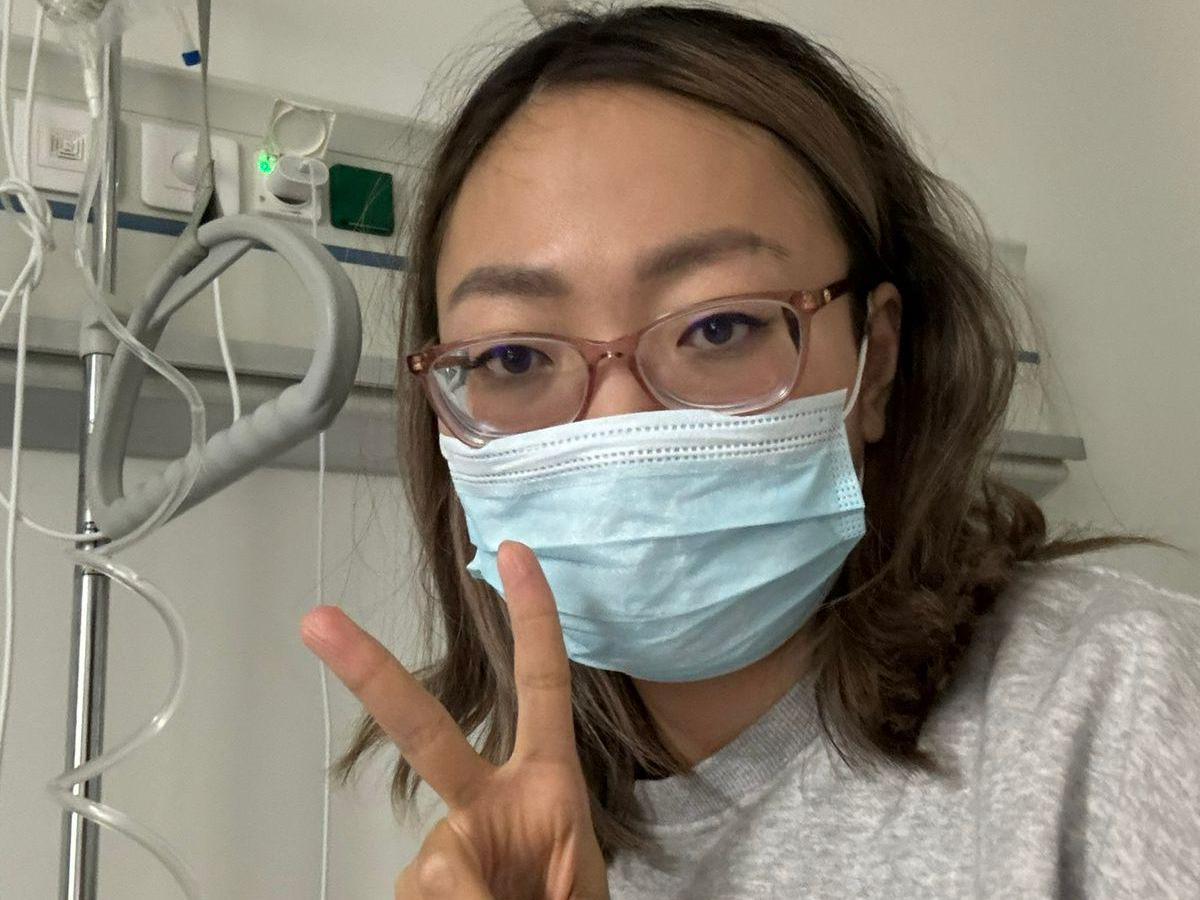
Hospital stay included intensive care, pain control, and ultrasound checks confirming immediate kidney function.
It became clear even in intensive care that the kidney had taken.
«I remember a doctor came in intensive care and did an ultrasound of the kidney. I asked her: “Is everything okay?” She came very close and said: “Everything’s excellent.” And she smiled. When we were moved to the ward, the doctors also said everything was good and that the kidney started working immediately», the young woman recalls.
After the operation came, first of all, an awareness of the value of life — how precious it is simply to live freely and without restrictions.
«People rarely think about that; for those like me, with health problems, it’s happiness. Thoughts came that I must value every day, value myself, not waste time, try to do things, travel… In short, live, not merely exist», Olga believes.
It turned out a kidney isn’t forever; sooner or later she will have to return to dialysis and get back on the waiting list. For now she isn’t thinking about that and plans to live these years fully and happily and accomplish everything she can. Donor kidneys typically serve 10–15 years, and in the best case up to 20. A transplant is a second chance at life — and a second chance to understand its value. It gives a push toward recognizing what matters and what isn’t worth your time.
Now Olga feels gratitude to her donor and believes it is truly wonderful when a person can help another even after death and give a chance at life. For the record, donor information is confidential.
Her daily life has hardly changed: she is still living in Volzhsky, meets friends on weekends, goes to the cinema, and travels to Volgograd. But an indescribable feeling has appeared — freedom from hemodialysis. And, on top of that, the ability to drink water and eat soup.
«The main thing is that I can drink as much fluid as I want — water, tea, or soups. On hemodialysis there are limits on fluid intake because, when your kidneys don’t work, fluid isn’t eliminated naturally and remains in the body as swelling. Dialysis pulls that excess fluid off. Between sessions I was limited to 2,000–2,500 ml. That’s very little, so I was strict with myself. To drink soup — that was a luxury! So now I’m making up for it: I drink lots of water, have soup every day, and lots of tea», Olga says.
Some restrictions remain at the initial stage of rehabilitation: it’s forbidden to eat salty or fatty foods, or those high in potassium; sugar and unhealthy foods — sausage, anything smoked, and canned goods — should be limited. There are also limits on physical activity, but they’re milder: after a few months you can start stretching, walk a lot, or swim. Once recovered, Olga plans to return to Pilates, which she practiced before the transplant.
Women with a transplanted kidney can have children, but no sooner than two years after surgery. You must notify your doctor when planning a pregnancy so the dose of immunosuppression can be reduced. There are many examples of successful births after transplantation, but it is always a major risk. Each person decides for themselves whether they are ready for it.
Immunosuppression is a set of medications that must be taken for life. They suppress the immune system to prevent kidney rejection. Patients are also prescribed hormone therapy.
Soon the young woman plans to go to Yakutsk to hug her relatives and friends.
«I miss them very much. I’ll stay in Yakutsk for a while because rehabilitation after a transplant is a long process. Next year I want to travel, because I absolutely love traveling. I don’t like sitting in one place for long. There are many countries I plan to visit», she says warmly.
The most important lesson she drew from all this is that anything can happen. You can live quietly, and then “bam” — a diagnosis — and your life turns 180 degrees. It’s impossible to predict anything, so you need to live here and now, fulfill dreams, not wait for a miracle, and be grateful for what you already have.

Now she enjoys everyday freedoms again, plans travel, and follows rehabilitation restrictions and medications.
To all the patients who are now waiting for their cherished kidney, Olga advises: don’t be afraid.
«The transplant itself isn’t scary at all; even the period of rehabilitation in hospital isn’t frightening. But afterward, the feeling of freedom from dialysis and from the diagnosis is incomparable. The main thing is — hang in there, and everything will be great! If someone is doubting — to choose transplantation or stay on dialysis — choose transplantation, because it’s better to live these years as a healthy person», she says.