Psychologist on spotting signs of someone on the brink


Often after a tragedy, those around are surprised: «He was so cheerful! Nothing foreshadowed it!» Exactly such words are heard from the relatives and acquaintances of sambo athlete Alexandra Lalachkina, whose body was found in the forest on 24 January. Psychologist Artem Sazykin is sure — this is not the case. Simply, the signals of trouble went unnoticed. A person, especially a teenager, rarely leaves life suddenly. Almost always, they first cry for help — quietly, not with words, but with behavior. And this help can be provided in time.
«This only shows that people are often inattentive. Because everyone is focused on their own life. But usually, when they say: »He had everything good,« this has no relation to reality,» says the psychologist.
What to look for? Non-obvious signals
The main thing — do not expect that a person in depression will always walk around sad and crying. Often everything is more complex and less noticeable.
The first and most important — sharp mood swings. Today they are as if on cloud nine, joking, full of plans, and tomorrow — or even in an hour — sink into silence and sadness. Then again, as if nothing happened.
«It»s like a swing: from too joyful to too depressed,« explains Artem Sazykin. »And this joyful mood often masks what is actually going on inside him. He might for a second fall into his thoughts, look detached, and then pretend that everything is fine.«
Of course, the classic signs are also important. This is when a person:
constantly says that everything is bad and hopeless;
stops doing what they used to love: gives up hobbies, doesn«t want to go out;
lies in bed all day, says they have no energy;
directly or indirectly says: »I«m tired of living,» «You»ll be better off without me,« »All problems will be solved soon.«
But the psychologist advises not to wait until it becomes very bad. One should start worrying already at the first «swings» of mood.
Where to look for clues? Social media and the 15-minute rule
Modern life gives us tools that cannot be neglected.
Social networks are a window into the child«s world. Many parents follow the pages of friends, colleagues, bloggers, but ignore the page of their own son or daughter.
«And yet, there are almost always answers to the question of what is happening,» says the psychologist. «It is worth paying attention to: sad, dark pictures and music; posts or reposts about death, loneliness, meaninglessness; strange, gloomy statuses; a new circle of communication that alarms you.»
But social media alone is not enough. The most important is live conversation. And it doesn«t require hours.
Artem Sazykin proposes a simple rule of 15 minutes a day. Not for interrogation, but for a heartfelt conversation.
Don«t ask: »How was school?« — this irritates everyone. Ask: »What«s popular in your crowd now?» «Who is the funniest in your class?» «What did you and your friends laugh about yesterday?» «What do you think, how should I handle things at work?»
«The conversation should be about his life, not about grades,» emphasizes the specialist. «And it is very important to share something of your own. This way you build a bridge of trust. The child sees that his world interests you and that you also trust him.»
Warning bells: appearance and actions
There are things that shout louder than words. They cannot be written off as «age» or «fashion.»
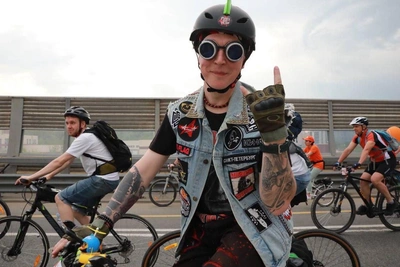
Sharp and radical change in appearance. If a girl with long hair suddenly shaves her head, or a guy radically changes his style — this could be an attempt to «kill» the old self.
«At least in my practice, as much as I»ve seen, very often people committed suicide after such things. A week or two passes, and tragedy occurs. Therefore, attention should be paid to these things,« says the psychologist.
Marks on the body. Cuts, scars (especially on the wrists), many new tattoos — often this is not about «beauty» and «fashion,» but a way to express mental pain physically, «punish» oneself, or change the body that the person hates.
«One needs to look at everything in combination,» repeats the psychologist. «One tattoo is not a sentence. But if it happens along with mood swings, sad posts, and withdrawal — this is a serious reason for a conversation.»
What to do if you notice danger? Step-by-step instructions
If you feel that there is danger, in no case brush off your intuition, don«t wait for it to »pass on its own.«
Step 1: Speak up first.
Choose a calm time, be alone together. Speak softly but directly.
«I»ve noticed that you«ve been often sad lately. It»s important for me to know what«s going on with you.»
«I see your cuts (or new tattoo). Tell me, what is this for? What did you want to say with this?»
«I got scared when I saw your post (picture). Are you thinking about something bad?»
The main thing is not to accuse («What horror!»), but to show care and willingness to listen.
Step 2: Seek help.
«Absolutely, one needs to go to a specialist,» says Artem Sazykin. Don«t be afraid of this.
If possible — find a good psychologist or psychotherapist. Nowadays, many can be «seen in action» through social media, videos, articles.
If there is no money — go to the school psychologist. Yes, they may not always help deeply, but it«s a start. The problem will be recorded, attention will be drawn to the child.
Don«t be afraid of »being put on a register.« Saving a life here and now is more important than any formalities.
Step 3: Don«t leave them alone.
Provide support. Call more often, write, be nearby. Remove from access what can cause harm (medicines, dangerous objects). Show that their presence in your life is priceless.
The most important conclusion that the psychologist makes: tragedies can be avoided if you don«t let the life of a loved one take its own course.
«Talk to your children. Just because. Every day. If you are in contact, you will know what they live for,» says Artem Sazykin. «And then, if they feel bad, they will come with their pain to you, not to random friends online who might advise something dangerous.»