Lipid profile tests added to Novosibirsk medical examinations
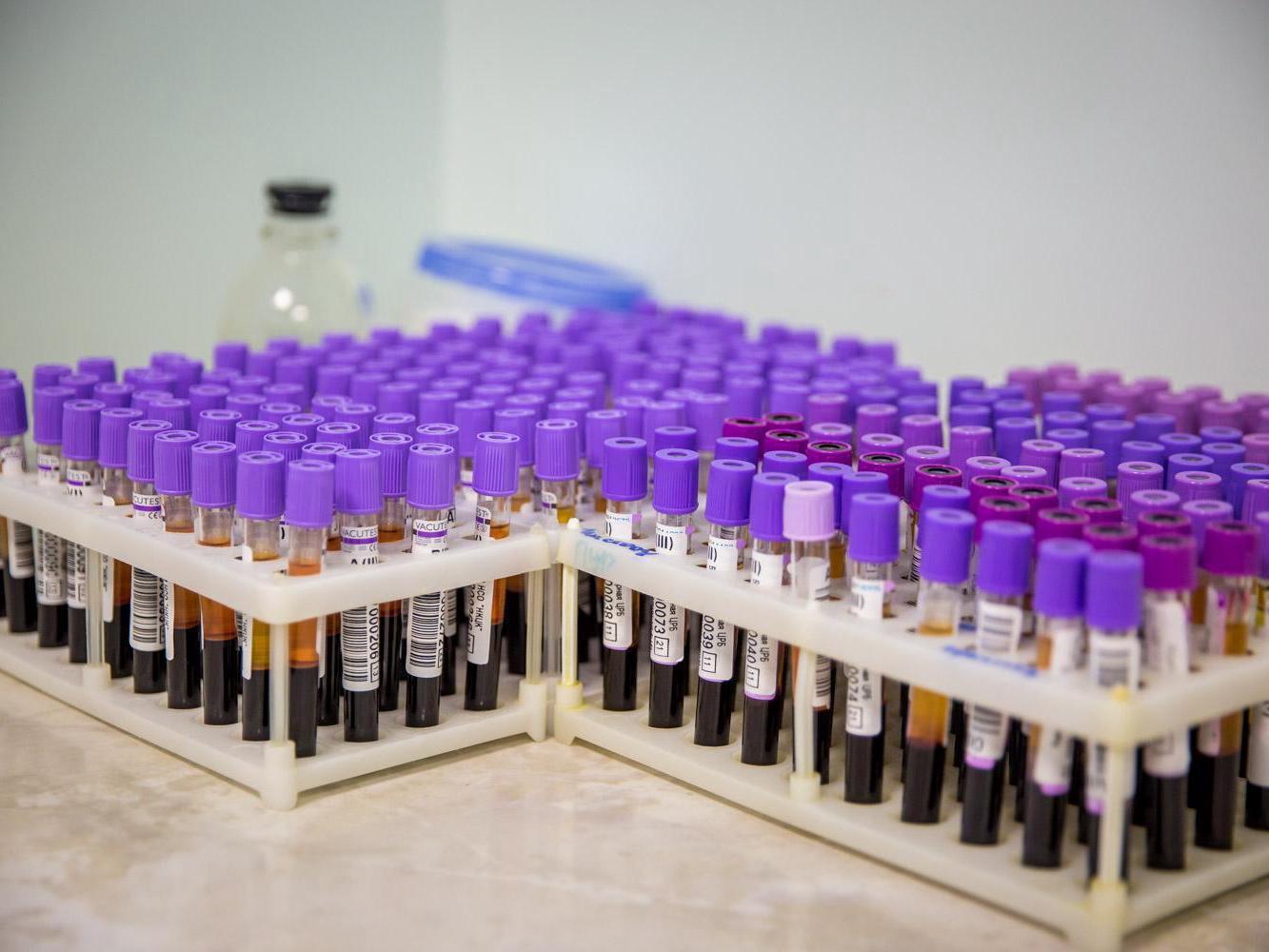

In 2026, lipid profile assessment has been added to the medical examination program. This was reported by the press service of the Ministry of Health of the Novosibirsk Region.

“Good” and “Bad” Cholesterol
As explained by Olga Timoshchenko, a research fellow at the Research Institute of Therapy and Preventive Medicine of the Institute of Cytology and Genetics, Siberian Branch of the Russian Academy of Sciences (ICG SB RAS), and a cardiologist-lipidologist, previously the medical examination mandatory included a blood test for total cholesterol. This is a rough screening indicator that does not provide complete information about which specific particles carry cholesterol in the blood. And this directly affects cardiovascular risk.
“Cholesterol is insoluble in blood; it ‘travels’ not by itself, but as part of complex particles — lipoproteins. The extended lipid profile precisely analyzes the quantity of transport particles,” explained Olga Timoshchenko.
According to her, there are two types of cholesterol: “good” and “bad.” Low-density lipoprotein cholesterol, so-called “bad,” is not harmful by itself; its function is to deliver fats from the liver to tissues.
With an excess of this type of lipoprotein, they penetrate the vessel walls and trigger the process of plaque formation, promoting the development of atherosclerosis. An increase in low-density lipoprotein cholesterol is a direct risk factor and the main target for therapy. In assessing the effectiveness of treatment, doctors focus precisely on it, not on total cholesterol.
Another lipoprotein is high-density lipoprotein cholesterol or “good.” These lipoproteins act conversely; they take excess cholesterol from the vessels and carry it back to the liver for utilization. That is, a low level of “good” cholesterol will also be a risk factor.
Now, within the framework of the medical examination, the doctor assesses not the total cholesterol level, but the quantity of “good” and “bad” lipoproteins, i.e., the indicators of the lipid spectrum. This allows for a more accurate assessment of the risk of developing cardiovascular diseases, to select the most suitable therapy for the patient, or to refer them to a specialist, for example, a cardiologist.
Triglyceride Level
Also, the Ministry of Health added that within the framework of the medical examination, another indicator is analyzed — the triglyceride level — one of the key indicators of lipid metabolism.
Fats coming from food are broken down and in the intestine re-synthesized into triglycerides. Subsequently, they are utilized by the liver, and in excess, they can be deposited in tissues and vessels, i.e., cause atherosclerotic changes.
A high level of triglycerides (above 1.7 mmol/L) should alert the doctor, since this is also associated with the risk of developing cardiovascular diseases, as well as with insulin resistance, metabolic syndrome, and non-alcoholic fatty liver disease.
Special attention in the study of the lipid spectrum recently has been given to lipoprotein(a). This is a genetically determined marker that combines two properties: “bad” cholesterol and a provocateur of thrombosis — a particle that increases the risk of developing atherosclerosis.
Olga Timoshchenko explains that an increase in this type of lipoprotein is not necessarily related to the level of total cholesterol: it can be normal, but at the same time, the patient retains a high risk of developing cardiovascular pathology. Knowing the level of lipoprotein(a), the doctor can more accurately assess the risk of developing myocardial infarction, stroke, and aortic stenosis.
Assessment of the lipid profile within the framework of the medical examination is conducted for people aged 18 to 39 — once every 6 years, for people over 40 — annually.
Earlier we reported what diseases were most often found in Novosibirsk residents during medical examinations.