Sweet symbols of Greek Christmas: three traditional desserts
Orthodox Greeks celebrate Christmas on December 25, and long before the holiday, the streets are filled with the aromas of special pastries.
Feb 22, 2026 0

A traditional Greek vasilopita pie, often baked with a coin for luck during Christmas celebrations.
Source:
Already in late November, the windows of Greek confectioneries and cafes transform: they are adorned with mountains of tempting treats, generously dusted with powdered sugar. Even during the Christmas fast, resisting this sweet temptation is almost impossible.
The main holiday dessert is vasilopita, a pie baked for New Year«s and Christmas. It is prepared as a sweet braid or round pie, and without these treats, winter celebrations in Greece are unthinkable.
The name «vasilopita» means «bread of Basil». On January 1, the Greek Orthodox Church honors the memory of Saint Basil the Great, who in local tradition has become the equivalent of Santa Claus.
Cutting the vasilopita is a whole ritual. Before dividing the pie, it is crossed three times with a knife. Then pieces are cut in strict order: the first for the infant Christ, the second for the Virgin Mary, the third for the poor, the fourth for the master of the house, the fifth for the mistress, the sixth for Saint Basil. The seventh piece is dedicated according to the family«s choice — for example, sailors and fishermen often give it to Saint Nicholas.
A coin is often baked into the vasilopita dough. This tradition dates back to legends about Saint Basil, who, according to lore, returned unjustly collected money by hiding it in bread. The one who gets the piece with the coin can expect good luck in the coming year.
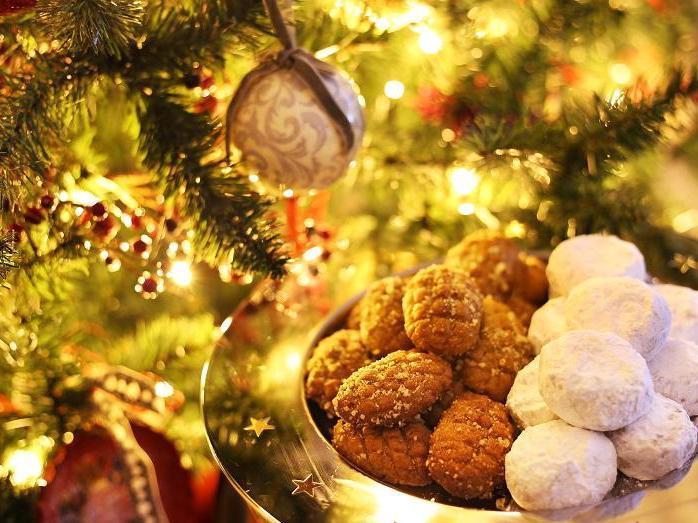
Besides vasilopita, throughout December, Greeks enjoy the fragrant cookie melomakarona, made with honey and orange juice. Another essential attribute of the holiday is the airy cookie kourabiedes made from almond flour, generously rolled in powdered sugar. Their aroma wafts in the air, creating a unique atmosphere of winter holidays.
Today, these traditional desserts have spread beyond Greece and become part of international culinary culture. To prepare them at home, a recipe from the chef of the Moscow restaurant Molon Lave, Athenian-born Stamatis Tsilias, who shares the secrets of authentic Greek baking, can help.
Read more