Sokwe-mtu: Family Life of Chimpanzees in Tanzania
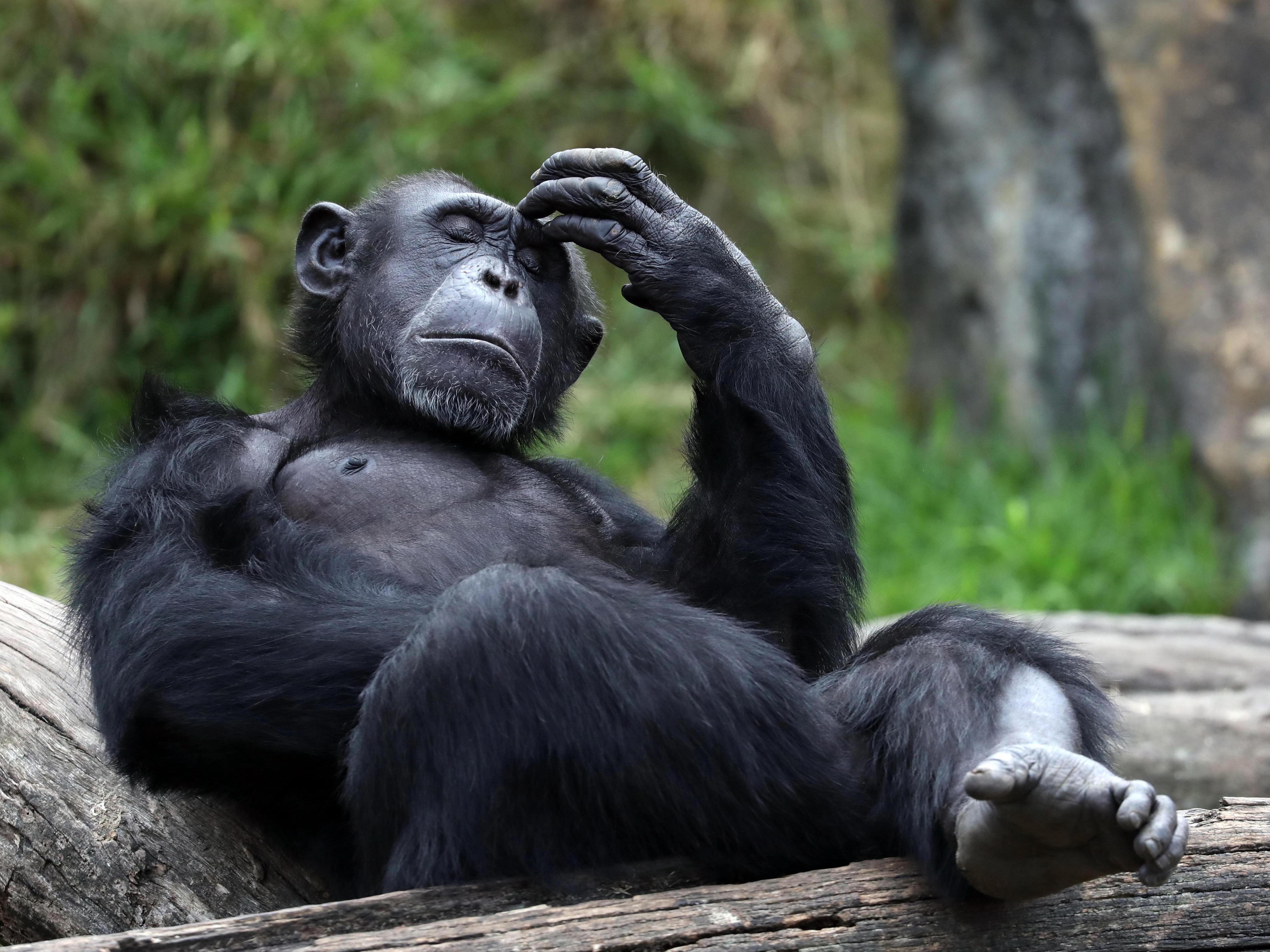

In Mahale Mountains National Park in western Tanzania, on the shores of Lake Tanganyika, lives one of the most studied groups of chimpanzees in the world. Here, among miombo forests and mountain slopes, these primates, called sokwe-mtu in Swahili, live by their ancient laws, offering a unique window into a world that is so similar to ours and yet distant from it.
A journey to Mahale is an immersion into the wild. The route begins with a flight over Tanzania, then continues by boat across the vast Lake Tanganyika, where water temperatures reach 30°C (86°F). The accompanying ranger, with an automatic rifle and machete, reminds us that this beauty demands respect and caution.
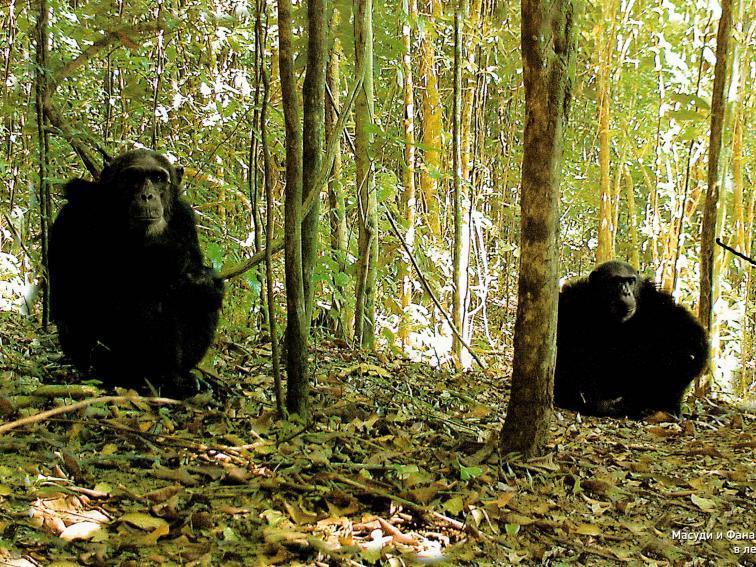
The goal is to meet the M-group chimpanzees, which scientists have been observing for decades. After an exhausting climb into the mountains, the first contact is through sound: the forest fills with cries, grunts, and calls. And there they are — Fanana, Masudi, Lydia with her infant Lubiko, Kalunde, and Bonobo.
The Leader and His Family
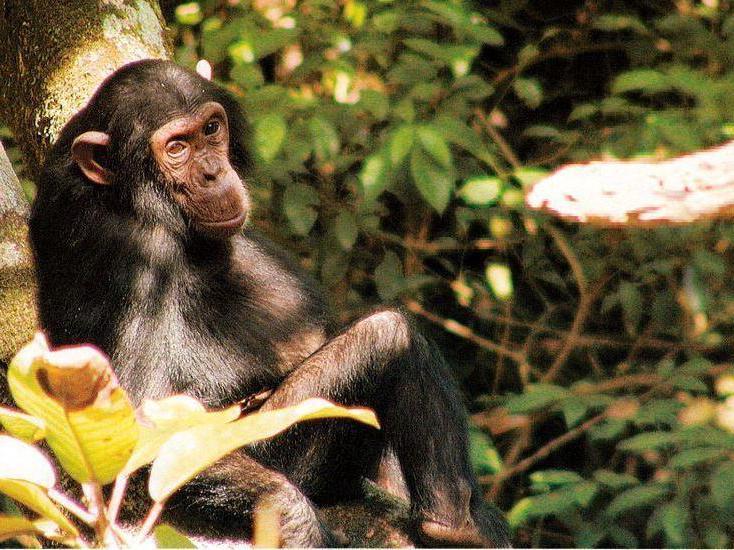
Fanana, the alpha male, sits with his chin resting on a powerful arm and looks at us. There is no aggression in his gaze, only a calm, almost philosophical curiosity. Direct eye contact can be a challenge for chimpanzees, so we avert our eyes. A moment later, he springs up and races past with incredible speed, as if we are merely part of the landscape.

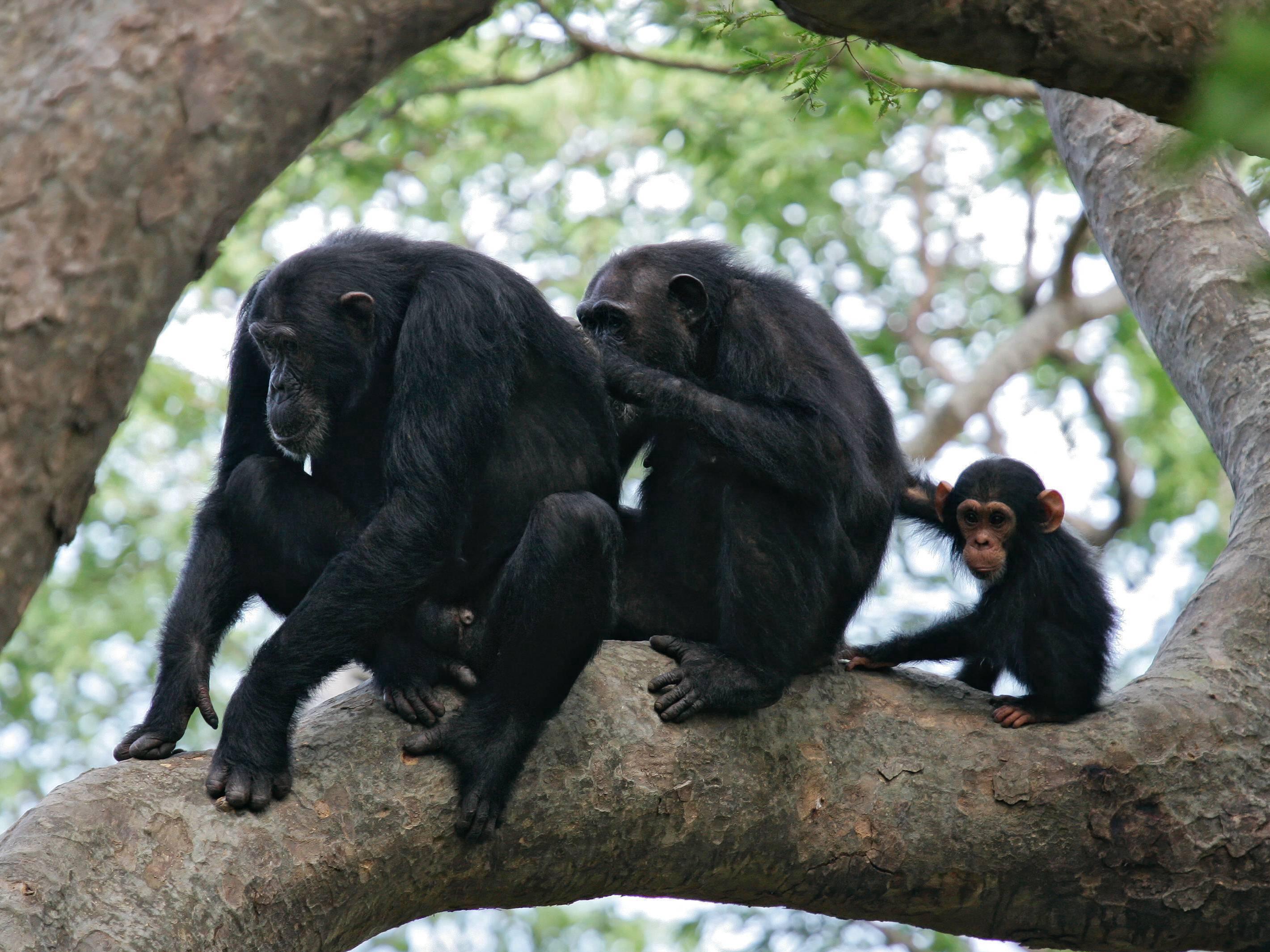
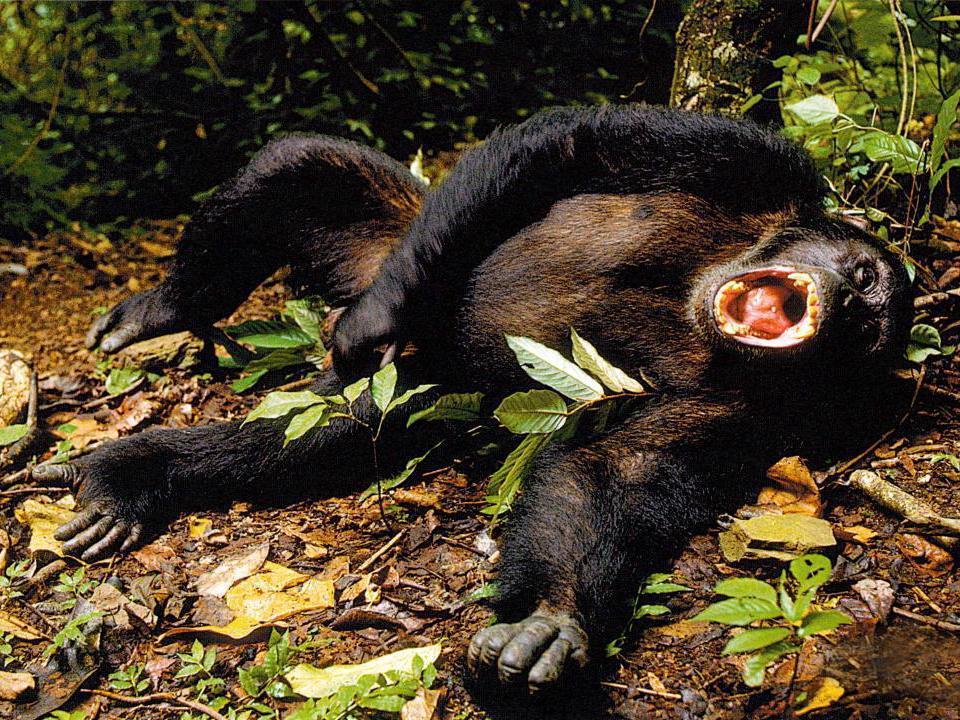
Later, we find the group by a stream. On a giant tree, resembling the Tree of Life, chimpanzees hang like Christmas ornaments. Adults are busy grooming — mutual care of fur that strengthens social bonds. A young male, nicknamed «the licker» by us, scratches himself on a lower branch, then falls asleep in an unthinkable position, his head hanging down.
A dignified female with a baby no older than two years descends to him. «The licker» turns out to be her elder son — waking up, he begins gently picking through his mother«s fur. Meanwhile, the baby demonstrates acrobatic wonders, hanging now by an arm, now by a leg, playing with leaves and sticking out her tongue. It is a picture of family idyll, full of serenity and mutual trust.
Chimpanzees at Home
The behavior of chimpanzees in Mahale has long been documented by scientists, primarily Japanese primatologists from Kyoto University. They note that these primates greet each other by shaking hands, attract females« attention by noisily tearing leaves, and during rain perform the so-called »rain dance« — shaking branches and beating on tree trunks.
Our observations confirm these rituals. Chimpanzees here are not afraid of humans, thanks to years of research that have accustomed them to the cautious presence of people. This is a rare case where one can see wild primates from such a close distance, almost like in a trusting dialogue between species.
Mahale Mountains National Park
The park, covering 1,613 km², was created to protect the unique ecosystem and, in particular, the chimpanzee population. In 1965, Japanese scientist Toshisada Nishida founded a research center here, initiating long-term observations. Researchers believe that studying chimpanzees, our closest relatives, helps understand the evolution of human society, including tool use, social organization, and even conflicts.
Today, despite its protected status, chimpanzees still face threats — from habitat loss to poaching. The park serves as an important refuge where they can live relatively safely, but their future remains in question, as with many other species in a rapidly changing world.
The Dark Side
However, the life of chimpanzees does not consist only of idyllic scenes. Like humans, they are capable of cruelty. Japanese researchers described a case in 1992 when, during the reign of alpha male Ntologi, several males took a six-month-old infant from female Mirinda, killed and ate it.
This act of cannibalism, though rare, shows the dark side of their social life. As noted by the famous primatologist Jane Goodall, such behavior makes chimpanzees even more similar to humans, reminding us that violence is part of the nature of both species. During our visit, we saw only peaceful scenes: two males, Fanana and Masudi, dozed nearby, and a teenager with a sad face watched us.
We spent more than an hour with them, breaking park rules, but this time gave a sense of deep connection. They were not afraid of us, and we stopped being afraid of them. And when they woke up and began calling to each other with their unique voices — from a low «U! U! U!» to a piercing screech — that sound remained in memory forever.
Farewell to Paradise
On the last day, the chimpanzees went high into the mountains, and we could not find them. Before departure, I flipped through the camp«s guest book. Someone had written: »This was paradise.« At first it seemed banal, but then I realized that in a way, they were right. Here, among indifferent and majestic beauty, one can feel part of nature, another species that simply had different luck.
Mahale Mountains are not a perfect Eden. There is struggle for survival, dramas, and moments of peace. But thanks to the work of scientists and rangers, we can glimpse into this world for a time. The chimpanzees will not remember us, but by observing them, we are reminded of what connects us to life on this planet — fragile, complex, and astonishingly familiar.