Krasnoyarsk Researcher Recreates Ancestors' Ancient Weapons
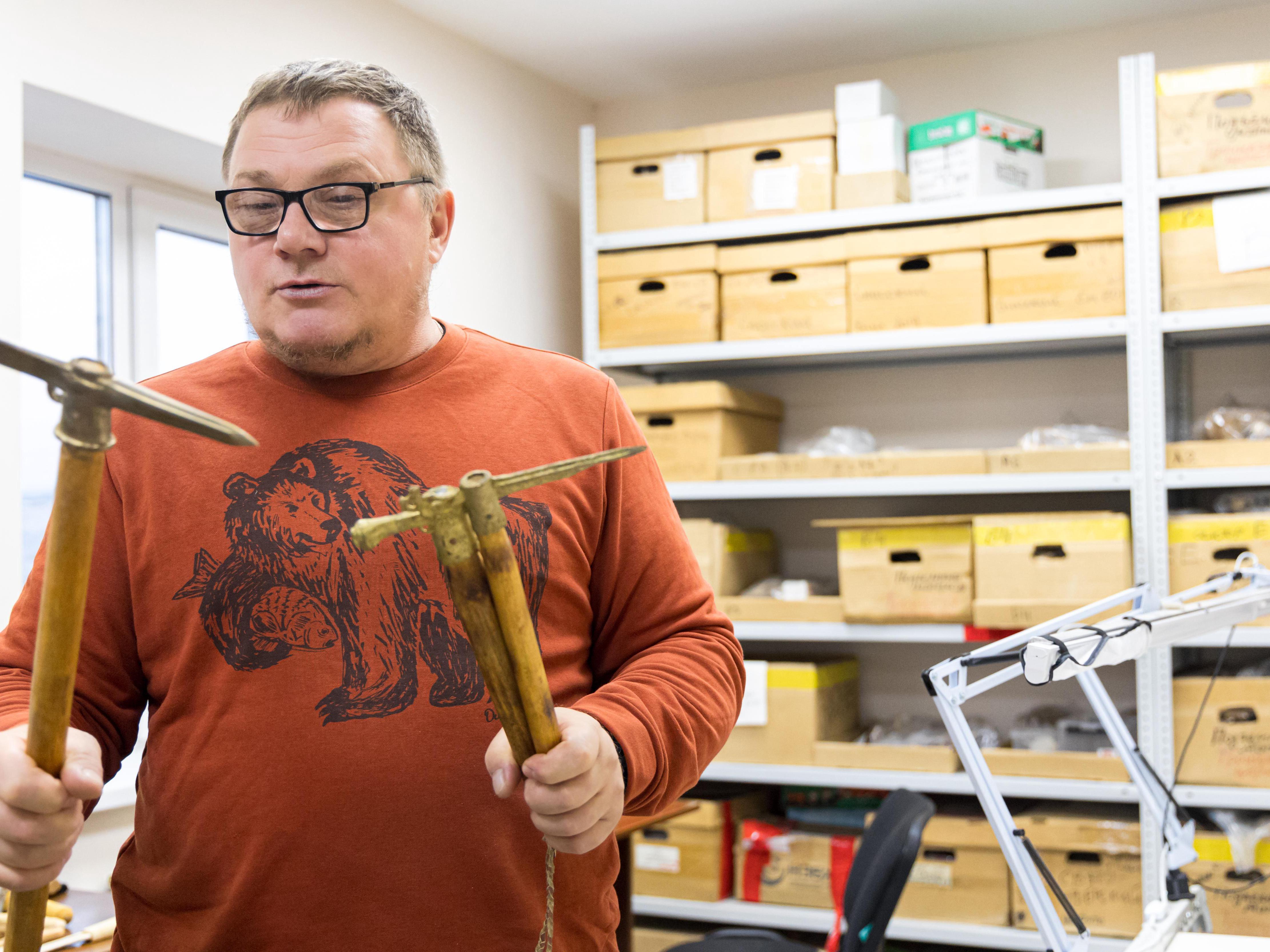

Andrey Petrenko is a research fellow at ANO «Archaeological Research of Siberia», a weapons expert, researcher, and a former role-player. He combined his passion for reconstruction with work and science. With maximum possible accuracy, he recreates ancient weapons — the kind used hundreds and thousands of years ago. He tests them in field conditions to confirm or refute scientific theories. His works are now in many museums across Siberia. NGS24.RU correspondents Alexey Taiganavt and Masha Lents visited his workshop.
Ancient Equivalent of the Kalashnikov Rifle
The storage room for artifacts, which doubles as archaeologist Andrey Petrenko«s workshop, is located in the suburbs. This is convenient: he can go outside with a boomerang, an ancient combat bow, or a spear-thrower in hand without risk of alarming anyone. He tests how these worked thousands of years ago.
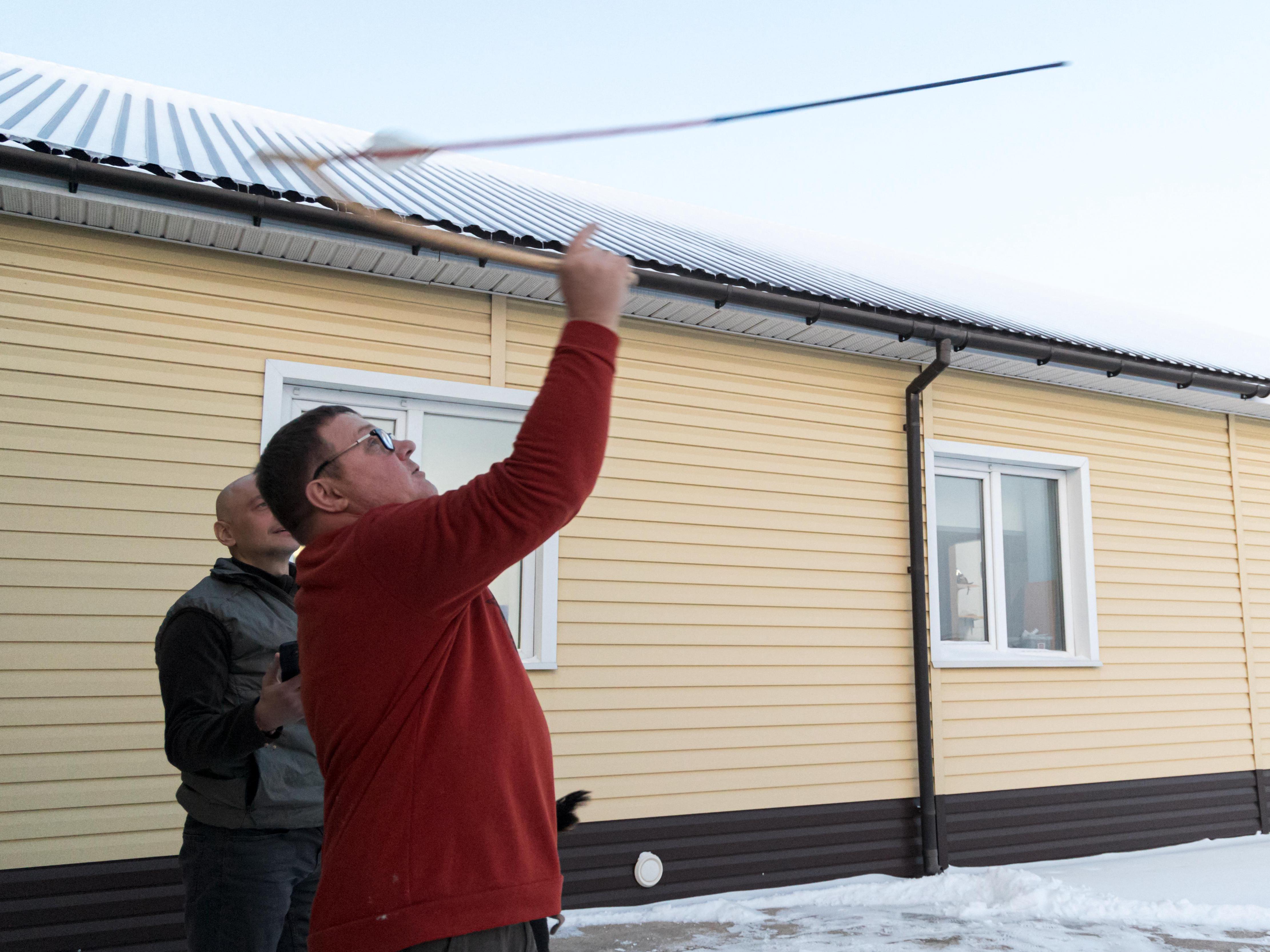
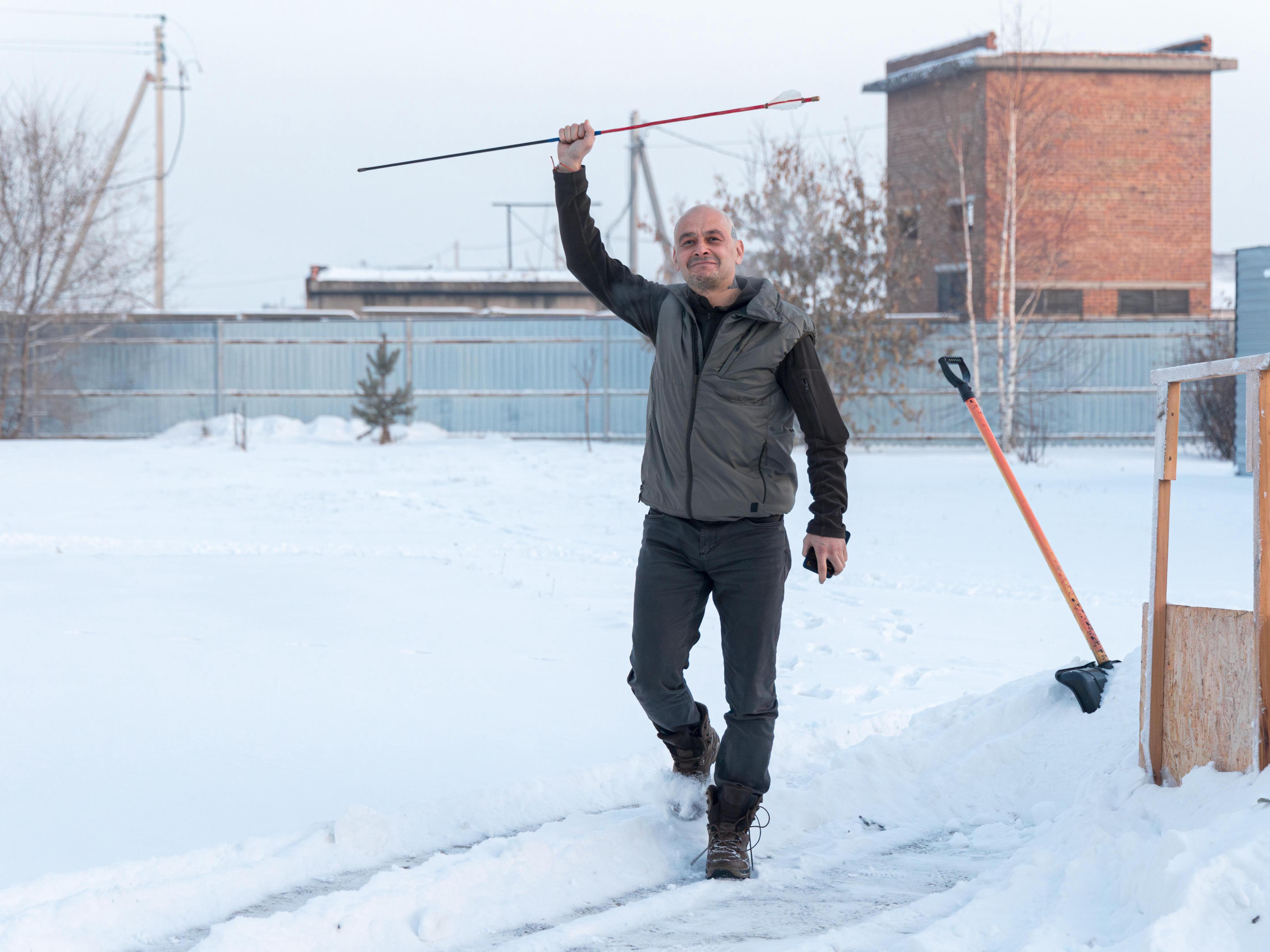
Which is precisely what the scientist proposes we do right away. He brings out a spear-thrower — the most ancient throwing device. With one professional swing, he sends a dart about 50 meters.
— I made this purely out of sporting interest. It has no scientific value. But in terms of significance for ancient humanity, the spear-thrower is one of the main tools. The ancient equivalent of the Kalashnikov assault rifle, — explains Andrey Petrenko. — With it, the Chukchi and Eskimos hunted sea mammals, right up to ethnographic modernity. It exists in Australia, America, and Africa. We made a sample; it threw a spear 160 meters, can you imagine?
We can imagine. But it«s too frosty outside. We go to look at the rest of the ancient weapon samples in the workshop.
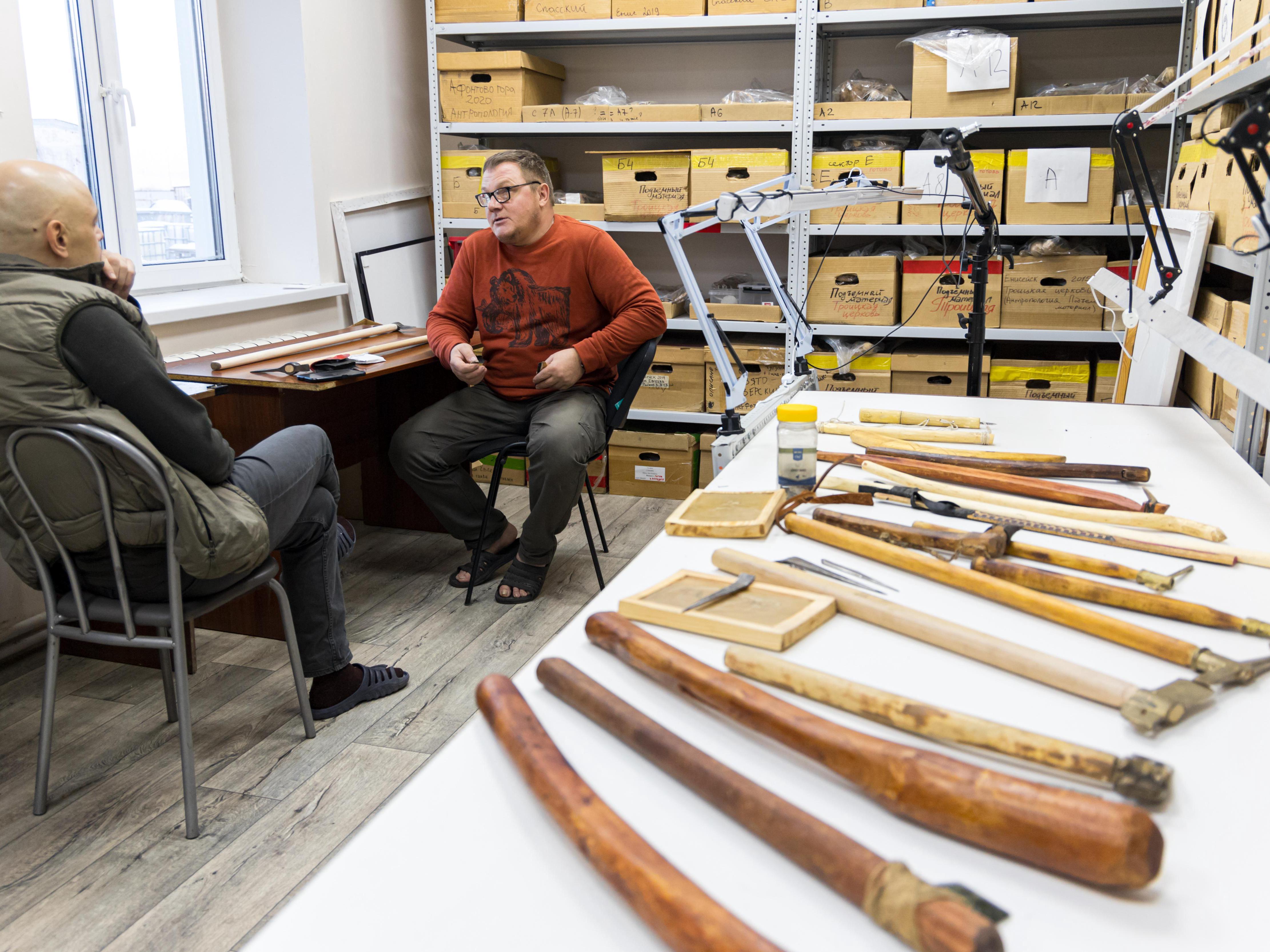
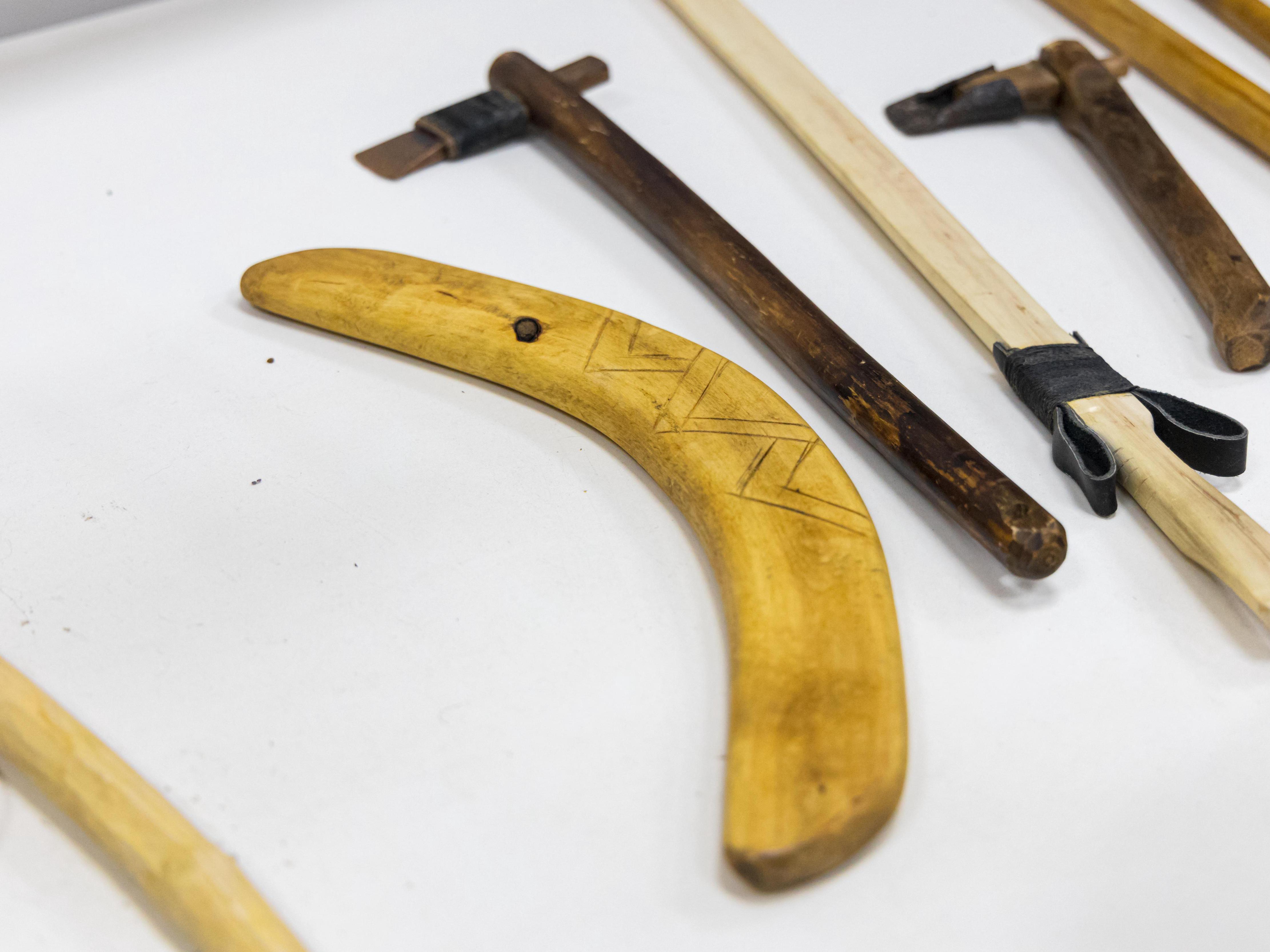
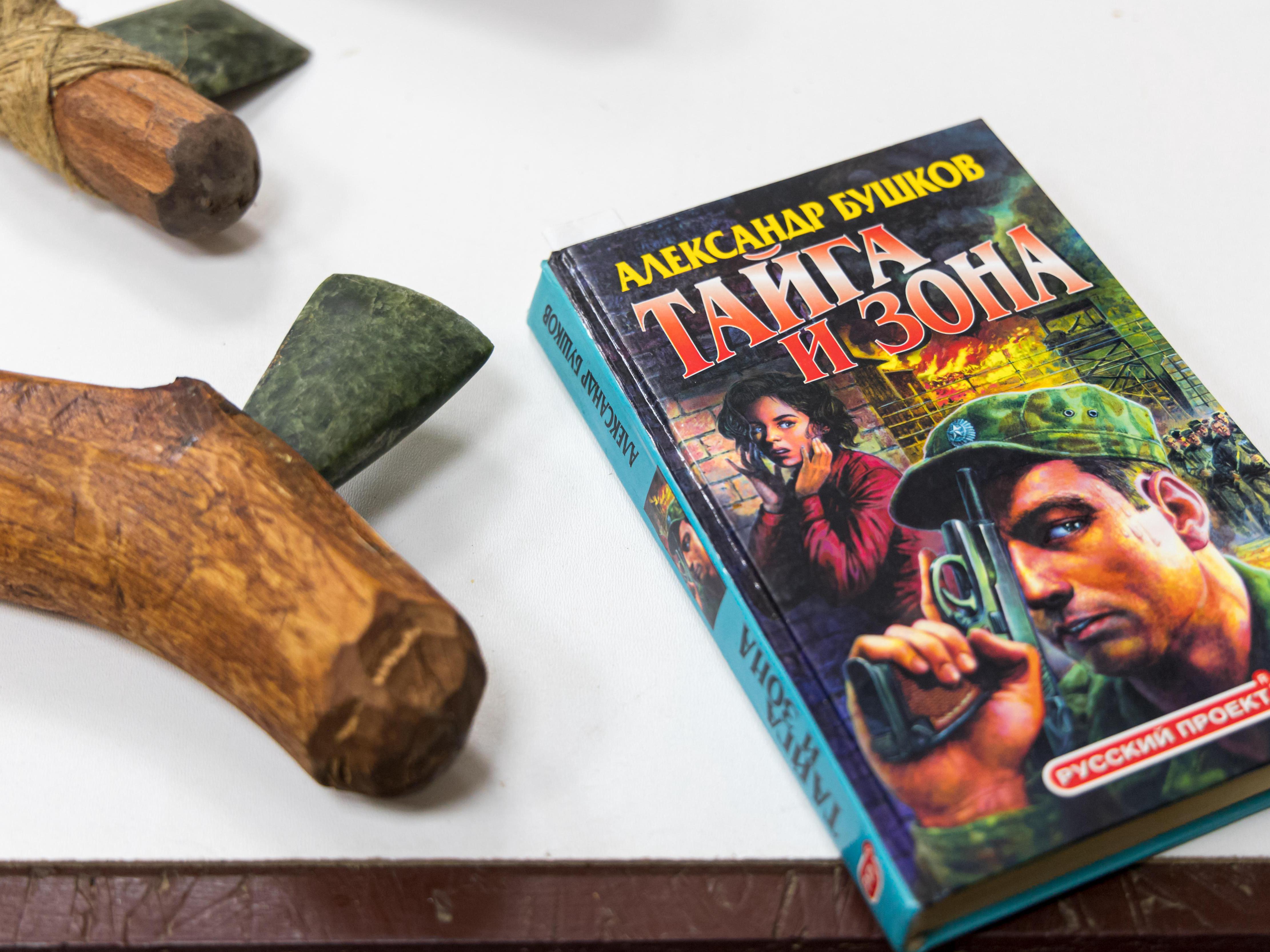
Here on the table — jade axes, bows, war picks (short-shafted weapons with a striking element), knives, arrows, a boomerang, and some other devices.
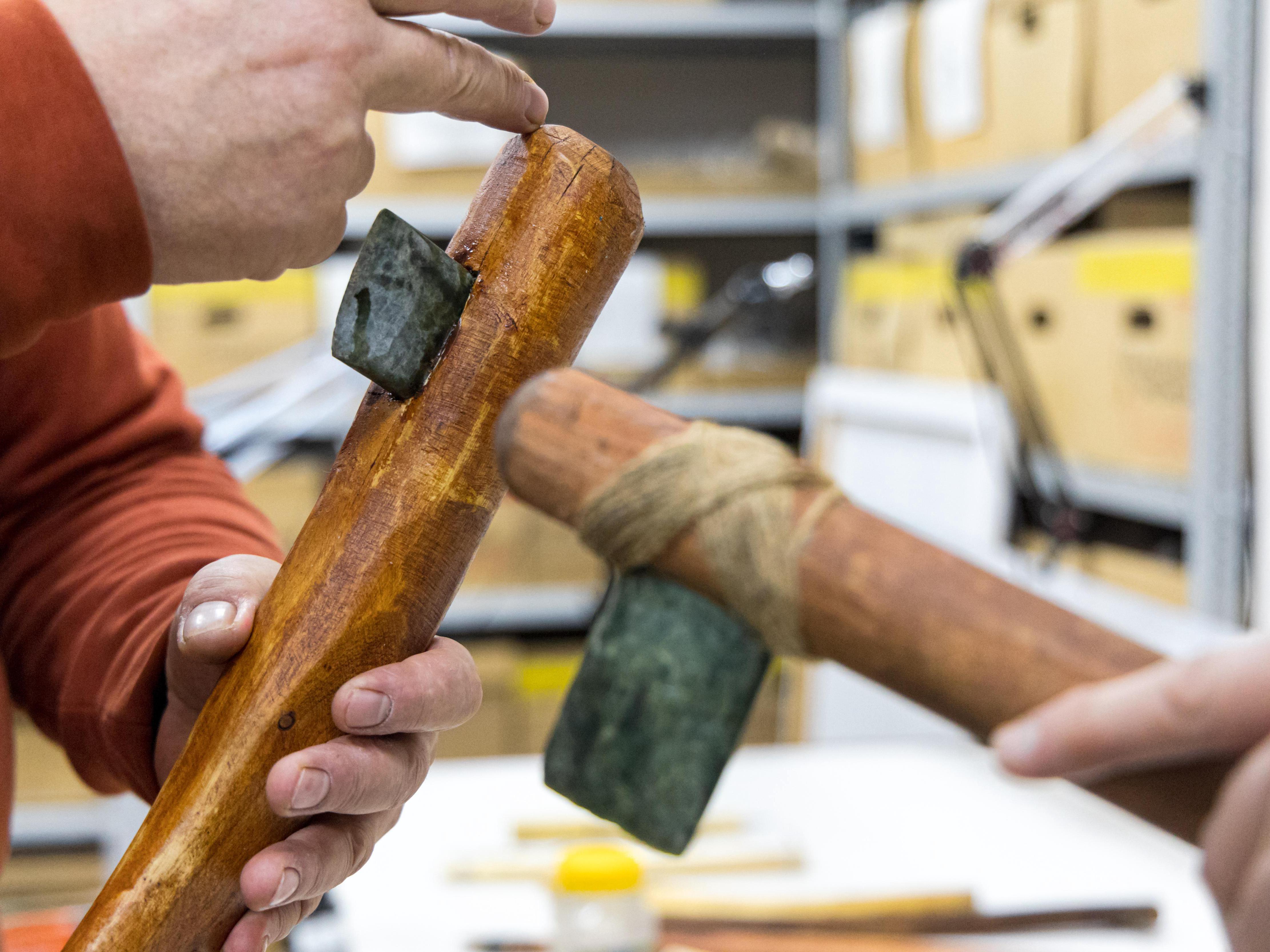
— This is Angara Neolithic, jade axes. These are all mine — made with my own hands. I was interested in how long it would take to make such an axe, — says Andrey Petrenko.
— So, how long?
— Well, about 4 hours of polishing the jade. By hand. And about six hours for the rest of the process. So, about 10 hours go into one axe.
— What can you chop with it?
— It chops well, but there«s a nuance. It»s very sensitive to vibration; I once used one to chop a thin birch stump, it was wobbling, and the blade broke. Obviously, stone is inferior to iron, but you can chop with it quite decently. Neatly, cleanly, no problem.
They Fought for Real with Iron Weapons
Andrey Petrenko is an archaeologist by education, a graduate of Kemerovo University, who defended his thesis on «the Bronze Age in the Krasnoyarsk forest-steppe». He works on excavations, periodically as a teacher, and writes scientific articles.
— How did this reconstruction start suddenly?
— I started with work in a children«s archaeological club, and teenagers need to do something with their hands to engage their minds. We started with the simplest: molding clay vessels, then began working bone and stone. It all started gradually from there, — says Andrey Petrenko.
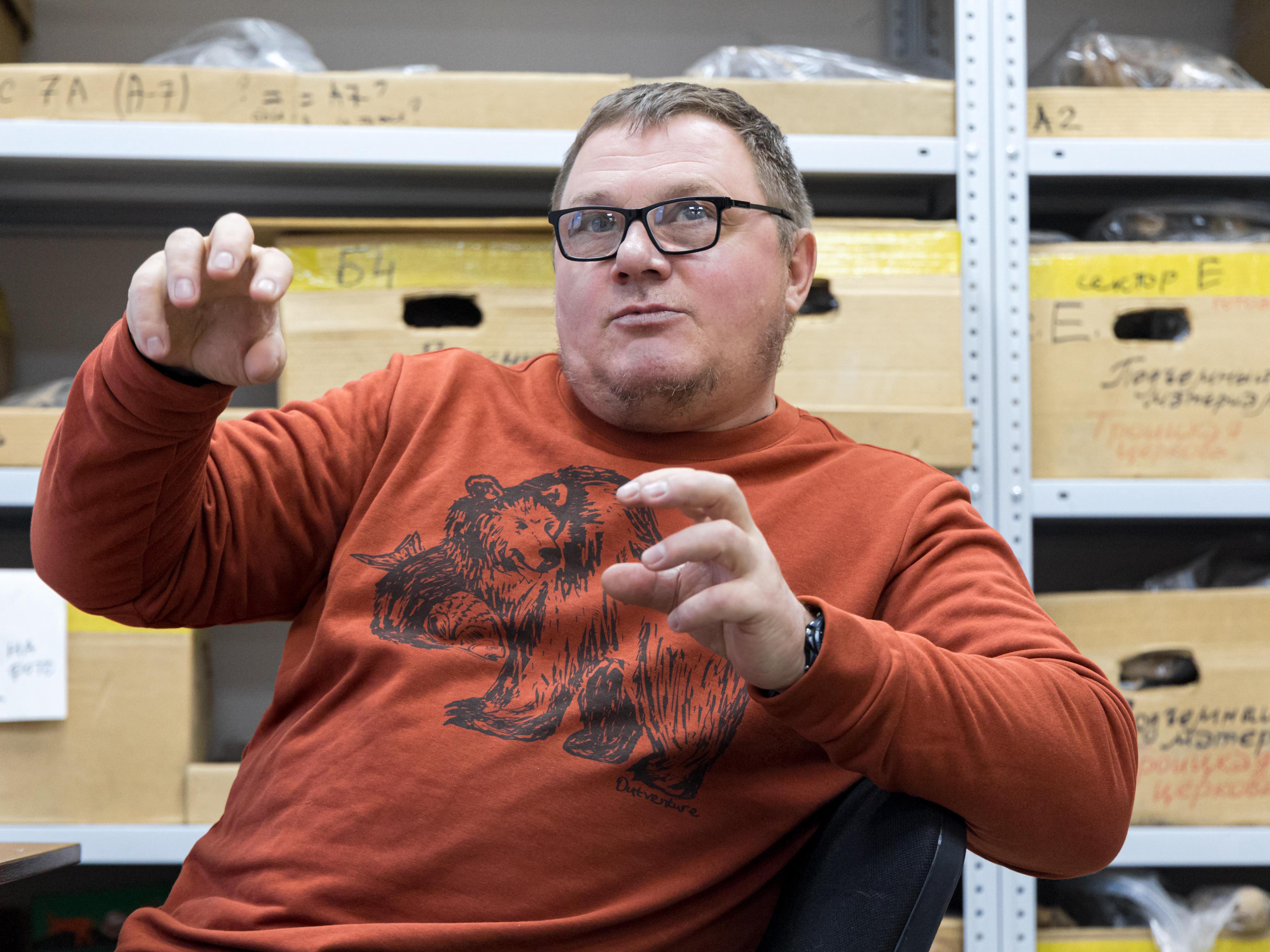
— And then, you know, the role-playing games of the early «90s overlapped. Are you aware that the first role-playing game was held in Krasnoyarsk? And its organizer, by the way, is alive and well today, running a club for science fiction fans. Those were the first hobbyist games based on the book »The Lord of the Rings«. In the 2000s, though, that fell apart, — Andrey continues.
— In science, reconstruction is also a method.
— Yes, here my scientific interest and my passion for Tolkienism coincided. And we started developing in this direction. We wove chainmail, forged helmets, everything was for real. Tournaments were held in Krasnoyarsk, we fought for real with iron weapons — by the way, armor saves you. Actually, the injury rate was surprisingly very low. Even though we worked in full contact.

— Tested on yourself — generally the best method.
— Yes, sometimes. And then I met Yuri Khudyakov, the leading weapons expert in Siberia. My wife was just then writing her thesis «Tactical and Technical Characteristics of Long Bladed Weapons of Central Asian Nomads». It«s about how well these sabers and broadswords actually cut armor: we tested piercing various types, chainmail, lamellar, we chopped ourselves, made everything ourselves, forged it all. It turned out to be a good thesis, Khudyakov noticed it and recruited us. We started collaborating with him.
It«s Quite a Combat Thing
— So what do you have now in terms of weapons?
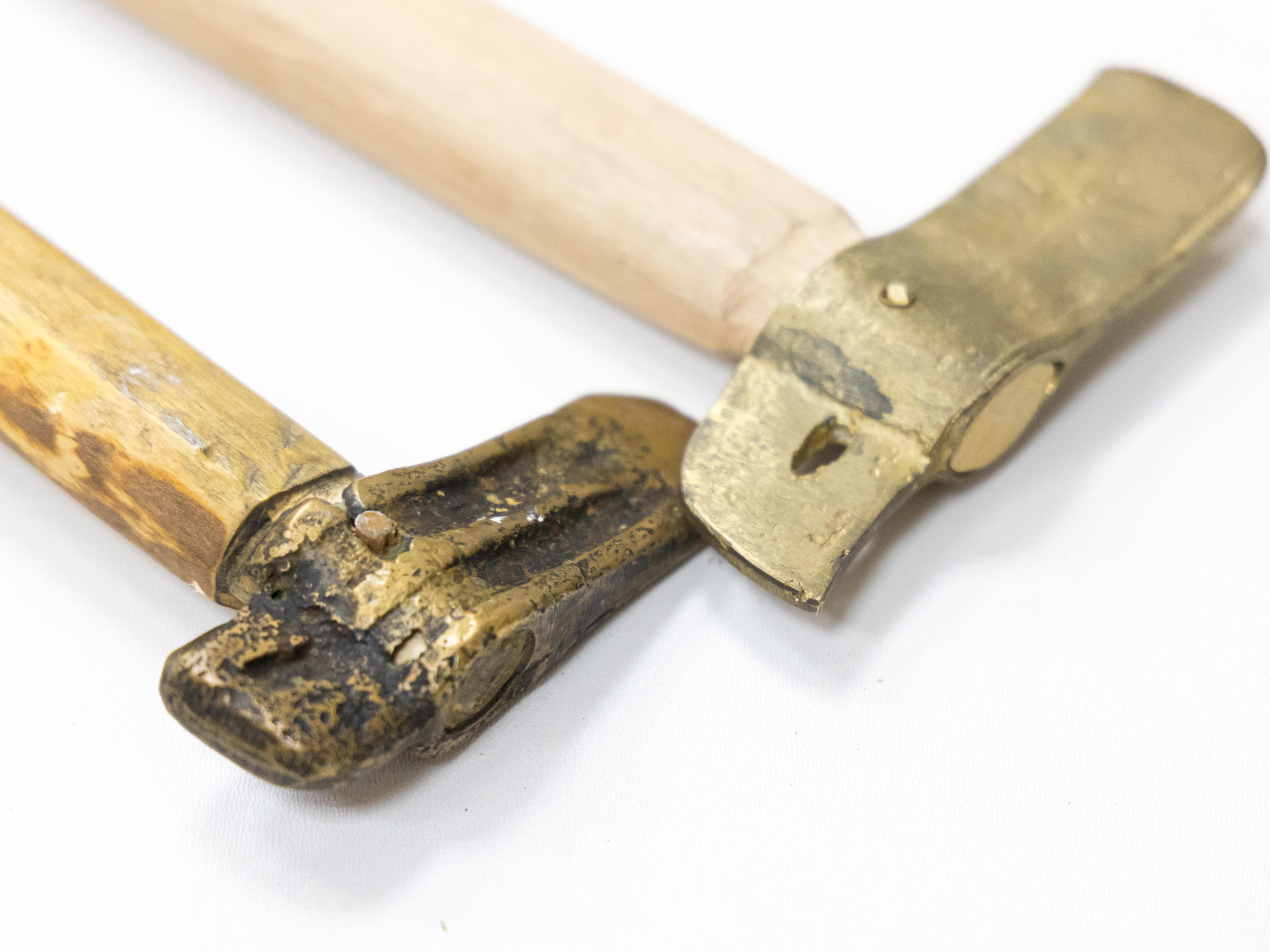
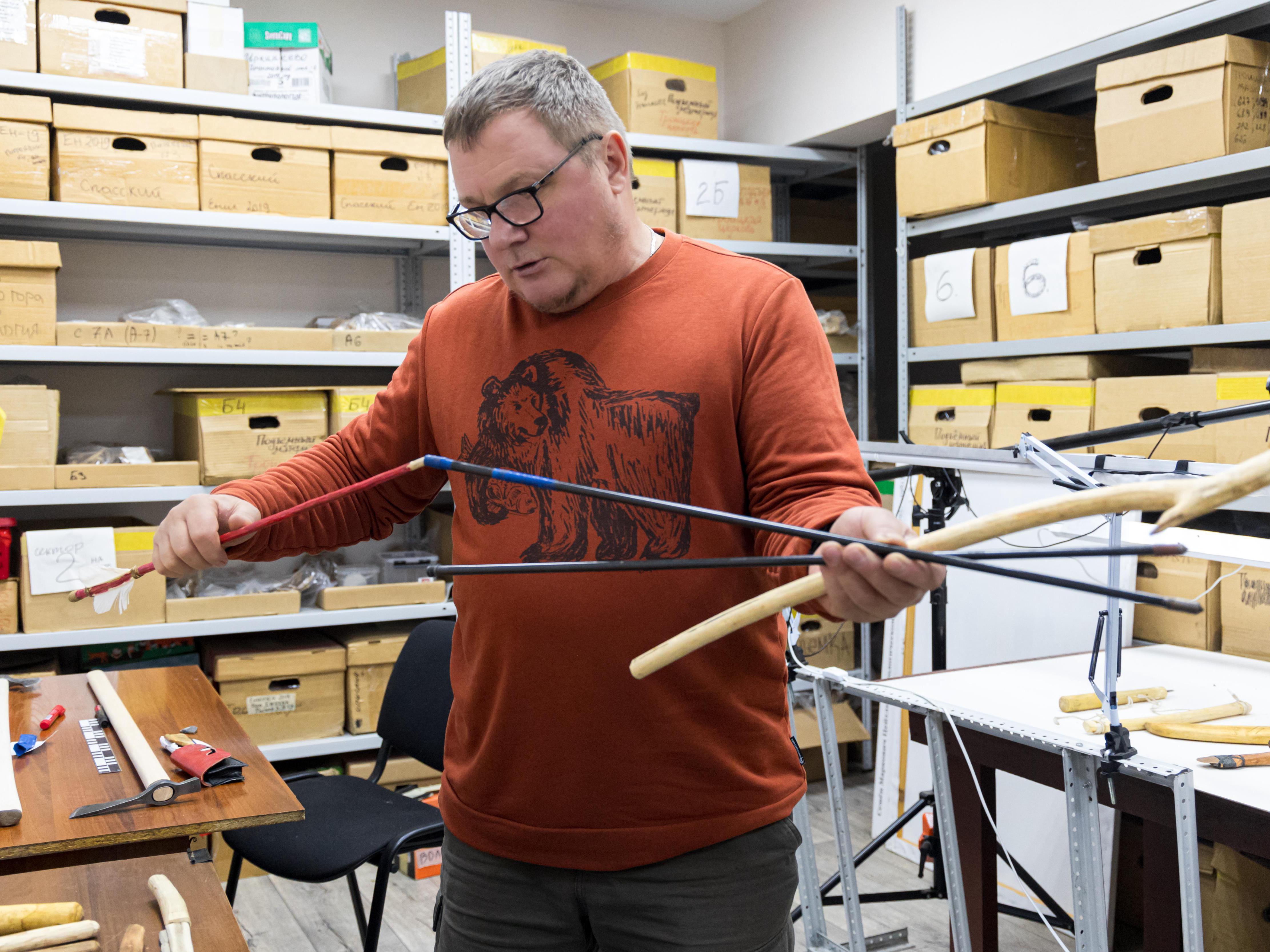
— Well, look, a war pick from the Tagar era (8th–3rd centuries BCE). These are absolutely exact copies — made from original variants. Lethal weapons in those times. One large and two small ones. Archaeologists thought the small ones were made only for burial. I made a copy and it became clear that this is quite a combat thing. And they started making it then based on the logic of changing battle tactics. A terrible weapon, actually, it easily pierces ribs, shoulder blades, easily pierces the spine. We tested it here with lab assistants on a piece of pork — it pierces brutally. In those times, there was no armor here yet. And now I«ve written several articles on this, that they really are combat weapons.
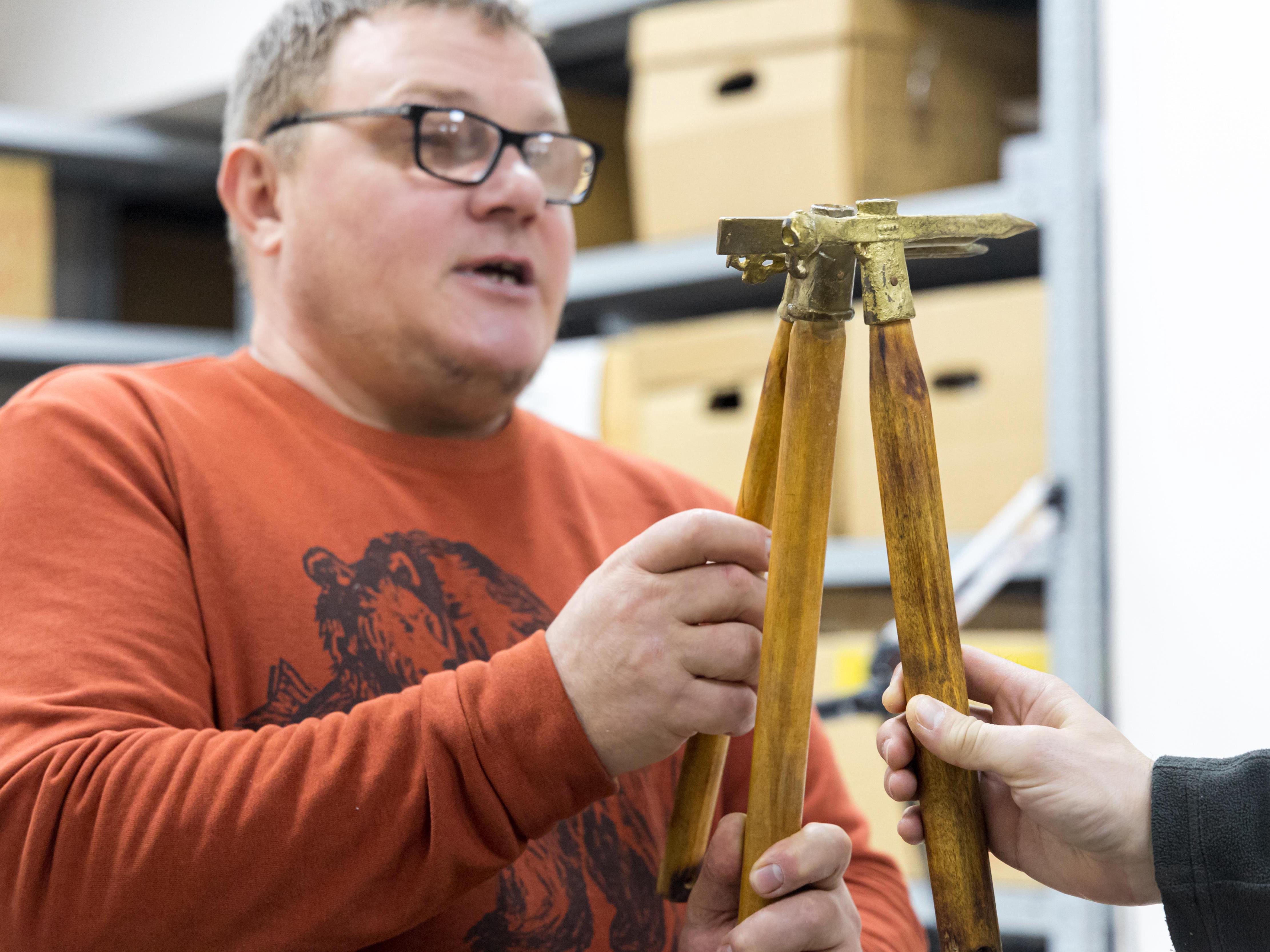
— I see a boomerang.
— We have guys with such rounded images on Tagar petroglyphs. Clearly it«s a boomerang. What»s the advantage of a boomerang? Not that it returns, that«s nonsense — it»s that it has exactly two types of motion. The first is simple flight. We throw it and it flies forward. And the second is rotational motion. Moreover, we can spin it as fast as we want. And when it hits a target, these two motions combine. If this boomerang hits your chest, it«ll take out two ribs just like that.
— Tried it?
— Tried it, but not on people, thank God, no. But it pierces eight-millimeter pine plywood like this. So our ancestors could easily hunt small game with it. Well, I told you about spear-throwers — it«s a terrible weapon, our ancestors conquered the whole world with it. That»s a fact. They wiped out species competitors with its help.
— Okay, what«s the oldest reproduced tool you have?
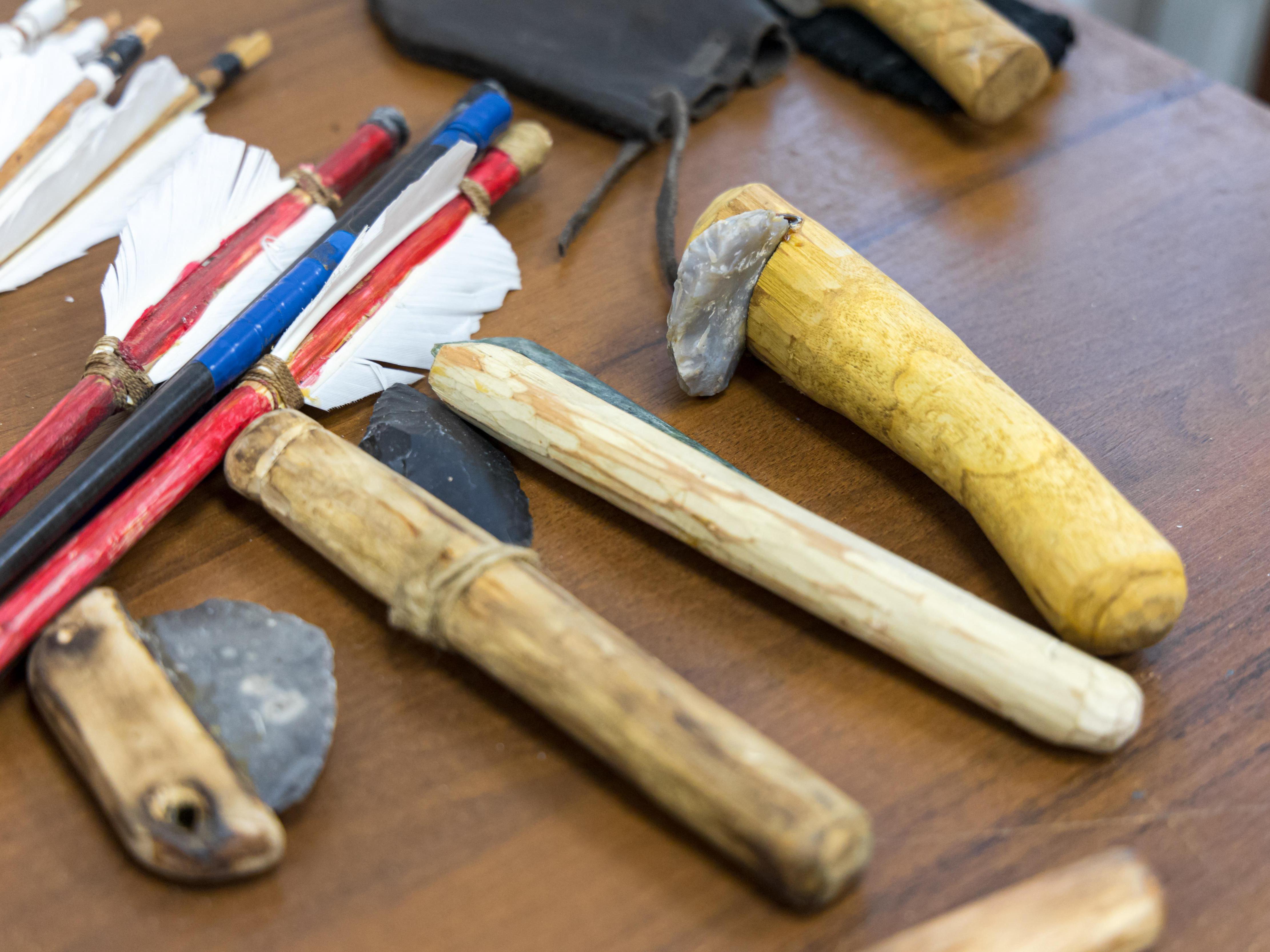
— Probably a scraper. These knives, a set of bone knives. For skinning hides, cleaning fish. You can peel potatoes. You need to understand that humans very actively started making tools not only from stone. They used wood, but it hasn«t survived to us. And bone. It does sometimes reach us. These are even African things. The most primitive. These are Neolithic knives. Such knives are found in Switzerland, in lake settlements. They come with handles like this.
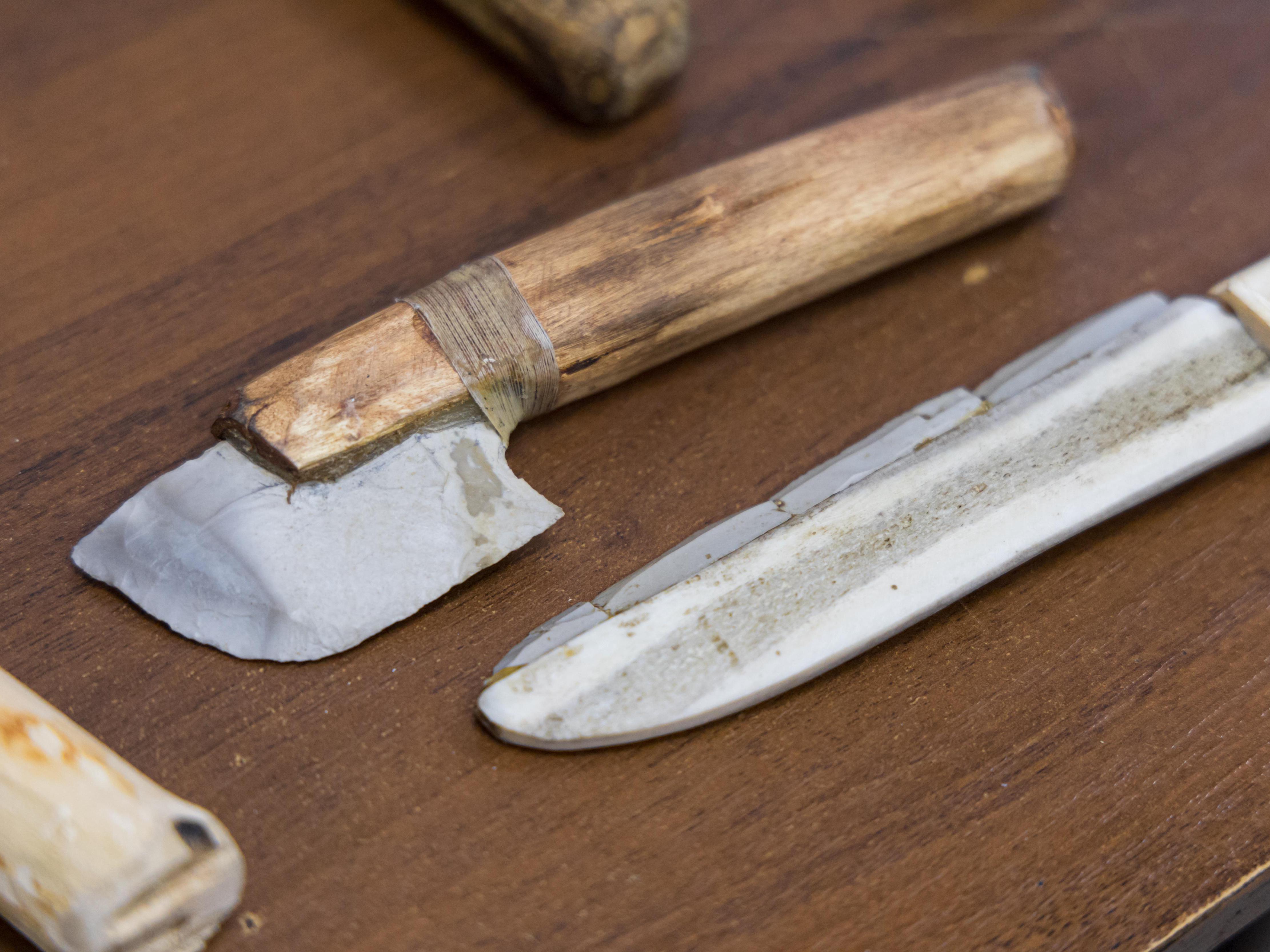
— What«s the manufacturing technology?
— You know, it all depends on the situation. There are different approaches. If you only need to research the function of a given item, you can even glue it with epoxy. But to understand how they made it back then, you adhere to what was possible at the time. Well, for example, the glue here — resin with wax and sand.

— Do you trade «weapons»? What about prices?
— I sometimes sell, yes, for private collections. Well, for example, a jade axe — costs 5,000 rubles (about $56 at current rates), a bronze war pick — 3,500 rubles (about $39). But mostly my clients are museums, of course. My works are represented in many of their archaeological collections across Siberia.