Village Teacher Sends Pupils to Top Technical Institutes
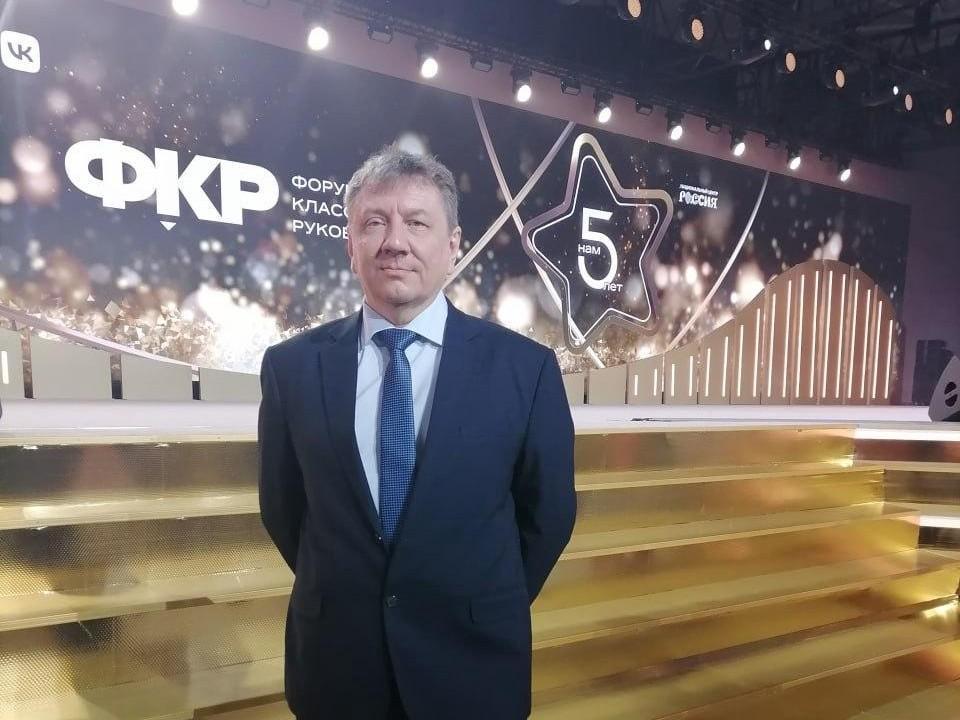

Teacher speaking at a forum for homeroom teachers in Moscow.
In early October, President Vladimir Putin awarded the title «Honoured Teacher of the Russian Federation» to Vladimir Skripkin, a physics and informatics teacher from Ryazan Oblast (Ryazan region, Russia). We contacted the teacher and spoke about education in rural schools and how he succeeds in engaging children with the exact sciences.
Vladimir Skripkin has for many years taught at the school in the village of Gorlovo, Skopinsky District, Ryazan Oblast (Ryazan region, Russia). He came to Ryazan — and to the profession — by accident.
War brought him to Ryazan — a family tragedy led him into teaching
«My aunt was a wonderful teacher of Russian language and literature. Seeing every day how she checked notebooks and worked with pupils individually, I realized that our profession is very, very demanding. I enrolled in a technical university in the mid-1980s. A year later my mother fell seriously ill — cancer. Financially we could not afford studies in Moscow, so I returned to Uzbekistan. There was only one single university there — a pedagogical institute — and I transferred to it», — says Vladimir Yevgenyevich.
But in that pedagogical environment he met people who inspired him and ultimately brought him into the profession — now not only from necessity but from love. After graduating from university, Vladimir Skripkin moved to Ryazan and became a practicing teacher there.
«There was a war in Uzbekistan. In 1989 and in 1993 alarming events followed one after another, and Russian-speakers were forced to leave. The theological school outside Ryazan had no teacher of physics and mathematics, and our former director contacted me. That is how I ended up in Ryazan Oblast. Although there were reasons: my grandmother was from Ryazan, from Shilovsky District, so perhaps fate itself led me in the right direction», — says Aleksandr Yevgenyevich.
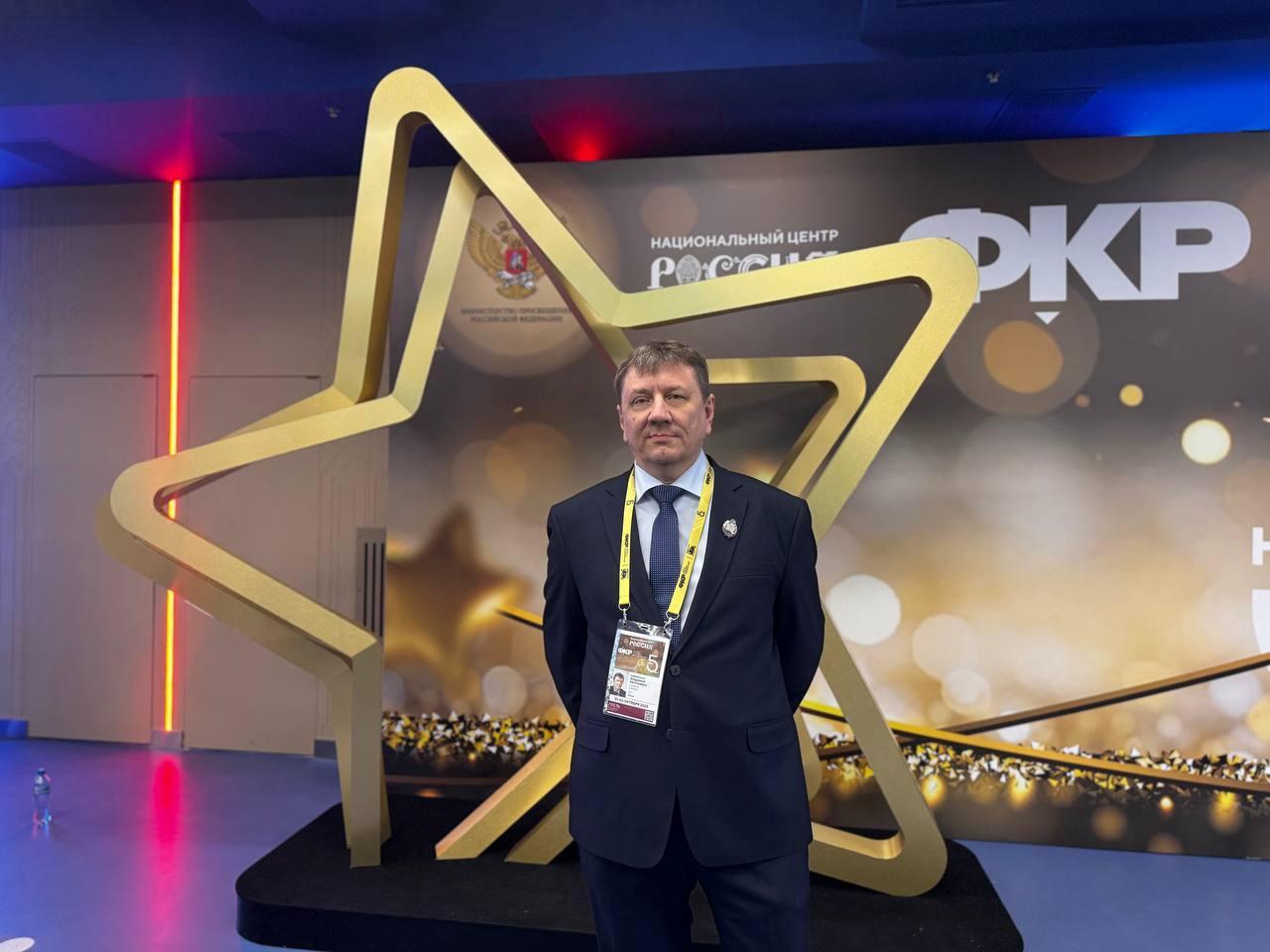
Among the teaching staff there are also standout educators recognized for their achievements.
From a village school to Bauman (Bauman Moscow State Technical University, BMSTU) and Fiztekh (Moscow Institute of Physics and Technology, MIPT) — is it realistic?
Among Aleksandr Yevgenyevich’s pupils, the majority choose the exact sciences for exams. «At our school almost everyone goes to technical universities, choosing directions related to radio electronics. This year two of our graduates, Misha Djalilov and Vanya Koltsov, completed bachelor’s degrees at the Ryazan Radiotechnical Institute and have now entered master’s programs free of charge. Some of the pupils served in the army; they were also connected with radio engineering. I myself, as a child, attended Dom pionerov (pioneers’ youth centre) in a radio-electronics club, and perhaps I inevitably pass that on to the children», — says the teacher.
To make a child interested in the exact sciences, you need to spark that interest with your own enthusiasm and inspiration. Location on the map matters little — it depends more on people and the school’s equipment.
«In our rural school children receive a good education consistently, and even before I arrived the results were excellent. We have very strong teachers in physics and mathematics. A major problem is that the children we prepare well in the village later do not return to the village. We have students who studied at MGU (Lomonosov Moscow State University, MSU), at Fiztekh, and at Bauman. These are institutions that not every Moscow child from an elite gymnasium can get into. But rural schools, of course, have big problems with equipment. From our school«s experience — if there is the desire, you can always find some solutions», — says the teacher.
In 2010 the school took part in a contest held by Intel Corporation (Intel) and for the first time won a mobile classroom — 28 netbooks. «For our rural school that was something. On that base we developed projects; pupils took part and won prizes. You always need an initial push. Later our school won major grants from Ministerstvo prosveshcheniya (Ministry of Education of the Russian Federation) twice, or even three times — one million rubles each (at current rates). The last time we won, in 2020, it was in the category “artificial intelligence technologies”. We committed to write a program and show how we were implementing it. The two-year trial ran at our school, and the ministry monitored us all the time. When I remember how much reporting we did, it is terrifying», — says Vladimir Yevgenyevich.
The school used the funds each time to buy advanced equipment. The last purchase consisted of drones with artificial intelligence capabilities and robotics kits. «All this helps and motivates. Even children who are not interested in physics or informatics, when they see something new and see others enthusiastically assembling things by hand, want to try. Ideally, such equipment should be in every rural school», — says the teacher. Vladimir Yevgenyevich advises those entering the teaching profession to follow their heart, because it is demanding — you must burn with passion at work to achieve results, and then at home face a second round of marking, reporting and extra classes with pupils.