Tyumen parents oppose weighted school grading
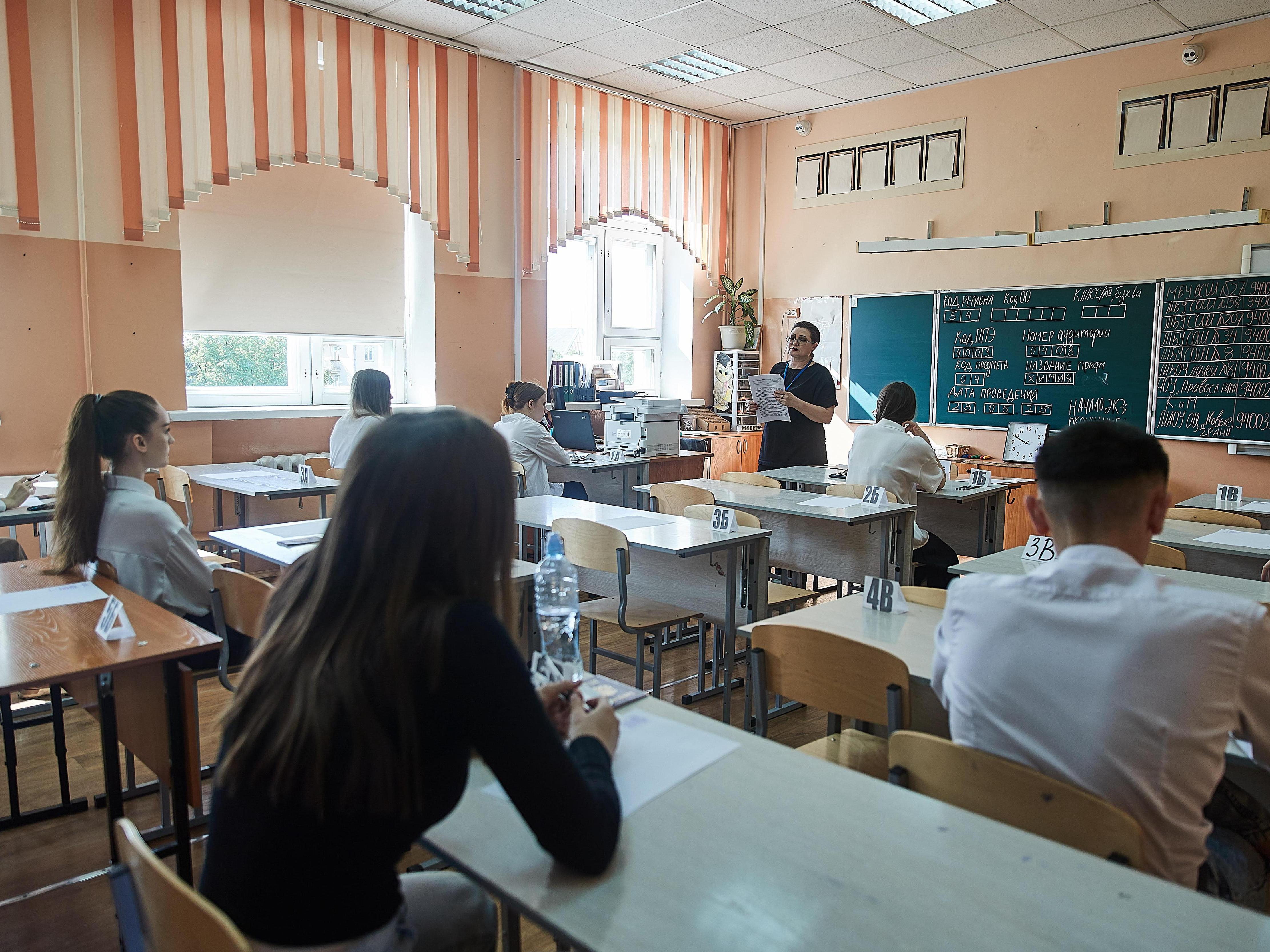

Parents and officials debate weighted coefficients for tests and classroom assessments in Tyumen.
Tyumen residents are energetically discussing officials’ statements that introducing weighted-average grades in Tyumen Oblast is in children’s interests. Earlier we wrote that the head of the regional Department of Education (Departament obrazovaniya Tyumenskoy oblasti) Dina Gorkovets spoke about the new student assessment system. The idea is that each mark and each piece of work has a different weight. Parents have weighed in. Most are dissatisfied and oppose such a system. But there are also those who support it. We publish the cutting opinions.
«They give a 4 for answers with a coefficient of 1, and a 2 for a test with a coefficient of 5 — which means five 2s for one lesson. I asked the teacher: and how do you fix that? The answer floored me: they’ll come, retake it, and get a grade also with a coefficient. Result: retook it, a 3 with a coefficient of 4», a reader shares.
«On the contrary, this was introduced to identify those who study the subject poorly. But parents care about grades, not children’s knowledge», a commenter believes.
«Teachers no longer actually teach — they just clock their hours and that’s it — while our children, thanks to such approaches, get their education from tutors», a user says.
«Or maybe kids will start studying — not sitting on their phones, whining, disrupting lessons, and skipping classes?» a resident asks.
«Who came up with this system? Inflated grades at the current level of teaching are wonderful; without tutors it’s simply impossible to gain knowledge. Teachers can neither explain nor maintain discipline in class», another complains.
«What if a child studied at a 5 all quarter, and during the test had a headache/stomachache/didn’t sleep well. The child gets a 3. In some schools, that grade has a weight of 5. That is, a child with a solid 5 gets five 3s at once for a single piece of work. In the best case it averages out to a 4. Where’s the motivation? Not doing homework at all? Not answering in class? Or just copying the test at the right time to get a 5? Commenters are right — better staff schools with teachers», the author argues emotionally.
«That’s exactly why only the teacher should grade a student. The teacher always knows whether a 5 is deserved or copied, whether a 3 is random — or the child simply had a headache. They observe students daily, in different situations and types of work, and can ask at any time — unlike a coefficients mechanism», a city resident thinks.
«Maybe a test grade is more important — but why three times more, and not twice? And why is a spontaneous answer at the board equal to homework?» a commenter asks.
«Teachers at school immediately told us to get ready: with the new system, grades will be lower. And wherever this system has already been introduced, parents immediately said the average score dropped», a Tyumen resident claims.
«This will definitely reduce children’s motivation. Offsetting a large number of bad grades when a subject is held once a week is a dead end — which means there’s no point even trying. Cheating on tests will definitely increase — even among children who previously never did that», a resident believes.
«There are no teachers at the school. And those who are there are constantly on sick leave. At the end of a quarter there’s the eternal problem of missing grades. At quarter’s end they immediately hold several in-class tests; keep in mind the child essentially studied the material alone while the teacher was ill. And if the weights of tests and in-class work already count as multiple grades, then it will be unrealistic to fix anything or build up marks at the end of the quarter», a user says about the problem.
«If parents swallow this system, children will have problems in the future. I believe this system assesses knowledge unfairly. They could have emphasized tests by grading them x2 — that would have been enough. But here they twisted and tinkered. There are many questions for the department, but alas, they silence us parents; they know better what is in our interests and what is not», a parent argues.
«In the first days of school, my child took a math test and got a 2. Instead of one 2, they entered three 2s. Question: how can a child fix three 2s at once? Which genius invented this system? And what kind of people adopted it? It would be one thing if the entire country studied under this system. How should children apply to further education if their GPA in certificates goes down?» a reader writes.
«As the mother of a successful high-schooler in graduating classes, and as a mother who experienced this experiment for two months in another region, I say a definite no to this innovation. To get good grades, we rely on tutors and extra lessons. We do not count on the school for the profile subjects we will take for the Unified State Exam (Ediny gosudarstvenny ekzamen, EGE). Weighted averages will definitely spoil the grade 9 certificate, when admission to college depends on the GPA. And I repeat: teachers do not always grade tests objectively. Getting three 2s or 3s will not add any motivation. Not only will children be sitting at school to retake, but interested parents will sit there too — to check whether the teacher graded the child correctly», a parent says.
«It was always like this in the 1990s. Quarter grades were based on tests — final and control tests. Yes, regular days affected the grade, but not that much. If a child studies, then they study. No need to whine and blame others for their development», a Tyumen resident says.
«Excellent system! All pseudo-‘good’ students and straight‑A students will be weeded out», a city dweller states.
Earlier we reported that after the new system was introduced, parents began massively collecting signatures and filing complaints with the prosecutor’s office. One parent managed to get such grading canceled at his child’s school. We explain how he did it.
Parents across the city are now trying to overturn schools’ decisions. Many are joining forces and collecting signatures for subsequent submission to the prosecutor’s office. This is what they did in Tyumenskaya Sloboda (a residential area in Tyumen, Russia), for example. Parents of students at Gymnasium No. 4 have already gathered 750 signatures against, and the collection continues. Spontaneous spots with applications have appeared at order pick-up points, supermarkets, and other high-traffic locations. What parents are so afraid of — read our emotional report from one such meeting of mothers and fathers.