Tatarstan’s 110-year teaching dynasty
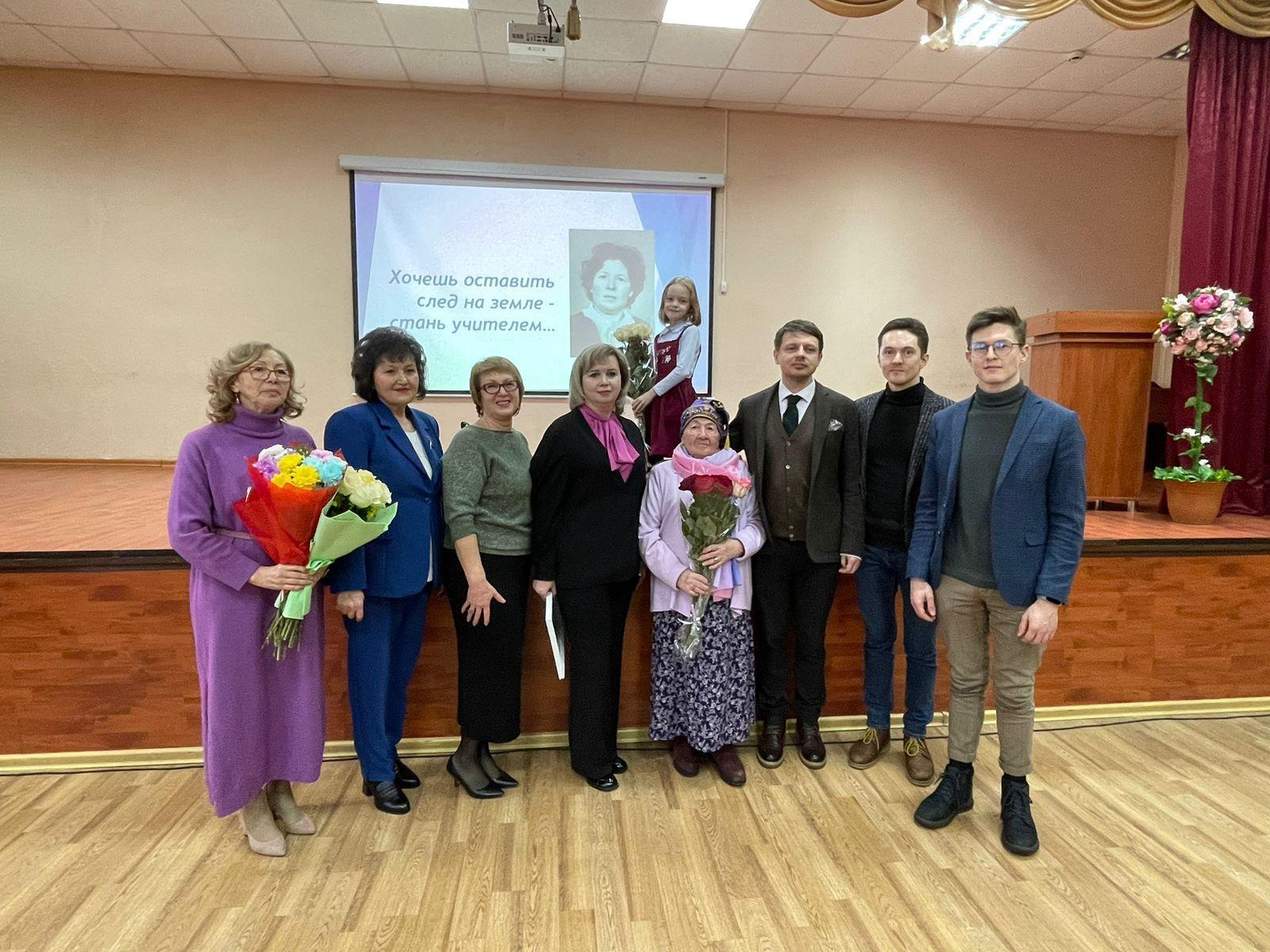

The family’s teaching dynasty traces its beginnings to 1915 in rural Tatarstan.
For about 110 years, a dynasty of educators from Tatarstan has continued. The combined teaching tenure of all the teachers from several families is more than 1,500 years. For that long, they have given their love and passed on knowledge to children, and some of them continue to nurture young talents.
Ahead of Teacher’s Day, the 116.RU newsroom spoke with teachers from a dynasty with a vast history. In this piece, we tell how more than a century ago Tatarstan residents gave their home for a school, how in the postwar period they taught orphaned children, and how generation after generation chose a noble profession.
A dynasty with a 110-year history
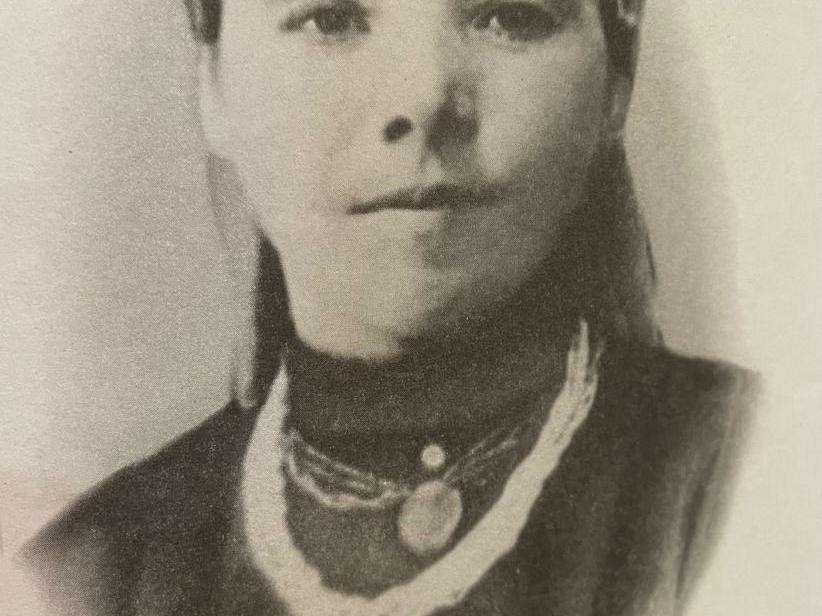
The multigenerational teaching line began with Shamseruy Safiullina and her husband.
Our heroine is named Ilgizya Gumarova. She is one of the dynasty’s representatives. She spent 10 years teaching and has been in administration for a full 24 years. Ilgizya Dzhamilevna studied in Zelenodolsk District and received higher education at Kazan Pedagogical University. She entered the physics and mathematics faculty — following in her father’s footsteps.
«My father was a physics teacher. He loved his subject and his students very much. That love for the subject, probably, was passed on to me. I enjoyed solving problems with him at different levels, especially those that touched on several sections of physics. My father taught me to see physics in nature. I probably didn’t even have a choice — I never thought about anything else», — our interlocutor explained her choice of profession.
As for Ilgizya Dzhamilevna’s mother, Firdaniya Valiullina, she is also a teacher. She worked 40 years as a teacher of Russian language and geography. As a very young 17-year-old, she raised children from an orphanage evacuated during the Great Patriotic War (World War II) — those who had survived bombings and the loss of their parents.
«At first I worked for two years in a Russian orphanage in my village. Then I worked for two years in Entugany (Tatarstan), teaching Russian because there was no Russian-language teacher; I worked the longest at Gymnasium No. 10 in Zelenodolsk as a geography teacher in my specialty», — explains Firdaniya Apa.
By the way, Firdaniya Apa (a respectful Tatar form of address) turned 91 this year. Former students still remember their teacher. Back then, children even called Firdaniya Apa ‘mom’, and her husband — ‘dad’.
«I didn’t complain; classroom discipline was good. And we held interesting evening events. The children loved the subject, they loved me, and I loved them. They still remember me and constantly send congratulations. Of course, there were all kinds, but mostly good kids. In our time we had authority», — our heroine recalls.
«Even if they chose another profession, they ended up teaching afterward»
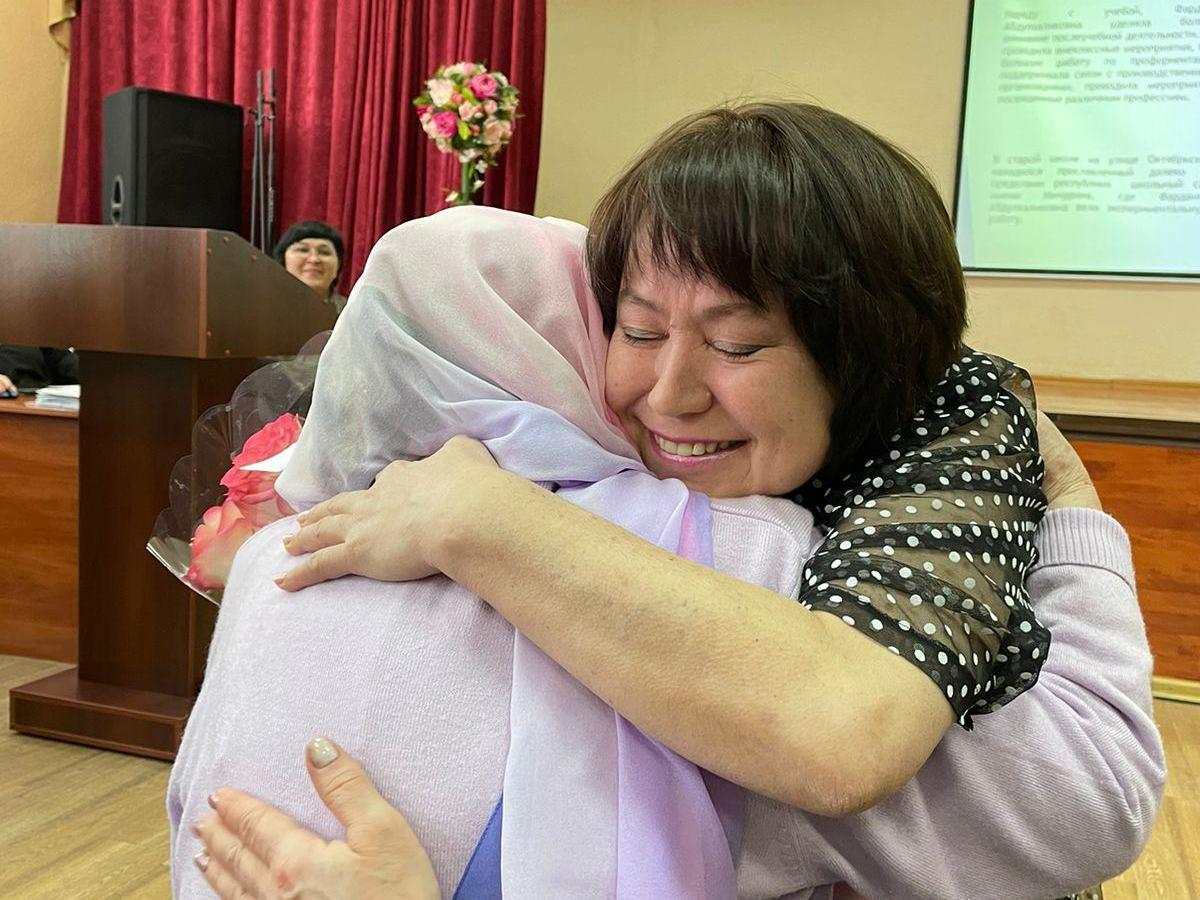
Former students of Firdaniya Apa still warmly remember their demanding, caring teacher.
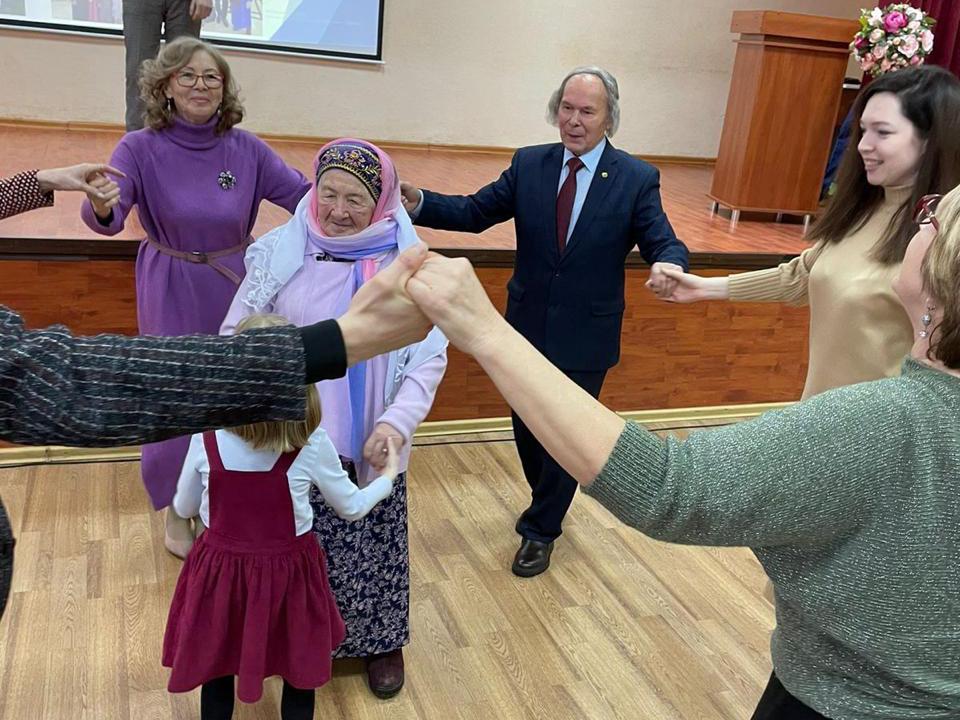
She worked for decades teaching Russian and geography to children in Zelenodolsk.
Firdaniya Apa stood at the origins of the dynasty. Her aunt by blood, Shamseruy Safiullina, together with her husband, gave one of their houses for a school. The fact was that the village of Sorok-Saydak (Tatarstan) previously had no educational institution. A school building was constructed only in Soviet times — around 1933. After that, Shamseruy Safiullina’s house was given over to a library.
«They began teaching both their children and village children. To ensure the kids received higher-quality education, they invited a Russian-language teacher. My mother and her cousin were the same age; they studied in the same class. My mother was always among these children. Since that grandfather had three wives, there were many children — 26. My mother was formed in an environment where enormous importance was attached to education. These children staged plays, read and knew by heart “Qissa-i Yusuf”, “Zuleikha”, “Layla and Majnun”», — says Ilgizya Dzhamilevna.
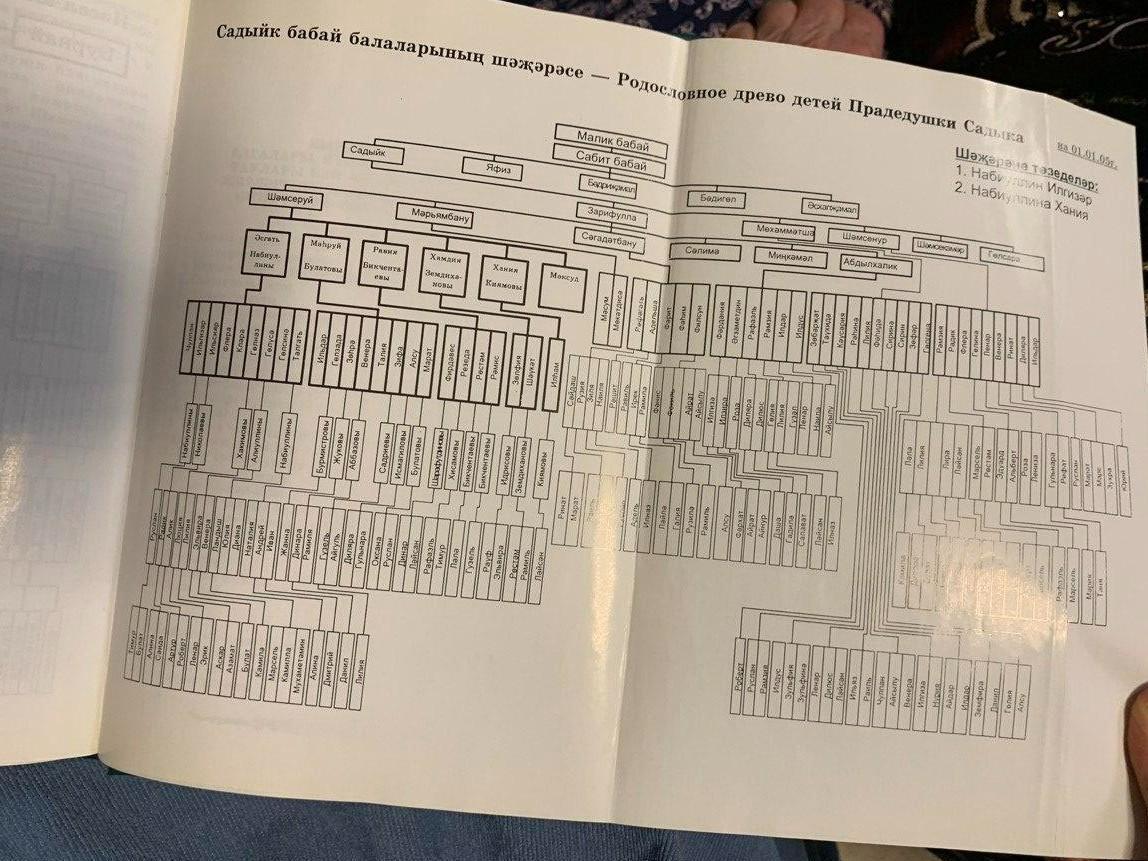
A detailed family tree traces the Safiullin–Nabiullin–Kiyamov–Valiullin–Zaripov teaching lineage across generations.
The history of the Safiullin — Nabiullin — Kiyamov — Valiullin — Zaripov dynasty has been kept since 1915. The children of the school’s founder and Firdaniya Apa’s aunt later also became teachers and married teachers.
«My mother’s cousin married a teacher; my mother also found herself a teacher. In this way, many pedagogical families formed. These families were friends, they had common interests, they met at conferences, they lived in harmony. Their children — us — are still friends. It turned out that both my mother’s and her cousin’s children also became teachers. My mother’s cousin is a teacher, a primary-school teacher. Even those who chose another profession — for example, my mother’s brother — still taught later», — our interlocutor shares.
Among the currently active educators in the dynasty are Doctor of Economic Sciences Ilgam Kiyamov; Candidate of Historical Sciences Farhad Gumarov (Ilgizya Dzhamilevna’s son); lecturer at Moscow State University of Civil Engineering (MGSU) and RUDN University (Peoples’ Friendship University of Russia) Leysan Kiyamova; Buinsk kindergarten head Endzhe Abuzyarova; mathematics and primary-school teacher in Zelenodolsk Guliya Khalimova; Tatar-language teacher at a Kazan gymnasium Guzel Zaripova; and head of a training and development department Airat Gaynetdinov. And this is still not the full list.
«I have never once regretted choosing this profession»
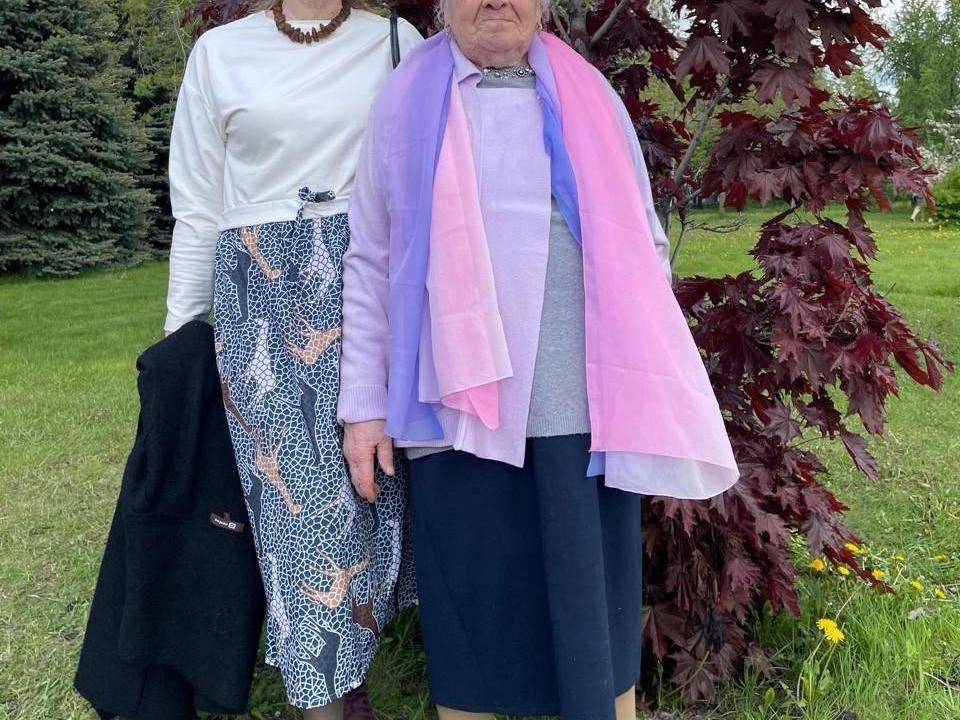
Relatives from several branches continue working as teachers, administrators, and researchers.
As for Ilgizya Dzhamilevna, she warmly recalls the time when she taught physics in schools. Her husband was a military officer, so she had the chance to work in many cities — including in Ukraine, in Lviv, in the Baltics, and in Kazakhstan.
«I have never regretted choosing this profession. Those years were very happy for me: I worked with the kids, prepared them for academic Olympiads, organized themed evenings — for example, physics and music for upperclassmen. It was very pleasant and interesting to instill a love of physics that way. Given that I had to live in different parts of the Soviet Union, I taught physics in other parts of our vast country as well», — the teacher says.
And Firdaniya Apa admits that even now she would go to teach. She even dreams about school. The teacher also actively supports Ak Bars Kazan (Hockey Club Ak Bars). Relatives joke that if Firdaniya Apa does not watch a hockey match, the team will lose. Neither of our heroines regrets having chosen the teaching profession.
«It is a very honest profession. Today every young woman strives to develop. This is precisely the profession that forces you to develop all the time. A teacher is also an educator and a psychologist. It is also the extracurricular work that reveals students’ abilities; a teacher is a director and a scriptwriter», — concludes Ilgizya Dzhamilevna.
Teacher’s Day is celebrated nationwide on 5 October. The professional holiday was established back in 1965. Earlier, we wrote about what to give a teacher on that day. Besides the typical bouquet and box of chocolates, you can also present a stylish pen, a planner or notebook, and items for comfortable work: a desk lamp, a tea thermos, or a nice coffee mug.