Russia Ends Bachelor's and Master's Degrees for New System
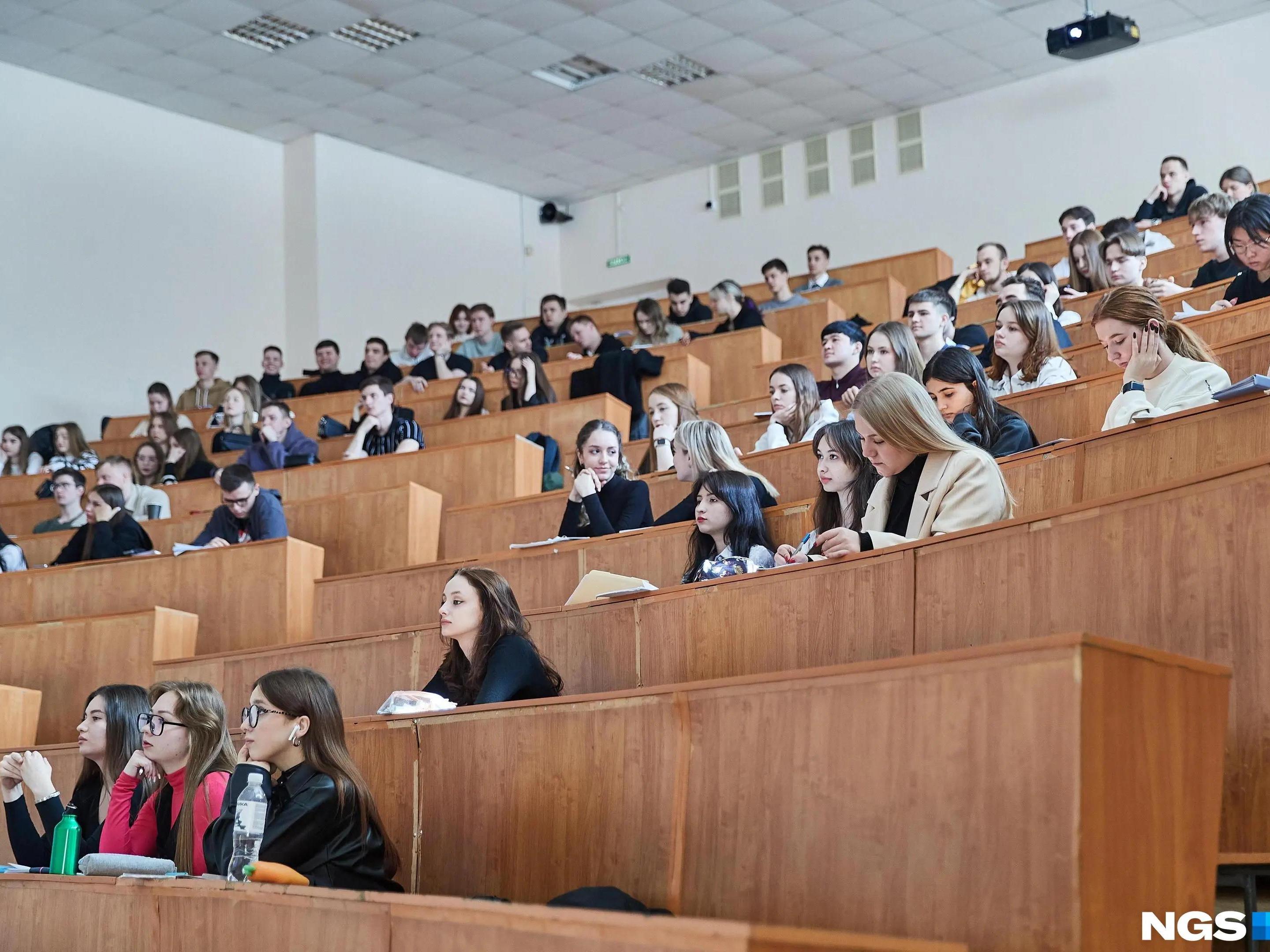

In September 2026, Russia will begin mass testing of a new higher education system. And from 2027, bachelor«s, master»s, and specialist«s degrees will be replaced in all universities across the country with basic, specialized, and professional higher education. This information was confirmed by 76.RU in the Ministry of Science and Higher Education of the Russian Federation.
«The mass transition to the new system is planned for the 2027/2028 academic year and will affect all universities in the country regardless of their departmental affiliation and form of ownership,» clarified the Ministry of Education and Science in response to the portal«s inquiry.
It is worth noting that since 2023, six Russian universities have already joined the pilot project. Among them:
Immanuel Kant Baltic Federal University;
Moscow Aviation Institute (MAI);
National University of Science and Technology MISiS;
Moscow Pedagogical State University (MPGU);
Saint Petersburg Mining University;
Tomsk State University.
In these educational institutions, enrollment is conducted for programs of basic and specialized higher education.
As clarified by the Ministry of Science and Education, a new list of universities that will join the pilot project is being developed. If any universities are included in this list, the modernization of the higher education system in them will begin in September 2026. Otherwise, all universities in the country will transition to the updated model with basic and specialized education from the new academic year in 2027.
What Will Change
In Soviet times, the main form of higher education was the specialist«s degree. Training under it lasted five to six years, and it provided the student with a specialist qualification in a specific profession. This was equivalent to the modern bachelor»s and master«s degrees, but without division into two levels.
After the collapse of the Soviet Union and the transition to a market economy in the 1990s, the higher education system in Russia began to change. In 2003, the country joined the Bologna system, which led to the introduction of a two-tier education model—bachelor«s and master»s degrees—and it was assumed that Russian-style diplomas would be recognized in most European countries. However, the specialist«s degree as a traditional form of training persisted in some universities (for example, in medical, creative, and military higher educational institutions).
The Bologna education system is a system created to standardize and improve the quality of higher education in Europe. It was founded and signed in 1999 in the Italian city of Bologna. Dozens of countries have joined this system. The essence of this system lies in bringing educational standards to a unified form, which was supposed to simplify the process of recognizing diplomas and qualifications, as well as facilitate the mobility of students and teachers.
Russia, participating in the Bologna Process, retained its own system of scientific degrees. The country continued to award the degree of Candidate of Sciences—after postgraduate studies and defense of a candidate«s dissertation, and then Doctor of Sciences—after defense of a doctoral dissertation. There is also the academic title of professor, which is awarded to specialists with an academic degree, more than 10 years of scientific and pedagogical experience, and significant scientific achievements.
Whereas in the Bologna system of higher education, three levels of academic degree are distinguished: bachelor, master, and Doctor of Philosophy (PhD). The latter is the highest academic degree in this system, which in its level approximately corresponds to the Candidate of Sciences in Russia.
In May 2023, President Vladimir Putin signed a decree on launching a pilot project to change the levels of professional education. The main goal is to move away from the Bologna model of higher education and create its own system. The Ministry of Education and Science explained this decision by the need to create a «nationally oriented system of higher education.»
«It will adopt the best practices of the Soviet system and recent decades. Its task is to prepare professionals with broad horizons, creative, critically thinking, loving the Motherland, and ready to work for its good.»
What Levels of Higher Education Will Appear
The new model of higher education involves moving away from bachelor«s, master»s, and residency degrees. Now there will be basic and specialized education. For those wishing to engage in scientific activity, a level of professional education is provided.
1. Basic higher education: training lasts from four to six years. After graduation, the student is ready for professional activity in the profile specified in the diploma.
The conditions for admission to basic higher education will not differ from the current admission to bachelor«s or specialist»s degrees.
2. Specialized higher education: training lasts from one to three years. It is intended for graduates of basic higher education who wish to deepen their qualification or obtain a new one. Specialized training includes master«s degrees, residency, and assistantship-internship.
Assistantship-internship is a type of training aimed at mastering the skills of teaching creative disciplines and improving one«s main creative qualification, and the graduation work is a performance, concert, show, exhibition, or film depending on the specialization. Duration of training: two years.
3. Professional higher education: training lasts three to four years. This level is intended for graduates of specialized higher education who are aimed at scientific activity and obtaining the scientific degree of Candidate of Sciences after successful defense of a candidate«s dissertation.