«PE Degree, Hired to Teach Russian»
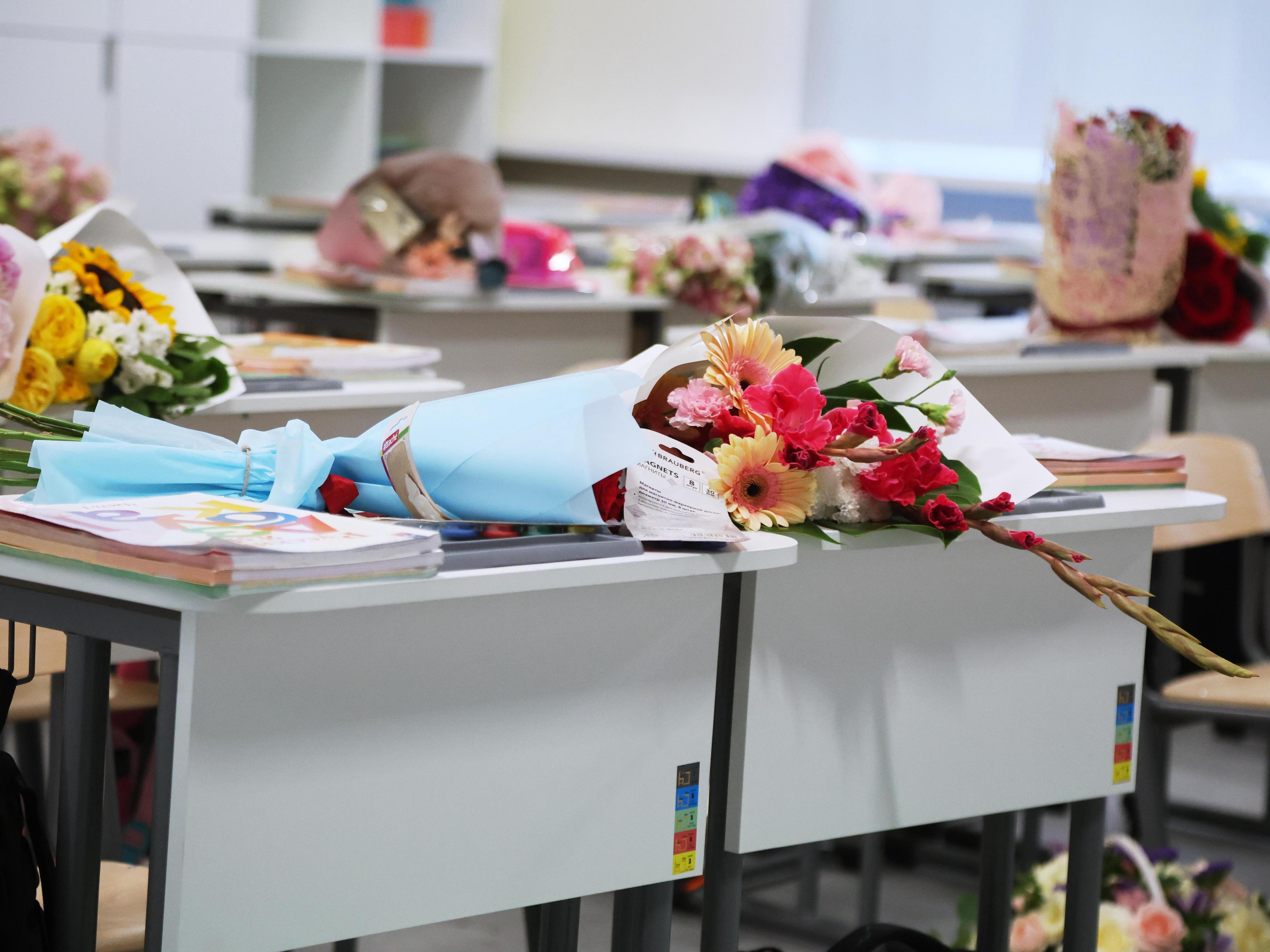

Many of us have heard that working at a school is grueling work, but few know the inner workings of modern pedagogy. The editors of 26.RU spoke with a young teacher from Stavropol Krai (Russia) who explained why this job has stopped appealing to her.
Valentina (name changed at her request) is a teacher with a not yet very long track record, having worked in this field for only three years. In that time, she managed to work at two general-education schools and to lose her infatuation with the profession. From here on — first person.
«I admired my teachers and dreamed of helping children»
My teachers inspired me and showed me that incredibly compelling side of the profession where you can help children sort themselves out. When a child is on the edge, wants to give up, and you don’t let them. I very much wanted to be not just a teacher, but a mentor for children, so I went into pedagogy.
I earned a degree as a teacher of physical education and decided to get a job at a school. However, I was hired as a teacher of Russian, and without any appropriate retraining. There is a severe staffing shortage in schools almost everywhere. So, with a PE diploma, I taught Russian language and literature without the necessary qualification. Of course, young people are very flexible about everything and adapt quickly. It’s easier for us to retrain. But still, it’s wrong that someone can be hired to teach such an important subject without the proper diploma.
I considered myself incompetent, although I’ll note that I made up the gaps in Russian and literature for probably 70% of my students, given that they had gone about half a year without proper Russian lessons. The children were left to their own devices — various substitute teachers simply came in, told them to write rules, and just sat with them.
After a while I left to work at another school in my own specialty, as a PE teacher.
«There are benefits, but it’s impossible to use them»
You often hear about all sorts of benefits and different “perks” used to attract young teachers. Yes, young specialists receive an extra payment of about 5,000 rubles ($50 at current rates), and there are discounts when buying a car or an apartment, but how important is that when your salary doesn’t even allow you to live comfortably without obligations, let alone pay a mortgage or a loan. I don’t have children yet, but even so the salary is hardly enough for anything. It’s hard to imagine how teachers with families live.
Because you work at a school, your salary isn’t that big and you don’t have the money to save up even for a down payment — so what kind of preferential mortgage are we talking about.
You don’t have your own apartment or house; you’re forced to rent, and no one helps with that. Neither the city nor the school provides housing — they say there isn’t any.
Even with the «Zemsky Uchitel» (Rural Teacher) program — a federal incentive — not everything is so simple. It sounds nice: if someone agrees to go work as a teacher in a rural area, they will be paid 1 million rubles ($10,000 at current rates) if they work for five years.
But at current prices you won’t buy yourself an apartment or a house with that money. If housing is allocated, it will be some kind of shack. As practice shows, even if a teacher moves to a village, they end up in the red.
«Even with two positions, there won’t be 50,000 a month»
You can talk endlessly about teachers’ salaries, but it always has the same direction — small sums that aren’t enough for anything. Some will object: teaching is not a profession but a vocation; you shouldn’t go into a school for big money. Perhaps that’s true, but you still need to buy food, water, and simply live.
Even if you take on a very heavy workload, even if you have two positions, a full day’s schedule, and homeroom duties, you won’t even get 50,000 rubles ($500 at current rates) a month. It will be 30,000, at most 40,000 rubles ($300–$400 at current rates), and that’s before tax. It’s not worth trying to earn big money at school. Either you live there, have no personal life, can’t devote time to yourself and your family, and get a bit more, or you agree to one position so you don’t burn out — and sacrifice your salary.
And if you don’t want to take on a heavy workload in order to have at least some personal life, then colleagues will consider you lazy.
When a young specialist comes to a school, all the paperwork and extracurricular work is dumped on them. Nothing is really explained, mentorship is poorly developed, and you sit there with a pile of your own workload, plus a pile of tasks your colleagues have additionally dumped on you, and you just don’t know what to do with it. You start burning out as soon as you begin working.
I burned out in my second year. By the end I didn’t know what to do and firmly decided to quit. Only vacation saved me — ours are long. If not for that, I would’ve simply lost my mind.
«Parents are unbalanced, children are lazy»
I became a teacher because I wanted to help children, to see their eyes light up. In reality, it turned out differently.
The downside of the job is parents and their spoiled children who don’t want to study, learn anything, or interact with the teacher. They see the teacher as an enemy. There are few kids for whom you want to stay at school and work, who give something back. Overall, the environment doesn’t justify your energy and emotional costs.
In theory, every principal first says they’re on the side of young teachers, but in practice that’s not so. I had a situation where a child’s mother — also a teacher — came to sort things out because her daughter wasn’t doing assignments and was being rude. I tried to resolve the problem peacefully, but the mother insisted on going to the principal. She went and complained, and the principal told me to give the girl good grades no matter what. Schools want to see people who will carry out all orders unquestioningly and won’t resist anything.
In a teaching staff, if you’re young, you’re not valued, not taken seriously, and most often they jab at your incompetence and your small store of knowledge and experience. But people, although they have a big background, are still closed to anything new — they don’t see original and interesting solutions. When you propose something, they say it’s no good.
There is a lot of paperwork. This affects not only young specialists, but everyone. You have to deal with all this paper red tape, while the older generation categorically refuses to master electronic gradebooks and software.
All that said, I try to see the positives in my work. Above all, it’s good experience interacting with children. And in the paperwork I also see useful experience. Another plus is lots of communication with people around you. Overall, I don’t regret going to work at a school. But the downsides turned out to be greater.