Doctors' Salaries in Russia: Can You Trust the Official Figures?
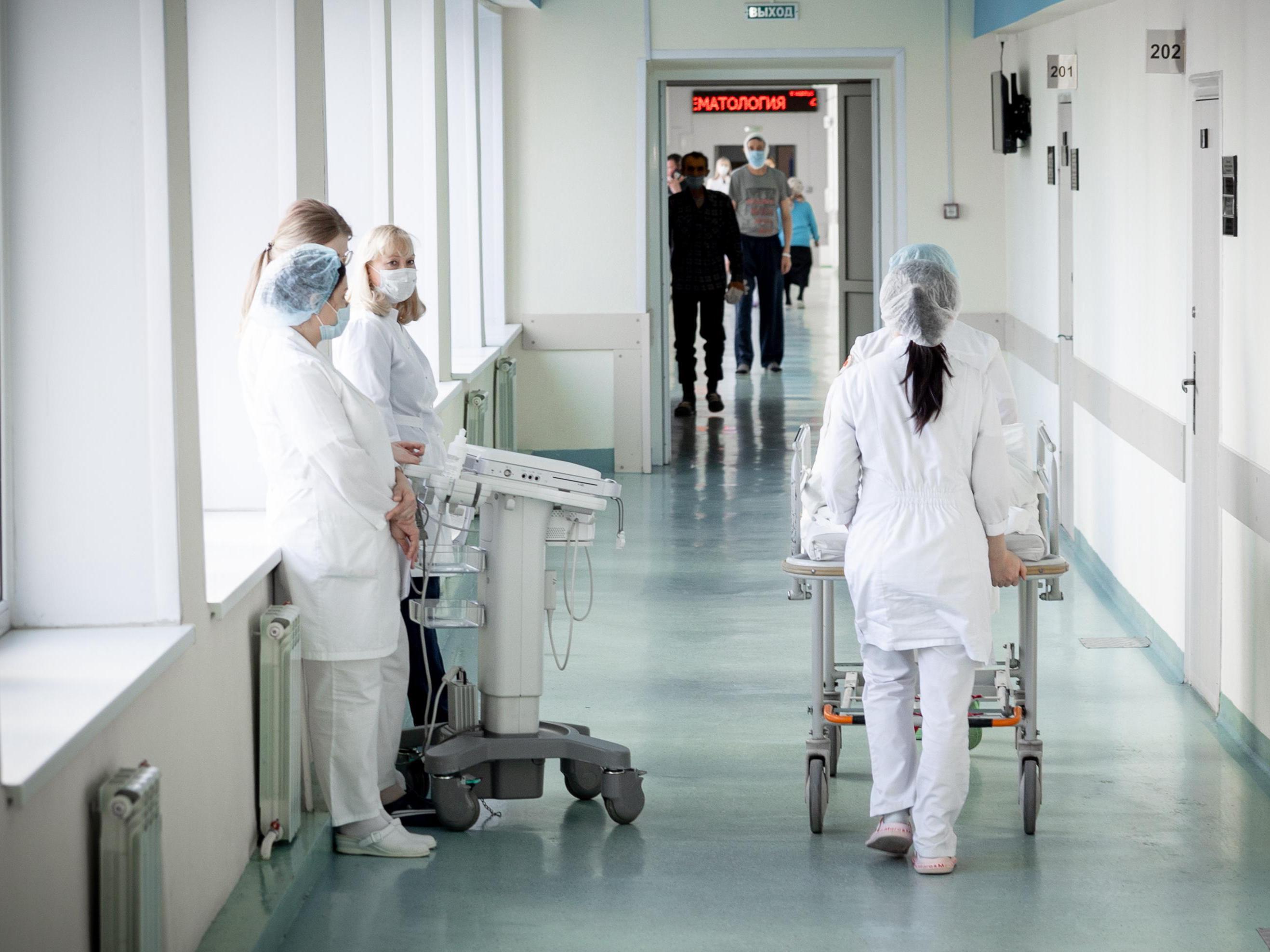

The average monthly salary for doctors working in the mandatory health insurance (MHI) system in 2025 was 147,000 rubles (approximately $1,500 at current rates). Meanwhile, the average nursing staff earns 71,000 rubles (approximately $710). This data was announced by the head of the Federal Fund for Mandatory Health Insurance, Ilya Balanin. According to him, compared to the previous year, doctors« salaries in the MHI system grew by more than 12 percent.
Formally, the figures look impressive. However, almost immediately after the publication of this statistics, the familiar question arose in the professional community: how much does this «average» salary correspond to the real picture in clinics and hospitals? And especially outside the largest cities?
147,000 rubles is the arithmetic mean. And average indicators, as is known, can mask deep imbalances. MSK1.RU decided to find out whether official figures can be trusted.
In response to a question that echoes Stanislavsky«s famous line, our experts gave diametrically opposed answers: one trusts the figures, the other does not.
«Average is Not Median»: What«s Wrong with Salary Calculations
The president of the «League for the Defense of Doctors,» Sergey Galperin, a neurologist, says that the figure of 147,000 rubles itself is not surprising—but only if one understands how it is formed. The doctor immediately clarifies that his personal income is significantly lower than the stated level.
«Some probably do have salaries that amount. For example, the Ministry of Health invented a very good calculation: take the chief physician and their deputies, take the lower boundary, and the sum is divided in half between them. But since there are very few workers with high numbers, this, so to speak, does not strongly correspond to reality,» says Galperin.
Separately, Galperin points out that in official statistics, salary is usually calculated for full employment, which in reality is almost unattainable.
«It is customary for us to consider full employment—salary including additional positions. Our doctors don»t work on one rate. At best, on one and a half. I«ll recall an old Soviet joke. Why one and a half? Because if they worked on one rate—there would be nothing to eat, and if on two—no time,» says Galperin. And to this day, the Soviet joke has not lost its relevance.
From the expert«s point of view, a much more informative approach would be to assess doctors» incomes differently: «I would ask officials about minimum rates. That»s where we should start: what should the minimum rate be so that one can live on it.«
«An Average Pulled Up by Large Cities»
A directly opposite assessment comes from the president of the All-Russian Public Organization «League of Patient Defenders,» Alexander Savernsky. He does not even question the fact of the growth of doctors« incomes in the MHI system, but immediately stipulates: it is precisely an average that says little about the situation of the majority of specialists.
Savernsky draws attention to the fact that in large cities (primarily in Moscow, of course) the salaries of managerial and highly qualified medical personnel have long been at a level significantly exceeding the all-Russian indicators: «I know, for example, in Moscow, department heads who received half a million rubles (approximately $5,000). And such figures were already five years ago.»
Moreover, this is specifically about state medical institutions, not private clinics, emphasizes Savernsky: «There are additional payments for paid services, but they are relatively small.»
According to the expert, if the situation is analyzed in detail, Moscow and other large cities inevitably «pull» the overall statistics upward. He says that a more informative approach would be to compare cities of different sizes to see the differentiation of doctors« and nurses» salaries across the country.
«In Moscow, the salary will be, for example, 250,000–300,000 rubles (approximately $2,500–$3,000), and there are many doctors there, more than in other regions. Other large cities will also pull this statistics up,» explains Savernsky.
However, the expert emphasizes that the healthcare system is not limited only to MHI, and this also affects the overall picture of doctors« incomes. Moreover, in private clinics, according to Savernsky»s estimates, salaries are even higher.
«About three years ago I looked at Rosstat figures—there were about 115,000 rubles (approximately $1,200) as the average salaries across Russia for doctors in general. Therefore, the figures he [Balanin] announced represent a quite decent growth,» says Savernsky.
Nevertheless, like Galperin, he points to the sharp contrast between official statistics and what doctors themselves discuss: «Well, if you look at medical forums, you»ll see surprised exclamations: «Where do I get a salary of 50,000 rubles (approximately $500) from?»«
Savernsky, like Galperin, emphasizes that without analyzing specific regions and institutions, any general figures lose practical meaning. Particularly close attention should be paid to subsidized federal subjects, where doctors« salaries are, of course, the lowest.
In general, the FFOMS data on the average monthly salary of doctors are neither false nor sensational in themselves. They reflect an averaged indicator for a system in which Moscow clinics with incomes in the hundreds of thousands of rubles coexist with remote rural outpatient clinics where doctors continue to work one and a half to two rates to approach an acceptable standard of living.
The experts« positions converge on the main point: without moving from average to median salary, without выделение minimum rate, and without a transparent regional breakdown, the »gross« figures remain a populist indicator, not a tool for real analysis of the healthcare system»s condition.