Don River Salinity Increase: Sea of Azov Jellyfish Threat?

The launch of the Bagayevsky Hydraulic Complex is expected to further increase salinity levels in the region.
An increase in water salinity in the Don River delta is unlikely to reach a level that would allow jellyfish from the Sea of Azov to spread in the river. This was reported to 161.RU by the Azov Research Institute of Fisheries (AzNIIRKH) in Rostov.
According to scientists, the spread of jellyfish in the Sea of Azov is limited precisely by water salinity. In years with average salinity below 10 parts per thousand, they practically do not develop. An increase to 13 parts per thousand leads to their intensive spread.
«The scenario of increasing water salinity to 10 parts per thousand in the Don River up to the first major water intakes is unlikely,» according to AzNIIRKH.
As reported by Klim Grigorenko, a researcher at the Southern Scientific Centre of the Russian Academy of Sciences (SSC RAS), due to a decrease in freshwater flow from the Don into the Sea of Azov, salty mineralized waters have begun to enter the water supply systems of Rostov, Azov, and Taganrog. According to him, scientists have repeatedly recorded cases where salty water flows from taps in these cities.
According to scientists, after the launch of the Bagayevsky Hydraulic Complex, salinity in the Don River delta may increase even more, as freshwater releases from the Tsimlyansk Reservoir will cease.
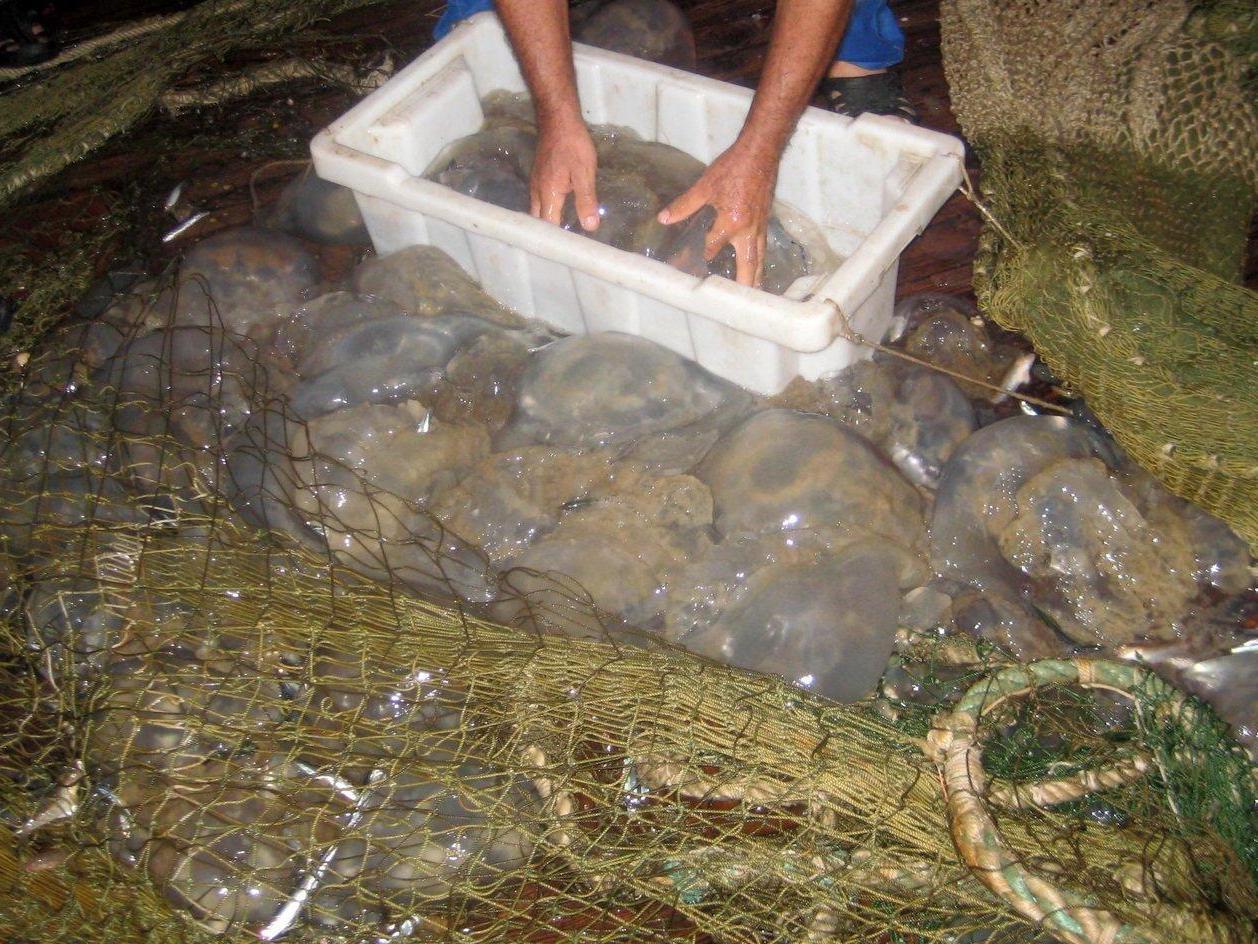
The salinity of the Taganrog Bay and the Sea of Azov has already reached its maximum in the last 70 years. This, as reported by 161.RU, has led to an overabundance of jellyfish in the water body. Because of them, the amount of dissolved oxygen in the water and the intensity of phytoplankton blooms, which fish feed on, are reduced.
However, this is compensated in autumn when jellyfish begin to die off in cold water. During this period, an increase in the content of biogenic substances in the water is noted in the Sea of Azov.
«Given that the natural die-off process of jellyfish in the autumn period stretches over 2–3 months, no negative consequences for the Sea of Azov ecosystem from this have been noted,» 161.RU was informed by AzNIIRKH.
Meanwhile, in 2025, the Sea of Azov cooled down particularly slowly. As a result, jellyfish began to die off only towards the end of autumn.