Don River Flow in 2026 Could Be Half of Normal
After a record low level in 2025, scientists expect an improvement in the Don River's water content. The forecast for the current year is about 50% of average values.
Jan 30, 2026 0
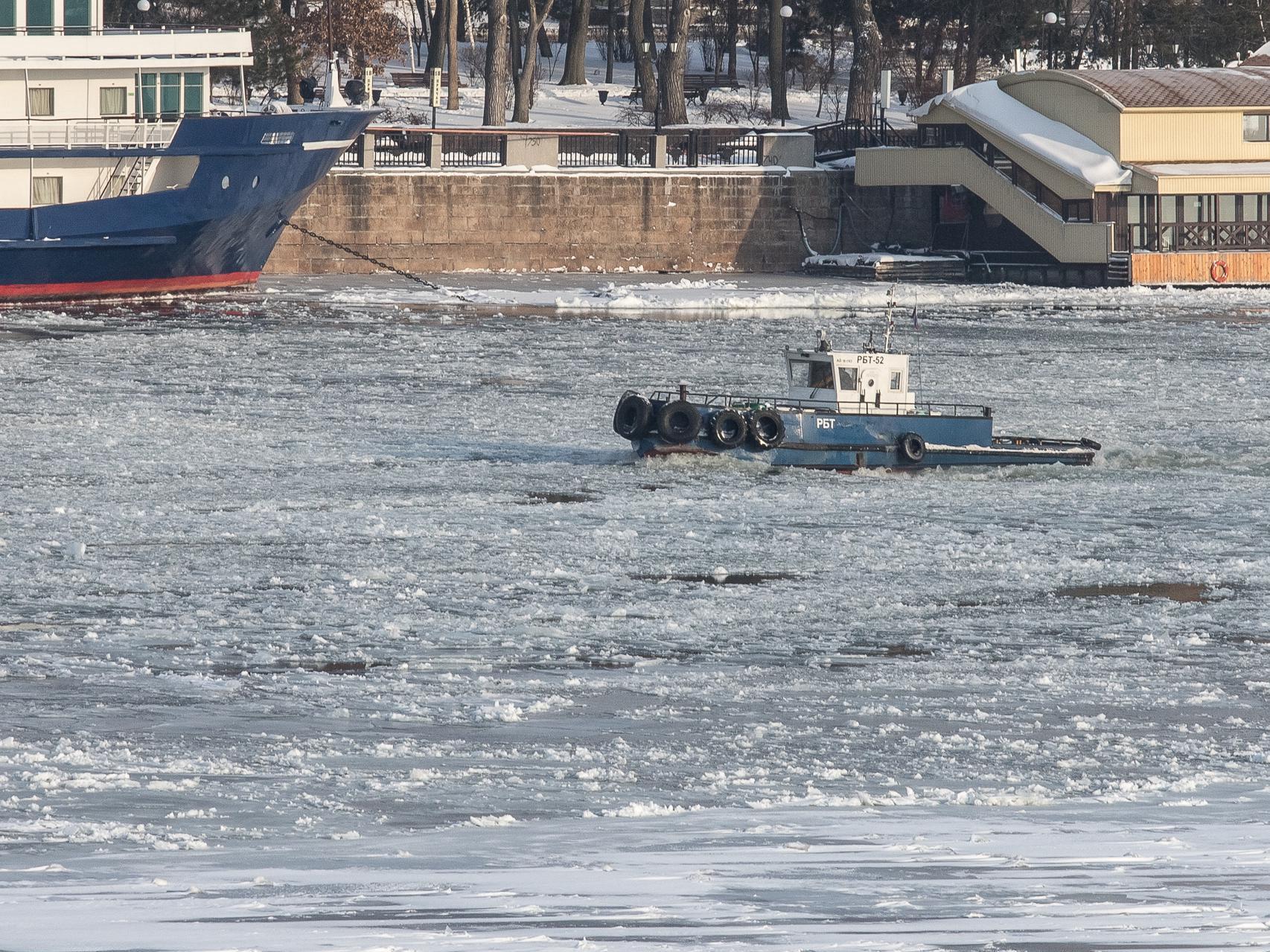

The ongoing frost in the Rostov region has resulted in the Don River being covered with ice, impacting water levels.
Source:
According to the Azov Research Institute of Fisheries (AzNIIRKh), the flow of the Don River in 2026 may approach 50% of the normal level. This is an encouraging signal after extremely low water content last year.
Specialists note significant snow accumulation in the upper and middle parts of the Don basin at the beginning of the year. Moreover, since January 19, a section of the river in the Rostov area has been completely covered with ice.
«This instills hope for the expectation of the Don River flow forming at a level, at least close to 50% availability,» stated AzNIIRKh.
The spring flow of the Don in 2025 was 4.37 cubic kilometers below the average value for the period from 1952 to 2025. The annual flow decreased by more than 10 cubic kilometers.
According to meteorological data, similarly low flow at the Razdorskaya stanitsa cross-section was observed only in 1972 and 2020.
The Tsimlyansk Reservoir, which regulates the Don«s water content, was insufficiently filled last year. The inflow of water was slightly more than 10 cubic kilometers, corresponding to 60% of the norm. Water input during the spring flood was the minimal in 80 years.
The maximum depth of the reservoir in 2025 reached 34.08 meters (111.8 feet), which is two meters below the normal retaining level of 36 meters (118.1 feet). As a result, water discharges into the Don were minimal and did not exceed 250 cubic meters per second. To ensure normal navigation, a flow of at least 410 cubic meters per second is required.
To solve the problem of navigation restrictions due to low water, the use of the Bagayevsky hydroelectric complex is planned. This facility will allow reducing navigational discharges from the Tsimlyansk Reservoir, leaving only sanitary norms of 230 cubic meters per second.
However, scientists warn that such an approach could negatively affect the ecology, in particular exacerbate the salinization of the Azov Sea and the Don delta.
Read more