Five obscure films by Soviet comedy legend Leonid Gaidai
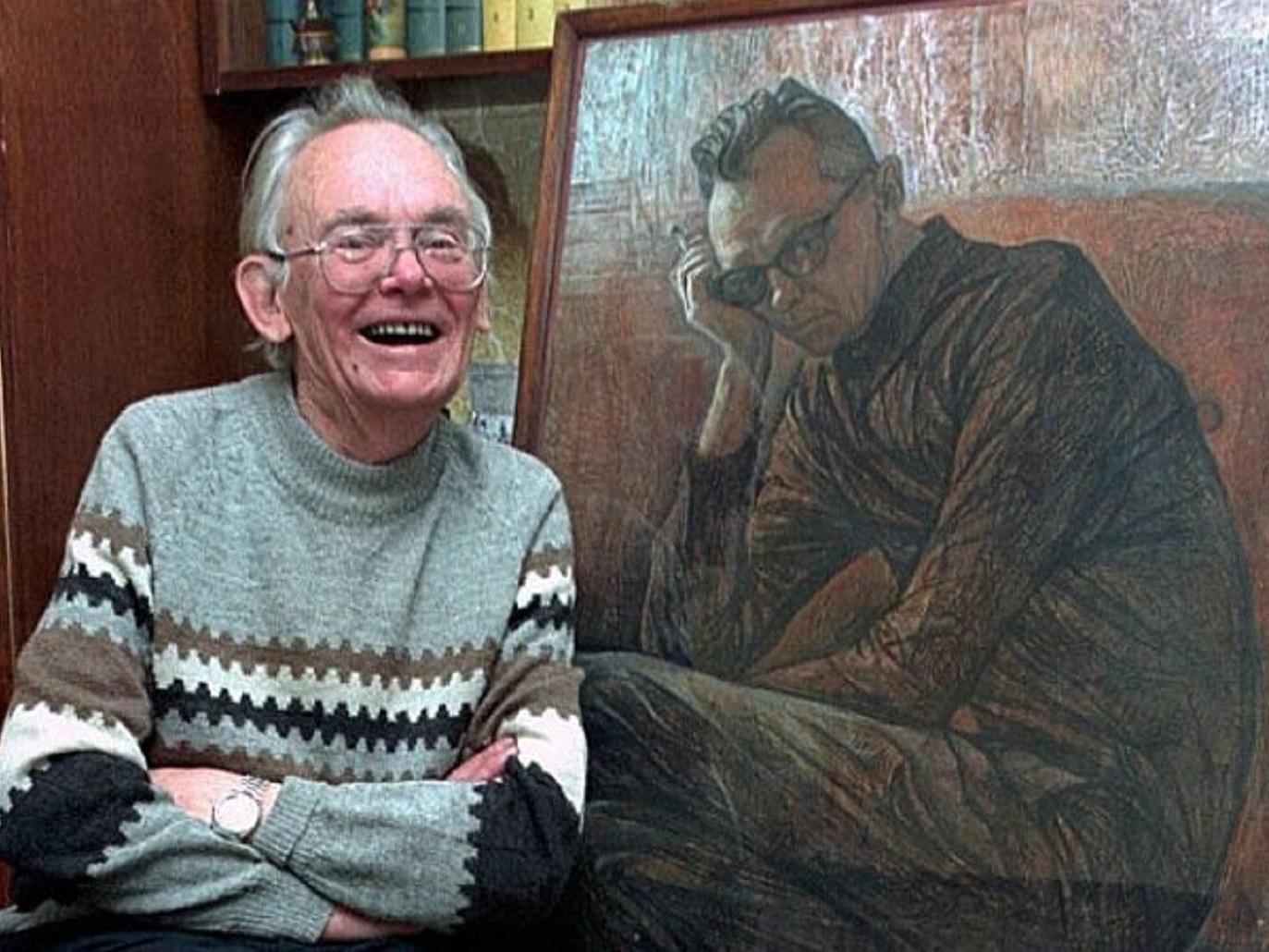

30 January marks 103 years since the birth of Leonid Gaidai, one of the 20th century«s foremost directors. He is perhaps one of the most significant filmmakers to work in the Soviet Union. We grew up on tales of Shurik, learned to love Ilf and Petrov through his adaptation of »The Twelve Chairs«, and make a point of rewatching »The Diamond Arm« or »Ivan Vasilievich Changes Profession« every year—and they never fail to amuse.
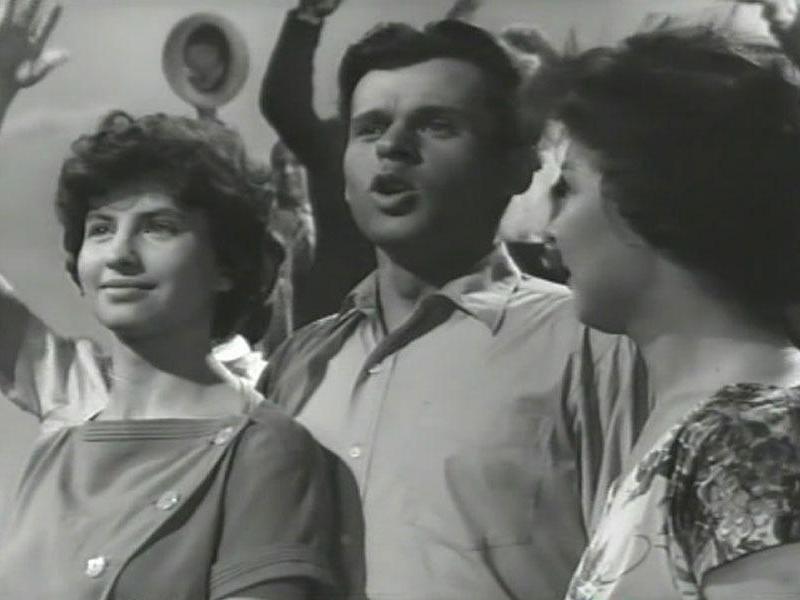
Gaidai is a recognized master of visual comedy. If you think about who shoots even remotely close to Gaidai today, you are unlikely to recall a single director. Leonid Gaidai is a man of his era and, at least for now, unique in his style.
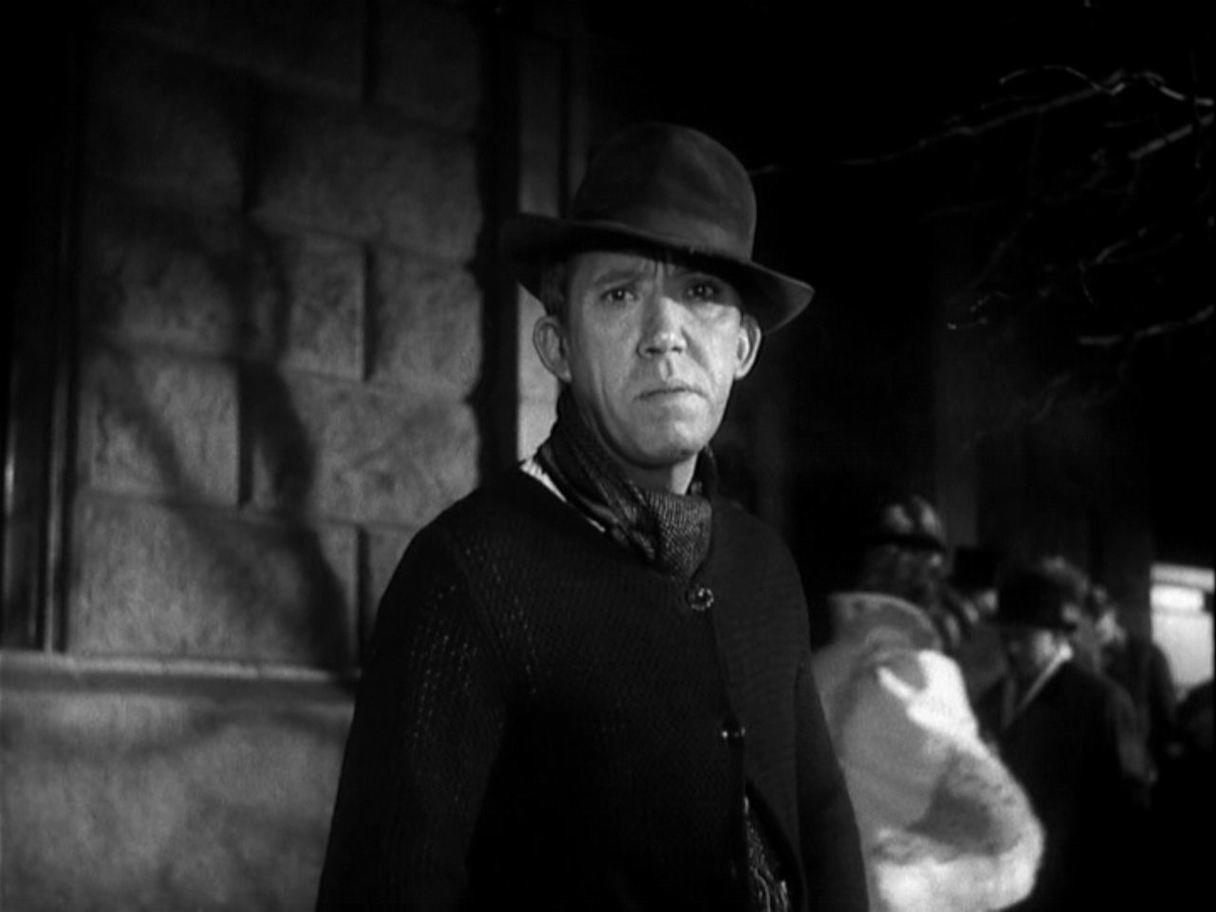
Our colleagues at MSK1.RU have told us about five non-obvious film works by Gaidai that you may not have seen, and recalled several important human qualities of the director.
«Thrice Resurrected»
The film «Thrice Resurrected», released in 1960, can be considered Gaidai«s full-fledged debut. The fact is that his formally first directorial work—»The Long Road«—was co-directed with Valentin Nevzorov, and the next film »The Groom from the Other World« is considered a short film, even though it lasts 48 minutes.
«Thrice Resurrected» stands out quite a bit from the general run of Gaidai«s films—it is a story about a secret museum of the October Revolution, which pioneers organized on an old ship called »Orlyonok«. Once upon a time, Komsomol members set off on this steamer »to beat the Whites«. To help deliver gifts to the builders of the Komsomol Hydroelectric Power Station, the crew had to restore the »Orlyonok« and set off on a real voyage.
In essence, «Thrice Resurrected» is a very patriotic Soviet film. It is also not surprising that Ivan Pyryev—a Soviet director, author of the cult films «Tractor Drivers», «Swineherd and Shepherd», «Kuban Cossacks», and a favorite of Stalin (Pyryev has six Stalin Prizes)—joined the work on Gaidai«s film. Pyryev was generally an important mentor to Soviet directors—for example, he »practically forced« Ryazanov to shoot »Carnival Night«.
The patriotic gloss of «Thrice Resurrected» does not at all negate its quality. In 1960, post-victory sentiments were still very strong. And even the cinematic «Orlyonok», which was created from the tugboat steamer «Lastochka», is deserved. The fact is that «Lastochka» participated in the Battle of Stalingrad. And many details of Gaidai«s »Orlyonok« relate to the biography of the real »Lastochka«.
«Dog Barbos and the Unusual Cross»
The short film «Dog Barbos and the Unusual Cross» lasts only 10 minutes and tells the uninitiated viewer approximately everything they need to know about Gaidai. This is such concentrated Gaidai visual humor: here there are classic visual jokes, funny chases, subverted expectations, and Homeric gags about Coward, Dunce, and Experienced. And also—the cool Yuri Nikulin, who became a constant actor for Gaidai. As, by the way, did Vitin and Morgunov.
Gaidai is often perceived as a people«s director, a comedy maker, an entertainer. To no lesser extent, Gaidai is a true auteur, in the sense gifted to this word by the directors of the French »New Wave«. »Dog Barbos«, by the way, even participated in the short film competition at the Cannes Film Festival.
This visual humor of Gaidai has its roots in the films of Charlie Chaplin. It was largely on them that Gaidai himself grew up. The director, as they write, would disappear into the cinema and watch his works, not the conditional «Chapaev».
«In my opinion, the style of Gaidai»s films is closest to Chaplin«s short films. I sometimes show his films—I have them all on videotapes—to French people, who laugh very hard, completely without knowing the language and not understanding the text,» said composer Alexander Zatsepin, who wrote much for Gaidai«s films. »In Gaidai«s films, everything is clear as it is, almost like in silent cinema. It»s like a joke. You tell it—and everyone laughs. If the story is complex, it can also be interesting and funny, but you don«t grasp it right away.»
By the way, several years ago, the film concern Mosfilm posted all of Gaidai«s films on YouTube. There are millions of views.
«Business People»
Gaidai is a truly literary director. He adapted many Russian-language authors: for example, «The Twelve Chairs» is based on the book by Ilf and Petrov, «Ivan Vasilievich Changes Profession»—on Bulgakov«s play, »It Can«t Be!»—on Zoshchenko«s works, »Incognito from Petersburg«—an adaptation of Gogol»s «The Government Inspector», and the already mentioned «Thrice Resurrected»—a film version of Alexander Galich«s play »The Steamer is Called «Orlyonok»!«.
«Business People»—a film anthology—fits perfectly into this series. Gaidai decided to adapt several works by the American O. Henry—a master of the short story and unexpected endings. Thus, for example, Gaidai preferred the stories «The Roads We Take», «The Ransom of Red Chief», and «Makes the Whole World Kin». Interestingly, none of them were part of the collection «Strictly Business», from which Gaidai borrowed the title for his film.
«Business People» was released for the 100th anniversary of the writer O. Henry. Despite material not very understandable to Soviet people, Gaidai managed to excellently adapt the author. «Business People» is considered one of the most successful translations of the American to the screen, who did not have much luck with interesting film works (one might recall only the film «Ruthless People» with Danny DeVito and a couple of Disney New Year cartoons with Mickey Mouse, where one can discern the plot of the story «The Gift of the Magi»).
Another interesting fact about Gaidai and O. Henry: they both loved cats very much. You are unlikely to recall a Leonid Gaidai film without at least one shot with a cat: such a small passion was had by the director. In «Business People», a whiskered one can also be noticed.
«For Matches»
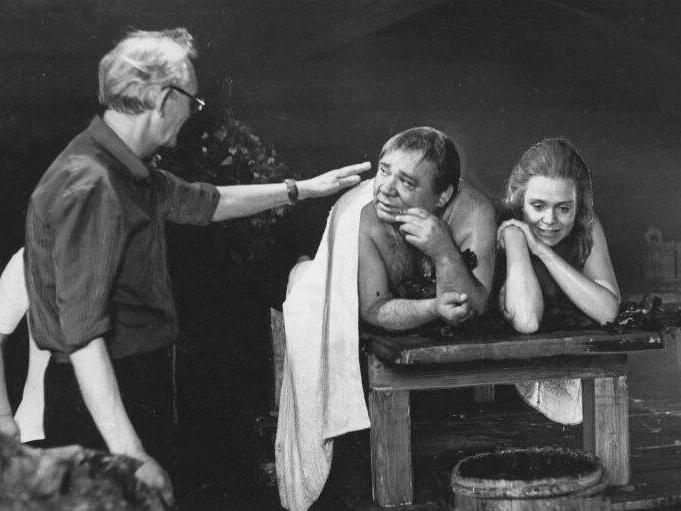
The work «For Matches», released in 1980, was shot after the director had become known throughout the Soviet Union. This is one example of those pictures that Soviet directors shot with foreign colleagues. Gaidai shot «For Matches» together with the Finn Risto Orko.
In essence, «For Matches»—is the same beloved comedic Gaidai, but in the context of Finland. This is a story about how the hero Ihalainen runs out of matches and now he cannot brew himself coffee, a drink beloved by Finns. Then Ihalainen (Yevgeny Leonov) meets an old friend, they reminisce about the past, have a drink... In general, in a quiet village, a story unfolds that is hard to imagine even in Moscow.
In the film, of course, Finnish actors also play. But you are unlikely to feel the difference. «For Matches» is also interesting to watch in the context of Russian-Finnish friendship, which was actively built after World War II. Finns in St. Petersburg, St. Petersburgers in Helsinki—this is a familiar story for all who lived in those parts in the Soviet Union. Today, of course, such a thing is quite hard to imagine—from this, the comedy becomes a document of the era, true, a bit melancholy.
«Good Weather on Deribasovskaya, or It»s Raining Again on Brighton Beach«
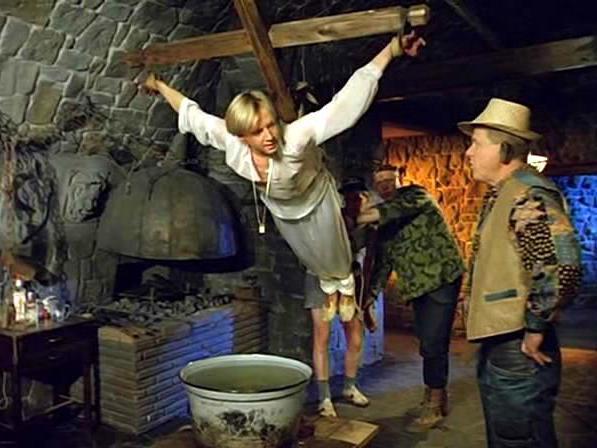
Sharp social cinema about banditry and corruption: many will say that in his last work about Deribasovskaya, Gaidai is no longer the same. But if you look closely at his humor, here he did not yield a step. Nevertheless, «Good Weather on Deribasovskaya, or It»s Raining Again on Brighton Beach«—is a work criticized for irrelevance and old-fashionedness.
We don«t know how interesting it will be for you to watch this film today, but there is something to think about here. Besides an interesting role by Dmitry Kharatyan (and this is perhaps not yet the most stellar years of his career), Gaidai debunks stereotypes of relations between Russia and the USA. He ridicules everything he can: the mafia, the KGB, Soviet tyranny. This picture of Gaidai is called »the last slap« at Soviet censorship.
In the early «90s, Gaidai, who was already watched simply because it was Gaidai, showed the post-Soviet person that neither in Russia nor in the USA is there an ideal life—everywhere has its own problems. The story, which revolves around important negotiations between the two powers, reminds of how important it is to be friends. Of course, »On Deribasovskaya…«—is a product of perestroika and the »90s era and may indeed seem irrelevant. But does this mean that in the current era, friendship is completely impossible?
However, Gaidai will be remembered, of course, not for «Brighton Beach». The director will forever remain a byword for situational comedy, the «Russian Chaplin», if you will. But it seems important to remember that behind phrases about those who «don»t take a taxi to the bakery« and those who »don«t work, do eat», hides a subtle and sensitive author. Gaidai brought no less to Russian cinema (for many—much more) than Tarkovsky, but still remains insufficiently studied. Yet Gaidai is still—the most people«s. And that is worth a lot.