Blind Pianist on Music, Bullying, and Life Beyond Stereotypes
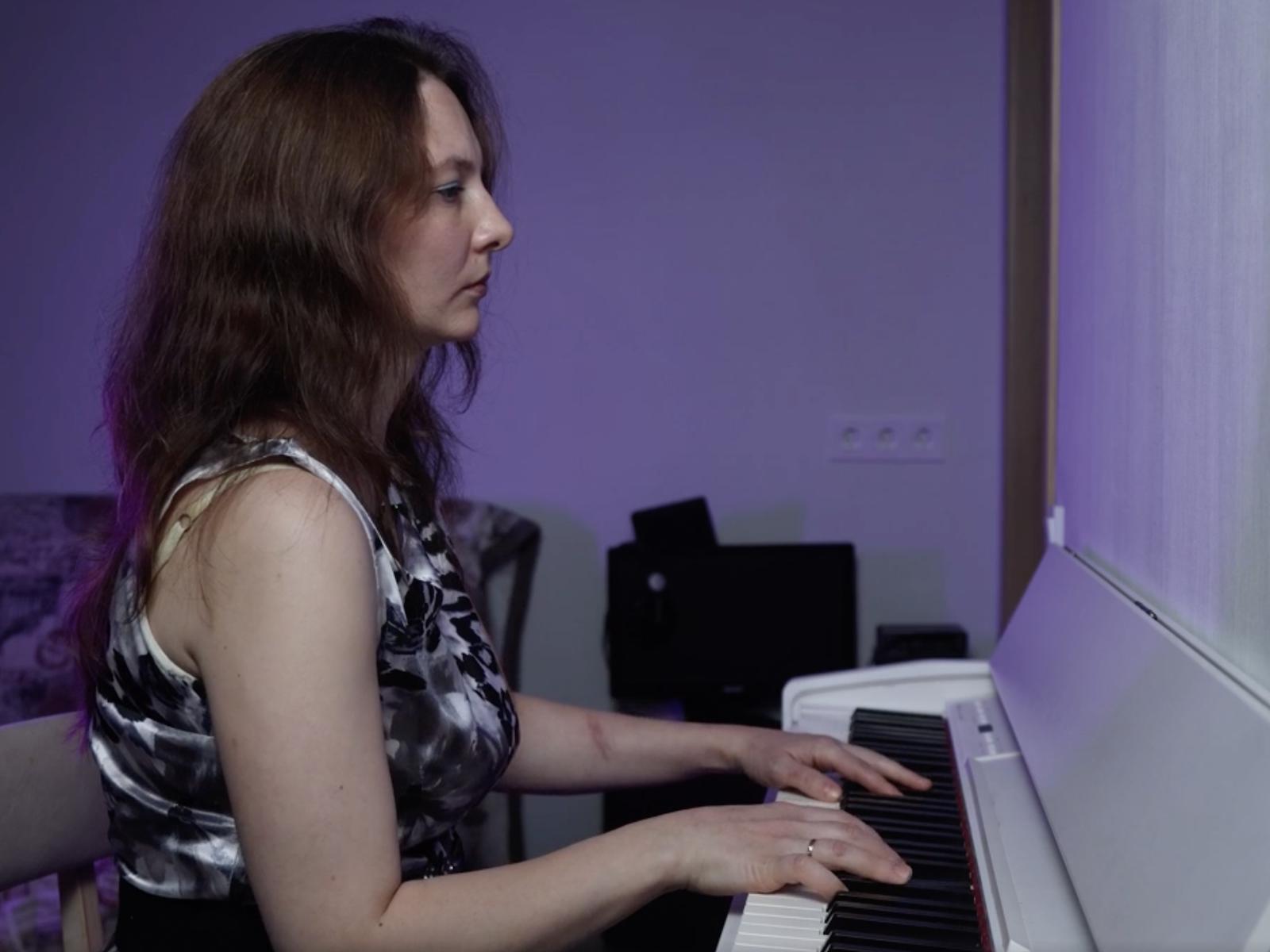

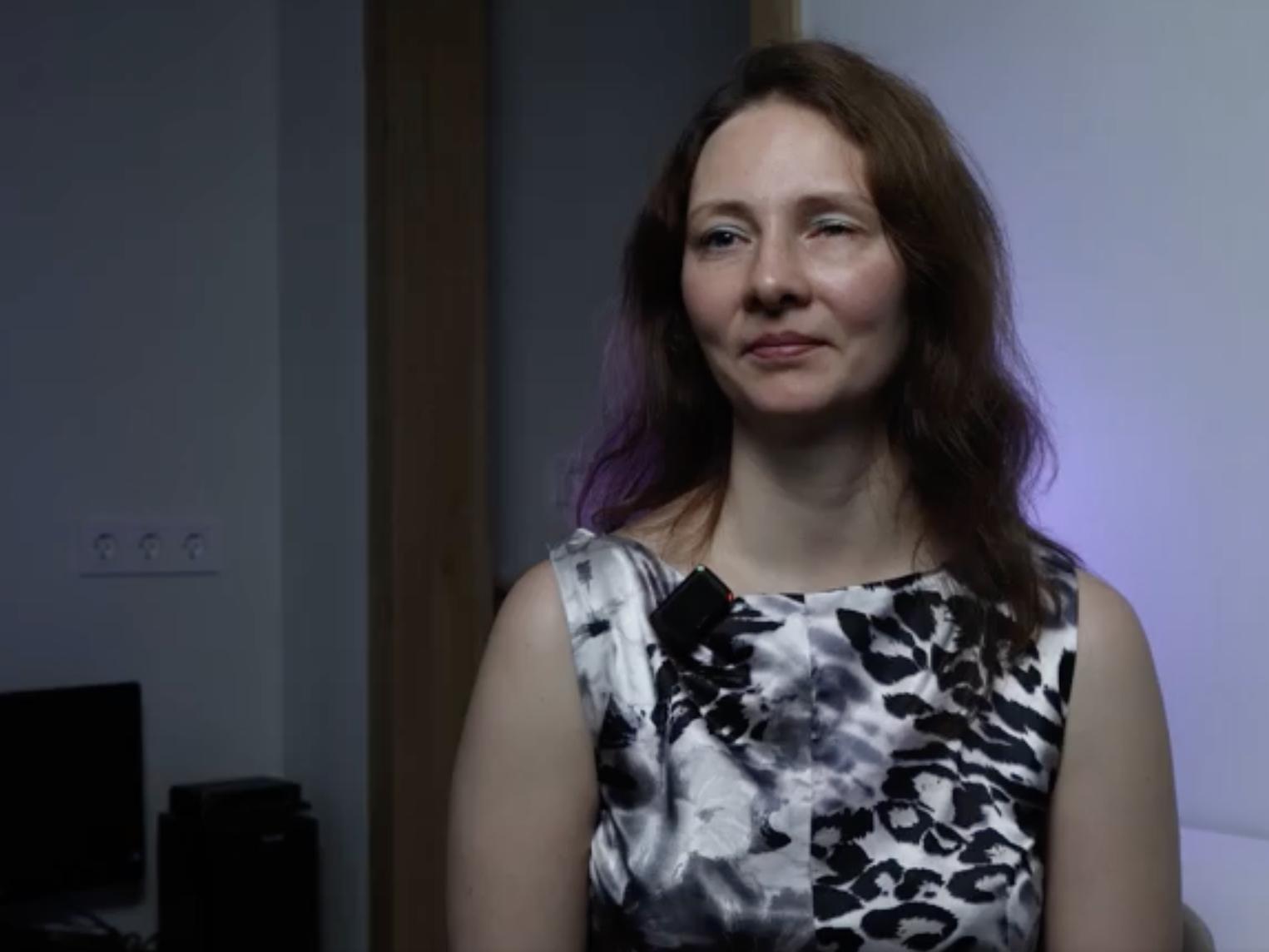
Elena Kukharenko is a happy wife, mother of four children, a professional pianist, and a piano teacher. She mostly gives music lessons online, and not even all of her students know that their teacher is blind.
Elena began to lose her sight when she was 7 years old due to a head injury. But before completely losing it, she managed to learn musical notation. Despite her disability, Elena fulfilled her lifelong dream: she graduated from a music academy in Moscow and became a pianist.
We talked to Elena about how blind people create music, build families, raise children, and in general—can live no worse than people with normal vision.
“My mother was told that if she didn’t send me to music school, she would make a very, very big mistake”
“I suspect we should kick the child out of here, because you can hear her rustling, right? Actually, you can hear the refrigerator too, and probably we should close the window…” Elena asks before the interview. All these sounds, which we don’t even pay attention to, are the most important source of information about the world for her.
Often people don’t suspect that Elena has any disability: not even all of her students know that she is blind. She confidently walks around the house, bakes pies, pours hot tea without any problems, and handles four children on her own.
Elena was born in Belarus, in the Vitebsk Region. She first encountered the piano as a child: she saw a beautiful grand piano that her older sister was playing, and immediately wanted to master the notes. Even in kindergarten, the teachers noticed Elena’s special musicality:
“At the slightest opportunity, it was immediately: ‘Kukharenko, go rehearse, go dance, go sing, go recite poetry.’ Sometimes I was even offended that all the children were playing, and I had to rehearse again. In kindergarten, my mother was told that if she didn’t send me to music school, she would make a very, very big mistake. My mother thought that if it was necessary, then it was necessary, and she sent me.”
Besides playing the piano, Elena was engaged in other creative activities: she knitted, made crafts, and drew from childhood. And one of her favorite activities was cooking:
“Cooking is also creativity. I loved cooking since childhood. From the age of five, I was already peeling potatoes and frying them, because my mother didn’t always have the opportunity to feed us, she worked two jobs. My father couldn’t help us, we lived separately, there were no grandmothers or grandfathers—no one at all,” Elena said.
“The teachers gave up on me”
Little Lena began to lose her sight at the age of seven. By the age of ten, she could no longer move around independently. In the second grade, the girl often lay in the hospital and because of this missed many classes at the music school.
“The teachers, who at first understood that I could do something, gave up on me because they thought that losing sight meant losing everything in life. They simply didn’t work with me and gave grades just for the sake of it. I didn’t understand why they treated me like that,” Elena said.
The girl was exempted from solfeggio, music literature, and dance classes. She was only allowed to attend piano and choir.
“I went everywhere, asked to be allowed to study, but the teachers told me to my face: ‘Why do you need this? Better go rest, you don’t see anyway. Well, even if you learn to play the piano, where will you work? Stay at home, get your pension, just plink away on your instrument for pleasure, and that’s it. Why work?’”
“I didn’t understand: why me?”
Elena considers one of the main reasons for her loss of sight to be the DTP vaccine (diphtheria, tetanus, pertussis) that she received as a child. Also, a concussion that the girl got at the age of 7 played a decisive role.
“I was in shock. I didn’t understand: why me? I’m a normal child! My mother calmed me down, said that I would see: ‘Now we’ll treat your eyes and everything will pass.’”
Elena believed that her sight would return and continued to do her usual activities: helping her mother, watering the garden, washing the floors. Even then, she learned to navigate by hearing and touch.
“The sight didn’t come and didn’t come. I wait and wait, but it doesn’t come. I’ve already adapted, but what can I do?” Elena says.
Since the tragedy happened in early childhood, it didn’t leave Elena with a strong psychological trauma. However, what really hurt the girl was the attitude of her peers and teachers:
“When I studied at a regular school with a choral focus, children from the lower grades pointed their fingers at me and laughed. They said ‘ugh, blind chicken’ or ‘night blindness.’ Until the third grade, I still tried to go to school on my own: I oriented myself by the light. Once, a boy ran from behind with a cut plastic water bottle, ran up to me and poured water on me. Then he threw the bottle and ran further to school. I caught up with him and beat him. Then there was a boy who constantly teased. When I was walking up the school stairs, he stood on the floor above, leaned over the railing and spat on me from above.”
When Elena moved to the fifth grade, she was forced to leave the school:
“The school principal came up to me and said: ‘The school is closed for you, you must leave.’ The teachers no longer knew how to work with me because no one knew Braille. I answered orally, but I was good at mental arithmetic, sometimes even ahead of my classmates. But I couldn’t read by myself and therefore dictated to the teacher how I would write.”
“We need to work on liberation with blind people”
Then, the only integrated class in Belarus was found for Elena, where several people were blind.
Elena managed to master musical notation and did not have any particular difficulties with the piano after losing her sight. The only thing that differs in her playing is that she cannot read sheet music and play at the same time.
The dream of becoming a pianist did not go away. After graduation, Elena started calling music colleges, but everywhere she got rejections. Completely by chance, she learned about an educational institution in Kursk where people with health disabilities could study music. Elena entered there and graduated from the college with honors. After that, she decided to continue her education and moved to Moscow, where she entered the Moscow State Specialized Academy of Arts.
“There were hard of hearing or deaf painters, actors, blind musicians and vocalists, sound engineers,” Elena shared.
While studying at the academy, the girl realized that for quality music education, people with health disabilities need not only instruments but also psychological support. Then Elena decided to get a second education—in psychology.
“I realized that other blind people cannot play many things: they have different movements, they play unnaturally in principle. My teachers noted that my movements are as close as possible to the playing of sighted musicians. I tried to understand why this happens and came to the conclusion that it is psychology that affects our body state. We need to work on liberation, psychology, and socialization with blind people. I realized that if a blind person fails at something in playing the piano, then we just need to work through that moment psychologically. We need to understand what is in the way, what the person is afraid of, and everything will work out.”
“In college, young men interfered with my studies”
About herself, Elena says that she was the “brightest star” at the academy. After graduation, she became a teacher there. Then she tried her psychological techniques on students.
“I had this experience: a blind girl was entering the academy, and she was very constrained, but very talented. I assured the management that we should take her, and they told me that they would take her under my responsibility. I worked with her on psychology, that is, I combined psychology and music. The girl showed such incredible results that the management was very surprised: how can this weak girl play like that?”
Despite the stereotypes about blind people, Elena always had many admirers.
“In college, young men interfered with my studies. They definitely needed to have a personal life. But for me, studying came first. But I didn’t find my husband there: there were no suitable ones for me.”
At the academy, Elena began her first serious relationship. Her chosen one was also a pianist, and sighted.
“It so happened that we entered the same course. We were together for 6 years, but he didn’t become my husband because I really wanted children, a family. And that person didn’t want so many children, and I realized that we had different interests. He went into politics, also works at the academy, and we have very good, friendly relations.”
Elena found her husband through a dating site. At that time, she worked in the project “Walks in the Dark,” where she acted as a guide for sighted people into the world of darkness.
In her profile on the site, she wrote that she had vision problems and invited people to come to “Walks in the Dark” to meet. Elena’s future husband did just that.
“When I met him, I realized that it was him,” Elena says. “He also decided that he had had enough of being a bachelor. He was just divorced, six months or a year. So he was sure that now he would be a bachelor, but he had to abandon that thought when he saw me.”
Elena and her husband got together very quickly and still live in a happy marriage. They now have four children. The husband’s parents were initially wary of their son’s choice, but then accepted Elena.
“They behaved very correctly, but the parents’ opinion did not play any role for my husband. My husband is an adult man, he is 10 years older than me. When we met, he was already 40 years old. But the parents themselves were in shock, that’s obvious. They slowly asked how I lived, observed from the side, trembled, worried, but then realized that it was useless to try to control me or help me.”
“I have students from different cities and even countries”
According to Elena, her main job now is being a mother. In her free time from children, she teaches piano. Moreover, the teacher does not advertise her lack of sight.
“I teach both via video and audio calls. I have students from different cities and even countries. There is a student from Austria who, by the way, thanks to our lessons, now works as a music teacher. I also record video lessons on playing the piano on my YouTube channel ‘Music Lessons’: improvisation, composition, how to compose, how to pick up favorite melodies, how to process them, adapt them to your technical capabilities. If students still ask about my sight, then I tell them. Some are shocked, some pretend not to be shocked, but I don’t care somehow… If you immediately say ‘guys, I’m blind, let me teach you,’ then no one will come, so there’s no point.”
Elena also engages in blogging on the topic of blind people’s issues: she talks about the difficulties of life without sight and how to cope with them.