Bataysk court grants parole to wheelchair-bound nuclear engineer
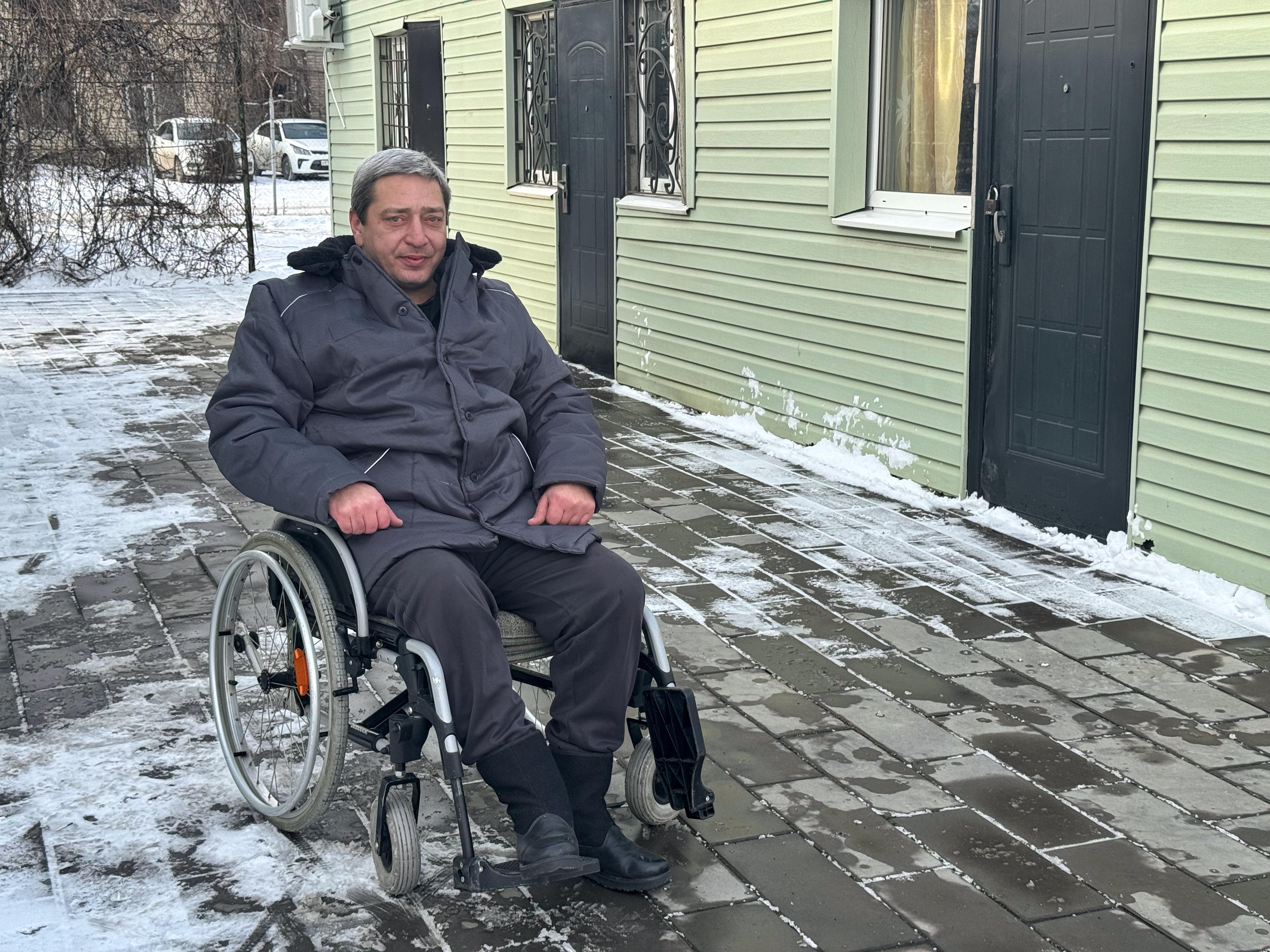

Nuclear engineer Ruslan Pelivanov has been released on parole from the Bataysk male colony IK-15. Pelivanov moved around the colony in a wheelchair due to shattered femur bones. He now plans to have surgery and hopes to be able to walk.
A correspondent from 161.RU met Ruslan outside the colony walls immediately after his release.
«First thing, I want to see my mom,» said Ruslan. «And then, I hope to have surgery so I can at least walk without crutches. If that doesn«t work out, I»ll get around on crutches. I used to move on crutches before it got worse. And in the colony, it«s just… There are no benches to walk ten meters and sit down. That doesn»t happen here. There are no conditions for using a regular wheelchair. Everywhere there are curbs, stairs.»
Ruslan«s mother is 84 years old. Svetlana Pelivanova could not come to meet her son: she moves only around the apartment — with the help of a walker. Two years ago, Svetlana was hit by a car, she fell on a curb and damaged her eyes. She was operated on in Rostov, where both lenses were replaced. Now Svetlana suffers from glaucoma and sees worse. She is waiting for her son to be able to help her after his leg surgery.
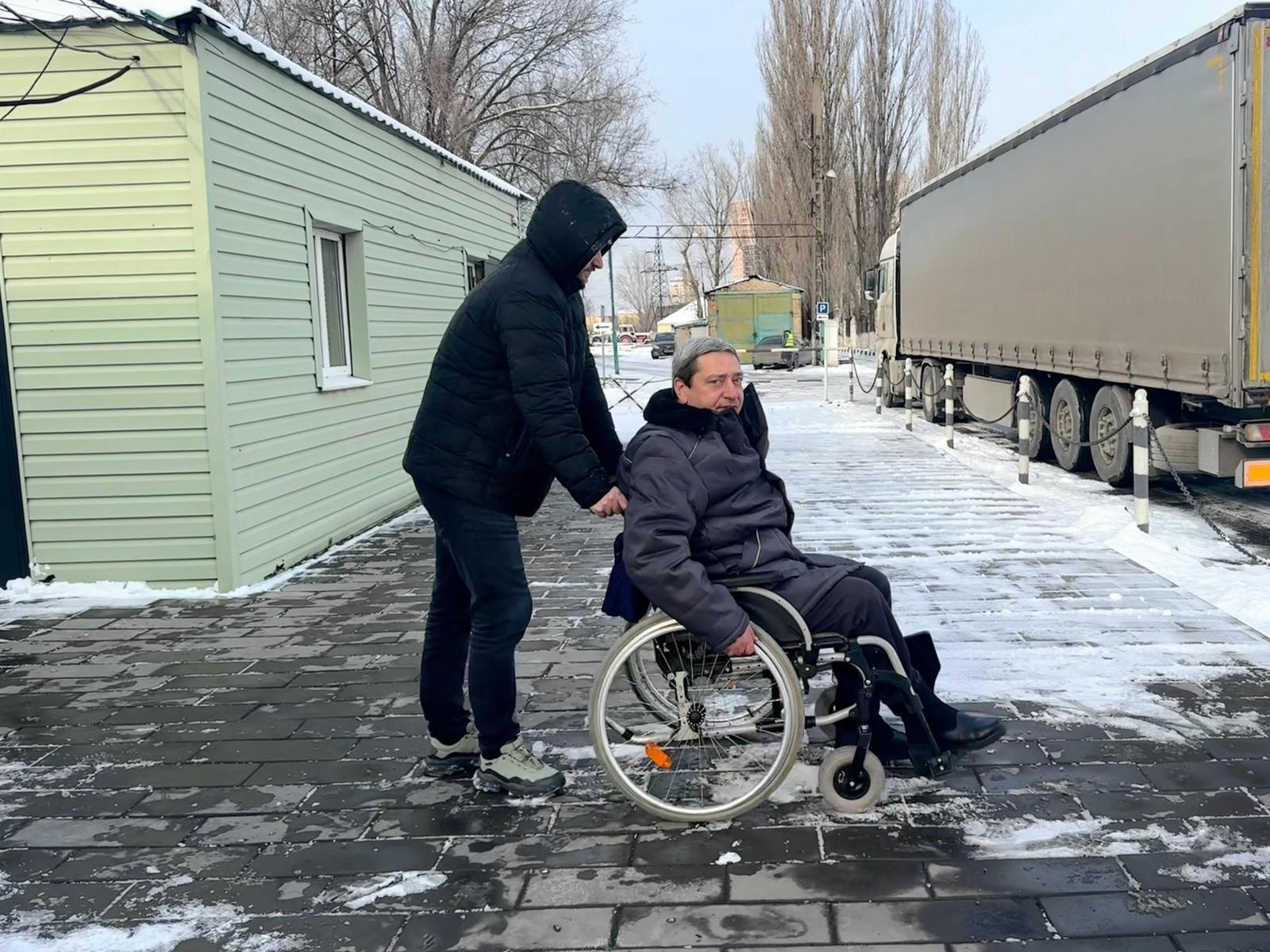
«The last time I saw her was the year before last. And otherwise, she came for a [long] visit about six years ago,» said Ruslan.
Immediately after release, his son took off his prison parka, and Ruslan changed into a regular jacket. At home, his wife and mother were waiting for him. Svetlana Pelivanova says that after her son«s release, she was finally able to sleep peacefully.
«At home, we talked, cried, and rejoiced,» Svetlana described the homecoming. «It went very well. Everything is good, and I calmed down. I even started sleeping better. Now surgeries are ahead.»
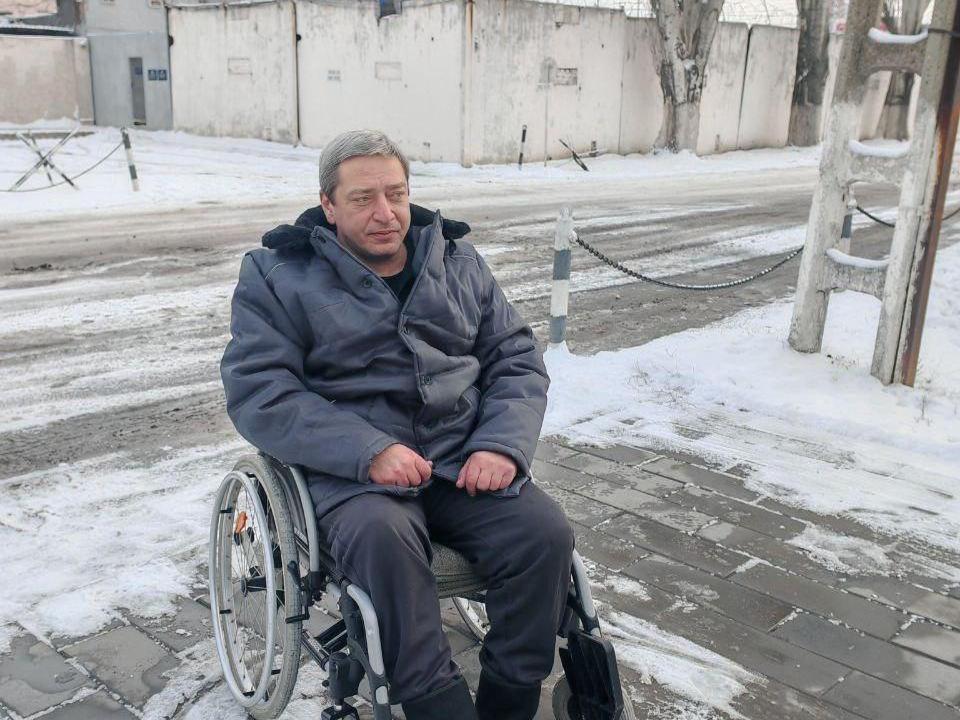
Oksana and Ruslan Pelivanov have been married for 36 years. The last eight were spent apart, but every month Oksana would take the bus and bring 20-kilogram bags of food to the colony.
«I have no idea what«s happening in the world. I feel that I need to adapt. Everything has changed a lot,» said Pelivanov.
His son warned him that the hardest thing would be getting used to the prices: over eight years, they have changed significantly.
In 2024, Russian courts granted more than 14,590 petitions for parole, according to official data from the Judicial Department at the Supreme Court of the Russian Federation. Slightly fewer — 14,294 times — release was denied. Meanwhile, 8,678 petitions were discontinued, withdrawn, returned, or transferred due to jurisdiction. How many of these were filed by prisoners with disabilities is unknown. But among them was the petition of Ruslan Pelivanov — at that time, he was denied.
«Serves his sentence under ordinary conditions. Has not violated the established order of serving the sentence. Was encouraged three times by the administration of the institution. <…> Characterized positively and the application of parole to him is advisable,» wrote the head of the colony, Ilya Lugansky, in Pelivanov«s personal reference.
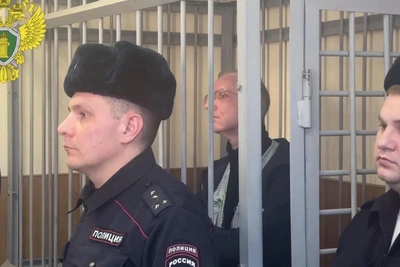
Lawyer Nikolai Artemov, who represented Pelivanov in court, noted that his client«s reference was «ideal.» Nevertheless, the court denied Pelivanov parole. The Bataysk City Court decided to grant the petition and release the engineer only after the publication by 161.RU.
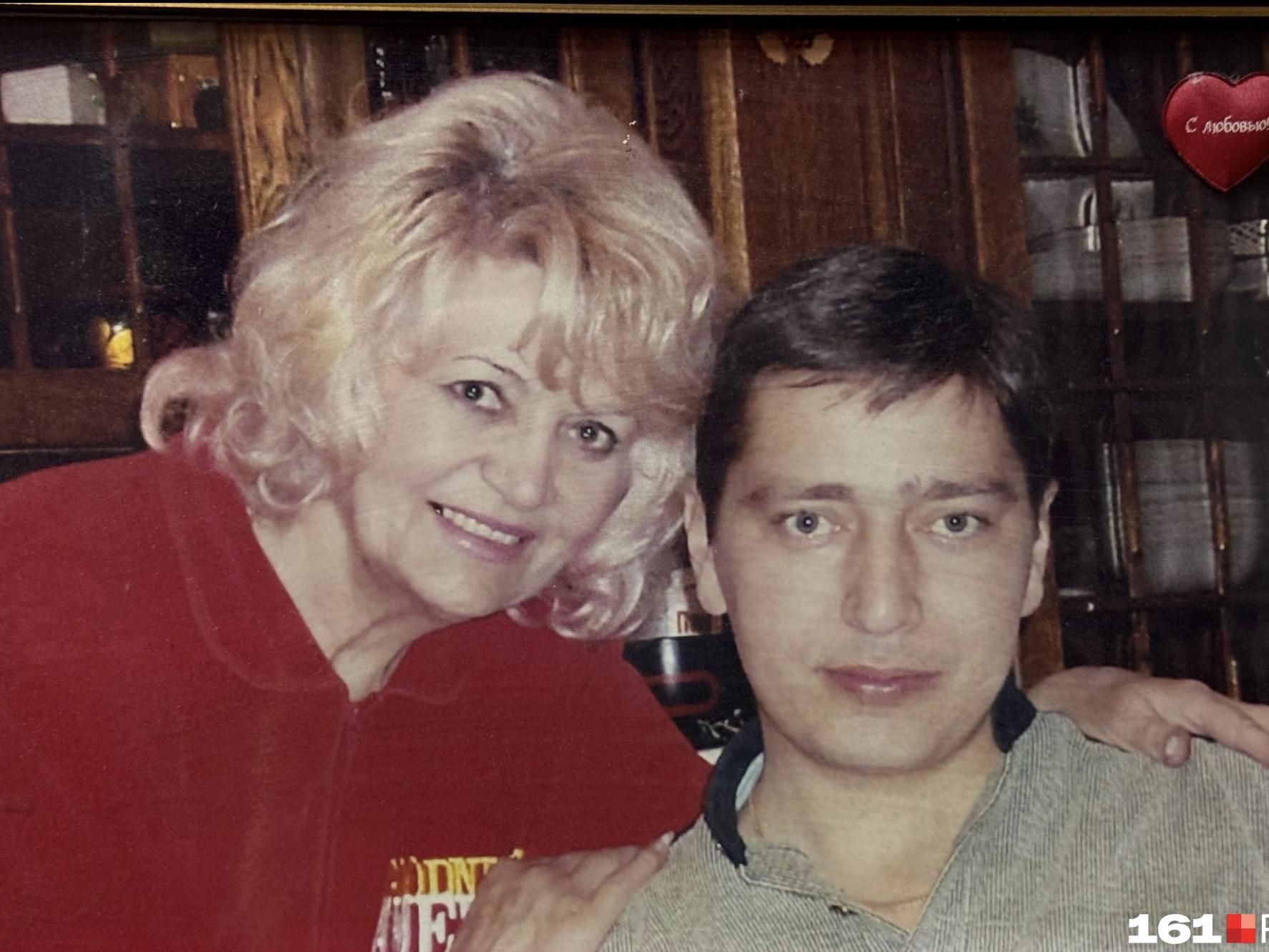
161.RU published the story of Ruslan Pelivanov. He graduated with honors from the Novocherkassk Institute of Engineering and Land Reclamation. He got a job at the Novocherkassk GRES (State District Power Station), and in the 2000s, Ruslan was invited to help build the Bushehr Nuclear Power Plant — engineers were needed for the first nuclear power plant in Iran and the entire Middle East. With his wife and son, Ruslan moved to Iran for eight years. Ruslan worked there as the head of the quality department. After returning to Russia, Pelivanov got a job at the Volgodonsk Nuclear Power Plant.
In 2012, he was in a car accident. His femur bones were shattered; they healed incorrectly, with displacement of the fragments. Pelivanov was given a second-degree disability. Ruslan admits that he used drugs, but insists that it was to dull the pain. In the colony, Pelivanov moved in a wheelchair — and dreamed of being released on parole to have surgery.
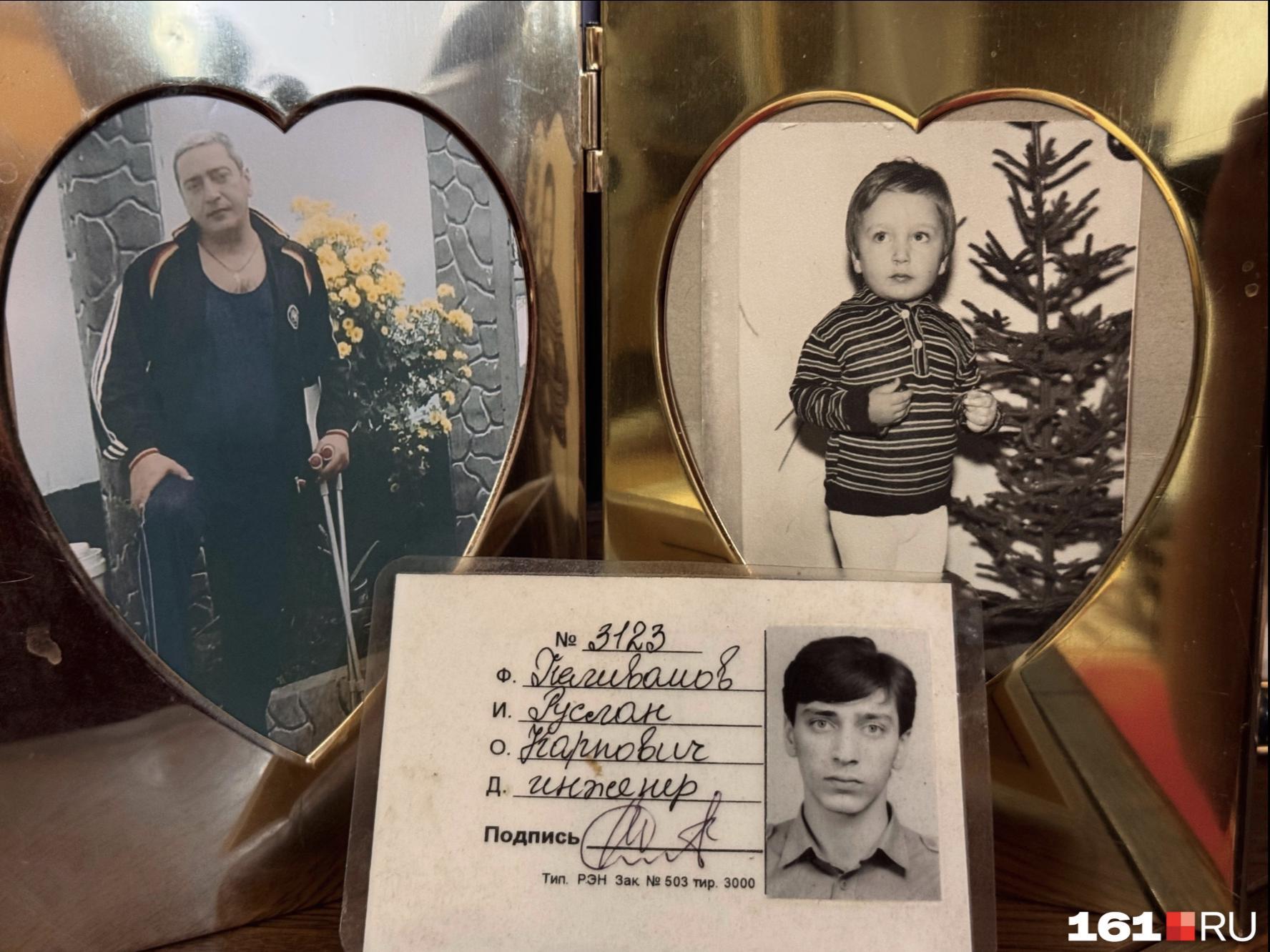
«I can walk a little on crutches — to the toilet, the canteen, the shower. But I«m tired, this helplessness is killing me. <…> No one understands how to wash in the shower on one leg, shave, do laundry, and also get through to the accountant and social department about pension issues… What pains one has to go through,» wrote Ruslan Pelivanov from the colony.
In daily life, he was helped by other prisoners — whom Ruslan calls «understanding convicts.» Those serving sentences in the Bataysk IK-15 confirmed to the 161.RU correspondent that sometimes convicts voluntarily help people with disabilities. This applies to duties that in the prison hierarchy are not considered to lower social status — that is, a prisoner can bring food from the canteen, pour tea, take someone somewhere in a wheelchair — for example, to the medical unit.
After the surgery, Ruslan Pelivanov wants to work.
«I don«t want to be useless,» said Pelivanov. «After all, I am a specialist, an engineer. If it doesn»t work out due to the criminal record, then I am a driver of all categories — a very good driver. I was in an accident only once in my life. And even then: I was a passenger. One can lease a minibus and engage in transportation. Or work on a truck. <…> Surgery is the first thing I want to do. I don«t want to be useless in my country.»