Ryazan Forecasts Restaurant Closures Amid Period of Uncertainty
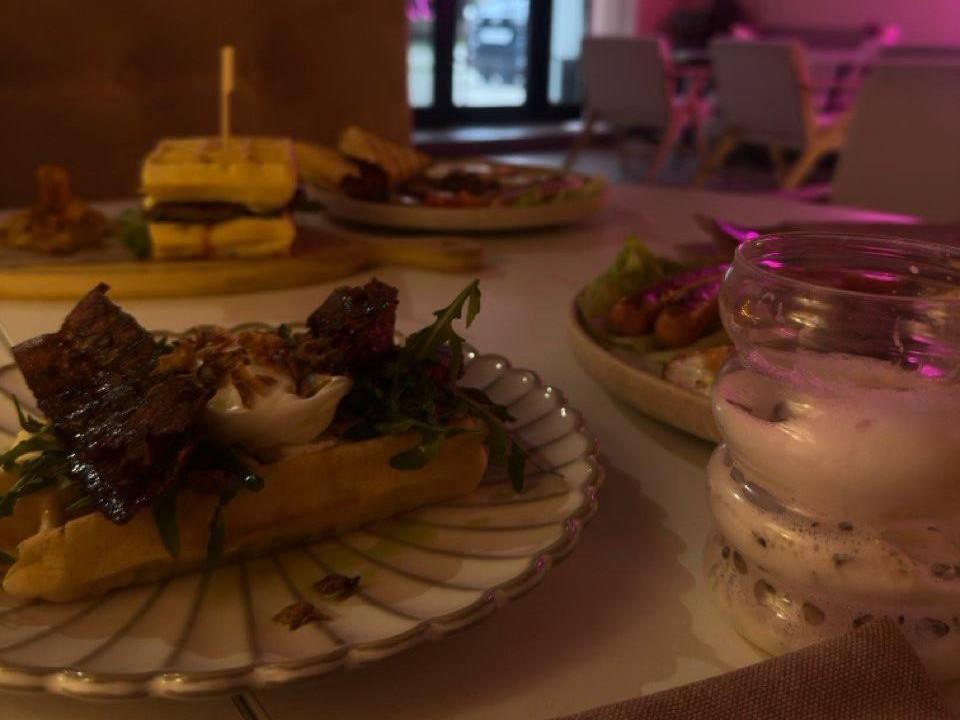

In January, Moscow recorded the largest wave of restaurant closures in recent years. Experts forecast that up to half a thousand bars and restaurants could close in the capital by 2026. A similar number ceased to exist in 2020 amid large-scale COVID-19 restrictions. And what about Ryazan? We asked entrepreneurs what is currently happening in the restaurant business of our city and whether to expect closures as soon as tomorrow.
The decline in the restaurant sector is linked to the increase in VAT (from January 1 it is 22%) and the overall change in tax policy in the country. Ryazan restaurateurs note that they are now operating in conditions of uncertainty, where it is very difficult to forecast anything.
“It«s Better When the Crisis Isn»t in Your Industry”
Thus, restaurateur Dmitry Kirilin (cafes “Old Miller”, “Grafin”) says that in the new conditions, entrepreneurs have worked for less than a month, but the forecasts are already disappointing.
“Our economic model doesn«t add up, we are optimizing the business as best we can. But the problem is that our guests have also entered a period of »uncertainties.« That is, if we can more or less forecast our indicators and costs, people now aren»t thinking about restaurants, so we can«t forecast revenues,” says Kirilin.
According to the restaurateur, the business is unsure whether the flow of visitors will persist or shrink in the near future.
“Those restaurants that were created as a business, not as a toy, that were made many years ago and allowed restaurateur businessmen to earn from it, scale, and develop, may close. Now, I think, savvy businessmen will quickly close projects that are in doubt. They will freeze them or close them entirely, leaving only the strong ones. You know, a kind of Spartan story will unfold for us,” the entrepreneur believes.
By “strong” he means establishments that have a good location, traffic, economics, and concept. Also, in his estimation, those restaurants and cafes that are in state and municipal premises with cheap rent will survive.
The restaurant business already has to save on employees. “A month ago, there was a terrible staff shortage, but soon there will be an excess, because we have to say goodbye to many. We see that the general situation is such that people aren«t thinking about restaurants, and guests won»t increase, there«s nowhere to get them from. On weekends, we have tourists, no question: Friday, Saturday, Sunday—all good. But that»s not enough. What do we do next? Either switch to some four-day week, a European-style system? Or other options. In any case, we need to cut people,” says the restaurateur.
It should be said that the drop in attendance did not start suddenly. According to Kirilin, it was observed since July-August last year, and in autumn everyone started talking about the problems.
“December, you imagine, is usually the fattest month in restaurants, but last year it turned out to be the worst. And not only in Ryazan, but throughout the country. January—the same thing. You can go and see now. Yes, there are restaurants, everything is beautiful, polished, waitresses are pretty, but there are no people. And there are more restaurants, including good, cool projects, and I«m glad about that. To build a restaurant, you need a year, for some more. People have already invested in some construction, and like it or not, they have to open,” says Kirilin.
“There is an idea that a crisis is the best time for development. Yes, that«s all true, if you have the means. And it»s even better when this crisis isn«t in your industry,” the restaurateur jokes sadly.
“Prices Scare People Away”
Chef of the gastropub “Eat”, co-founder of the Association of Chefs of the Ryazan Region (Assotsiatsiya kulinarov Ryazanskogo kraya) Maksim Titov says that for now, the situation on average is the same as last year. “But December was very bad, a failure, and such a drop probably never happened in my practice. Apparently, it was related to the buildup of a general negative atmosphere that everything would be bad. And I think that the rise in food prices had a big impact. If a person can afford to go to the store and choose what to buy themselves, then expenses for going to a restaurant, they will likely cut, it«s not a necessary expense. And in restaurants, prices have risen very sharply because the cost of products has increased, salaries have increased, taxes have increased. The price, of course, has also risen, and this strongly scares people away,” says the chef.
According to him, a failure in attendance at establishments was observed after the New Year holidays: for a week, there was no one. Now the situation is slowly recovering, but not at the same pace as a year ago.
Maksim Titov believes that with the new tax policy, the restaurant business will have to restructure and find new working models, and restaurateurs will have to get used to earning less than before.
“And, most likely, many will leave the market, because the restaurant business is very tough, with too many critical points that need constant attention: people, guests, products, and so on,” he thinks.
In Titov«s opinion, the market for ready-made food will grow in the near future, which saddens him.
“We were at an exhibition in autumn, and there is a lot of equipment that heats up ready-made food from frozen. Everything is presented to the maximum. The Chinese brought a lot of such things, where you make a ready-made dish from semi-finished products as quickly as possible. I think that similar small establishments with affordable prices will be in demand. Elite restaurants, of course, will have it harder,” the chef believes. Also, in his opinion, unique concepts will stay afloat, but they will require a lot of investment of effort, time, and money.
“Need to Preserve the Benefit, Since We Can«t Roll Back”
Chair of the Ryazan Regional Branch of “Opora Russia” (a business association) Yevgeniya Khalamtseva believes that changes in the tax system have hit the smallest family projects hard.
“Now, with a turnover of about two million a month, they will pay not 30,000–40,000 rubles (approximately $330–$440 at current rates) in taxes, but over 120,000 rubles (approximately $1,330 at current rates). This is a significant transition. Second—these are entrepreneurs in the restaurant market who were not on a patent, as they work with alcohol. For the entire industry, there is a twofold increase in tax burden. This is starting to destroy existing business models. But now there is a benefit: if employees officially receive the average industry salary, then 5% VAT is not charged,” she explains.
According to her, paying the average industry salary is the only opportunity for the restaurant business to maintain a full staff without increasing prices many times over. If prices increase, it will lead to a loss of guests. The degradation of the industry begins, unemployment, including among young people, because waiters are young people for whom this is not their main job.
“It is extremely important, since we can«t roll back, to preserve this benefit, so as not to finally drive small, in some cases family businesses out of the market and not break the entire middle segment. Because if the benefit is removed, only large federal chains with a turnover above 2 billion rubles (approximately $22 million at current rates) per year will remain on the market, and we have very few of those,” notes Yevgeniya Khalamtseva.
Ryazan Commissioner for Entrepreneurs« Rights Mikhail Pronin says that for now, there are no mass complaints about problems from representatives of the restaurant business due to changes in the tax system. According to him, entrepreneurs are adapting to the increase in the basic VAT rate from 20 to 22%. The reduction in the VAT exemption threshold for the simplified taxation system—from 60 to 20 million rubles (approximately $220,000 at current rates).
At the same time, he says, entrepreneurs know that they can use the benefit to maintain the VAT rate on the condition that at least 70% of income comes from providing food services, and also employees« wages are not lower than the average for the industry in the region. Moreover, the government has expanded the list of expenses that can be written off under the “income minus expenses” simplified system. Previously, there was a strict closed list.
“We still need to feel how visitors will come in February. Let«s not forget that we have two more holidays ahead—February 23 and March 8. After that, we can probably already talk about the consequences of tax increases on restaurants. For now, entrepreneurs are analyzing, looking at purchasing power. It cannot be said that most restaurateurs are in the stage of closing or deciding to close. Probably, it would be more correct to say that those who had a small business—a small cafe—yes, this increase has affected the business,” notes the business ombudsman.
According to him, in the near future, he plans to analyze the situation with the association of chefs.
“I think, in any case, federal and regional support measures will be adopted. From our side, if necessary, we will ask for additional support measures that will be necessary for our entrepreneurs. Even if there are distortions somewhere, we will level it all out, find common ground with the authorities, talk about the problems that have arisen for business,” explained Mikhail Pronin.