Mycologist and geneticist save crane with broken wing
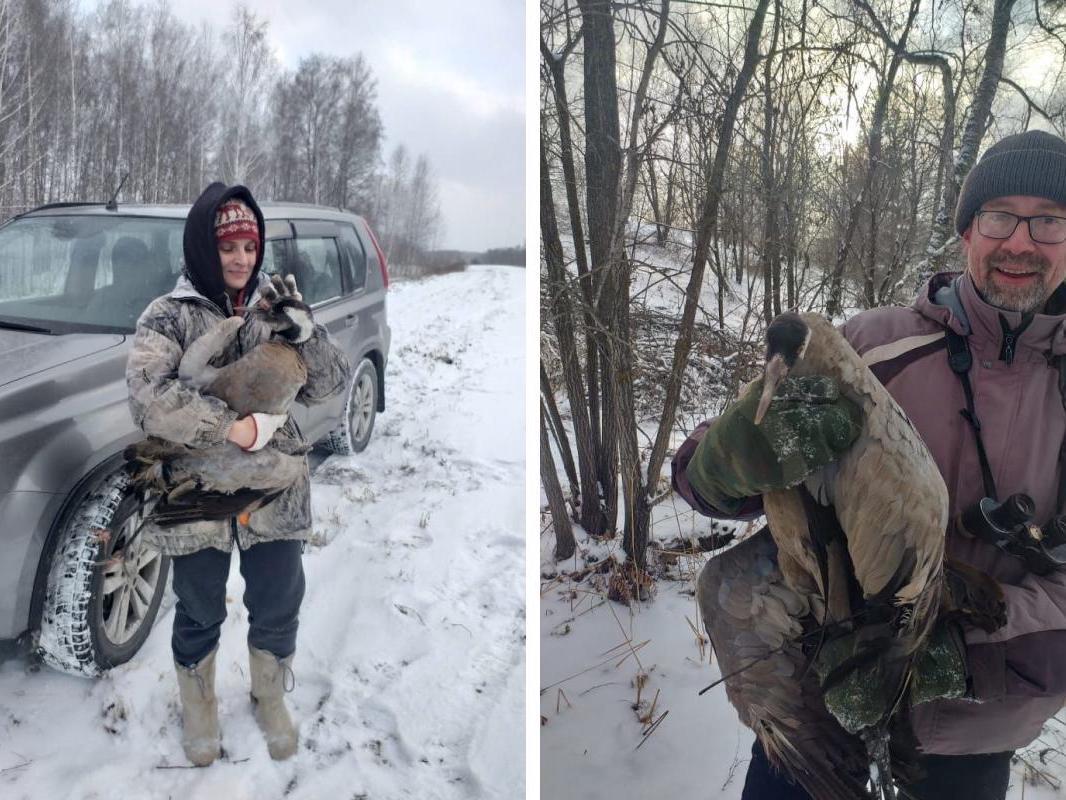

If Siberians decide to save someone, the one in trouble has no chance of not getting help. Even if you are a huge, willful gray crane. The co-author of one of the most famous guides to Siberian mushrooms noticed the bird that did not fly south during a walk in the fields with her son. Forecasters had just announced that frosts would soon hit and snow would fall, so there was no time to delay. The mycologist called her friend—an equally famous Novosibirsk biologist and geneticist. The scientists took on the task thoroughly and in the process involved a whole team in the rescue operation. A funny and touching story—in the NGS material.
All flew away, but he stayed
Tatyana Bulonkova is well known to Novosibirsk residents, especially fans of quiet hunting. She is an amateur mycologist, one of the co-authors of the popular guide «Mushrooms of Siberia», and also engages in science.
In early autumn, the Siberian woman was walking in the fields near Iskitim (Novosibirsk Oblast) with her son, taking photos for the school project «Life of Animals». In the distance, a large bird with dark plumage was walking. At that time, the Siberian thought it was a capercaillie, but a few weeks later Tatyana encountered the bird almost nose to nose and to her surprise realized it was a gray crane.
«I called my friend, he is a biologist and molecular geneticist, and also a famous amateur ornithologist—Oleg Andrejenkov. He said to me: “What, cranes flew away long ago”. But the crane was right here, standing there»—recalled Tatyana Bulonkova in a conversation with an NGS correspondent.
October was warm, so for several weeks she still waited for the crane to set off on its journey south. Sensing a trap, the bird began to keep its distance from the weekly guests on its swamp.
«He doesn’t let anyone get close. There are problems with his wing, but he runs at the speed of an airplane! He ran away from me faster than a person on a bicycle»—said Tatyana.
The first attempts to get closer to the bird and catch it were unsuccessful. But Siberians never give up. Last week, forecasters announced: winter is gradually taking hold, cold and heavy snowfalls are coming to the region. For the bird, this would be a death sentence.
«The crane simply lost his nerve»
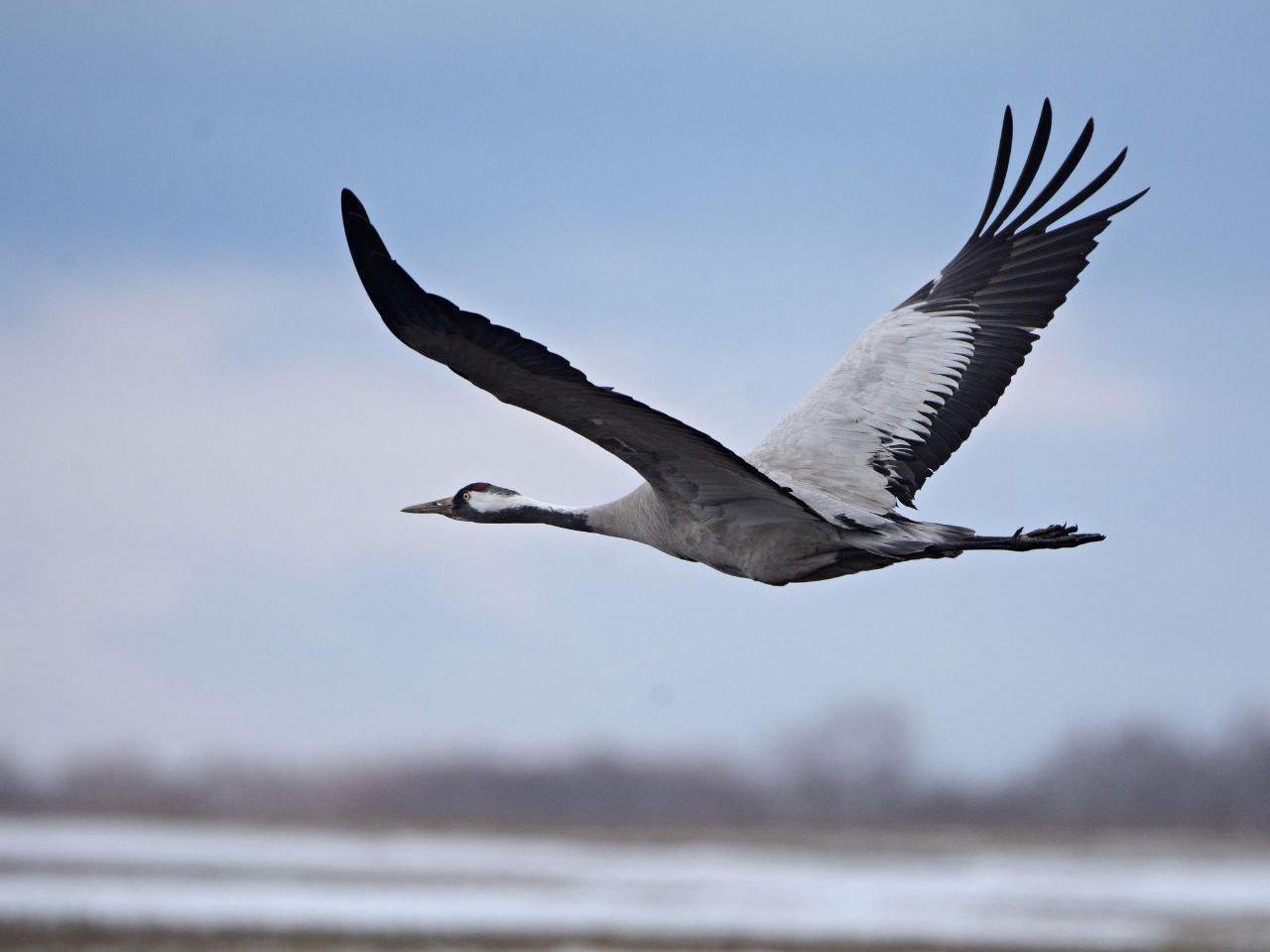
Tatyana and her friends began to think what to do—they needed to catch the bird. The first option—using a drone to drive the crane into a trap—was dismissed immediately. At the local stable, they didn’t give a horse for the chase—in the swampy area, the animal could easily break a leg.
An offer of help came from where no one expected it. Alena Turbina, a dog handler with a herding dog, assured that she could handle the task if people themselves couldn’t catch the crane. Her border collie excellently herds domestic birds and would manage with the crane.
Tatyana and Oleg decided to first go alone on a final reconnaissance.
«I’m limping, haven’t recovered properly after surgery, Oleg has blood pressure issues—that’s the team,—laughed Tatyana. —Our task was to see if there were any traces of the bird. We walked about three kilometers in a circle, saw tracks, were happy, but they disappeared. Started walking around—nowhere to be found».
It turned out the crane simply lost his nerve, he was hiding. According to Tatyana, if he had sat quietly ten meters from his rescue group, they wouldn’t have found him. But people came closer, about five meters away, the crane couldn’t stand it and cried out—gave himself away, joked Tatyana Bulonkova. And the chase began.
«Oleg rushed after the bird. The crane runs, cries out. Oleg falls, gets up. The crane rushed into the swamp, leaped through the mire like a velociraptor: with his wing he helps a bit, but doesn’t fly properly. We followed him up the slope,—described the chase the Siberian woman. —I see the crane is slowing down. Oleg and I looked at each other: somehow we need to catch up. After all, humans are the most persistent mammals. The crane was faster, but we didn’t give up».
After about an hour, Tatyana had to return to the car—her recent surgery took its toll. But Oleg was undeterred: the cold, snow, rising wind, running crane.
More than two hours passed. Tatyana began to worry, whether they would have to rescue not only the crane but also Oleg. At that time, the Siberian had stirred up not only the swamp.
Vasily, apartment, Barnaul
While Tatyana waited in the car, Oleg continued the chase. The man understood: this was the bird’s last chance to survive.
«He was in a dire situation, the weather only worsened all this time. We wanted to make sure he was alive before calling the dog handlers. And so it happened that we accidentally passed right by the bush where he was hiding. He ran out, and there were so many dangers around—nowhere to go. For a couple of hours I followed the trail, periodically caught up with him, and then he doubled his efforts. I caught up with him again: there was a gravel road with an embankment nearby—he went there, I after him. And a car was driving on the road. I stopped it, explained everything, asked the man to help. He first refused»—recalled Oleg Andrejenkov.
There is a suspicion that Vasily—a resident of the village of Nizhny Koyon, who was on his way to the hospital at that time—didn’t understand at first what was required of him. He drove off a few meters, but then turned off the car and rushed after Oleg in pursuit of the crane.
«Then it was a matter of five minutes—the crane was tired. We drove him into a pile of trees, Vasily grabbed him first, handed him to me. Of course, I warned before that you need to grab carefully: a crane is a rather dangerous bird, can easily peck out an eye. He was really combative, fought with us to the end. But there was an old fracture on the wing, the crane couldn’t fly away»—explained Oleg.
The Siberian got into the car with the crane to Vasily, and together they returned to Tatyana. The helpers’ contacts were not recorded, but the scientists are very grateful to him.
After the capture, another question arose sharply: what to do with the crane now. Volunteers don’t keep such birds, and moreover, veterinary help was needed.
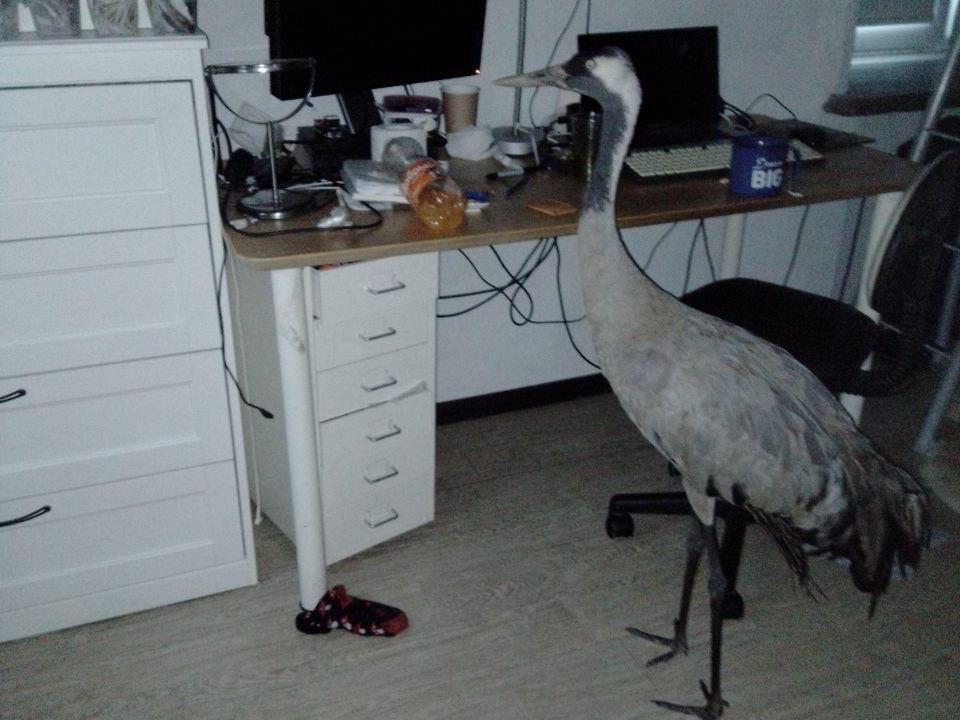
«The car pulls up, out come sweaty Vasily and Oleg with this crane, wrapped in some bag. He doesn’t give up—he’s a tough dinosaur, trying to peck. Started calling colleagues. Had to take him to my apartment»—said Tatyana Bulonkova.
The crane, who had already resigned himself to his fate, was locked in the bedroom. After he marked everything and made a mess in the apartment, it was decided to let him spend the night in the basement of a private house at Oleg’s parents. In the morning, the crane left with a volunteer for Barnaul.
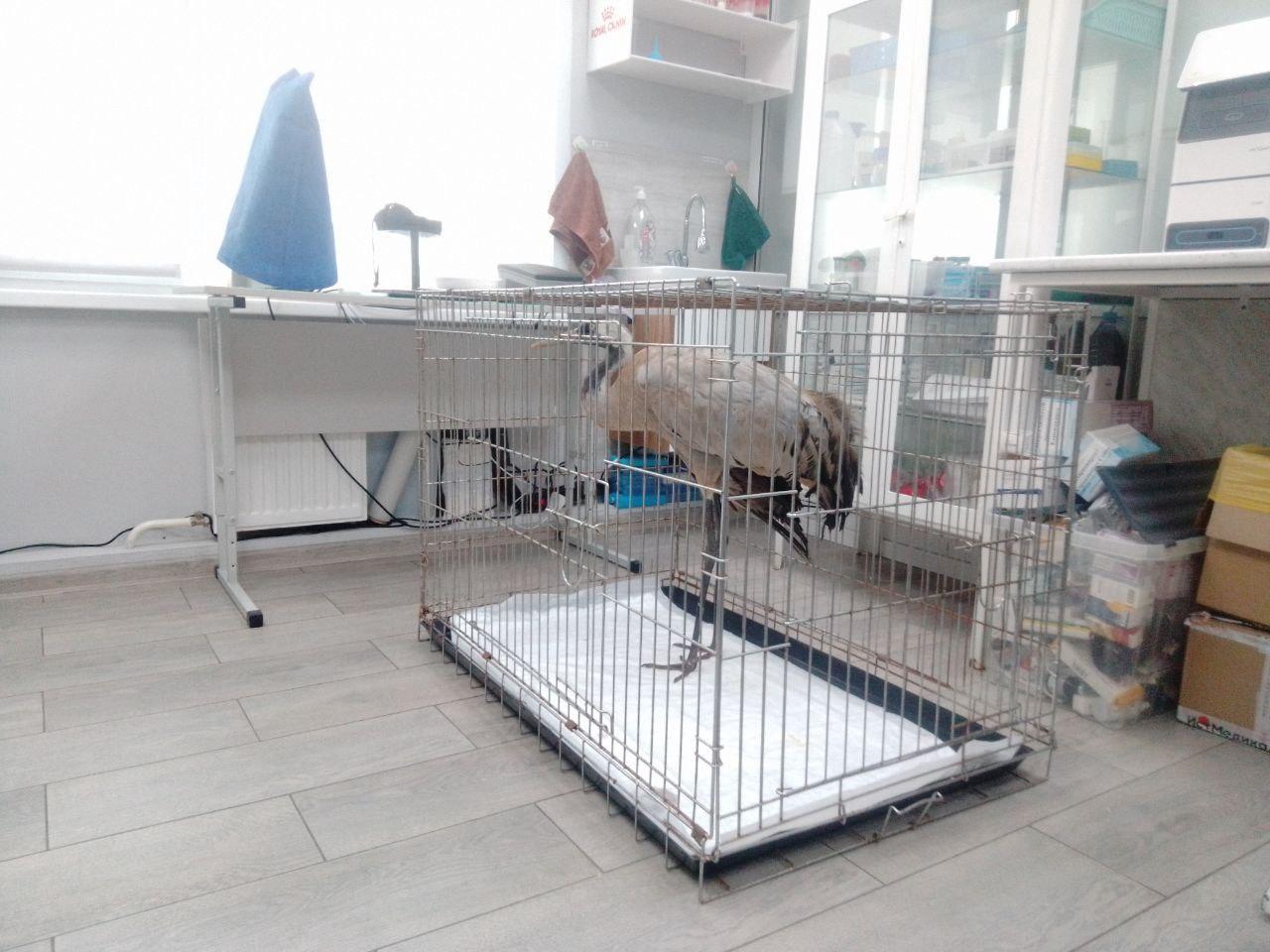
Veterinarian Artem Kucher from the clinic «Good Doctor» examined the crane and confirmed an old, improperly healed fracture of the wing, so the bird definitely cannot fly normally, and breaking the bones was dangerous. They had to find someone to take the bird in. The Barnaul zoo «Forest Fairy Tale» responded to the call.
«The crane arrived to us on Tuesday. He is in quarantine, feeling well. We are observing him. Doctors are doing everything so that he eats well. And he eats well! So everything will be fine»—assured the NGS correspondent Sergey Pisarev, director of the Barnaul zoo «Forest Fairy Tale».
Why did they rescue him?
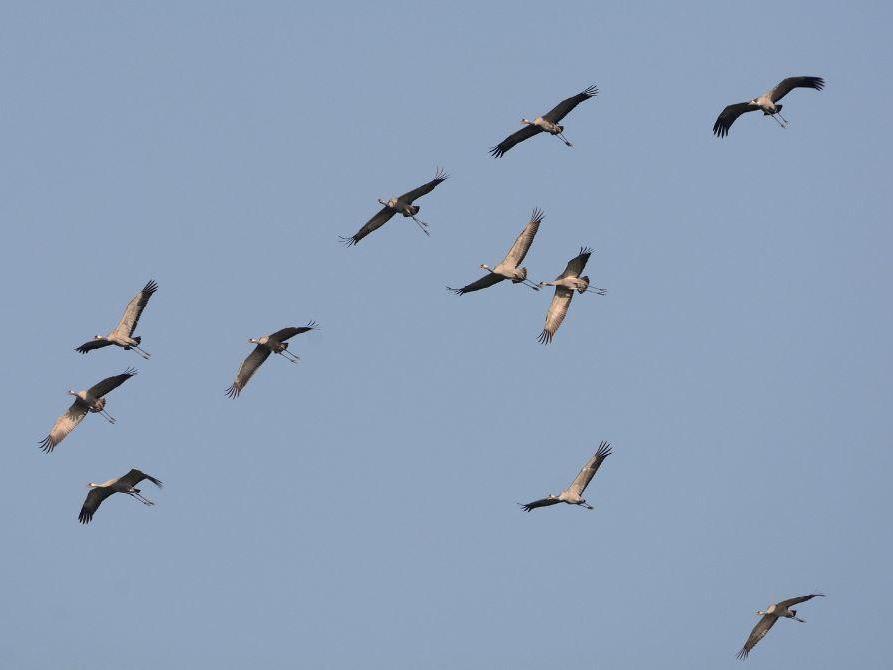
After listening to the whole story from beginning to end, we asked the rescuers the most important question: why? This is wild nature, a wild bird. The gray crane is not listed in the Red Book of Russia, although it is in several regional ones, and specialists note that its population is steadily declining.
«The question is not about rarity. All large birds are rare one way or another, that is, they are not encountered as frequently as sparrows. But that’s not the main point, that’s not the essence,—began Oleg Andrejenkov in bewilderment. —This is a living creature that got into such trouble. Who will help if not me?»
Tatyana Bulonkova answered that not only she was worried about the crane, but also her son. She couldn’t let down either the bird or her boy.
«We have few cranes after all. He is big and beautiful. Should we have watched him die there? Ran around for five hours in the swamp—no big deal.—she shrugged. —We also have great cultural significance for the crane. I couldn’t sit at home knowing that he was dying there in the swamp».
The scientists are sure that the crane will be fine in the zoo: with his combative character, he will be able to stand up for himself and live a long and well-fed life.
In August, volunteers from the Novosibirsk zoo saved two dozen bats.